

A medium banana contains approximately 400 to 451 milligrams of potassium. This tells you how much potassium does a banana have. Bananas are a popular, convenient, and nutrient-dense fruit. You find many vital compounds in these delicious bananas. Beyond potassium, this amazing banana offers a range of other important nutrients. You gain many benefits from the excellent banana nutrition this fruit provides. Enjoying bananas regularly supports your overall health. A single banana is a simple way to boost your daily intake. These versatile bananas are truly powerhouses.
Key Takeaways
A medium banana has about 400 to 451 milligrams of potassium. This is 7-9% of what you need each day.
Potassium helps your heart, nerves, and muscles work well. It also helps keep your blood pressure healthy.
Bananas offer more than just potassium. They have fiber for good digestion and vitamins like B6 and C.
You can easily add bananas to your diet. Eat them as a snack or put them in smoothies and oatmeal.
While bananas are healthy, people with certain health issues like kidney problems or diabetes should talk to a doctor about how many to eat.
Potassium in Bananas: A Key Mineral

Understanding Banana’s Potassium Content
You often hear about bananas as a top source of potassium. A medium banana gives you about 400 to 451 milligrams of potassium. This amount provides 7-9% of your daily recommended value. This shows you exactly how much potassium does a banana have. However, bananas are not the only source of this vital mineral. Many other foods also contain potassium.
You might be surprised to learn that bananas do not even make the top 10 list of potassium rich foods. Other fruits offer even more potassium. Look at this table to see how bananas compare:
Fruit | Potassium Content | % Daily Value (DV) |
|---|---|---|
Banana | ~315-422 mg | ~7% |
Avocado (half) | 345 mg | 7% |
Watermelon (2 wedges) | ~658 mg | ~14% |
Dried Apricots (1/2 cup) | ~756 mg | 16% |
This chart also visually compares the potassium content:
While bananas are a good source, you have many options for increasing your dietary potassium.
Health Benefits of Potassium
Potassium plays a crucial role in your body. It helps your nerves work and your muscles contract. It also helps maintain a healthy fluid balance. The health benefits of bananas, partly due to their potassium content, are significant.
Potassium is especially important for your heart. It helps regulate your blood pressure. Increased dietary potassium can slightly lower blood pressure. This reduces your risk of stroke deaths. Potassium also directly affects your blood vessels. It stops harmful cells from sticking to vessel walls. In studies, potassium has even stopped free radical formation. It reduces cell growth in blood vessels. It also decreases blood clot formation. Potassium can lower cholesterol in vessel walls.
Your heart’s electrical system also relies on potassium. Low potassium levels can cause abnormal heart rhythms. This is especially true if you have heart disease. Very low potassium can even stop your heart. High potassium can also cause problems. It can slow heart conduction.
Magnesium and potassium work together. Both are key minerals inside your cells. If one is out of balance, it affects the other. Low levels of either can lead to heart rhythm problems. This is common in people with heart disease. Magnesium also helps your heart’s energy and stability.
Many studies support potassium’s role in blood pressure. A Cochrane Review by Dickinson et al. (2006) looked at potassium supplements for high blood pressure. Another study by Dainelli et al. (2017) showed potassium’s role in preventing heart problems.
What happens if you do not get enough potassium? A small drop might cause no symptoms. You might feel constipated. You could have skipped heart beats or feel tired. Muscle weakness, spasms, or tingling can also occur. A big drop in potassium can cause abnormal heart rhythms. You might feel lightheaded or faint. Extremely low levels are very dangerous. They can even cause your heart to stop. Low potassium affects your muscles, nerves, and heart. It can also harm your digestion and bones. Over time, low potassium can lead to muscle weakness or even paralysis.
Potassium’s Role in Daily Diet
You need a certain amount of potassium every day. An average healthy adult should aim for 3,500 to 4,700 mg of potassium daily. Your exact needs can change. Factors like your health, activity level, and background play a role. Experts have not set a Recommended Dietary Allowance (RDA) for potassium yet. This is because they need more evidence.
You can easily add potassium to your diet. Bananas are a convenient choice. You can eat them as a snack. You can add them to smoothies or oatmeal. Remember, many other potassium rich foods exist. These include potatoes, sweet potatoes, spinach, and avocados. Eating a variety of fruits and vegetables helps you get enough potassium. This supports your overall health.
Beyond Potassium: Other Vital Nutrients in Bananas
You know bananas offer potassium, but they give you so much more. A medium banana contains about 110 calories. These calories come packed with many important nutrients. You get a lot of nutritional value from this simple fruit. Let’s explore the other vital compounds that make bananas a healthy choice.
Fiber for Digestive Health
Fiber is crucial for your digestive system. A medium banana provides about 3 grams of fiber. This gives you roughly 10% of your recommended daily amount. You need fiber to keep your gut healthy and functioning well.
Different types of fiber exist in bananas, each with unique benefits:
Resistant Starch:
You find this in unripe bananas.
It passes through your gut undigested.
Bacteria in your large intestine ferment it to form butyrate.
Butyrate helps your gut health.
It also moderates the rise in your blood sugar after a meal.
Pectin:
This type of fiber is also in bananas.
Some pectin is water-soluble, and its amount increases as bananas ripen.
It moderates the rise in your blood sugar after a meal.
Pectin acts as a prebiotic nutrient, supporting beneficial gut bacteria.
Beneficial bacteria ferment it to form butyrate, promoting gut health.
You might wonder how much fiber you need each day. Here is a guide for adults:
Group | Recommended Daily Fiber Intake (grams) |
|---|---|
Women (under 50) | 25 |
Men (under 50) | 38 |
Women (over 50) | 21 |
Men (over 50) | 30 |
This chart also shows your daily fiber needs:
Eating bananas helps you reach these targets.
Essential Vitamins: B6 and C
Bananas are a good source of vitamins, especially B6 and C.
Vitamin B6 (Pyridoxine) performs many vital functions in your body:
It helps produce red blood cells.
It helps make neurotransmitters like serotonin, which regulate your mood and aid sleep.
It is important for your brain health because it helps make neurotransmitters.
It helps maintain normal levels of homocysteine.
It plays a key role in the healthy growth and development of cells.
It helps your body make antibodies to fight viruses, infections, and diseases.
It maintains normal nerve function.
It helps make hemoglobin, which carries oxygen in red blood cells.
It breaks down proteins.
It keeps your blood sugar (glucose) in normal ranges.
It assists over 100 enzymes in various functions.
It breaks down proteins, carbohydrates, and fats.
It supports your immune function.
It supports your brain health.
You also get Vitamin C from bananas. Vitamin C is an antioxidant. It helps protect your cells from damage. It also supports your immune system and helps your body absorb iron. These vitamins contribute significantly to the overall banana nutrition.
Magnesium and Other Minerals
Beyond potassium, bananas offer other important minerals. Magnesium is one of them. It plays a critical role in your body.
Magnesium performs many key roles in your physiological processes:
It acts as a cofactor in over 300 enzymatic reactions.
It critically stabilizes enzymes, including many ATP-generating reactions.
It is essential for ATP metabolism, muscle contraction and relaxation, and normal neurological function.
It is required for the release of neurotransmitters.
It contributes to the regulation of vascular tone, heart rhythm, platelet-activated thrombosis, and bone formation.
It is necessary for the structural function of proteins, nucleic acids, and mitochondria.
It functions as a natural calcium antagonist.
It stimulates calcium re-uptake by the calcium-activated ATPase of the sarcoplasmic reticulum during muscle contraction.
It modulates insulin signal transduction and cell proliferation.
It is important for cell adhesion and transmembrane transport, including potassium and calcium ions.
It maintains the conformation of nucleic acids.
It antagonizes calcium-dependent release of acetylcholine at motor endplates.
It inhibits calcium-induced cell death and is anti-apoptotic in mitochondrial permeability transition.
It plays an important physiological role, particularly in your brain, heart, and skeletal muscles.
It is involved in over 600 enzymatic reactions, including energy metabolism and protein synthesis.
Bananas also contain other trace minerals. Green bananas are a source of zinc. You also find phosphorus in bananas. Banana peels contain trace amounts of iron and calcium. These minerals, along with vitamins and other bioactive compounds, contribute to your overall health benefits. Eating bananas regularly helps you get these vital nutrients.
Integrating Bananas into a Healthy Diet
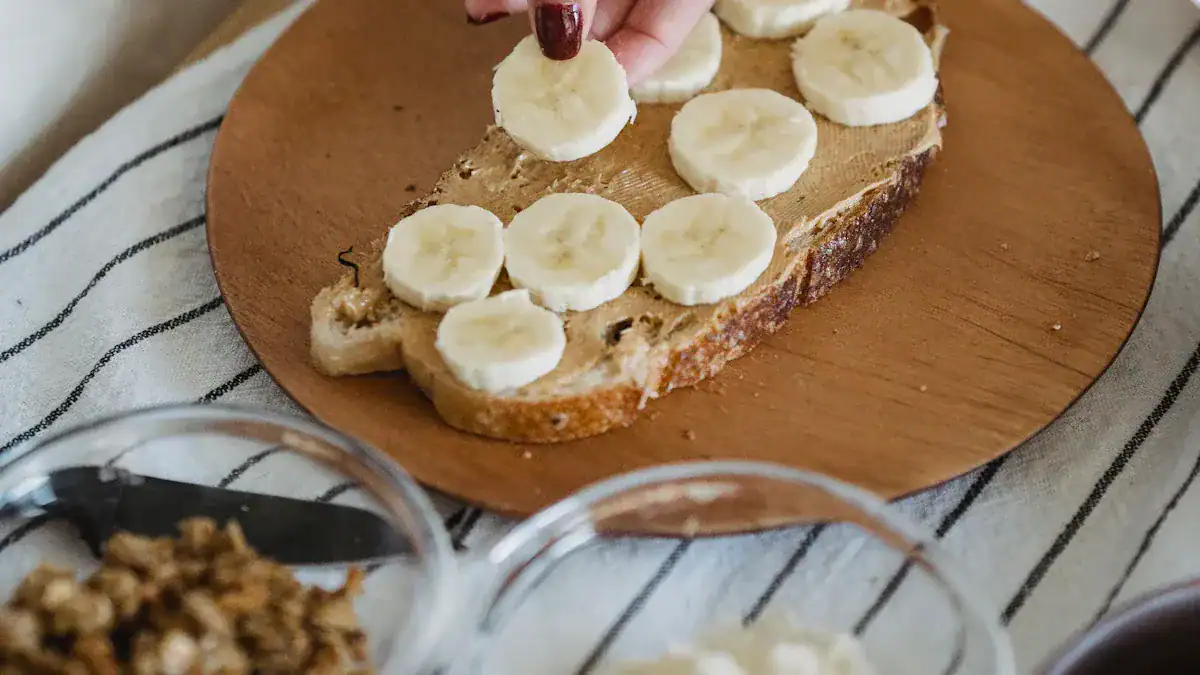
Serving Suggestions and Portion Control
You can easily add bananas to your daily meals. Bananas are versatile. You can enjoy a banana as a quick snack. Add sliced banana to your morning oatmeal or cereal. Blend a banana into smoothies for a creamy texture. You can also use bananas in many recipes. For example, try Banana Upside Down Cake or Banana Oat Pancakes. You can make Frozen Chocolate Banana Bites for a treat. Banana Bread Baked Oats are great for meal prep. These ideas help you enjoy bananas in different ways. Remember to control your portions. One medium banana is a good serving size.
Bananas for Heart Health and Beyond
Bananas offer great benefits for your heart. The DASH (Dietary Approaches to Stop Hypertension) diet recommends bananas. This diet emphasizes potassium, magnesium, and fiber. Bananas are ideal for the DASH diet due to their potassium. Potassium helps maintain normal blood pressure. It also counteracts high sodium levels. The American Heart Association supports the DASH diet for blood pressure management. A large Harvard study shows increasing potassium intake by 1,000 mg reduces cardiovascular disease risk by 18%. Bananas are a rich source of this potassium. They help relax blood vessels. They also increase sodium excretion. This decreases blood pressure. Consuming bananas 3-4 times per week did not reduce the risk of death from cardiovascular diseases in patients with dyslipidemia. However, it significantly reduced the risk of death due to other causes.
Dietary Considerations for Bananas
Consider a few things when you eat bananas. If you have uncontrolled diabetes, remember bananas contain carbohydrates. A medium banana has about 26 grams. Individuals with late-stage kidney failure must watch their potassium intake. Bananas are high in potassium. If you take high blood pressure or heart failure medications, potassium-rich foods like bananas can interact with them. Some people have allergies to bananas. This is more common if you are sensitive to latex, avocado, or kiwi. Unripe bananas have a lower glycemic index (GI) than ripe ones.
Ripeness Stage | Glycemic Index (GI) |
|---|---|
Green (unripe) | ~30 |
Yellow with green spots | ~42 |
Fully yellow | ~51 |
Yellow with brown spots | ~62 |
As bananas ripen, their sugar content increases. This raises their GI score. Fully ripe bananas with brown spots have the highest GI. |
You now understand how much potassium does a banana have. Bananas are an excellent source of potassium. This amazing banana also provides many other important nutrients. These bananas contribute to your balanced diet. They support your overall well-being, from heart health to digestion. Enjoy a banana daily. This simple banana is a powerful addition to your nutrition. You can easily add these bananas to your meals. These versatile bananas offer great benefits.