
Beans are a nutritional powerhouse. You might underestimate the power of these versatile legumes. They are affordable and offer significant health benefits. For instance, regular consumption of beans can prevent heart disease and certain cancers. Beans also aid in weight management. These amazing beans support overall health. This guide offers a comprehensive bean nutrition comparison chart. It demystifies bean nutrition through a clear comparison. This helps you make informed choices for your health. Which beans best suit your specific needs? How can you easily integrate these beneficial beans into your daily meals? Understanding the unique benefits of each type of beans is key.
Key Takeaways
Beans are a nutritional powerhouse. They offer fiber, protein, vitamins, and minerals. These nutrients support your overall health.
Eating beans regularly helps your body. They can help you manage weight and keep your heart healthy. Beans also help control blood sugar.
Different beans offer different benefits. Some beans have more fiber, like navy beans. Others have more protein, like soybeans.
You can easily add beans to your meals. Use them in soups, salads, or dips. Soaking dried beans helps reduce gas.
Choose dried beans to save money and control salt. Canned beans are convenient. Rinse them to lower sodium.
Bean Basics: Nutritional Powerhouse
Key Bean Nutrients
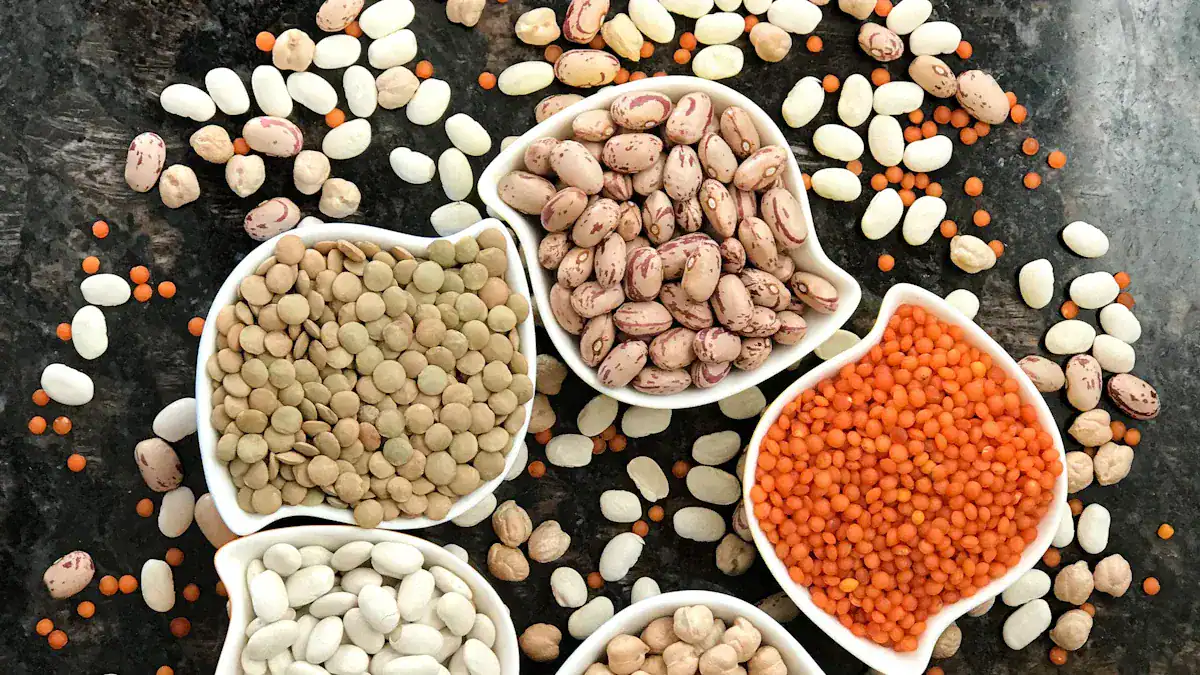
Beans are truly a nutritional powerhouse. They offer you a rich source of fiber, essential vitamins, and vital minerals. You also get excellent plant-based protein from them. These nutrients make beans a cornerstone of a healthy diet. For example, you can see how various beans provide important minerals and vitamins:
Nutrient | Black Beans | Cranberry Beans | Great Northern Beans | Navy Beans | Pink Beans | Pinto Beans | Red Kidney Beans |
|---|---|---|---|---|---|---|---|
Vitamin A (IU) | 5 | 0 | 1 | 0 | 0 | 0 | 0 |
Vitamin C (mg) | 0 | 0 | 1.2 | 0.8 | 0 | 0.7 | 1.1 |
Folate (mcg_DFE) | 128 | 183 | 90 | 127 | 142 | 147 | 115 |
Calcium (mg) | 23 | 44 | 60 | 63 | 44 | 39 | 25 |
Iron (mg) | 1.8 | 1.9 | 1.9 | 2.2 | 1.9 | 1.8 | 2.6 |
Potassium (mg) | 305 | 342 | 346 | 354 | 429 | 373 | 357 |
Magnesium (mg) | 60 | 44 | 44 | 48 | 55 | 43 | 40 |
Biofortification of food crops can also boost these essential micronutrients. This helps increase levels of iron, zinc, and provitamin A in your food system.
Beans: A Dietary Staple
You should make beans a regular part of your meals. The 2020–2025 Dietary Guidelines for Americans recommend a weekly intake of 1.5 cups of beans, peas, and lentils. This is roughly half a cup per day. You can count beans, peas, and lentils in two food groups. They fit into both the Vegetable and Protein Foods groups. This dual classification highlights their versatility and significant nutrition contribution.
Broader Health Benefits of Beans
Eating beans regularly offers you many health benefits. They contribute to your overall health. For instance, beans help you manage your weight. They also support heart health. Clinical research shows specific improvements.
Individuals with prediabetes often exhibit impaired lipid metabolism and chronic low-grade inflammation. Both of these can contribute to the development of conditions like heart disease and type 2 diabetes. Our study found that bean consumption helped significantly lower cholesterol and reduce inflammation in people with prediabetes, although glucose levels were not changed.
Here are some specific benefits you can gain:
Health Condition Improved | Type of Bean | Specific Improvement | Baseline Value | Post-Study Value (12 weeks) |
|---|---|---|---|---|
Cholesterol Levels | Chickpeas | Significant decrease in total cholesterol | 200.4 mg/dL | 185.8 mg/dL |
Inflammation | Black Beans | Significant decrease in pro-inflammatory cytokine interleukin-6 | 2.57 pg/mL | 1.88 pg/mL |
The high dietary fiber content in beans also aids digestion. This dietary fiber helps keep your gut healthy.
Bean Nutrition Comparison: Charting Differences
You want to understand the specific benefits of different types of beans. This bean nutrition comparison chart helps you see the unique nutritional information each bean offers. You will learn about calories, protein, fats, carbohydrates, fiber, and key vitamins and minerals. This detailed comparison guides you to make the best choices for your health.
Fiber Content: Digestive Health
Beans are champions for your digestive health. They pack a lot of fiber. This dietary fiber helps keep your digestive system running smoothly. It also helps you feel full longer. A half-cup serving of cooked beans typically contains between 6 and 8 grams of fiber. Some beans offer even more. Navy beans, for example, give you about 9.5 grams per serving. Black beans provide 7.5 grams.
You can see how much fiber different beans offer per cup:
Bean Type | Fiber per Cup (g) |
|---|---|
Black Beans | 15 |
Kidney Beans | 11 |
Navy Beans | 19 |
Here is a visual comparison of fiber content:
For instance, a half-cup of light red kidney beans gives you 7.9 grams of fiber. Navy beans offer 6.5 grams. Black beans and pinto beans each provide 6.1 grams. If you are looking for high-fiber options, choose navy beans, small white beans, adzuki beans, split peas, lentils, pinto beans, mung beans, chickpeas, and kidney beans. These beans are excellent for your dietary fiber intake.
Protein Power: Plant-Based Source
Beans are an amazing source of plant-based protein. This makes them a great choice for vegetarians, vegans, or anyone wanting to reduce meat intake. Protein is essential for building and repairing tissues in your body. You can find significant protein in many different types of beans.
Here is a comparison of protein content per cup for various bean varieties:
Bean Variety | Protein per Cup (g) |
|---|---|
Mature Soybeans | 31.3 |
Lentils | 17.9 |
Large White Beans | 17.4 |
Cranberry (Borlotti) Beans | 16.5 |
Split Peas | 16.3 |
Pinto Beans | 15.4 |
Kidney Beans | 15.3 |
Black Beans | 15.2 |
Navy (Haricot) Beans | 15.0 |
Lima (Butter) Beans | 14.7 |
This chart shows you which beans offer the most protein:
Mature soybeans lead the pack with over 31 grams of protein per cup. Lentils and large white beans also provide excellent amounts.
Iron & Minerals: Energy & Vitality
Beans give you important minerals that boost your energy and vitality. Iron is one of these key nutrients. It helps carry oxygen in your blood. You can get a good amount of iron from beans.
Look at the iron content in some popular beans:
Bean Type | Iron Content (mg) | Serving Size |
|---|---|---|
Lentils | 3 | ½ cup boiled and drained |
Chickpeas | 2 | ½ cup boiled and drained |
For a larger serving, consider this:
Bean Type | Iron Content (mg) | Serving Size |
|---|---|---|
Chickpeas | 4.7 | per cup cooked |
Lentils | 6.6 | per cup cooked |
Beans also provide other vital minerals. These include magnesium and potassium. These nutrients support muscle function and nerve health.
Vitamins & Antioxidants: Immune Support
Beans are rich in vitamins and antioxidants. These compounds protect your body and support your immune system. Legumes contain phenolics, like isoflavones. These contribute to their strong antioxidant activities. Dry beans show a wide range of total phenolic contents. Fava beans have particularly high levels. Vigna beans also generally show higher total phenolic content. This leads to elevated antioxidant activities.
Beans offer important vitamins:
Folic Acid: One cup provides about 10% of your daily needs.
Vitamin K: One cup gives you 14.4 micrograms. This is almost 20% of your daily requirement.
Here is a quick comparison of some beans and their antioxidant and vitamin content:
Bean Variety | Antioxidants | Folate | Vitamin K |
|---|---|---|---|
Black Beans | High | High | N/A |
Kidney Beans | N/A | N/A | High |
Lima Beans | N/A | Rich | N/A |
Soybeans | Isoflavones (antioxidants) | N/A | N/A |
Navy beans also stand out. They contain twice as much vitamin B1 (0.237mg) compared to white beans (0.118mg). This makes them a great choice for B vitamin intake.
Calorie & Macronutrient Breakdown
Understanding the calorie and macronutrient comparison helps you fit beans into your diet. Macronutrients include carbohydrates, fats, and protein. Beans are generally low in fat and high in complex carbohydrates and fiber.
Here is a look at the carbohydrate breakdown for some beans:
Bean Type | Net Carbs (g) | Sugar (g) | Fiber (g) | Total Carbs (g) |
|---|---|---|---|---|
Baked Beans | 19.19 | 3.38 | 11.3 | 30.49 |
Black Beans | 36.65 | – | 13.9 | 50.55 |
Chickpeas | 15.10 | 6.38 | 6.9 | 22.00 |
Pinto Beans | 20.09 | 0.37 | 6.7 | 26.79 |
You can also see the calorie and fat content per 100g for various beans:
Bean Type | Calories (kcal) per 100g | Net Carbs (grams) per 100g | Total Fat (grams) per 100g |
|---|---|---|---|
Beans, baked, canned, no salt added | 105 | 15 | 0.4 |
Beans, small white, mature seeds, cooked, boiled, without salt | 142 | N/A | N/A |
Beans, small white, mature seeds, raw | 336 | N/A | N/A |
This macronutrient comparison shows you that beans are a low-fat, high-fiber, and complex carbohydrate food. This makes them a healthy addition to almost any meal. You can see that the healthiest type of bean for you depends on your specific nutritional needs.
Beans for Specific Health Goals
Beans for Weight Management
You can use beans to help manage your weight. Studies show people who eat them often have lower body weights and a lower chance of obesity. Meta-analyses confirm that eating legumes leads to significant weight loss. Beans are low in fat and have a low glycemic index. They are rich in dietary fiber. This fiber helps you feel full and can bind fats and sugars, reducing absorption. Beans also provide plant protein, which makes you feel satisfied. Eating them increases feelings of fullness, helping you eat less overall. Beans also improve your gut microbiome, linking to healthier body weight.
Beans for Heart Health
Beans offer great benefits for your heart health. They help lower cholesterol levels. Beans contain both soluble and insoluble fiber. This dietary fiber binds bile acids, removing them from your body, which reduces cholesterol. They also give you plant-based protein and important nutrients that support heart health. Antioxidants and polyphenols in beans reduce stress and inflammation, protecting your blood vessels. Beans also improve your gut health, which positively affects your heart. For example, chickpeas can reduce total cholesterol, and black beans can decrease inflammation markers.
Beans for Blood Sugar Control
Beans are excellent for managing blood sugar. Regular consumption can lower your risk of type 2 diabetes. They help by reducing your body’s glycemic response, meaning your blood sugar does not spike as much. Beans are a good alternative to starchy foods. They significantly reduce blood glucose after meals. The insulin response from beans is also lower. Beans provide soluble fiber, which can reduce insulin resistance. Studies show that eating beans helps people with type 2 diabetes improve their blood sugar control. For instance, black beans dramatically improved insulin sensitivity in obese mice.
Iron-Rich Bean Varieties
If you need more iron, certain beans are great choices. Iron is vital for energy. Lentils are a top source, providing about 3 mg per half-cup serving. Chickpeas also offer a good amount. Other beans like kidney beans and black beans contribute to your iron intake. Including these in your diet helps boost your iron levels. You can choose the healthiest type of bean for your iron needs based on these options.
Integrating Beans: Practical Tips & Solutions
Beans vs. Other Proteins
You can choose beans as a great source of protein. They offer a well-balanced amino acid profile. This profile is similar to peas and soy. Beans contain high levels of lysine, leucine, and isoleucine. However, beans are often low in sulfur-containing amino acids like methionine. This is common for most pulses. Animal-based protein sources generally have higher digestibility. They also contain all nine essential amino acids. This makes them “complete” proteins. You can still get complete protein from a plant-based diet. Combine different incomplete sources throughout your day. For example, eat rice and beans together. This ensures you get all necessary amino acids.
Addressing Bean Concerns: Gas & Bloating
You might worry about gas and bloating from eating beans. You can reduce these effects. Try soaking beans overnight. Discard the soaking water. Then cook them in fresh water. Soaking for at least 16 hours helps reduce gas production. You can also add herbs and spices to boiling beans. Peppermint, ginger, fennel, or cumin seeds aid digestion. Kombu seaweed also makes beans more digestible. Start with small amounts of beans, like 2-4 tablespoons. Gradually increase your intake to ½ cup per day. Drink more water when you eat beans. This helps fiber move through your digestive system. Rinse canned beans to remove oligosaccharides. These are sugars that cause gas.
Canned vs. Dried Beans
You have choices when buying beans: canned or dried. Each has benefits. A ½ cup serving of pinto beans cooked from dry has almost no sodium. A ½ cup serving of canned pinto beans contains about 200 milligrams of sodium. You can drain and rinse canned beans. This removes about 40% of the sodium. Dried beans are often more cost-effective.
Type of Beans | Cost per Serving |
|---|---|
Dry Pinto Beans | $0.14 |
Canned Pinto Beans (store brand) | $0.34 |
Canned Pinto Beans (national brand) | $0.45 |
Choosing dry beans can save you money. A family of four eating beans once a week could save nearly $65 annually. This is if they choose dry beans over national brand canned beans. This cost comparison shows you the savings.
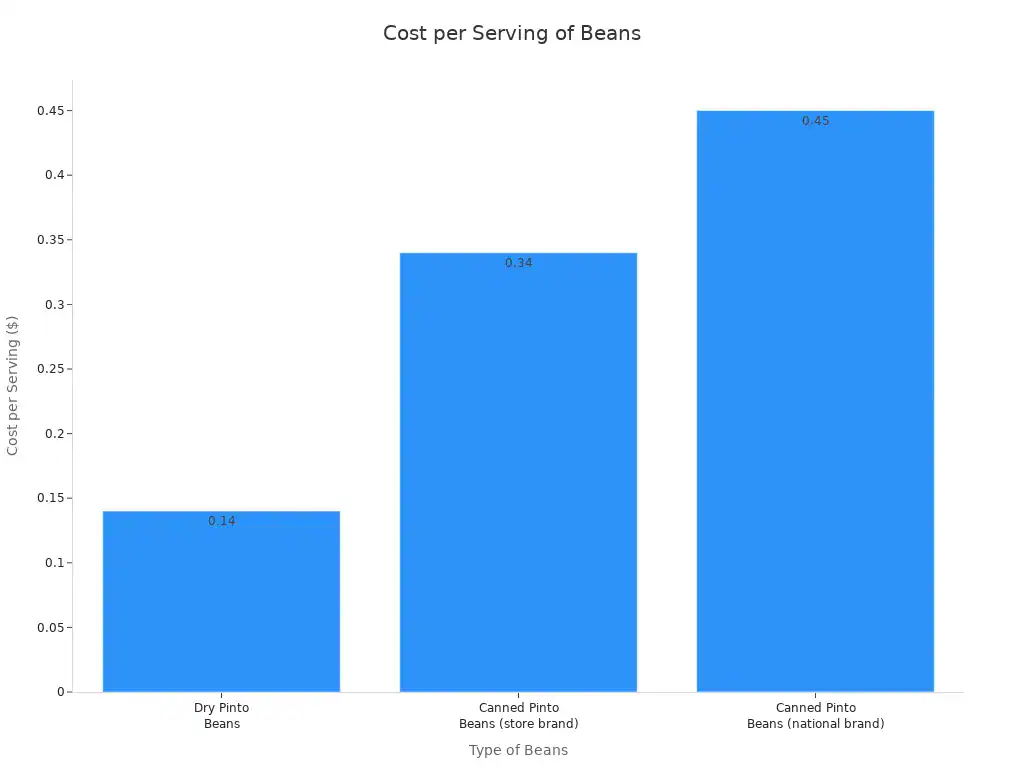
On average, a half-cup serving of legumes cooked from dry costs about 40% less than canned beans.
Creative Bean Recipes & Usage
You can easily add beans to many dishes. Use them in soups, stews, and salads. Make bean dips like hummus. Add them to tacos or burritos. You can even blend them into smoothies for extra protein and fiber. Experiment with different types of beans. This adds variety to your meals.
This bean nutrition comparison chart showed you the immense health benefits and versatility of beans. You now understand their powerful nutrition profile. Incorporate various beans into your diet. Experiment with different types of beans and cooking methods. Even small changes lead to significant health improvements. You take control of your health through informed dietary choices. Beans are a cornerstone of a healthy lifestyle, offering many benefits. This comparison empowers you.