


Experiencing right side pain above hip is common and can be perplexing. Much of this pain is benign, but it sometimes signals more serious issues. Understanding the causes of pain becomes crucial for your well-being. This guide helps you identify potential sources of your pain and directs you toward effective management. You should not self-diagnose serious conditions. Instead, use this information to have informed conversations with your healthcare provider about your specific causes of pain.
Key Takeaways
Right side pain above your hip has many causes. These include muscle problems, organ issues, and nerve problems.
Muscle strains, bursitis, and SI joint problems are common reasons for hip pain. Piriformis syndrome and sports hernias also cause pain.
Organ problems like appendicitis, IBS, kidney stones, ovarian cysts, and endometriosis can cause pain. These need different treatments.
Seek urgent medical help for severe pain, numbness, or loss of bladder control. These are serious signs.
You can manage mild pain with rest, ice, and simple exercises. See a doctor if your pain continues or gets worse.
Musculoskeletal Causes of Right Side Pain Above Hip

When you feel right side pain above hip, musculoskeletal issues are often the source. These problems involve your muscles, bones, ligaments, and tendons. Understanding these common causes helps you pinpoint what might be happening.
Muscle Strains and Sprains
Muscle strains and sprains happen when you overstretch or tear muscle fibers or ligaments. You might experience this as a sudden, sharp pain or a dull ache that worsens with movement. Common mechanisms for these injuries in your right hip area include:
Sudden contraction of a stretched muscle. This happens if you twist awkwardly or overexert yourself during exercise.
Falls can cause immediate injury.
Overstretching your muscles beyond their normal range.
Direct blows to the muscle.
Overuse due to repetitive movements. This leads to gradual weakening of the muscle or tendon over time.
Repetitive motions or not warming up before exercise also contribute to these injuries. Acute injuries occur instantly from events like falls or direct blows. Overuse injuries develop over time as continuous movement weakens affected muscles and soft tissues.
Greater Trochanteric Pain Syndrome (GTPS) and Bursitis
Greater Trochanteric Pain Syndrome (GTPS) describes pain on the outer part of your hip. This often includes bursitis. Bursitis means inflammation of a bursa. Bursae are small, fluid-filled sacs that cushion your bones, tendons, and muscles near your joints. When the bursa on the outside of your hip (the trochanteric bursa) becomes inflamed, you feel pain. This often presents as lateral hip pain or pain on the outer hip and upper thigh. Repetitive motions commonly cause this condition.
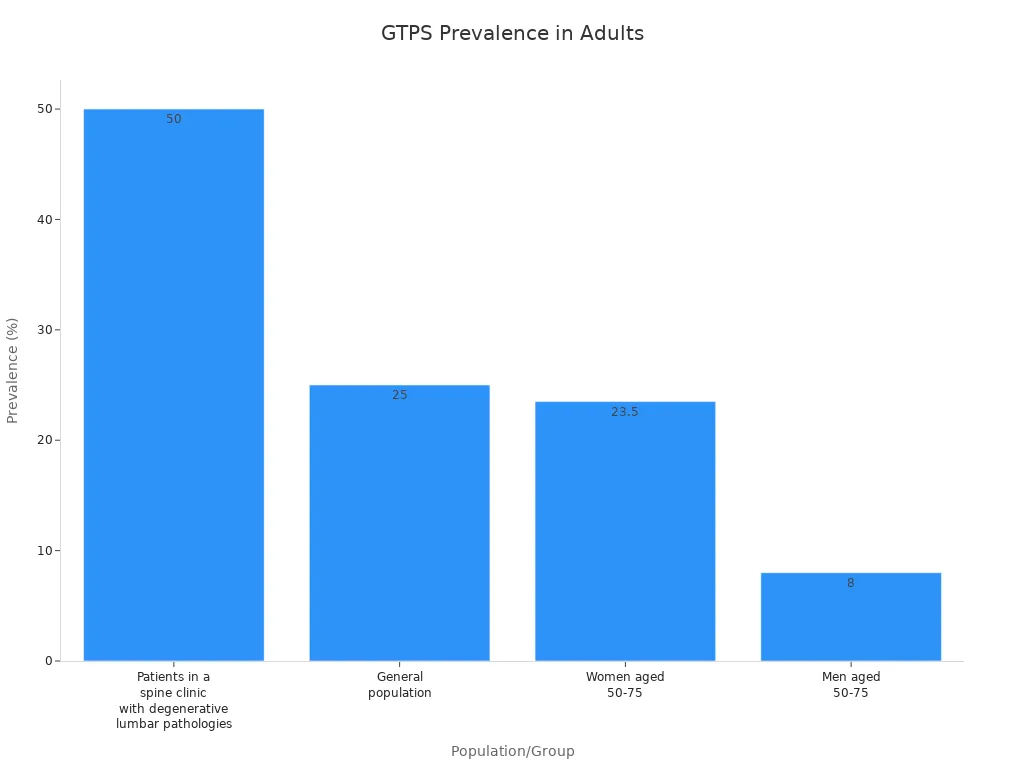
GTPS is quite common. Look at its prevalence in different adult groups:
Population/Group | Prevalence |
|---|---|
Patients in a spine clinic with degenerative lumbar pathologies | >50% |
General population | Up to 25% |
Women aged 50-75 | Up to 23.5% |
Men aged 50-75 | Up to 8% |
Several factors increase your risk for bursitis in your right hip:
Repetitive stress: Activities like running, stair climbing, bicycling, or prolonged standing.
Hip injury: Falls, bumps, or lying on one side for long periods.
Spine disease: Conditions like scoliosis or lumbar arthritis.
Leg-length inequality: This changes how you walk and can irritate the bursa.
Rheumatoid arthritis: This increases bursa inflammation.
Previous surgery: Surgery around the hip or prosthetic implants can irritate the bursa.
Bone spurs or calcium deposits: These can cause bursa irritation and inflammation.
Being female, older, and active: These are significant risk factors.
Tight iliotibial band (IT band): This is common in female athletes and can rub against the bursa.
Sacroiliac Joint Dysfunction
Your sacroiliac (SI) joints connect your sacrum (the triangular bone at the base of your spine) to your ilium (the large bones of your pelvis). Dysfunction occurs when these joints move too much or too little. This can cause pain in the right hip, lower back, or buttock.
Common causes of SI joint dysfunction include:
Arthritis: This is a primary cause. It includes ankylosing spondylitis and psoriatic arthritis.
Other inflammatory conditions: Crohn’s disease, ulcerative colitis, and reactive arthritis.
Pregnancy: Hormonal changes cause your SI joints to widen and rotate. Extra weight also adds wear on cartilage.
Hypermobility: Your ligaments connecting the sacrum to the pelvis are too loose. This leads to instability and excessive movement.
Hypomobility: You have insufficient movement in the joint. This causes fixation, pain, and stiffness.
Injury: Forceful impacts like falls, car accidents, or sports injuries can strain or tear SI joint ligaments.
Spinal fusion: If a spinal fusion extends to the sacrum, it can irritate your SI joints.
Uneven leg length: One leg being weaker or longer creates uneven movement and stress in your pelvis. This triggers pain.
Doctors diagnose SI joint dysfunction through several methods:
Physical exam: Your doctor performs provocative tests. These tests may indicate dysfunction.
Injection into the SI joint: A numbing medication, sometimes with cortisone, can be used. If your pain decreases after the injection, it may confirm the SI joint as the source of your pain.
Imaging: An arthrogram can show the joint’s condition. X-rays might show widening or erosive changes of the pubic symphysis.
When you have three or more positive provocation tests (Gaenslen, thigh thrust, distraction, compression, and sacral thrust), doctors can reasonably conclude SI joint dysfunction is present. This combined approach is quite accurate.
Clinical recommendation | Evidence rating | Comments |
|---|---|---|
Use the clinical decision rule of at least three out of five positive provocation tests to assist in diagnosing SI joint dysfunction. | B | Consistent results from prospective and blinded validity trials |
Confirmation of SI joint pain can be made by an image-guided anesthetic block to the SI joint. | B | Systematic reviews to identify diagnostic accuracy of SI joint injections |
Piriformis Syndrome
The piriformis is a small muscle deep in your buttock. It runs from your sacrum to the top of your thigh bone. Piriformis syndrome occurs when this muscle spasms or tightens. It can then compress the sciatic nerve that runs beneath it. This causes pain and other symptoms.
Typical symptoms of piriformis syndrome include:
Deep, Radiating Buttock Pain: You feel a persistent ache in one buttock. This often worsens when you sit for long periods. It may improve with standing or walking. The pain can range from a dull ache to sharp, electric-like sensations.
Pain Down the Back of Your Leg: Pain travels down the back of your thigh. It sometimes goes into your calf. The piriformis muscle compresses the sciatic nerve.
Increased Pain with Specific Movements: Your symptoms intensify with activities like climbing stairs, getting up from a seated position, walking up inclines, crossing your legs, or shifting weight while seated.
Morning Stiffness: You experience significant stiffness and discomfort first thing in the morning. This typically improves with gentle movement. It can return after inactivity.
Numbness and Tingling: You may feel periodic sensations of numbness, tingling, or ‘pins and needles’ in your buttock and down your leg. These sensations can fluctuate and worsen with prolonged sitting or certain positions.
Specific exercises can help alleviate piriformis syndrome symptoms:
Knee-to-shoulder piriformis stretch: Lie on your back. Lift and bend one leg. Pull the knee towards the opposite shoulder with the opposite hand. Hold for 30 seconds. Repeat three times on each side, twice daily.
Ankle-over-knee piriformis stretch: Lie on your back with bent knees. Cross one ankle over the opposite knee. Gently pull the thigh towards your chest. Hold for 30 seconds. Repeat three times on each side, twice daily. You can also do this seated.
Bridge: Lie on your back with bent knees. Contract your core. Lift your hips. Squeeze your buttocks. Slowly lower. Repeat 10 times per set, three sets, once or twice daily.
Side leg lifts: Lie on your side with stacked ankles. Tighten the top thigh. Slowly lift and lower the leg. Repeat 10 times on both sides per set, three sets, once or twice daily.
Clamshell: Lie on your side with stacked ankles and bent knees. Keep your heels together. Lift the top knee like an opening clamshell. Slowly lower. Repeat 10 times on both sides per set, three sets, once or twice daily. An exercise band can add resistance.
Facedown leg raises: Lie on your stomach with extended legs. Tighten thigh muscles. Lift one leg off the floor, keeping the knee locked. Slowly lower. Repeat 10 times on both sides per set, three sets, once or twice daily.
Standing small range squat: Stand with heels shoulder-width apart. Hinge your hips. Push your buttocks back into a comfortable squat. Slowly return to standing. Repeat 10 times per set, three sets, once or twice daily.
Other helpful activities include cardio exercises like walking or using an elliptical machine. Core exercises such as crunches, leg lifts, and planks strengthen your core. Using a foam roller or tennis ball can release trigger points. Yoga and Pilates offer many beneficial stretches.
Core Muscle Injury (Sports Hernia)
A core muscle injury, often called a sports hernia, involves tears or strains in the muscles or tendons of your lower abdomen or groin. This injury is common in athletes. It relates to athletic activities involving rapid, forceful movements. You often feel pain in your groin or lower abdomen.
Many athletic activities commonly lead to this injury:
Sports: Soccer, hockey, football, tennis, golf, baseball, basketball, rugby. These involve rapid changes in direction, twisting, and turning.
Movements: Quick acceleration, deceleration, kicking, twisting, lateral movement, sprinting, sudden acceleration and deceleration.
Repetitive actions: Twisting, turning, or kicking movements. Hard or long kicks in soccer are a specific example.
Doctors diagnose core muscle injury using several indicators:
Visual inspection: Your doctor looks for bruising or swelling in the groin area.
Palpation: Your doctor feels for tenderness over key anatomical landmarks. These include the pubic symphysis, pubic tubercles, rectus abdominis tendon, conjoint tendons, and adductor longus tendons.
Specific criteria: Doctors often use three out of five criteria for diagnosis. These include pinpoint tenderness over the pubic tubercle, palpable tenderness over the deep inguinal ring, pain and/or dilation of the external ring without obvious hernia, pain at the origin of the adductor longus tendon, or dull, diffuse groin pain radiating to the perineum, inner thigh, or across the midline.
Maneuvers: Coughing or performing a Valsalva maneuver can reproduce groin pain. Resisted sit-ups indicate rectus abdominis or conjoint tendon pathology. Lateral bends against resistance isolate oblique muscles. Pain with passive hip abduction or resisted hip adduction suggests adductor longus tendon pathology.
Imaging: Radiographs may show abnormal widening or erosive changes of the pubic symphysis. MRI can reveal tears of the aponeurotic plate, fluid undermining the aponeurosis, abnormal marrow signal in pubic bones, and partial or complete tears of the adductor musculature.
You might experience abdominal or groin pain. This pain is heightened during and after activity. You feel minimal pain at rest. Exertion (sprinting, kicking, sidestepping, lifting) increases your pain or discomfort. Coughing, sneezing, or turning over in bed also increases pain. The pain can be unilateral or bilateral. It can be fleeting or move from your abdomen to your groin or thigh.
Digestive and Organ-Related Pain in the Lower Right Abdomen
Sometimes, the causes of pain above your hip come from your internal organs. These issues can range from common digestive problems to more serious conditions. You need to understand these potential sources of pain in the lower right abdomen.
Appendicitis
Appendicitis is a serious condition. It happens when your appendix becomes inflamed and infected. This requires immediate medical attention. You should not delay seeking help if you suspect appendicitis. The pain often starts suddenly. It can even wake you from sleep. This pain begins as a dull ache but becomes sharp and severe within 4 to 48 hours. You might first feel pain near your navel. Then, it moves to the lower right abdomen. This is a classic sign.
The pain worsens with movement, deep breathing, coughing, or sneezing. It can become so severe that you limit your movement. You might bend or curl into a fetal position to find relief. Other symptoms often come with this abdominal pain. You might experience fever, loss of appetite, nausea, and vomiting. Abdominal bloating or a distended belly can also occur, especially in young children. Some people have constipation or diarrhea. If the pain spreads all over your abdomen, it could mean your appendix has ruptured. This is a medical emergency.
Appendicitis can affect anyone. However, it is most common in certain age groups. The highest incidence of appendicitis in the United States occurs in people aged 10-19 years. Globally, the number of cases peaks in the 15-19 year age group for both males and females. Appendicitis is less common in very young children (under 5) and older adults (over 50).
Irritable Bowel Syndrome (IBS)
Irritable Bowel Syndrome (IBS) is a common disorder. It affects your large intestine. IBS can cause pain in the lower right abdomen, along with other digestive symptoms. These include cramping, abdominal pain, bloating, gas, and changes in bowel habits. You might have diarrhea, constipation, or both. IBS does not cause changes in bowel tissue or increase your risk of colorectal cancer.
Many adults experience IBS. The global prevalence of IBS ranges from 7% to 18%. Studies using different diagnostic criteria show varying rates.
Diagnostic Criteria | Pooled Prevalence |
|---|---|
Rome III | 9.2% |
Rome IV | 3.8% |
IBS affects women more often than men. About 12.0% of women experience IBS, compared to 8.6% of men.
Managing IBS often involves dietary changes. No single diet works for everyone. You need to find your personal triggers. Working with a nutritionist helps identify these. Here are some common dietary recommendations:
Increase fiber and fluids: High-fiber foods and plenty of fluids often help. Soluble fiber, found in beans, fruit, and oat products, is especially helpful for constipation. Increase fiber slowly to avoid gas and bloating.
Avoid certain foods: Carbonated and alcoholic beverages, caffeine, raw fruit, and vegetables like cabbage, broccoli, and cauliflower can cause gas and bloating.
Consider gluten: Reducing or eliminating gluten may ease diarrhea for some people.
Try a low FODMAP diet: FODMAPs are certain carbohydrates that can cause abdominal pain, bloating, and gas. Avoiding high-FODMAP foods for 6-8 weeks can help. Then, you reintroduce them one by one to find your specific triggers. High-FODMAP foods include apples, mangoes, garlic, onions, dairy, wheat, and artificial sweeteners.
Kidney Stones
Kidney stones are hard deposits. They form inside your kidneys. These stones can cause severe pain. The pain often starts in your flank area. This is the side of your back, just below your ribs. Initially, you might feel a dull ache or vague discomfort. As the stone moves from your kidney towards your bladder, the pain shifts. It radiates downwards to your lower abdomen, side, groin area, or even your inner thigh. This radiating pain follows the path of the ureter.
Classic kidney stone pain is sharp or colicky. It appears suddenly and comes in waves. These waves can last 20-60 minutes before subsiding and then recurring. The pain can be excruciating. It can be intermittent or continuous.
Kidney stones form from various substances. Common types include:
Calcium oxalate
Calcium phosphate
Uric acid
Cystine
These stones form when free ions in your urine create microscopic particles (nucleation). These particles then clump together (aggregation) and grow larger (crystal growth). Factors like too much of certain substances in your urine, low urine volume, and changes in urine pH influence this process. For example, very acidic urine can lead to uric acid stones. It can also make calcium oxalate stones more likely.
Ovarian Cysts and Endometriosis
These conditions are specific to biological females. They can cause pain in the lower right abdomen.
Ovarian Cysts
Ovarian cysts are fluid-filled sacs. They develop on or inside an ovary. Many cysts are harmless and go away on their own. However, some can cause significant pain. If a cyst forms on your right ovary, you will feel right-sided ovary pain. This pain is typically in your lower abdomen on the same side as the cyst. It can range from a dull ache to a sharp, stabbing sensation. The pain may also radiate to your lower back or thighs.
You might experience sudden and severe pain if a cyst ruptures. Another cause of severe pain is ovarian torsion. This happens when the ovary twists around its supporting tissues. Ovarian torsion can cut off blood supply to the ovary. This is a medical emergency. Nausea and vomiting often accompany severe pain, especially with ovarian torsion.
Endometriosis
Endometriosis is a condition where tissue similar to the lining of your uterus grows outside your uterus. This tissue can grow on your ovaries, fallopian tubes, and other pelvic organs. It can cause chronic pain. This pain often worsens during your menstrual period. Endometriosis can cause pain in the lower right abdomen if the growths are on the right side.
Endometriosis is a common condition. It affects about 10% of women globally. The prevalence can be even higher in certain groups. For example, up to 50% of individuals experiencing infertility may have endometriosis. Among women with pelvic pain, the prevalence of deep endometriosis can be as high as 34.2%.
Nerve-Related and Other Causes of Pain
Sometimes, nerve issues or other conditions cause your right side pain above your hip. These problems can be tricky to identify. You need to understand their specific symptoms.
Sciatica
Sciatica happens when something irritates or compresses your sciatic nerve. This nerve runs from your lower back down your leg. You feel pain along its path. This pain can affect your right leg and hip. Common causes include:
Herniated disks
Degenerative disk disease
Spinal stenosis
Foraminal stenosis
Spondylolisthesis
Osteoarthritis
Injuries
Pregnancy
Tumors, cysts, or other growths
Conus medullaris syndrome
Cauda equina syndrome
You might feel a sharp, shooting pain, numbness, or tingling. This pain often starts in your lower back and goes down your right leg.
Meralgia Paresthetica
Meralgia Paresthetica causes numbness, tingling, or burning sensations in your outer thigh. This happens when the lateral femoral cutaneous nerve gets compressed. This nerve is purely sensory. It does not affect your muscle strength. You will not have movement problems. You only feel unusual sensations on your skin. Distinguishing symptoms include:
Burning pain on the outer thigh.
Numbness and tingling on the outer leg.
Sensitivity to light touch and heat in the affected area.
IlioTibial band Syndrome that does not respond to traditional therapy.
Pinching pain in the hip crease during exercises like squatting.
Hernias
A hernia occurs when an organ pushes through an opening in the muscle or tissue that holds it in place. You can develop a hernia in your groin area. This can cause pain above your hip. You might notice a bulge. This bulge can become more noticeable when you cough or strain. The pain can be dull or sharp. It often worsens with activity.
Shingles
Shingles is a viral infection. It causes a painful rash. The virus that causes chickenpox also causes shingles. It can reactivate later in life. If shingles affects nerves on your right side, you will feel pain in that area. Early signs of shingles affecting the right side of your body can include flu-like symptoms. You might have chills and a general feeling of being unwell. You may also feel very tired. Key early skin sensations include tingling and burning feelings. These often concentrate around your trunk. They can appear days before the rash. You might also have unusual itching without a visible rash. Heightened sensitivity to touch in specific areas is also common. Even clothing or a breeze can cause discomfort. Localized pain often comes before the characteristic rash. This signals potential nerve injury before any visible signs appear. You might also experience fever, headaches, or an upset stomach before the rash appears.
When to Seek Medical Help and Diagnosis
Understanding when to seek medical help for your right side pain above hip is very important. While many causes are not serious, some require immediate attention. You need to know the signs.
Red Flag Symptoms for Urgent Care
You should seek urgent medical care if you experience certain “red flag” symptoms. These signs suggest a serious condition. If you have sudden, intense, or worsening pain that rest does not relieve, this could indicate a spinal fracture, infection, or tumor.
Numbness, tingling, or weakness in your limbs along with back pain suggests nerve involvement. This could be a herniated disc. A critical sign is sudden loss of bowel or bladder control. This points to cauda equina syndrome. It needs immediate intervention.
Pain in your abdomen combined with fever, localized tenderness, swelling, warmth, or redness points to a spinal infection. Unexplained weight loss with pain in your abdomen could signal spinal tumors or infections. Any changes in bowel or bladder control, like incontinence or retention, can indicate damage to your spinal cord. These symptoms may appear gradually or suddenly. They suggest conditions that can lead to lower body paralysis if not treated.
Consulting Your Doctor for Persistent Pain
If your pain persists, you should consult your doctor. Even if you do not have red flag symptoms, ongoing discomfort needs evaluation. Your doctor can help you understand the source of your pain. They will guide you toward proper treatment.
Common Diagnostic Tests for Right Hip Pain
To diagnose pain in the lower right abdomen or hip, doctors use several tests. A comprehensive patient history is the primary source of information. Your doctor will ask about your symptoms. A physical exam includes inspecting for swelling or deformity. It also checks your range of motion.
Doctors palpate for tenderness. They perform orthopedic assessments. These tests help identify the cause of your pain. X-rays of your hip and pelvis are often the first step. They rule out fractures. They also help identify osteoarthritis. If X-rays are unclear, your doctor may consider an MRI or CT scan. MRI is very sensitive for detecting joint issues.
It is the gold standard for evaluating cartilage. Magnetic resonance arthrography is the test of choice for labral tears. Ultrasonography is useful for suspected bursitis or joint fluid. It can also guide injections. Specific physical tests like the FABER hip test or the Hip Lag Sign can also help diagnose hip problems.
Specialist Referrals
Your doctor may refer you to a specialist. This happens if your condition requires more specific expertise. You might see an orthopedic surgeon for bone or joint issues. A gastroenterologist can help with digestive problems in your abdomen. A neurologist handles nerve-related pain.
You now understand the diverse reasons for right side pain above hip. These causes range from musculoskeletal issues to organ-related problems and nerve conditions. Accurate diagnosis is crucial for effective treatment. While you can manage some causes at home, persistent or severe pain, especially with “red flag” symptoms, warrants professional medical evaluation. Be proactive in your health. Work with healthcare providers to find the most effective treatment plan for your specific situation.