

Keep a small stash of reliable 312 and P13 cells plus a matched charger to avoid sudden silence.
Carry zinc‑air disposables for long shelf life and Ni‑MH or silver‑zinc rechargeables for daily convenience.
Choose chargers with proper charge control, USB‑C or internal batteries for portability, and clear LED status indicators.
Match battery chemistry, size, and terminal orientation to the hearing aid for trouble‑free use.
| Power One ACCU Plus Size 312 Rechargeable Hearing Aid Batteries |

| Reliable Long‑Life | Battery Size / Type: Size 312 (Ni-MH rechargeable) | Rechargeability / Power Source: Rechargeable (Ni‑MH) | Capacity / Runtime (where stated): Typical capacity 22 mAh | VIEW LATEST PRICE | Read Our Analysis |
| Amazon Basics Hearing Aid Batteries Size 312 (60-Pack) |

| Best Value | Battery Size / Type: Size 312 (Zinc‑Air disposable) | Rechargeability / Power Source: Non‑rechargeable (Zinc‑Air primary cells) | Capacity / Runtime (where stated): Not stated (Zinc‑Air, 1.45 V; performance described as “clear sound throughout battery life”) | VIEW LATEST PRICE | Read Our Analysis |
| P13 Rechargeable Hearing Aid Batteries & Charger Kit |

| Portable Power Kit | Battery Size / Type: P13 / 13-size equivalent (silver‑zinc rechargeable) | Rechargeability / Power Source: Rechargeable (silver‑zinc) with included charger | Capacity / Runtime (where stated): 28 mAh; runtime 8 hr (Bluetooth) / 16–20 hr (non‑Bluetooth) | VIEW LATEST PRICE | Read Our Analysis |
| Starkey Legacy Charger for Evolv AI Hearing Aids |

| Premium Compatibility | Battery Size / Type: Uses Starkey rechargeable hearing aid batteries (charger for Evolv AI; fits Starkey rechargeable models) | Rechargeability / Power Source: Charger for rechargeable hearing aids (charger unit; some models include internal battery) | Capacity / Runtime (where stated): Not applicable to cell mAh (charger product); charger maintains hearing aid runtime and can include internal battery for portable charges (Premium) | VIEW LATEST PRICE | Read Our Analysis |
| Wokyo Size 312 Rechargeable Hearing Aid Batteries + Charger |
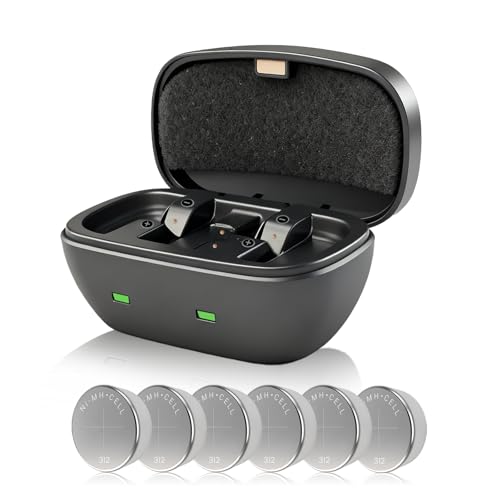
| Compact Travel Pack | Battery Size / Type: Size 312 (silver‑zinc rechargeable) | Rechargeability / Power Source: Rechargeable (silver‑zinc) with included charger | Capacity / Runtime (where stated): 15 mAh; runtime 4 hr (Bluetooth) / 8–10 hr (non‑Bluetooth) | VIEW LATEST PRICE | Read Our Analysis |
More Details on Our Top Picks
Power One ACCU Plus Size 312 Rechargeable Hearing Aid Batteries
In case you rely on small, rechargeable 312 batteries and want a fast-charging, mercury-free option, the Power One ACCU Plus Size 312 is aimed at users who want a greener, reusable alternative without sacrificing compactness or build quality. You get a 2-pack of Ni‑MH cells (22 mAh) in corrosion-free stainless steel housings, made in Germany through Varta. They’re lightweight (0.6 g), compact (7.9 mm x 3.6 mm), and fast-chargeable, but won’t work with Oticon aids or Z‑Power stations. They contain no heavy metals, undergo strict safety checks, and carry seller warranty info; rated 3.9/5 by users.
- Battery Size / Type:Size 312 (Ni-MH rechargeable)
- Rechargeability / Power Source:Rechargeable (Ni‑MH)
- Capacity / Runtime (where stated):Typical capacity 22 mAh
- Charging / Charge Time / Indicators:Fast chargeable (no charger included)
- Safety / Materials:Stainless steel housing; free of mercury, cadmium, lead, silver; made in Germany; strict safety checks
- Environmental / Cost Benefit:Rechargeable design reduces single‑use battery waste
- Additional Feature:Made in Germany
- Additional Feature:Corrosion‑free stainless housing
- Additional Feature:Not Oticon/Z‑Power compatible
Amazon Basics Hearing Aid Batteries Size 312 (60-Pack)
In case you rely on size 312 zinc-air cells and want a reliable, cost-effective supply, the AmazonBasics 60-pack delivers consistent 1.45 V performance and a four-year shelf life. You’ll get brown-tab size 312 batteries that provide clear sound throughout their useful life. They’re mercury-free and meet child-resistant packaging rules under CPSC 16 CFR PART 1700.15/1700.20, so safety won’t be an afterthought. The package is child-safe; you’ll need scissors to access cells. Should you desire a straightforward, economical option for stocking spares, this Amazon brand 60-pack balances performance, longevity, and regulatory compliance without fuss.
- Battery Size / Type:Size 312 (Zinc‑Air disposable)
- Rechargeability / Power Source:Non‑rechargeable (Zinc‑Air primary cells)
- Capacity / Runtime (where stated):Not stated (Zinc‑Air, 1.45 V; performance described as “clear sound throughout battery life”)
- Charging / Charge Time / Indicators:Not applicable (disposable batteries; no charging)
- Safety / Materials:Mercury‑free; child‑resistant packaging compliant with CPSC rules
- Environmental / Cost Benefit:Long shelf life (4 years) reduces waste from unused stock; mercury‑free
- Additional Feature:60‑pack value bundle
- Additional Feature:4‑year shelf life
- Additional Feature:Child‑resistant packaging
P13 Rechargeable Hearing Aid Batteries & Charger Kit
In case you want a compact, eco-friendly way to keep P13 hearing aids powered all day, the P13 Rechargeable Batteries & Charger Kit is a smart choice because it converts disposable P13 cells into rechargeable silver‑zinc batteries that run up to 8 hours for Bluetooth aids (16–20 hours for non‑Bluetooth) and charge in about 4 hours via USB‑C. The kit includes four 28 mAh cells and an ABS charging case that’s lightweight and durable. Red/green LEDs show charge status; continuous green before insertion means poor contact — flip orientation (positive forward). Use the same-brand charger, keep contacts clean and dry, and don’t reverse terminals.
- Battery Size / Type:P13 / 13-size equivalent (silver‑zinc rechargeable)
- Rechargeability / Power Source:Rechargeable (silver‑zinc) with included charger
- Capacity / Runtime (where stated):28 mAh; runtime 8 hr (Bluetooth) / 16–20 hr (non‑Bluetooth)
- Charging / Charge Time / Indicators:Charger included; USB‑C; full charge ~4 hours; red/green charge LEDs
- Safety / Materials:ABS charger; batteries designed to resist leakage and damage; keep surfaces clean/dry
- Environmental / Cost Benefit:Rechargeable conversion reduces repeat purchase of disposables; eco‑friendly
- Additional Feature:Converts disposable P13
- Additional Feature:Type‑C charging port
- Additional Feature:LED charge status
Starkey Legacy Charger for Evolv AI Hearing Aids
Should you rely on Evolv AI rechargeable Starkey hearing aids and want hassle-free, on-the-go power, the Starkey Legacy Charger is a smart pick — Premium models even pack an internal lithium-ion battery so you can top up without plugging in. It fits standard Starkey rechargeable models (not custom) and shows charging status with front LEDs; Premium units add rear LEDs for charger battery level. Auto power on/off simplifies daily use, and standard chargers double as Dry-Aid kits to maintain performance. Standard models need external power; Premium ones offer portable charging. Rated 3.9/5 from eight reviews; 30-day returns apply.
- Battery Size / Type:Uses Starkey rechargeable hearing aid batteries (charger for Evolv AI; fits Starkey rechargeable models)
- Rechargeability / Power Source:Charger for rechargeable hearing aids (charger unit; some models include internal battery)
- Capacity / Runtime (where stated):Not applicable to cell mAh (charger product); charger maintains hearing aid runtime and can include internal battery for portable charges (Premium)
- Charging / Charge Time / Indicators:Charger unit with LED charge indicators; auto on/off; Premium models show charger battery level
- Safety / Materials:Charger/dry‑aid functionality to protect devices; auto power on/off for safe handling; manufacturer warranty/support available
- Environmental / Cost Benefit:Recharges hearing aids and includes dry‑aid function to prolong device life (indirect environmental benefit)
- Additional Feature:Auto power on/off
- Additional Feature:Dry‑Aid kit functionality
- Additional Feature:Internal battery (Premium)
Wokyo Size 312 Rechargeable Hearing Aid Batteries + Charger
In case you want a compact, budget-friendly rechargeable option for traditional (non-Bluetooth) hearing aids, Wokyo’s Size 312 kit is a strong fit. You get six 15 mAh silver‑zinc 312 cells and a USB‑C ABS charger that tops cells in about four hours. Expect roughly 8–10 hours runtime for non‑Bluetooth aids (around four hours for Bluetooth, so avoid high‑drain models). LEDs show red while charging and green once finished; should green stay on, reseat batteries to confirm contact. Follow safety tips—clean, dry terminals and use the same‑brand charger—to prolong life and cut disposable battery waste.
- Battery Size / Type:Size 312 (silver‑zinc rechargeable)
- Rechargeability / Power Source:Rechargeable (silver‑zinc) with included charger
- Capacity / Runtime (where stated):15 mAh; runtime 4 hr (Bluetooth) / 8–10 hr (non‑Bluetooth)
- Charging / Charge Time / Indicators:Charger included; USB‑C; full charge ~4 hours; red/green LEDs (note about continuous green meaning poor contact)
- Safety / Materials:ABS charger; silver‑zinc chemistry resists leakage; keep surfaces clean/dry; safety notes about correct orientation
- Environmental / Cost Benefit:Rechargeable conversion reduces single‑use waste and purchase frequency; economical
- Additional Feature:6‑battery kit included
- Additional Feature:Compact USB‑C charger
- Additional Feature:Not ideal for Bluetooth aids
Factors to Consider When Choosing Hearing Aid Batteries Chargers
Upon selecting hearing aid batteries and chargers, you’ll want to compare battery chemistry, capacity/runtime, and how fast a charger replenishes cells. Check charger compatibility with your hearing aid model and whether the unit’s size and portability fit your lifestyle. Balancing these factors helps you get reliable power without unnecessary bulk.
Battery Chemistry Type
Although battery chemistry might seem technical, it directly affects how your hearing aids perform, how long they run, and what charger you need. You’ll choose between single‑use zinc‑air and several rechargeable chemistries—Ni‑MH, silver‑zinc, and lithium‑ion—each with different voltages, recharge behavior, and safety needs. Zinc‑air gives high energy density and long shelf life but won’t work with chargers. Rechargeables cut waste and require chargers matched to their chemistry: correct charging current, voltage limits, temperature monitoring, and proper termination prevent overcharge or damage. Ni‑MH tolerates many cycles but self‑discharges faster; silver‑zinc is compact with good conductivity yet sometimes shorter cycle life; Li‑ion offers long cycle life but is less common in tiny cells. Match chemistry to your charger and priorities.
Capacity And Runtime
Because capacity (mAh) sets the ceiling for how long a hearing aid runs, pick batteries and a charger that match your usage patterns. Higher capacities (roughly 15–28 mAh for button cells) proportionally extend hours of use, but actual runtime depends on your aid’s power draw—Bluetooth or streaming can roughly halve runtime. Choose a charger that fully charges cells to rated capacity and clearly indicates completion to avoid under‑charging. Expect full charge times around 3–4 hours for small cells; quicker charging reduces downtime but can shorten cell life when the charger lacks proper control. To keep runtime steady over the battery’s life, avoid deep discharge, keep contacts clean, and follow recommended charge/discharge practices so usable capacity doesn’t decline prematurely.
Charger Compatibility
Compatibility matters: pick a charger that matches your battery’s chemistry, size, capacity range and power interface so cells charge correctly and safely. You’ll want a charger designed for the specific chemistry—Ni‑MH, silver‑zinc or zinc‑air recharge conversion—because voltages and algorithms differ; the wrong charger can damage cells. Confirm the physical fit for sizes like 312 or P13 and correct terminal orientation to avoid failed charging or polarity issues. Check the supported capacity range (mAh): high‑capacity cells might need longer, controlled cycles and some chargers cap charge time. Verify the power interface (USB‑C, micro‑USB or mains) and whether the unit offers internal backup for portable use. Prefer clear charge indicators and safety features—short‑circuit, overcharge and temperature monitoring—matched to your chemistry.
Charging Speed Options
Whenever you’re choosing a charger, balance how fast you need a full charge against the long‑term health of the cells—faster chargers cut downtime but can wear small Ni‑MH or silver‑zinc hearing‑aid cells faster provided they don’t use proper thermal and voltage controls. You’ll prefer low‑current or trickle charging for best cycle life; gentler rates suit small cells (<30 mAh) and follow C‑rate guidance (often C/5–C/10). Smart chargers that monitor voltage, temperature, and state of charge are ideal because they taper current and switch to maintenance to prevent overcharge. Rapid top‑ups are handy for immediate needs—an hour for several hours of use—but you should follow with a full controlled charge to preserve capacity. Match charger output to the battery chemistry and mAh rating for reliable longevity.
Portability And Size
Whenever you carry chargers and spare batteries daily, size and weight matter as much as charging speed — pick units that fit your usual pocket, purse, or travel case so they stay with you and don’t add unnecessary bulk. Choose a charger and batteries whose combined weight and dimensions suit your carrying method to keep them handy and comfortable. Favor compact, low-profile cases—credit-card to palm-sized—that tuck into small compartments or sit neatly on crowded bedside tables. Verify power options: USB-C or built-in batteries let you top up on the go without bulky adapters. For travel, favor units with internal rechargeable cells or multiple charges per fill so you can go days off-grid. Finally, inspect bay count and layout and confirm terminals are covered to avoid shorts.
Safety And Protections
Size and convenience matter, but you also need chargers and batteries that protect both your hearing aids and you. Choose chargers with overcharge protection—automatic shutoff or current‑limiting circuitry—to prevent Ni‑MH, silver‑zinc, or lithium cells from degrading or overheating. Look for short‑circuit and reverse‑polarity protection so sparks, rapid heating, or damage won’t occur should contacts touch or a cell be inserted backward. Prefer units with temperature monitoring or a thermal cutoff to halt charging whenever cells get too hot. Make sure the charger uses the correct charge algorithm and low‑mA current for tiny 10–30 mAh hearing‑aid cells to avoid stress or poor conditioning. Finally, verify corrosion‑resistant terminals and appropriate safety certifications to reduce leakage, fire, or shock risk.
Environmental Impact
Sustainability matters whenever you pick hearing‑aid batteries and chargers, because your choice affects waste, toxic exposure, and the product’s total carbon footprint. Choose rechargeable chemistries like Ni‑MH or silver‑zinc to replace dozens of disposables over their lifetime, cutting landfill and recycling burdens. Zinc‑air disposables have long shelf lives (3–5 years), but they still add heavy‑metal disposal risk whenever not recycled.
Prefer chargers and housings made from durable, repairable materials or with replaceable cells to extend product life and lower embodied carbon versus disposable all‑in‑one units. Pick mercury‑ and cadmium‑free batteries and follow proper end‑of‑life recycling to reduce soil and groundwater contamination. Regularly recharge instead of replacing disposables to reduce material throughput and net manufacturing and transport energy.