

A loose box of supplies under your seat rarely helps much when you need a bandage quickly. Your car first aid kit needs a case that fits your storage space, keeps supplies organized, and matches the way you travel, whether your miles are daily commutes, family drives, or backcountry routes. The seven options below range from glove-box-friendly hard shells to larger kits built for shared vehicles and outdoor gear.
The Shortlist At A Glance

Swiss Safe 2-in-1 348 Pcs Large First Aid Kit

First Aid Only 90755 ANSI A First Aid Kit

Tamfile Fireproof Car Emergency Kit with Fire Blanket

VRIEXSD 400 Piece Large First Aid Kit

First Aid Only 91248 50-Person First Aid Kit
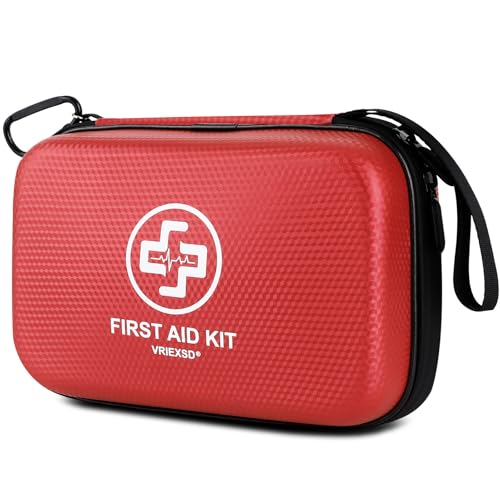
VRIEXSD Premium 320-Piece First Aid Kit
Inside Each Recommended Option
Your trunk or cargo area benefits from a kit that keeps its shape rather than collapsing under loose gear. Swiss Safe uses an impact-absorbing hard case, and its two-way opening gives you access from either side, a useful detail in a packed vehicle.
The 348-piece main kit also includes a separate 32-piece mini kit for your glove box, daypack, or purse. For family trips with more than one vehicle, that split setup may feel more practical than carrying a single large bag everywhere.
Useful Strengths
- Hard case helps supplies stay contained beside roadside gear.
- Dual-access opening supports quicker access in tight storage spaces.
- Separate mini kit gives your second vehicle basic coverage.
- Organized interior reduces rummaging during everyday scrapes.
Things To Consider
- The main hard case needs more cargo-room planning than a compact pouch.
- Your glove box must have room for the included mini kit.
A metal case makes the First Aid Only 90755 a sensible match for a work van, office vehicle, or shared garage. Unlike Swiss Safe’s larger 348-piece format, this 71-piece kit keeps the focus on core supplies in a smaller carry case with a handle.
You get fabric and plastic bandages, gauze, gloves, scissors, tweezers, antiseptic towelettes, ointment, and burn cream packets. Your storage spot should be a vehicle compartment, travel bag, or desk drawer where the metal case can sit flat.
Useful Touches
- Metal case suits desk drawers and vehicle compartments.
- Carry handle makes transfers between work areas easier.
- Core wound-care supplies cover routine minor incidents.
Worth Noting
- The 71-piece count suits basic preparedness rather than larger group supply needs.
Who It Suits Best
Your work vehicle or home office gains a compact kit with a defined everyday supply mix.
Where Another Pick Suits Better
First Aid Only 91248 50-Person First Aid Kit suits your larger crew vehicle with more shared supplies.
Tamfile goes beyond a standard roadside medical pouch with a 40 x 40-inch fire blanket, compass, whistle, emergency blanket, and CPR shield. A CPR shield is a barrier intended for rescue-breathing situations, while the MOLLE attachment system lets you secure the bag to compatible gear.
The silicone-coated fiberglass exterior is rated for heat up to 2200°F, with waterproof coating and waterproof zippers. For camping vehicles and off-road setups, the adjustable shoulder strap and 13 x 6.3 x 9.9-inch shape may justify the larger carry footprint.
Everyday Advantages
- 555 pieces support broad vehicle and camp preparedness.
- Transparent pockets make your supplies easier to locate.
- Shoulder strap helps during walks from vehicle to campsite.
- MOLLE system attaches to compatible packs and gear.
- Reflective strips help you spot the bag in dim conditions.
Trade Offs
- Its 13-inch length needs a dedicated cargo or seat-back location.
- MOLLE attachment needs compatible webbing to serve its intended purpose.
- The expanded survival assortment may exceed your needs for city commuting.
Your glove box has limited real estate, and this Mini First Aid Kit is built around that constraint. At 6.4 x 4.9 x 2.7 inches and 0.73 pounds, it takes far less room than Tamfile’s larger outdoor bag.
The waterproof EVA shell, internal sections, zippers, and included carabiners make it easy to store in a vehicle or hang from a backpack. Its 150-plus supplies include bandages, gloves, povidone-iodine pads, metal tweezers, and a tourniquet.
What Makes Sense
- Compact dimensions work well in smaller vehicles.
- Carabiners give you an alternate backpack carry option.
- Hard EVA exterior protects the kit’s organized layout.
- Interior sleeves separate supplies for faster selection.
- Low weight suits day trips and travel bags.
- Metal tweezers add a reusable tool to the kit.
Minor Gripes
- The small case leaves less room for adding bulky personal supplies.

VRIEXSD’s 400-piece kit lands between the small Mini First Aid Kit and Tamfile’s larger 555-piece format. The 9.4 x 3.9 x 6.8-inch bag has labeled, divided sections, helping you separate bandages, emergency blanket, tourniquet, and first aid guide.
At 2.64 pounds, it makes more sense in a trunk, under-seat organizer, or larger center console than in a tiny glove box. Your family vehicle benefits most when several people share one organized supply bag during sports travel or longer drives.
The Upside
- 400-piece assortment supports a shared family vehicle.
- Labeled compartments reduce searching through loose supplies.
- Emergency blanket adds a useful travel-oriented item.
- Bag can hang from compatible backpack storage.
Room For Improvement
- Its 2.64-pound weight is less convenient for everyday handbag carry.
- Your compact car needs a measured storage spot before purchase.
Made For
Your family car, sports travel vehicle, or trunk setup benefits from its larger organized supply selection.
Consider Something Else When
Mini First Aid Kit suits your compact car or daypack where every inch matters more.
Shared vehicles need clear organization more than another soft pouch, and First Aid Only 91248 takes a cabinet-style approach. Its durable plastic case has slide latches, a clear cover, and individual compartments, so you can see supplies without opening every section.
The 260-piece set is intended for up to 50 people and includes bandages, gauze, butterfly closures, burn cream, antiseptic towelettes, gloves, scissors, and tweezers. For a fleet van, workshop vehicle, or large household, the visible layout may make regular supply checks less tedious.
What Helps Most
- Clear cover lets you locate supplies before opening the case.
- Individual compartments keep shared supplies separated.
- Slide latches support straightforward access.
- 260 pieces suit larger group environments.
- Ergonomic handle helps carry the case between locations.
Points To Note
- The 50-person capacity can be excessive for a single commuter vehicle.
- Compartmented plastic case needs a flatter storage area than a flexible bag.
- Your personal supplies may need separate space within the case.
VRIEXSD Premium 320-Piece First Aid Kit gives you a middle-sized hard-shell format for a car that also sees weekend trips. Its 8.65 x 5.88 x 3.54-inch EVA case sits between the Mini First Aid Kit and the larger 400-piece VRIEXSD bag.
Water-resistant double zippers, a water-resistant EVA surface, labeled sleeves, and carabiners make the setup suited to your trunk, camping bin, or backpack. The 320-plus supplies include bandages, povidone-iodine pads, metal tweezers, and tourniquets, which covers a wider assortment without moving into the bulk of a group kit.
What It Does Well
- 320-plus pieces balance supply range and travel-friendly size.
- Labeled sleeves help your family find supplies quickly.
- Double zippers help keep the hard-shell case closed in transit.
- Carabiners create a convenient backpack attachment option.
Softer Spots
- The case needs more space than the 6.4-inch Mini First Aid Kit.
- Water-resistant construction is best matched to covered vehicle storage.
What Matters Before Your Car Kit Goes Into Storage
Case Shape and Storage Location
Your first decision is physical fit. A hard-shell case protects organization well, but your glove box, center console, under-seat organizer, or trunk has fixed dimensions. Compact options such as the Mini First Aid Kit suit tight spaces, while larger kits belong in a cargo area where you can reach them without unloading groceries.
Supply Count and Vehicle Use
More pieces matter most in shared family vehicles, fleet vans, and outdoor travel setups. A 50-person kit can make sense for a worksite vehicle, while a smaller 71-piece kit keeps routine coverage compact. Your actual passenger count and trip style matter more than a large piece count alone.
Access During Everyday Use
Divided sleeves, transparent pockets, and clear covers help you find supplies quickly. A compartment is a separated storage section, and it matters because loose supplies can become difficult to sort in a moving vehicle. Your kit should be easy to open while parked, with a storage location that remains reachable around car seats, cargo, or roadside equipment.
Materials and Carry Options
Water-resistant EVA shells suit travel bags and covered vehicle storage, while metal and plastic cases work well in stable compartments. Shoulder straps and carabiners matter for camping or sports travel because you can move the kit beyond the car. Your route determines whether a compact carry feature is useful or just extra hardware.
A Few Details That Change the Fit
Common Shopping Slip Ups
Your car first aid kit can become less useful when it is too large for its intended storage spot. Measure your glove box or under-seat space first, then match the kit to your vehicle and passenger needs. Also check whether you need a portable mini kit for day trips.
The Upgrade Payoff
Higher-tier kits often add more supplies, better organization, hard shells, or specialty tools such as fire blankets. Your upgrade makes sense for frequent camping, shared work vehicles, and family road travel. For short daily drives, compact organization may matter more than a large supply count.
Final Thoughts
Your car first aid kit should fit where you can reach it and contain supplies that suit your actual travel routine. Swiss Safe works well for split main-and-mini-kit storage, while Tamfile suits outdoor-focused vehicles and First Aid Only 91248 fits larger shared settings. A compact hard-shell option makes more sense for your glove box or daypack. Keep your choice accessible, organized, and matched to the miles ahead.