

A quiet nursery can make every small movement feel important, especially during naps, overnight feeds, and the first weeks at home. Breathing monitors for newborns come in several forms, including diaper clips and fabric socks, with different alert styles, app connections, and charging routines. Your strongest match depends on whether you need portability, sleep-history tracking, a no-Wi-Fi setup, or a wearable that stays out of the way during regular diaper changes.
The Leading Options At A Glance

BEMPU Baby Movement Monitor

WUUK BABY Smart Sock Monitor, Sleep & Movement, 0-18 Months

Sense-U Smart Baby Monitor Pro

Snuza Hero Baby Movement Monitor with Patented Sensor Technology
Owlet Dream Sock Smart Baby Monitor

Levana Oma Sense Portable Baby Movement Monitor
Inside Each Recommended Option
The BEMPU monitor clips onto clothing or a diaper, keeping the wearable approach compact for crib, bassinet, or bedside rest. It tracks abdominal movement and begins with vibration before moving to an audible alert, a sequence that may suit households wanting a local cue before a louder notice.
Bluetooth Low Energy, or BLE, is a power-saving wireless connection used here to send app notices without Wi-Fi. For families moving between rooms or traveling, its stated seven-day typical battery span and roughly one-hour recharge are particularly convenient.
What Pays Off
- Clip-on format avoids adding a sensor pad beneath the mattress.
- Vibration comes before the audible alert.
- Android and iOS app support adds remote notice options.
- No Wi-Fi requirement suits temporary sleep spaces.
- Rechargeable design reduces frequent cable time.
Things To Consider
- Your baby needs clothing or a diaper placement that keeps the clip stable.
- App notices require a compatible smartphone nearby.
WUUK BABY takes a different route from BEMPU’s clip design by placing monitoring hardware in a stretchy fabric sock. Three included sock sizes cover the listed 0-to-18-month range, which can make regular bedtime routines feel more consistent as your baby grows.
The base station and mobile app deliver notices, while the app stores sleep history for pattern review. You may value that record during a changing nap schedule, though the sock style means fit checks become part of your daily routine.
Reasons It Performs
- Soft, breathable fabric focuses on foot comfort.
- Three sock sizes support the stated age range.
- Sleep-history records help you review routine changes.
- Base station and app provide two notification paths.
Worth Noting
- The sock needs to be fitted correctly before each sleep period.
- Families preferring a diaper clip may find Sense-U simpler during frequent changes.
- Monitoring begins after pairing the sock with its system.
Frequent diaper changes are where the Sense-U Smart Baby Monitor Pro has a practical edge over the sock-based WUUK BABY. Its dedicated button powers the wearable down without opening an app, a small detail that may be useful during feeds and changes.
The compact unit attaches to a diaper and connects directly to a smartphone through BLE rather than Wi-Fi. Its optional sound indicator can be switched off, so you can choose whether device operation includes an audible cue.
Noteworthy Benefits
- One-touch control saves app navigation during care routines.
- Diaper attachment keeps setup direct and portable.
- Wearable and app both provide notifications.
- Optional sound indicator can remain disabled.
- Stated battery life exceeds seven days at eight daily hours.
- No Wi-Fi setup supports travel and room-to-room use.
Trade Offs
- Bluetooth connection means your phone remains part of the monitoring setup.
Snuza Hero keeps the setup notably direct: the unit attaches to the diaper and uses direct-touch sensing rather than a Wi-Fi connection, cord, or sensor pad. That makes it a sensible direction for a nursery where you want fewer separate parts around the sleep space.
A visible green light indicates detected movement, while an optional ticking sound provides another local operating cue. The honest read is that these local indicators suit caregivers staying nearby more than households that want smartphone history.
Key Advantages
- Direct-touch sensor sits at the diaper position.
- No cords or under-mattress pad complicate setup.
- Green light gives a visual movement indication.
Minor Gripes
- The diaper-mounted format needs repositioning during each change.
- Families wanting app-based sleep records may prefer WUUK BABY.
- The ticking cue may not suit every quiet-room preference.
- Its local design does not mirror Sense-U’s phone connection.
Who It Suits Best
Caregivers who want a diaper-mounted monitor with local visual and audible operating cues benefit most.
Where Another Pick Suits Better
Sense-U Smart Baby Monitor Pro suits households that want smartphone notices and a dedicated power button.
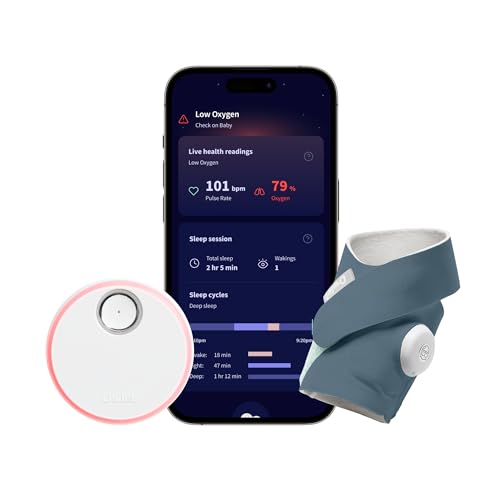
Owlet Dream Sock follows the wearable-foot approach, pairing a sock format with a base station and phone notices. Compared with Snuza Hero’s self-contained diaper monitor, it suits a setup where you want alerts available in more than one place.
The listed use range begins at one month and runs through 18 months, so age fit deserves attention before placing it on a newborn registry. Families already comfortable with a sock-based bedtime routine may find the format easy to fold into nightly care.
Everyday Advantages
- Wearable sock format keeps the monitor away from the diaper area.
- Base station and phone can both receive notices.
Room For Improvement
- The listed age range starts at one month.
- Sock placement adds a fit check to each sleep routine.
- A clip-on alternative may feel less involved during overnight changes.
Made For
Families with babies in the listed one-to-18-month range who prefer a wearable sock and dual notice locations.
Consider Something Else When
WUUK BABY Smart Sock Monitor, Sleep & Movement, 0-18 Months suits households seeking a stated fit beginning at birth.
Levana Oma Sense is built around abdominal movement monitoring with a wearable format that avoids skin contact. Its response starts after 15 seconds without detected abdominal movement, using a randomized vibration pattern before an audible alarm begins five seconds later.
That timing structure resembles BEMPU’s vibration-first approach, though Levana places particular emphasis on a no-skin-contact design. For families who prefer local alerts rather than an app-dependent routine, this may feel like the more focused approach.
Notable Upsides
- Wearable design does not require skin contact.
- Vibration precedes the audible alert stage.
- Randomized vibration pattern is part of its alert sequence.
- Portable format suits naps away from the main nursery.
Points To Note
- Local alerts mean you need to remain within audible range.
- Families wanting app notices may find BEMPU more suitable.
What Matters Before Bringing Home a Newborn Monitor
Wear Style and Daily Care
Diaper clips work well for families who want a compact unit that moves with each diaper change. Socks can feel less intrusive around the waist, but you need to check fit before each rest period. A wearable that matches your existing changing and dressing routine is more likely to feel manageable at 2 a.m.
Alerts Where You Need Them
Local vibration and audible alarms suit caregivers staying close to the nursery. App notices add another communication path, while a base station gives you a dedicated in-room alert point. Decide whether your routine needs phone connection, historical sleep records, or a self-contained local setup.
Wi-Fi, Bluetooth, and Travel
Several options here work without Wi-Fi, which helps during travel, visits with family, or room changes. Bluetooth still connects a wearable to a nearby phone, so keep your phone charged and within its usable connection range. A no-Wi-Fi design does not mean every monitor operates without a paired device.
Battery and Placement Checks
Long stated battery life reduces charging chores, but charging remains part of ownership. Check whether your preferred monitor clips to a diaper, rests in a sock, or needs a particular clothing arrangement. The best fit is the one you can position consistently during everyday naps and overnight sleep.
Details That Can Shape Your Decision
Common Shopping Slip Ups
Avoid selecting a sock monitor without checking its stated age range. Also match the alert location to your household, since a local alarm and an app notice solve different routine needs.
Where The Extra Money Goes
Higher-tier setups may add a base station, app history, multiple alert locations, or more included sizing options. Those additions matter most for households tracking changing sleep patterns or managing care across several rooms.
Frequently Asked Questions
Do newborn breathing monitors need Wi-Fi?
No, several wearable monitors in this list operate without Wi-Fi. Bluetooth-connected models may still need a nearby paired smartphone.
Are diaper clips or socks easier for nightly routines?
Diaper clips can be convenient during frequent changes. Socks suit families comfortable checking foot fit before sleep.
What does a vibration-first alert mean?
The monitor vibrates before moving to an audible alarm. That sequence provides an earlier local cue from the wearable.
Can you use these monitors while traveling?
Portable, no-Wi-Fi designs are suited to changing sleep locations. Check charging needs and phone pairing before leaving home.
Why does app sleep history matter?
Sleep history lets you review recorded rest patterns over time. It can be useful while your baby’s nap schedule changes.