

A wheelchair that fits your home makes a noticeable difference at tables, through doorways, and across carpeted rooms. Your seat width, arm style, wheel setup, and folded dimensions all affect how comfortably the chair fits into daily routines. These seven Medline options cover compact folding frames, reclining designs, wider seats, and a pediatric model for younger users.
The Leading Options At A Glance
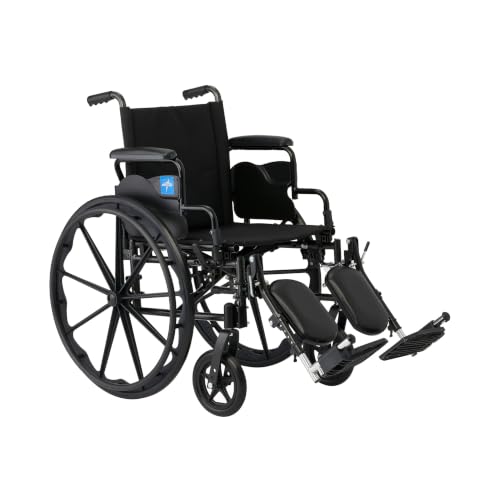
Medline Lightweight Wheelchair 16W x 16D Seat

Medline Comfortable Folding Wheelchair Black
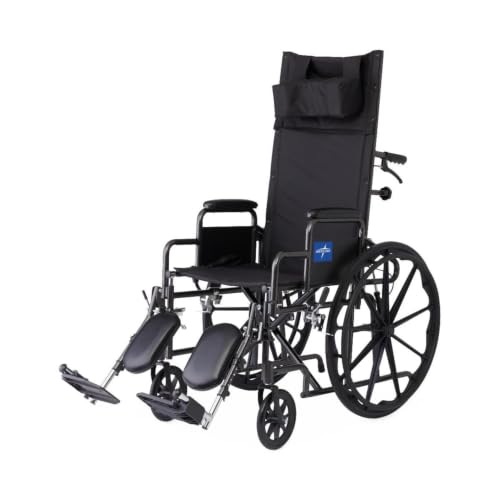
Medline Reclining Wheelchair 18-Inch Elevating Leg Rests

Medline Reclining Wheelchair 16 x 18 Seat

Medline Pediatric Foldable Wheelchair Yellow Steel Frame

Medline Premium Lightweight Wheelchair 18W x 16D Seat
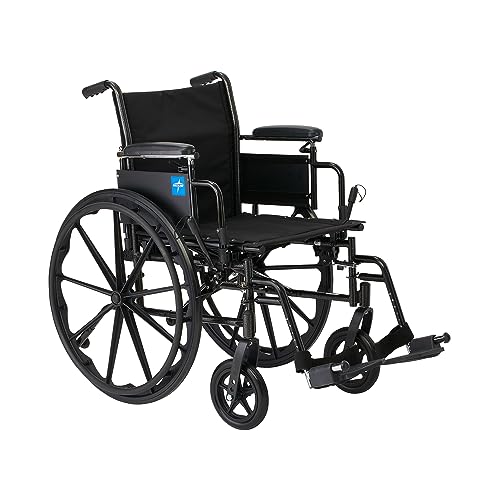
Medline K3 Height Adjustable Wheelchair 20-Inch
A Breakdown Of The Leading Choices
The 16-by-16-inch seat, swing-back desk-length arms, and elevating leg rests create a practical setup for home routines. Desk-length arms sit lower than full-length arms, helping you pull closer to a dining table or desk. You may find that especially useful in a kitchen where space around furniture feels tight.
At 34 pounds, this chair sits below the weight listed for several reclining models here. Its 10.5-inch folded width also makes more sense for a closet or vehicle than a chair that stays bulky after folding.
What Pays Off
- Elevating leg rests support a more relaxed seated position.
- Swing-back arms can make lateral transfers less obstructed.
- Breathable nylon upholstery wipes clean after everyday use.
- 24-inch wheels support self-propelled movement.
Things To Consider
- Measure your doorway and table clearance against the 25.5- or 27.5-inch overall width.
- The 16-inch seat is more compact than the wider Medline K3 Height Adjustable Wheelchair 20-Inch.
Medline Comfortable Folding Wheelchair Black centers on everyday transfers, with desk-length arms and swing-away footrests. Unlike the first chair’s elevating rests, these footrests swing away to clear the front of the seat before you get in or out. That straightforward difference may matter more than extra cushioning for frequent transfers.
Precision bearings, which are enclosed parts that help wheels rotate smoothly, pair with 24-inch wheels for self-propelled use. The 11.5-inch folded width remains manageable, though it takes slightly more storage room than the first Medline model.
The Practical Payoff
- Swing-away footrests clear access to the front of the seat.
- Desk-length arms help you approach tables more closely.
- Large wheels suit users who propel their own chair.
Worth Noting
- The listed 38-pound chair weight calls for a realistic lifting plan.
Who It Suits Best
You benefit most from this model when repeated transfers and a folding frame matter in your daily home routine.
Where Another Pick Suits Better
Medline Lightweight Wheelchair 16W x 16D Seat suits you better when elevating leg rests are a higher priority.
Long seated stretches call for a different design, and this Medline Reclining Wheelchair uses a hydraulic mechanism for positions from 90 to 140 degrees. Hydraulic means fluid-powered adjustment, allowing the backrest to stop at many points rather than a few fixed angles. Its 18-by-18-inch seat gives you more room than either 16-inch-wide folding chair above.
The wheels sit farther back on the frame, and rear anti-tippers add support behind the chair. The honest read is that its 35-inch turning radius needs more open indoor space than the compact models.
A Few Highlights
- Recline adjustment supports varied seated positions.
- Elevating leg rests swing away for seat access.
- Composite mag-style wheels avoid routine air filling.
- Sealed bearings are fitted front and rear.
- Locking wheel brakes support stationary positioning.
Trade Offs
- A 35-inch turning radius deserves a room-by-room clearance check.
- The 18-inch seat may feel too wide for narrow interior paths.
This reclining model keeps the adjustable 90-to-140-degree backrest found on the preceding chair but changes the seating proportions to 16 inches wide and 18 inches deep. A padded headrest extension and cushioned head immobilizer place more emphasis on supported reclined seating. For a caregiver-assisted routine, those additions may be more relevant than a wider seat.
The carbon-steel frame weighs 61.9 pounds, markedly more than the folding models listed first. Its 18.5-inch turning radius is comparatively compact, but transport and storage deserve attention first.
Benefits That Matter
- Padded armrests add cushioning at common contact points.
- Arm support extensions accommodate the reclining position.
- Swing-away elevating rests clear space for transfers.
- Flat-free composite wheels avoid tire-pressure upkeep.
- Rear anti-tippers and locking wheel brakes are included.
- Nylon upholstery supports straightforward cleanup.
Minor Gripes
- The 61.9-pound weight makes frequent vehicle loading less practical.
- Confirm that your storage area accommodates its 32-inch depth.
- The 16-inch seat width is narrower than the 18-inch reclining chair.
The Medline Pediatric Foldable Wheelchair uses a 14-by-12-inch seat built for younger users rather than adult proportions. Adjustable footrests, seat height, and armrest height help you tailor the chair around a growing child’s positioning needs. Its yellow steel frame keeps the appearance less clinical, nothing flashy, just more approachable for a child.
Treaded flat-free wheels use a patterned surface for traction and do not require air. Telescoping handles also give you an adjustable pushing point, which may be useful where more than one caregiver handles outings.
What Earns Its Place
- Seat, armrest, and footrest adjustments support a more tailored setup.
- Padded swing-back arms can clear space for transfers.
Room For Improvement
- The 14-inch-wide seat is intended for children, not adult use.
- At 38 pounds, store it where lifting remains manageable.
- Check the 250-pound capacity against your required fit.
- Its 11-inch folded width still needs dedicated storage space.
Made For
You get the intended fit here for a child needing a foldable chair with adjustable positioning components.
Consider Something Else When
Medline Lightweight Wheelchair 16W x 16D Seat fits adult daily routines better with its adult-sized 16-inch seat.
A wider 18-by-16-inch seat is the clear draw here, giving you two more inches of width than the compact folding adult options. Full-length flip-back arms remain removable, so you can clear the sides for transfers while retaining arm support during normal use. Compared with the reclining chairs, the 31.5-pound listed weight better suits regular loading into a vehicle.
The hemi-height adjustment lowers the seat by 2 inches for foot-powered movement. That may suit you when your routine includes using your feet to help move the chair, though seat-height fit deserves careful checking.
Reasons It Performs
- 18-inch seat width offers more lateral room.
- Flat-free tires avoid air-pressure maintenance.
- Removable leg rests elevate for additional support.
- Breathable nylon upholstery feels less enclosed during long routines.
Points To Note
- A 30-inch turning radius calls for more room than compact 16-inch-seat chairs.
The Medline K3 Height Adjustable Wheelchair 20-Inch brings the broadest stated seat in this group, measuring 20 by 16 inches. Its cloth-covered backrest, swing-back desk-length arms, and swing-away footrests target regular day-to-day seating. You may appreciate the added width in rooms where chair clearance is already generous.
The welded steel frame folds by lifting the seat, while flat-resistant tires avoid the regular pressure checks of pneumatic tires. At 45 pounds, it is heavier than the 31.5-pound Medline Premium Lightweight Wheelchair 18W x 16D Seat, so it favors a stable home base over frequent lifting.
Everyday Advantages
- 20-inch seat width provides the roomiest stated seating area here.
- Seat-height adjustment adds 2 inches for foot-powered movement.
- Solid flat-resistant tires reduce pressure-related upkeep.
- Swing-away footrests help clear the entry path.
- Folding frame helps reduce its stored profile.
Softer Spots
- The 45-pound frame needs consideration before frequent car transport.
- Its 3-foot turning radius requires space around furniture.
What Matters Before Selecting Carpet for Wheelchairs
Carpet Pile and Wheel Resistance
Low-pile carpet generally creates less resistance than thick, plush carpet because the wheels sink less into the surface. Dense carpet can still feel firm under a wheelchair, while loose fibers and deep padding can make self-propulsion more demanding. For rooms used every day, check how the chair moves from carpet to hard flooring at thresholds.
Seat Fit and Household Space
Seat width and depth deserve attention before a wheel style or upholstery color. A 16-inch seat can work well in narrow routes, while 18- and 20-inch seats provide more room but may change your doorway and turning needs. Measure the tightest hallway, bathroom entry, and table area before deciding.
Armrests, Footrests, and Transfers
Desk-length arms help you draw nearer to tables, while flip-back or swing-back designs clear space at the side. Swing-away footrests move away from the front of the chair, whereas elevating rests provide a raised leg position. Your daily transfer pattern should guide that choice.
Storage and Transport Routine
Folded width matters in a closet, car trunk, or shared entryway. Chair weight matters just as much where you or a caregiver routinely lift it. A reclining steel-frame model may suit a settled room, while a lighter folding chair better matches frequent outings.
Details That Shape Daily Use
Common Shopping Slip Ups
Avoid selecting seat width from room size alone. Your body fit, door clearances, footrest style, and folded storage space all need a place in the decision. Deep carpet and thick underlay can also add rolling resistance.
Where The Extra Money Goes
Higher-tier wheelchairs may include reclining mechanisms, head support, adjustable seat height, removable components, or specialized wheel assemblies. Those additions are worth considering where your daily routine uses them often, rather than as features you rarely need.
Final Thoughts
Your strongest match depends on the space you use most and the support features that matter during a normal day. Medline Lightweight Wheelchair 16W x 16D Seat suits compact storage, while the reclining models favor more supported seated routines. For wider seating, look closely at the Medline Premium Lightweight Wheelchair 18W x 16D Seat or Medline K3 Height Adjustable Wheelchair 20-Inch. Measure first, then choose the chair that fits your movement and storage routine.