

A classroom demonstration can lose its point when an indicator is too concentrated for the activity, too awkward to dispense, or supplied in more volume than your shelf can hold. Bromothymol blue is a pH indicator, a liquid that changes color as a solution moves from acidic to basic conditions. Your right match depends on whether you need a small bottle for occasional lessons, a larger supply for repeated labs, or a dispensing setup for measured drops.
The Leading Options At A Glance

ALDON Innovating Science 0.5% Bromothymol Blue Solution 30mL

Rs’ Science Improved Neubauer Hemocytometer Kit

ALDON Innovating Science 0.04% Aqueous Bromothymol Blue 500mL

ALDON Innovating Science 0.01% Aqueous Bromothymol Blue 500mL
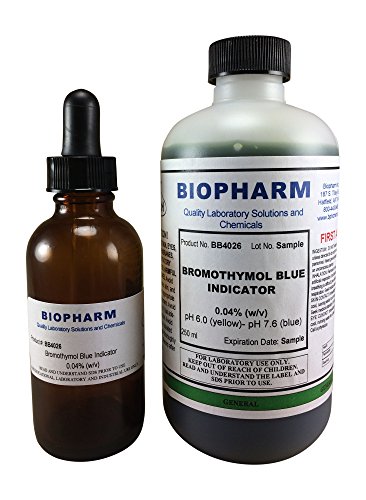
Biopharm Bromothymol Blue Indicator Solution 0.04% 250mL

Biopharm Bromothymol Blue Indicator Solution 0.1% 250mL
Why These Options Stand Out
Your occasional classroom experiment does not always need a large supply bottle. This 30mL liquid uses a 0.5% concentration, making it a notably different choice from the lower-concentration, larger-volume ALDON bottles later in this list.
For a short acid-and-base lesson or a small chemistry station, the compact format may keep storage simpler. The honest read is that your planned procedure should already suit a more concentrated solution.
Well-Handled Touches
- 30mL format takes little cabinet space.
- 0.5% bromothymol blue solution is supplied as a liquid.
- Supports general laboratory and educational work.
- Printed handling and storage directions help keep reference information close by.
- An SDS is available through the listing or by request.
Things To Consider
- Your lesson plan needs to account for the 0.5% concentration.
- 30mL may run short across repeated multi-group activities.
Who It Suits Best
Your small lab station or occasional classroom demonstration benefits most from this compact 30mL format.
Where Another Pick Suits Better
ALDON Innovating Science 0.04% Aqueous Bromothymol Blue 500mL suits your repeated group activities more naturally.
This kit takes a different route from every bromothymol blue solution here. A hemocytometer is a ruled counting chamber used for manually estimating cell concentration, and this kit is intended for cell, blood, and yeast counting.
Its illuminated grid lines and included instructions may make the counting workflow easier to follow in teaching settings. You need a cell-counting task, though, because it does not replace a pH indicator.
Key Advantages
- Combines a counting chamber and stains in one kit.
- Bright grid markings support visual cell counting.
- Step-by-step guidance helps your first setup feel less opaque.
Worth Noting
- Your work needs manual cell-counting equipment rather than an acidity indicator.
- The 7.2 by 4.8 by 1.69-inch package needs a protected storage spot.
- Counting cells requires a suitable viewing setup and technique.
Made For
Your teaching or lab workflow involving blood, cells, or yeast counts is the intended match.
Consider Something Else When
Biopharm Bromothymol Blue Indicator Solution 0.04% 250mL suits your color-based pH observations more directly.
Repeated classroom activities call for volume, and this ALDON bottle provides 500mL of 0.04% aqueous solution. Compared with the 30mL 0.5% ALDON option, your supply is much larger and the stated concentration is lower.
The yellow-in-acidic and blue-in-basic response gives your demonstrations a direct visual cue. For most classroom routines, that clear color shift is the whole point.
Everyday Advantages
- 500mL bottle supports repeated lesson preparation.
- 0.04% aqueous formula arrives in liquid form.
- Yellow and blue endpoints help you demonstrate pH change visually.
- Printed storage guidance keeps handling information on the bottle.
Trade Offs
- The larger bottle needs more cabinet room than the 30mL ALDON format.
ALDON Innovating Science 0.04% Aqueous Bromothymol Blue 500mL
Like the preceding ALDON option, this choice arrives in a 500mL bottle intended for educational and general laboratory work. Your chemistry classroom gains a larger-format supply rather than a compact demonstration bottle.
The bottle carries storage directions directly on its package, a useful detail in a shared prep area. One thing worth considering is your planned concentration requirement before selecting any indicator solution.
The Upside
- 500mL volume supports a busy teaching schedule.
- Liquid bromothymol blue fits pH-indicator demonstrations.
Minor Gripes
- The larger bottle occupies more storage space than compact formats.
- Your procedure needs to align with the listed 0.01% solution.
- This format may be excessive for a single short activity.
- Package handling directions deserve a quick review before storage.
ALDON Innovating Science 0.01% Aqueous Bromothymol Blue 500mL
Right Fit For
Your stocked classroom supply cabinet benefits from this large liquid format for ongoing pH lessons.
A Better Fit Elsewhere
ALDON Innovating Science 0.5% Bromothymol Blue Solution 30mL suits your short, limited-volume demonstrations better.
Dispensing can matter as much as volume during a hands-on pH activity. Biopharm includes a 250mL plastic bottle, a dispensing cap, and a labeled 2-ounce dropper bottle, unlike the ALDON bottles listed above.
The solution changes from yellow at pH 6.0 to blue at pH 7.6. Your work around that stated range may benefit from having a smaller dropper bottle ready to fill.
Positive Takeaways
- 250mL balances recurring use with less bulk than a 500mL bottle.
- Included dispensing cap supports refilling the dropper bottle.
- Labeled dropper bottle can simplify measured additions during lessons.
- Waterproof labels help keep bottle identification readable around liquid work.
- Yellow-to-blue range is stated from pH 6.0 through pH 7.6.
- Plastic main bottle suits a handling-focused lab setup.
Room For Improvement
- Your procedure needs to match the 0.04% concentration.
- The included dropper bottle requires filling before use.
This Biopharm solution keeps the same 250mL bottle-and-dropper approach as the 0.04% version but lists a 0.1% concentration. That distinction matters because concentration affects how your written procedure calls for the indicator to be used.
Your routine setup may appreciate the refillable 2-ounce dropper bottle and dispensing cap. Nothing flashy, but those included parts can reduce the need to source a separate dispensing container.
Features That Help
- Ready-to-use liquid solution avoids mixing from a dry material.
- 250mL bottle offers a middle ground between 30mL and 500mL formats.
- Dropper bottle and dispensing cap support controlled transfer.
- Stated color shift runs from yellow at pH 6.0 to blue at pH 7.6.
Points To Note
- Your experiment instructions need to suit a 0.1% solution.
- Dropper dispensing adds a refill step before your first activity.
- The solution is marked for non-consumption.
What Matters Before Selecting Bromothymol Blue
Match Concentration to Your Procedure
A percentage describes the concentration of indicator in the solution. Your lab instructions should name the concentration or tell you how much indicator to add, because 0.04%, 0.1%, and 0.5% are not interchangeable by assumption. Keep your protocol beside the bottle before preparing an activity.
Plan Around Volume and Storage
A 30mL bottle suits limited demonstrations and small setups. A 250mL bottle gives you more working supply without reaching the 500mL footprint. Repeated classroom sections often justify 500mL, provided your chemical cabinet has room.
Consider How You Dispense It
A separate dropper bottle can make repeated small additions more convenient during student-facing work. The Biopharm options include a dispensing cap and 2-ounce dropper bottle, while the ALDON bottles focus on the indicator solution itself. Your existing pipettes or droppers may make that difference less important.
Know the Color Range
Bromothymol blue visibly changes from yellow in more acidic conditions toward blue in more basic conditions. The Biopharm solutions state yellow at pH 6.0 and blue at pH 7.6, which helps your activity target the transition you want to show. Your observation is clearest when the experiment is designed around that range.
A Few Details That Prevent Frustration
Common Shopping Slip Ups
Do not select by bottle volume alone. Your procedure needs the correct concentration, while your classroom routine needs enough solution for the number of planned activities. Also check whether your setup already includes dispensing tools.
Where the Extra Money Goes
Higher-tier convenience often comes from included transfer accessories, such as a dispensing cap and labeled dropper bottle. That added setup makes sense for your repeated measured additions, but a plain bottle may suit your work just as well when you already own suitable lab tools.
Frequently Asked Questions
What Does Bromothymol Blue Indicate?
Bromothymol blue shows changes in pH through color. It appears yellow in more acidic conditions and blue in more basic conditions.
What Does 0.04% Mean on an Indicator Bottle?
A 0.04% label states the solution concentration. Your experiment instructions should align with that stated concentration.
Is a 500mL Bottle Necessary for Classroom Use?
A 500mL bottle suits your repeated lessons or multiple activity groups. A smaller bottle may fit your occasional demonstrations better.
Why Would You Want a Dropper Bottle?
A dropper bottle supports controlled small-volume additions. You may prefer it for student stations or repeated test-tube work.
Can a Hemocytometer Replace a pH Indicator?
No, a hemocytometer serves manual cell counting. Your pH activity needs a bromothymol blue solution instead.