

A capsule beside your coffee maker can make a daily routine easier, but ingredient forms, capsule counts, and added compounds change the fit. You may prefer a one-daily formula for a packed commute, a methylated formula with active B vitamins, or a women’s formula designed around a specific life stage. These six clean multivitamins focus on concise ingredient lists and clearly stated formulation details.
The Leading Options At A Glance
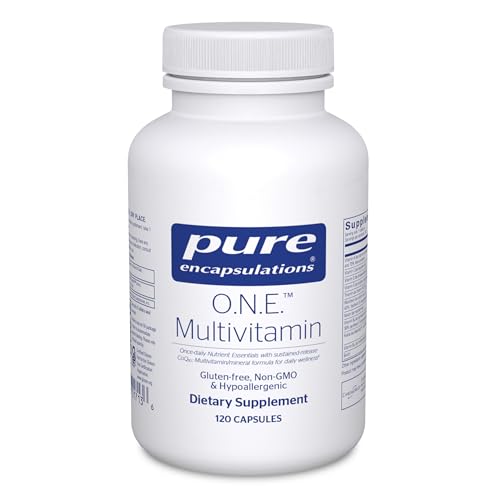
Pure Encapsulations O.N.E. Multivitamin 120 Capsules

Pure Encapsulations O.N.E. Multivitamin 60 Capsules
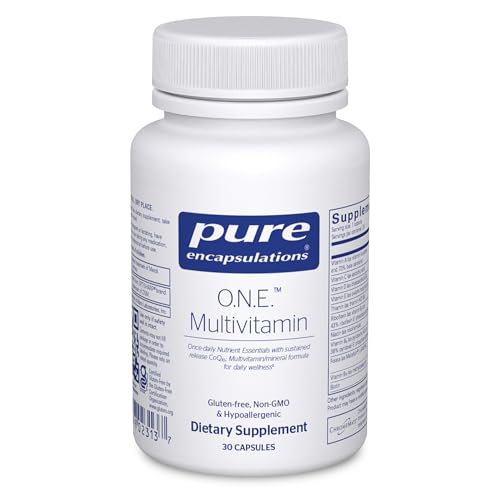
Pure Encapsulations O.N.E. Multivitamin 30 Capsules

Life Extension One-Per-Day Multivitamin 60 Tablets

Micro Ingredients Pure Methylated Multivitamin 240 Capsules

Pure Encapsulations Women’s Nutrients 40+ 180 Capsules
A Deeper Look At The Lineup
Daily routines tend to stick better with fewer moving parts, and this 120-capsule O.N.E. formula uses a one-daily capsule format. Its ingredient list includes vitamins A, B, C, D, and E, plus CoQ10, alpha-lipoic acid, choline, inositol, lutein, and zeaxanthin.
L-5-MTHF is an active form of folate, included here alongside a broader antioxidant-focused blend. For most busy adults, the longer capsule count makes this a practical pantry choice rather than a bottle needing frequent replacement.
A Strong Showing
- One capsule daily keeps a morning routine straightforward.
- Includes L-5-MTHF rather than a basic folate listing.
- Lutein and zeaxanthin add targeted carotenoid ingredients.
- Made without common allergens, artificial ingredients, or GMOs.
- 120 capsules suit households planning beyond a short supply.
Worth Noting
- The capsule has a distinct taste and odor.
- Moisture can cause harmless spotting, so dry storage matters.
Same formula, shorter commitment. Compared with the 120-capsule O.N.E. bottle, this version retains the same one-daily structure and nutrient profile while taking up less cabinet space.
You get vitamins A through E, CoQ10, alpha-lipoic acid, L-5-MTHF, lycopene, lutein, and zeaxanthin. The honest read is that this works best for your first bottle or a smaller household schedule.
Key Advantages
- Uses the same core formula as the 120-capsule version.
- One-daily use suits a simple breakfast routine.
- Contains choline and inositol alongside vitamins and carotenoids.
Small Caveats
- The 60-capsule count requires replacement sooner than the 120-capsule bottle.
- Distinct capsule taste and odor may matter for sensitive palates.
- Keep the bottle away from moisture to limit normal spotting.
Who It Suits Best
You’ll appreciate this bottle for a shorter routine reset or limited medicine-cabinet space.
Where Another Pick Suits Better
Pure Encapsulations O.N.E. Multivitamin 120 Capsules suits you better for a longer uninterrupted supply.
The 30-capsule O.N.E. bottle is the compact counterpart to the earlier 60- and 120-capsule options. Its listed dimensions are 1.97 by 1.97 by 3.4 inches, a useful detail for carry-on bags or a desk drawer.
The formulation remains centered on vitamins A through E, CoQ10, L-5-MTHF, alpha-lipoic acid, and carotenoids. For a month away from home or a first run with this format, the small bottle may feel more manageable.
Bright Spots
- Compact bottle dimensions work well in a toiletry kit.
- Preserves the same one-daily capsule approach as larger O.N.E. bottles.
Points To Keep In Mind
- Thirty capsules mean more frequent reordering for daily use.
- The stated odor and taste may be noticeable outside a meal routine.
- Moisture exposure can create normal spots on capsules.
- Small-bottle convenience matters less for a permanent home supply.
Made For
You’ll get the most from this size during travel, short projects, or a limited-space trial.
Consider Something Else When
Pure Encapsulations O.N.E. Multivitamin 120 Capsules better suits you for consistent daily use at home.
Tablet fans have a distinct alternative here. Life Extension One-Per-Day lists more than 25 vitamins, minerals, and plant extracts, including quercetin and 5-MTHF folate.
Unlike the O.N.E. capsule options, this adult formula is a tablet and includes stated forms of B1, B2, B6, and B12. You may prefer this broader lineup when a plant-extract component matters alongside standard vitamin coverage.
Where It Helps
- One-daily tablet format keeps the schedule uncomplicated.
- Includes quercetin, a plant-derived flavonoid, within the blend.
- Lists 5-MTHF folate and metabolized B1 and B2 forms.
- A Certificate of Analysis is available for each item.
Practical Considerations
- Tablet format differs from the capsule forms used by several picks here.
Ingredient-form detail is the central reason to consider this 240-capsule Micro Ingredients option. Methylated refers to forms such as methylfolate and methylcobalamin, the listed B12 form, while P5P is the active form of vitamin B6.
Compared with the O.N.E. products, this formula also states magnesium and zinc and leaves out iron. That makes it a more particular fit for adults intentionally seeking an iron-free, methylated capsule formula.
Features That Help
- Lists methylfolate and methylcobalamin forms.
- Includes magnesium and zinc alongside vitamins C and D.
- Iron-free composition helps you avoid an ingredient you may not want.
- 240 capsules make sense for established supplement routines.
- Made without fillers, soy, dairy, wheat, fish, shellfish, peanuts, or tree nuts.
- Uses ascorbyl palmitate as its listed vitamin C form.
Factors To Consider
- The iron-free formula is not the fit for everyone, so compare your intended nutrient plan.
- A 240-capsule bottle takes more storage space than the smaller O.N.E. bottles.
- The formula’s many active forms may be more detail than a basic routine requires.
Women over 40 who prefer a life-stage-specific formula have a more focused option in Women’s Nutrients 40+. The capsule blend combines vitamins and minerals with Metafolin L-5-MTHF, while the brand frames the formula around eye, urinary tract, breast-cell, and cardiovascular considerations.
Its 180-capsule count makes it notably larger than the O.N.E. bottles. Depending on your cabinet layout, the 3.5 by 3.5 by 4.5-inch bottle may need a dedicated spot.
What Pays Off
- Designed specifically around women’s 40+ nutritional priorities.
- Uses Metafolin L-5-MTHF in its multivitamin and mineral complex.
- 180 capsules support a longer routine between replacements.
- Made without common allergens, artificial ingredients, or GMOs.
Things To Weigh Up
- The focused life-stage design is less suitable for adults outside its intended group.
- The larger bottle needs more shelf room than the 30-capsule O.N.E. option.
What Matters Before Selecting a Clean Multivitamin
Match the Formula to Your Routine
A one-daily capsule or tablet helps keep a breakfast routine short, especially during commute-heavy weeks. Capsule and tablet preferences matter too, since consistency often comes down to the form you’re comfortable taking. Longer supplies reduce replacement frequency but take more cupboard space.
Look Beyond the Front Label
“Methylated” points to active forms such as methylfolate or methylcobalamin, not a universal sign that one formula suits every routine. Compare the actual forms and added nutrients, such as CoQ10, carotenoids, magnesium, zinc, or plant extracts. A shorter ingredient list can be appealing, but it still needs to align with your intended use.
Consider Intentional Omissions
Iron-free formulations serve a particular preference, not a universal need. Allergen exclusions may also shape your shortlist, especially around soy, dairy, wheat, fish, shellfish, peanuts, and tree nuts. Keep the bottle’s form, size, and stated ingredients in view rather than relying on broad front-label language.
Choose a Sensible Supply Size
A 30-capsule bottle works neatly for travel or a brief trial. A 120-, 180-, or 240-capsule container makes more sense once you know the formula belongs in your routine. Store capsules in a dry area, particularly where normal moisture-related spotting is mentioned.
A Few Details That Shape the Decision
Common Shopping Slip Ups
Don’t assume two bottles with similar names contain identical supply counts or suit identical routines. Compare capsule versus tablet format, active vitamin forms, iron inclusion, and stated extras before settling on a formula.
Where the Extra Money Goes
Higher-tier formulas often add named nutrient forms such as L-5-MTHF, methylcobalamin, P5P, CoQ10, or carotenoids. Paying more can make sense when you specifically want those details rather than a general vitamin list.
Frequently Asked Questions
What makes a multivitamin “clean”?
Clean multivitamin usually describes a formula that avoids selected additives or common allergens. The meaning differs between brands, so check the stated ingredient exclusions.
What does methylated mean in a multivitamin?
Methylated refers to specific active vitamin forms, including methylfolate and methylcobalamin. These forms are distinct from standard folic acid and some other B12 forms.
Are capsules or tablets better for daily routines?
Neither format is automatically better. Your best fit is the form you can take consistently and comfortably.
Why do capsule counts matter?
Capsule count affects how often you replace a bottle and how much storage room it uses. A smaller bottle also works more easily for trips or short-term routine changes.
Can capsules develop spots from moisture?
Some capsule formulas can show spotting after moisture exposure. The O.N.E. listings describe this variation as normal.
Final Verdict
Your clean multivitamin choice should reflect your routine, ingredient preferences, and supply needs. Pure Encapsulations O.N.E. works well for a concise one-daily capsule approach, while Micro Ingredients fits a methylated, iron-free preference. Women’s Nutrients 40+ is more tailored for its named age group, and Life Extension suits a broader tablet-based formula.