Your MPV, or mean platelet volume, measures the average size of platelets in your blood. This MPV result indicates larger-than-average platelets. It often suggests your bone marrow produces new, larger platelets. You see this on an MPV blood test. A high MPV is not always a cause for alarm. However, this MPV can be a crucial indicator. It points to underlying health issues. These issues warrant your attention. This post explores various causes and their urgent health implications. It discusses what this MPV in your blood truly signifies.
Key Takeaways
High MPV means your blood platelets are larger than normal. This often shows your body is making new, bigger platelets.
Many things can cause high MPV, like infections, inflammation, heart problems, and long-term illnesses such as diabetes or some cancers.
A high MPV can mean a higher chance of blood clots, heart attacks, or strokes. It can also show that there is inflammation in your body.
If your MPV is high, your doctor will do more tests to find the cause. They will help you manage it with treatments or lifestyle changes.
You can help manage high MPV by eating healthy, exercising, and avoiding smoking. Always talk to your doctor for advice.
Understanding High MPV

Platelet Function
Your blood contains tiny cells called platelets. These cells play a vital role in your body. Platelets primarily function to prevent and stop bleeding. When a blood vessel is damaged, your body signals platelets to the injured area.
They then clump together to form a clot. This action halts blood loss. Platelets also contribute to wound repair. They contain growth factors that promote healing of damaged tissues. Furthermore, platelets participate in your immune responses. They help your body fight off bacteria and viruses.
Normal MPV Range
Doctors measure your mean platelet volume (MPV) during a blood test. This MPV blood test tells you the average size of your platelets. A normal mean platelet volume typically falls between 7.5 and 11.5 femtoliters (fL) for healthy adults. This range indicates your platelets are of regular size. It also suggests your body produces them at a steady, healthy rate. Your blood test MPV result helps doctors understand your platelet health.
Significance of Large Platelets
A high MPV means your platelets are larger than average. Larger platelets are often newer and more active. Your bone marrow produces these new, larger platelets. This can happen when your body needs more platelets. For example, if your body is losing platelets, your bone marrow might work harder. It releases bigger, younger platelets into your blood. A high MPV does not always mean a problem. However, it can signal underlying conditions. It is an important piece of information when doctors look at your overall blood picture, including your platelet count.
Common Causes of Elevated MPV
Many different factors can lead to an elevated MPV. These factors range from temporary bodily responses to long-term health conditions. Understanding these causes helps you and your doctor interpret your blood test results.
Inflammation and Infection
Your body often produces larger platelets when it fights inflammation or infection. These larger platelets are more active. They play a role in your immune response.
Bacterial and Viral Infections: When you have a bacterial or viral infection, your body’s immune system activates. This activation can lead to an increase in MPV. For example, patients with sepsis often show higher MPV levels. Sepsis is a severe response to infection. An increase in MPV during a bacterial infection might even signal septicemia. This is a serious blood infection.
You see elevated MPV in Gram-positive sepsis for the first three days.
It also appears in Gram-negative sepsis for four days.
Very low birth weight infants with sepsis also show this.
Infective endocarditis, an infection of the heart’s inner lining, also shows higher MPV levels. These levels decrease after treatment.
Children with acute pyelonephritis (a kidney infection) have increased MPV compared to healthy children.
Rheumatoid Diseases: Conditions like rheumatoid arthritis cause chronic inflammation. This ongoing inflammation can trigger your bone marrow to release larger, more reactive platelets.
General Inflammation: Any process causing widespread inflammation in your body can result in an elevated MPV. Your body uses these larger platelets as part of its inflammatory response.
Cardiovascular Risks
An elevated MPV can signal an increased risk for cardiovascular problems. These larger platelets are more prone to clotting. This increases your risk of serious heart events.
High Blood Pressure (Hypertension): Some studies suggest a link between high blood pressure and elevated MPV. You might see increased platelet activity, reflected by MPV, in newly diagnosed hypertensive patients. This is especially true with an enhanced morning blood pressure surge (MBPS). High MPV has been independently associated with enhanced MBPS values. It also links to higher hs-CRP levels. This suggests a connection between MPV, MBPS, and atherothrombotic cardiovascular events. However, a Mendelian randomization study found no direct association between MPV and blood pressure. This suggests that observational studies can sometimes be biased.
Heart Disease: Larger platelets are more active. They contain more substances that promote clotting. They also show greater clumping in response to certain signals. These larger platelets are denser. They contain more alpha-granules. These granules release prothrombotic substances. These substances contribute to blood vessel changes.
You see increased MPV in people with cardiovascular risk factors. These include smoking, diabetes, obesity, hypertension, and high cholesterol.
If you have established cardiovascular disease, an elevated MPV may indicate adverse cardiovascular events.
An increased MPV likely precedes a heart attack. It is not just a consequence. Platelet size remains high weeks after hospital discharge. This suggests MPV increases are chronic.
A higher MPV in patients with Acute Coronary Syndrome (ACS) links to more cardiovascular risk factors. It also links to a greater incidence of cardiovascular events during follow-up.
Platelet Loss and Recovery
Your body’s response to platelet loss or injury can also cause an elevated MPV. Your bone marrow works harder to replace lost platelets.
Recovery from Bleeding, Injury, or Surgery: When you experience significant blood loss, your bone marrow ramps up platelet production. It releases larger, younger platelets into your bloodstream. This response helps replenish platelets after substantial blood loss. Your MPV tends to be high during this recovery. This signifies that platelets are larger, younger, and more reactive. It indicates increased turnover or activation.
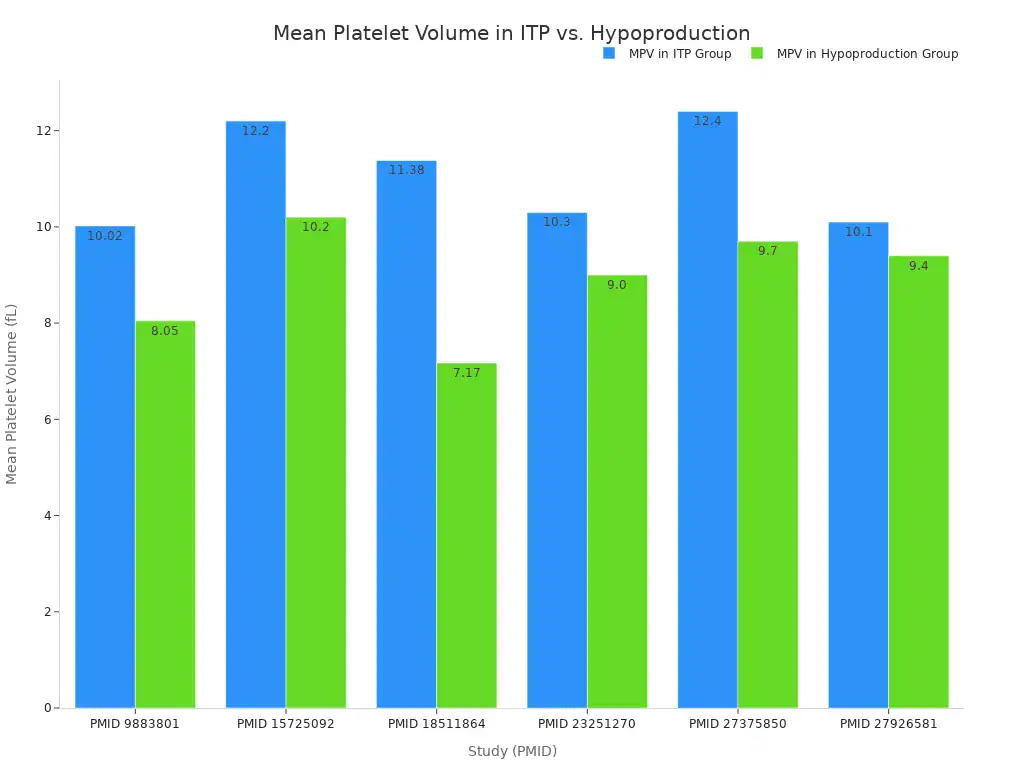
Immune Thrombocytopenia (ITP): ITP is a condition where your immune system mistakenly attacks and destroys your platelets. Your bone marrow tries to compensate by producing more platelets. These new platelets are often larger. Studies show that MPV is significantly higher in ITP patients. This is true compared to healthy individuals or those with low platelet production. This elevated MPV in ITP can help doctors differentiate it from other types of low platelet counts.
PMID | Patient Group (ITP) | MPV in ITP Group | Patient Group (Hypoproduction) | MPV in Hypoproduction Group |
|---|---|---|---|---|
9883801 | 28 children with ITP | 10.02±0.58 | 128 children with low platelet count due to decreased production | 8.05±0.96 |
15725092 | 39 patients with ITP | 12.2±0.2 | 40 patients with hypoproductive thrombocytopenia (aplastic anaemia) | 10.2±0.2 |
18511864 | 63 patients with ITP | 11.38±0.57 | 71 patients with hypoproductive thrombocytopenia due to myelosuppression | 7.17±0.54 |
23251270 | 124 patients with ITP | 10.3±1.8 | 268 patients with bone marrow failure | 9.0±1.8 |
27375850 | 33 patients with ITP | 12.4±3.6 | 50 patients with hypoproductive thrombocytopenia | 9.7±0.9 |
27926581 | 118 patients with ITP | 10.10±1.76 | 35 MDS patients | 9.4±1.31 |
Chronic Diseases and MPV
Many chronic conditions can influence your mpv. These conditions often involve ongoing inflammation or changes in blood cell production.
Diabetes: If you have diabetes, your mpv is often higher. This is especially true if your blood sugar control is poor. Platelet activity is significantly higher in diabetic individuals. This is supported by studies showing a graded association between mpv and glucometabolic state. Your mpv may decrease if your glycemic control improves with diet and medication. The higher mpv in diabetes may be due to osmotic swelling from high blood sugar. Insulin might also cause megakaryocytes to produce larger platelets. These larger, younger platelets are more active and prothrombotic. This may explain the increased cardiovascular risk in diabetes.
Crohn’s Disease: Interestingly, patients with Crohn’s disease often show a lower mpv. This reduced size may happen because larger, activated platelets are consumed or trapped within the intestinal blood vessels.
Hyperthyroidism: An overactive thyroid gland can affect various bodily functions, including platelet production. This can sometimes lead to an elevated MPV.
Chronic Renal Failure: Kidney disease can impact your blood cell production and function. Patients with chronic kidney failure may exhibit changes in mpv.
Respiratory Diseases (e.g., Emphysema): Chronic lung conditions can cause systemic inflammation. This inflammation can influence platelet size and activity.
Autoimmune Diseases: Several autoimmune diseases are linked to increased mpv.
Psoriatic arthritis and Psoriasis: You may see higher mpv levels in patients with these conditions. This suggests mpv could be a marker for severe psoriasis. It also links to cardiovascular risk factors.
Scleroderma: Patients with scleroderma, especially those with heart problems, digital ulcers, and gangrene, show significantly higher mpv. This may serve as a marker for vascular disease.
Type 1 Diabetes Mellitus: Pediatric patients with type 1 diabetes often have high mpv. This potentially correlates with future cardiovascular events.
Idiopathic Sudden Hearing Loss (ISHL): mpv was significantly elevated in ISHL patients. This supports the idea of ischemic events in this potentially autoimmune syndrome.
Bullous Pemphigoid: Patients with bullous pemphigoid exhibit high mpv levels. This might indicate cardiovascular risk.
Chronic Urticaria: This skin disorder, often linked to autoimmune systemic conditions, shows higher mpv in affected individuals.
Certain Cancers: Altered mpv levels appear in various cancers.
Most studies on gastric, breast, endometrium, thyroid, and lung cancer show an elevated MPV in cancer patients.
You also find altered mpv levels in ovarian cancer.
Some studies on colon cancer indicate an unfavorable role of increased mpv.
Aplastic Anemia: This condition affects your bone marrow’s ability to produce blood cells. While it often leads to low platelet counts, the remaining platelets can sometimes be larger, resulting in a higher mpv.
Genetic Conditions: Some inherited disorders can affect platelet size and production. These conditions can lead to a consistently high mpv.
Obesity: Being overweight or obese often involves low-grade systemic inflammation. This inflammation can contribute to an elevated MPV.
Side Effects from Specific Medications: Certain drugs can influence platelet size. For example, hormone therapy, specifically Tamoxifen, has shown an increase in mpv levels over time.
Physical/Mental Stress and Long-Term Vigorous Exercise: Even significant physical or mental stress, or intense, long-term exercise, can temporarily affect your mpv. Your body’s stress response can influence platelet production and activity.
MPV and chronic conditions are closely linked. Your doctor will consider these various factors when evaluating your mpv results.
Urgent Health Implications of High MPV
A high mpv result can signal several urgent health implications. You need to understand these potential issues. They can affect your overall health significantly.
Clotting Risks
When your mpv is high, your platelets are larger. These larger platelets are often more active. They have a greater tendency to clump together. This increases your risk of forming dangerous blood clots.
Elevated mpv levels increase your risk of deep venous thrombosis. This is a type of blood clot in your legs.
You also face a higher risk of acute myocardial infarction, which is a heart attack.
An increased mpv is a predictor of venous thromboembolism. This is a serious condition where blood clots form in veins.
High mpv levels (7.85 fL or more) are a risk factor for ischemic stroke. This is true for patients with nonvalvular atrial fibrillation. This risk exists regardless of your sex or if you take anticoagulant therapy.
A large study followed 25,923 people for over 10 years. It found that mpv is an independent risk factor. It predicts future heart attack and stroke. Another study looked at 365 cases of venous thromboembolism. It found that high factor VIII levels combined with large platelets (high mpv) greatly increased the risk of these clots. These findings highlight the urgent health implications of a high mpv.
Heart Attack and Stroke
A high mpv directly links to an increased risk of heart attack and stroke. Larger platelets are more active. They have a higher capacity to form aggregates. This means they stick together more easily. This heightened platelet activation and aggregation strongly connect to cardiovascular problems.
A study with 39,531 participants showed this connection clearly. People with an mpv of 7.4 fL or more had a 38% increased risk of myocardial infarction. This was compared to those with an mpv below 7.4 fL. This association was independent of other known cardiovascular risk factors. The risk of heart attack increased by 37% in the middle mpv group. It increased by 30% in the upper mpv group. This shows the significant urgent health implications of an elevated mpv for your heart.
Systemic Inflammation Marker
Your mpv can also act as a marker for systemic inflammation. This means it can show if your body has widespread inflammation. Platelets play important roles in your body’s inflammatory response.
Mpv levels are often lower in patients with active systemic lupus erythematosus (SLE) who have arthritis. This is true during flare-ups compared to remission.
Mpv has been studied as a simple inflammatory marker. It shows increases in heart attack and cerebrovascular disease. However, it decreases in active rheumatologic diseases. These include rheumatoid arthritis, ankylosing spondylitis, and ulcerative colitis.
Mpv is elevated in various diseases. These include atrial fibrillation, cerebrovascular disease, and Behçet disease. It plays important roles in the inflammatory function of platelets.
The MPVLR (mpv to platelet count ratio) is a new inflammatory indicator. It is significantly higher in patients with ascending thoracic aortic aneurysm and acute deep vein thrombosis.
In chronic kidney disease patients, MPVLR values increase with the disease stage. Patients with higher hsCRP levels (a sign of inflammation) also have higher MPVLR values.
You see decreased mpv values in high-grade inflammatory diseases. These include active systemic lupus erythematosus, active rheumatoid arthritis, and ulcerative colitis.
These findings show that mpv changes can reflect your body’s inflammatory state. This makes it a valuable tool for doctors.
Cancer Link
A high mpv can also have implications for cancer. Altered mpv levels appear in various cancers. This suggests a potential link between platelet size and cancer progression or prognosis.
A high MPV/PC ratio (mpv to platelet count ratio) links to poorer overall survival in hepatocellular carcinoma (HCC) patients.
In non-small cell lung cancer (NSCLC), a high MPV/PC ratio means significantly inferior overall survival. It acts as an independent prognostic factor for locally advanced NSCLC.
A low MPV/PC ratio in colorectal cancer (CRC) patients suggests a lower cancer stage. It also indicates reduced lymph node metastasis.
A high MPV/PC ratio links to a poor prognosis. It is an independent prognostic factor for cervical cancer patients.
You observe elevated mpv in patients with breast, endometrium, gastric, thyroid, and lung cancers. However, you see reduced mpv in patients with gallbladder cancer and renal cell carcinoma. The trends in mpv are less clear for colon, esophageal, and ovarian cancers. Elevated mpv was a marker for worse mortality outcomes in some colon and lung cancer studies. These connections show the urgent health implications of mpv in cancer.
Managing High MPV: When to Act

You need to understand your high mpv results. This helps you take proper action. Your doctor will guide you through this process.
Interpreting Results
You receive your mpv test results from a blood test. A high mpv means your platelets are larger than average. Your doctor does not look at this number alone. They consider your mpv alongside other blood test results. These include your platelet count and overall health. Many factors that affect mpv results can influence this number. Your doctor will explain what your specific mpv blood test means for you.
Diagnostic Process
If your mpv is high, your doctor will likely order more tests. They want to find the exact cause. This might involve checking for inflammation or specific diseases. You may need further blood work or imaging scans. This helps your doctor understand the underlying factors. They will use these findings to make an accurate diagnosis.
Management and Treatment
Managing a high mpv depends on its cause. If chronic inflammation is a factor, you can adopt an anti-inflammatory diet. This includes fruits, vegetables, whole grains, and healthy fats. You should also maintain a healthy weight and avoid processed foods. Consider natural anti-inflammatory supplements like turmeric. Ensure you get enough sleep, limit alcohol, and quit smoking. For cardiovascular risks, your doctor might recommend anticoagulation therapy. This reduces stroke risk if you have atrial fibrillation. Statin therapy can also reduce mpv in patients with cardiovascular disease risk factors.