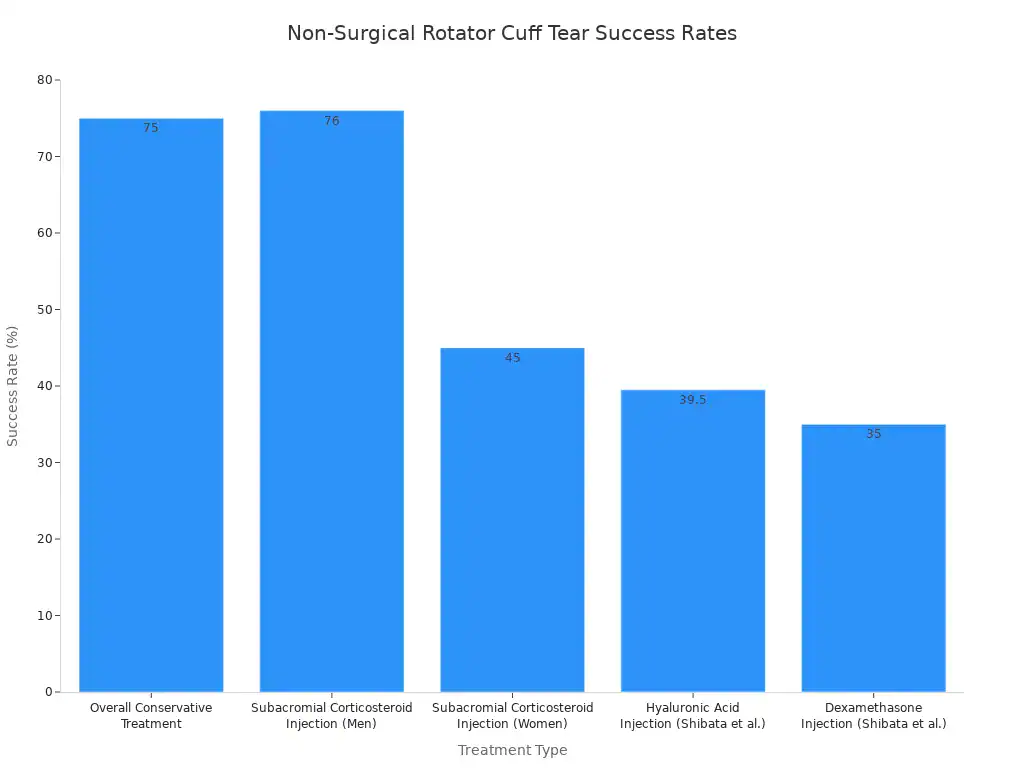
Many people immediately think of surgery when they face a torn rotator cuff. However, you can often heal torn rotator cuff naturally. This is especially true for partial tears or non-acute shoulder injuries. Avoiding surgery is a real possibility for your rotator cuff tear. Most studies show an overall success rate of approximately 75% for conservative treatment of rotator cuff tears.
This post outlines seven actionable steps for your natural recovery journey. Rotator cuff injuries are common and cause significant shoulder pain and arm weakness. Consistency and patience are crucial for success to heal torn rotator cuff and manage your rotator cuff pain. You can achieve lasting relief for your shoulder joint.
Key Takeaways
Rest your shoulder and avoid painful movements. This helps reduce pain and swelling. It also prevents more damage.
Manage pain with cold and heat therapy. Eat foods that fight inflammation. Over-the-counter medicines can also help with pain.
Start with gentle exercises like pendulum swings. Slowly add stretches to improve how much you can move your arm. Do not push into pain.
Strengthen your shoulder muscles and shoulder blade muscles. Start with light weights. Increase resistance slowly as you get stronger.
Eat protein, vitamins, and minerals. Drink plenty of water. This helps your body repair damaged tissues and keeps your tendons healthy.
Step 1: Prioritize Rest And Protect Shoulder
Initial Rest Importance
When you first experience a rotator cuff tear, your body needs time to begin the healing process. Resting your shoulder is the most important first step. This initial rest helps reduce pain and swelling.
For a rotator cuff injury, this acute stage typically lasts about one to two weeks. During this time, you must give your shoulder adequate rest. This allows the injured tissues to start healing. You prevent further damage to your shoulder joint when you prioritize rest. This initial period of rest is crucial for your overall recovery.
Avoid Painful Movements
You must modify your activities to prevent further injury to your shoulder. Certain movements can worsen a rotator cuff tear. You should avoid overhead activities of all kinds. For example, repeatedly reaching up to paint a wall or placing a heavy suitcase in an overhead bin can strain your shoulder.
Lifting or lowering heavy objects away from your body also significantly strains the rotator cuff. To prevent further injury, avoid these specific movements:
Overhead Lifts: These movements put intense pressure on your shoulder. They can cause more significant injury.
Beyond the Neck Pulldown: This move extends your rotator cuff beyond its natural range of motion. It places unneeded stress on the shoulder joint.
Upright Rows: The starting position of this exercise can cause discomfort. It can also aggravate existing injuries.
Bench Dips: This exercise requires internal shoulder rotation. This can cause undue stress and pinch your torn rotator cuff.
Use Slings/Supports
Protecting your shoulder from accidental movements is vital. Using a sling or other support can provide significant relief. A sling keeps your arm in a safe position. It reminds you to avoid movements that cause pain. This protection helps reduce pain and swelling. It also allows the injured area to rest. This support is a temporary measure. It helps you protect your shoulder during the early stages of healing.
Step 2: Manage Pain And Inflammation
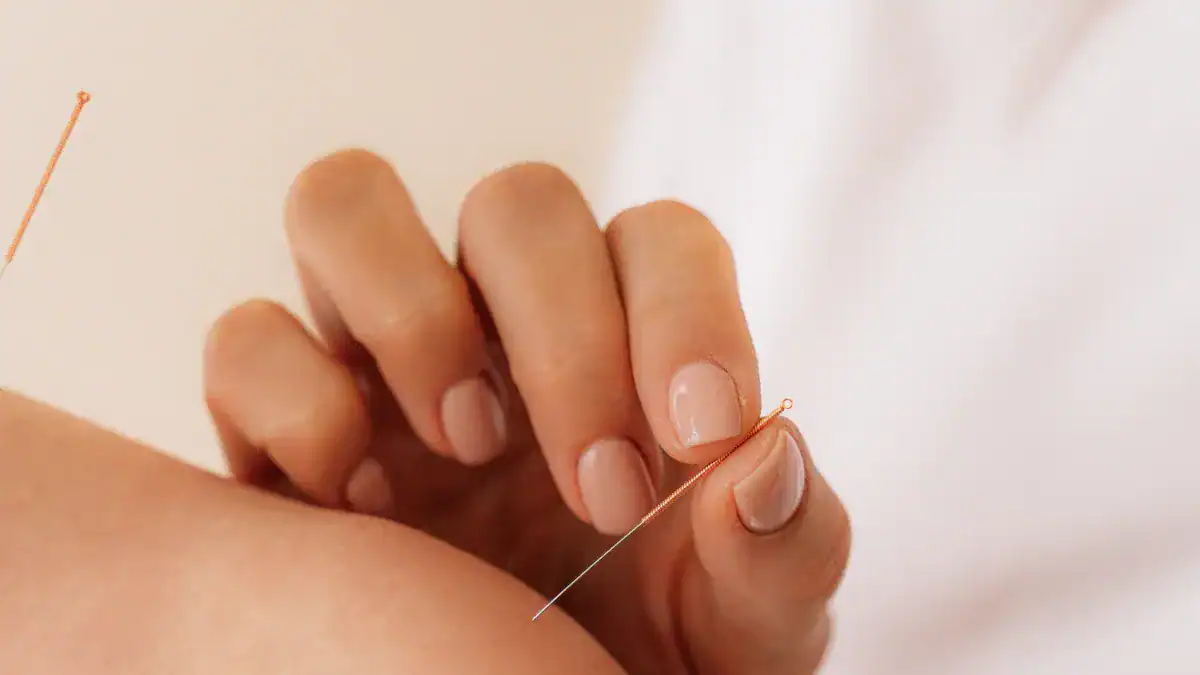
Managing pain and inflammation is a key part of your recovery journey. This step helps you feel better. It also creates a good environment for your body to heal a torn rotator cuff. You can use several non-surgical treatments to reduce discomfort.
Cold And Heat Therapy
You can use both cold and heat to manage your shoulder pain. Cold therapy is best right after an injury. It helps reduce pain and swelling. You should apply ice for 10-15 minutes at a time. This is especially helpful during the first 48-72 hours. Cold therapy numbs the area. It also constricts blood vessels. This reduces swelling and inflammation.
Heat therapy works differently. It improves blood flow to your shoulder. This helps relax tight muscles. It also aids the healing process. You can use heat after the initial swelling goes down, usually after 72 hours. Warm showers or heating pads are good options. You can also try contrast therapy. This involves switching between cold and heat. It enhances circulation and reduces pain.
Therapy | Timing | Mechanism | Benefits |
|---|---|---|---|
Ice | First 48-72 hours (acute phase) | Constricts blood vessels, reduces swelling | Numbing effect, eases pain, reduces inflammation |
Heat | After initial 72 hours (swelling subsides) | Loosens tight muscles, boosts blood flow | Aids healing process, eases muscle stiffness |
Contrast | 3-5 days post-injury, chronic conditions | Alternating constriction and dilation of blood vessels | Enhances circulation, reduces pain |
Natural Anti-Inflammatory Foods
Your diet plays a big role in healing a rotator cuff tear. Certain foods can reduce inflammation. They also help repair your tendons.
Fatty fish: Salmon and tuna have omega-3 fatty acids. These are strong anti-inflammatory agents.
Berries: Blueberries and raspberries are full of antioxidants. They help reduce inflammation.
Dark leafy greens: Kale and spinach provide vitamins and minerals. These also fight inflammation.
Nuts: Walnuts and almonds offer healthy fats. These can reduce inflammation.
Protein: Lean meats, fish, and eggs are vital. They help repair damaged tissue.
Bone broth: This contains collagen. Collagen is excellent for healing tendons.
Vitamin C-rich foods: Citrus fruits and peppers help rebuild collagen.
Turmeric and Ginger: These spices have natural anti-inflammatory properties.
Resveratrol, found in grapes and berries, also helps. It boosts collagen production. This is crucial for tendon vitality. Eating these foods supports your non-surgical treatments.
OTC Options
Over-the-counter (OTC) medications can provide temporary pain relief. Non-steroidal anti-inflammatory drugs (NSAIDs) like ibuprofen or naproxen reduce both pain and swelling. You should use these for short periods. Always follow the directions on the label. Talk to your doctor before starting any new medication. This ensures the treatment is right for you. These options offer quick relief from rotator cuff pain.
Step 3: Gentle Range Of Motion
Exercises and stretches are crucial for rotator cuff healing. However, you must not start them too early. Listen to your body’s limits. Avoid any movement that causes pain.
Pendulum Swings
Pendulum exercises are crucial for early healing from a rotator cuff tear. They use gravity and momentum for motion. You do not use muscle strength. This technique promotes healing. It allows for range of motion without straining damaged structures. A 2010 study recognized these exercises as common rehabilitation practices. They help decrease joint stiffness. They also prevent adhesions and improve circulation. You must perform these correctly. Active range of motion exercises are often not suitable in early recovery.
Benefits of pendulum swings include:
Preserves shoulder mobility
Prevents shoulder stiffness
Maintains mobility of the rotator cuff and joint capsule
Provides space in the shoulder for sensitive and painful structures
Offers pain relief
Increases blood flow to the shoulder
These exercises are passive. They involve very little muscle contraction around your shoulder. This is vital for serious rotator cuff tears. Muscle contraction can further damage tendons. A 2016 study confirmed minimal muscle activity during pendulum exercises. This makes them ideal for early rehabilitation.
Passive/Active-Assistive Stretches
After initial rest, you can introduce gentle stretches. These improve your shoulder’s range of motion. You have two main types: passive and active-assistive.
Passive stretches mean someone or something else moves your arm. You do not use your own muscle strength. Examples include:
Supine Single-Shoulder External Rotation With a Cane
Standing Codman’s Exercises
Seated Passive Range of Motion Shoulder Flexion
Standing Shoulder Passive Range of Motion External Rotation in a Doorway
Active-assistive stretches mean you help move your arm. You use a cane, pulley, or your other hand. This helps you move your arm through its full range. Examples include:
Side-Lying Sleeper Stretch for Shoulder Internal Rotation
Supine Shoulder Flexion With or Without a Cane
Seated Shoulder Pulleys for Flexion While Facing a Door
Standing Shoulder Flexion With a Cane
These exercises help reduce pain and improve function.
Gradual Movement Introduction
Introduce movements gradually. Always listen to your body. Never push into pain. Pain is a signal. It tells you to stop or reduce the movement. Your goal is to restore shoulder function without causing more pain. Consistency is key. Patience is also vital. This careful approach helps you avoid setbacks. It ensures steady progress in your healing.
Step 4: Targeted Strengthening Exercises
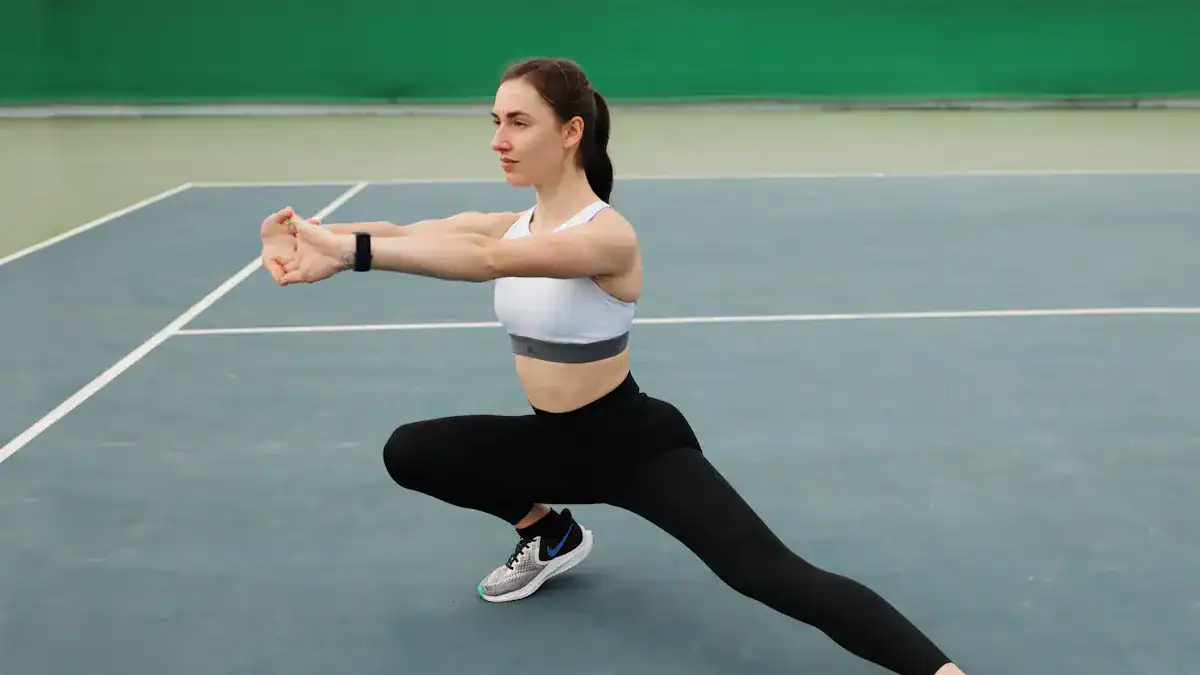
After you regain some range of motion, you can begin specific exercise therapy. This step focuses on strengthening your shoulder muscles. This helps stabilize your shoulder joint and prevents future rotator cuff injuries. Proper exercise therapy is crucial to heal torn rotator cuff and reduce rotator cuff pain. These targeted exercises help reduce pain and allow for more advanced movements.
Rotator Cuff Muscles
Strengthening the muscles of your rotator cuff is vital. These muscles directly support your shoulder. Here are some targeted exercises for each specific rotator cuff muscle. These exercise options are part of your overall exercise therapy. They help you regain strength and reduce pain.
Muscle | Exercises |
|---|---|
Supraspinatus | – Empty Can Exercise: Stand with arms at sides, raise arms to 90 degrees abduction with thumbs pointing down, then lower. – Full Can Exercise: Similar to empty can, but thumbs point up. – Scaption: Raise arms to 90 degrees in the scapular plane (about 30 degrees forward from the side) with thumbs up, then lower. |
Infraspinatus & Teres Minor | – External Rotation with Resistance Band: Hold a resistance band, elbow bent at 90 degrees and tucked into side, rotate forearm outwards. – Side-Lying External Rotation: Lie on side, elbow bent at 90 degrees, rotate forearm upwards. |
Subscapularis | – Internal Rotation with Resistance Band: Hold a resistance band, elbow bent at 90 degrees and tucked into side, rotate forearm inwards. |
Scapular Stabilizers
Your shoulder blade muscles, called scapular stabilizers, are also very important. They provide a stable base for your arm movements. Strengthening these muscles helps your shoulder move correctly. These targeted exercises are key to your exercise therapy. They help exercise can help heal your rotator cuff tear.
Table Push Ups: Lean forward on a stable surface. Draw your shoulder blades back and down. Let your chest drop, then push up. Repeat 20-30 times.
Modified Plank Press Ups: Lie on your front. Lift your chest and hips into a half plank. Draw your shoulder blades back, then push them forward. Repeat 15-30 times.
Plank Row: Push up into a full plank. Lift one arm, bending the elbow and drawing the shoulder blade back. Lower and repeat on the other side. Repeat 20-30 times on each arm.
These targeted exercises offer significant relief from pain.
Gradual Resistance Progression
You must progress slowly with these targeted exercises. Start with light weights or resistance bands. Focus on correct form, not heavy lifting. Gradually increase the resistance as your strength improves. Never push through pain. If an exercise causes pain, stop immediately. This careful approach helps exercise can help heal your rotator cuff tear without causing further damage. Consistency with these targeted exercises brings lasting relief.
Step 5: Optimize Nutrition For Repair
Targeted nutrition helps speed up tendon repair in a torn rotator cuff. You must focus on nutrients essential for tissue repair and overall healing. Your diet plays a crucial role in how quickly your shoulder recovers.
Protein For Regeneration
Protein is vital for regenerating damaged tissues. It provides the building blocks your body needs to repair your torn rotator cuff. You should aim for a high protein intake daily. For tissue repair after an injury, you need about 1.5 to 2 grams of protein per kilogram of body weight. For example, if you weigh 180 pounds (about 81 kilograms), you need around 122–163 grams of protein each day. Spreading your protein intake throughout the day is beneficial. Include protein in your meals and snacks. The National Athletic Trainer’s Association suggests that injured athletes consume 20 to 35 grams of protein every three hours. This includes before bedtime. This supports tissue repair. A general guideline for optimal health and soft tissue repair is about half a gram of protein per pound of body weight. You can increase this amount if you are physically active, recovering from illness, or healing from an injury.
Vitamins And Minerals
Certain vitamins and minerals are crucial for tendon healing. They also help with collagen synthesis. Collagen is a key protein in your tendons.
Vitamin C: This vitamin is crucial for tendon and ligament healing. It acts as an antioxidant. It also helps your body make collagen. Collagen synthesis needs Vitamin C to form strong tendon properties.
Collagen Supplements: Emerging research shows collagen supplements can help. They enhance collagen synthesis in tendons. This improves structural integrity. It can also lower your injury risk.
Combining collagen and Vitamin C supplements can enhance collagen synthesis. This speeds up the healing process. They work together to support your musculoskeletal health.
Hydration
Proper hydration is often overlooked. However, it is critical for maintaining tendon health. Staying adequately hydrated ensures your tendons remain elastic. This prevents them from becoming stiff. It directly contributes to their overall health. Without enough water, your tendons can become brittle. This increases your risk of sprains or tears during activities. Hydration also ensures your joints stay well-lubricated. This helps tendons glide smoothly. It reduces friction and wear. This lubrication is vital for preventing stiffness. It maintains flexible joint movements. Optimal hydration also helps you recover from injuries. It reduces inflammation and swelling. It enhances blood flow. This delivers essential nutrients to the injured area. It also removes waste products. Adequate water intake can speed up your recovery time. You can return to normal movement more quickly.
Step 6: Posture And Ergonomics
Your posture and how you arrange your workspace significantly impact your shoulder recovery. Poor posture can hinder healing and even cause new pain. Addressing these areas helps you avoid further shoulder injury.
Correct Daily Posture
Your body alignment plays a crucial role in shoulder joint health. Abnormal posture can predict rotator cuff tears. This means fixing how you stand and sit can prevent injuries. Look at how different postures affect the prevalence of rotator cuff tears:
Posture Type | Prevalence of Rotator Cuff Tears |
|---|---|
Ideal Alignment | 2.9% |
Kyphotic-Lordotic | 65.8% |
Flat-Back | 54.3% |
Sway-Back | 48.9% |
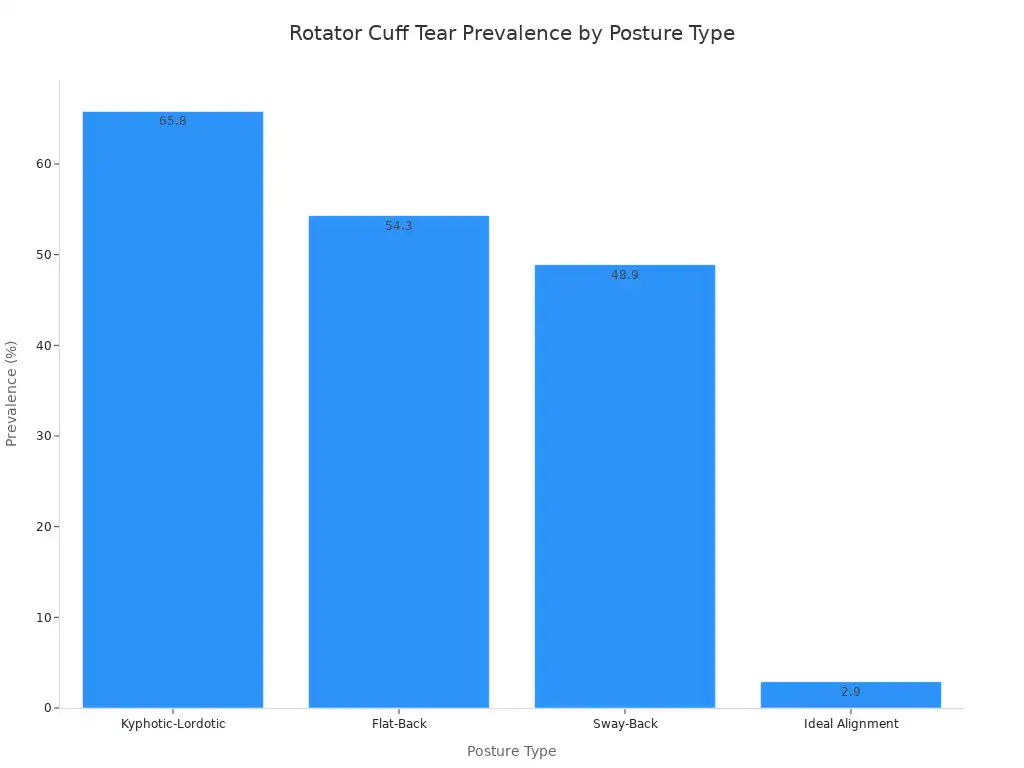
Kyphotic-lordotic posture involves a rounded upper back and an exaggerated lower back curve. Flat-back posture reduces the natural curves of your spine. Sway-back posture shows a forward shift of your pelvis. Maintaining ideal alignment helps reduce stress on your shoulder. It can significantly reduce your pain.
Ergonomic Workspace
Set up your workspace to support your healing shoulder. Proper ergonomics prevents strain and reduces pain.
Place your monitor directly in front of you. This avoids twisting your neck or body.
Position your keyboard so your forearms stay parallel to the ground.
Use hands-free devices for phone calls. This keeps your neck in a neutral position.
Keep your keyboard and mouse close. Avoid stretching your arms.
Adjust your desk height. Your shoulders should relax, and forearms should stay parallel to the ground.
Use an ergonomic chair. It offers lumbar support for proper spinal alignment.
Position your monitor at eye level. Keep it an arm’s length away to prevent neck strain.
Take regular breaks for stretching and movement. This improves blood circulation and reduces muscle fatigue.
Mindful Daily Activities
Extend your awareness of posture and ergonomics to all daily tasks. Lift objects with your legs, not your back. Avoid reaching overhead or carrying heavy bags on one shoulder. Be mindful of how you sit on the couch or stand in line. These small changes prevent unnecessary strain. They support your recovery and reduce pain.
Step 7: Seek Professional Guidance
You have taken many steps to heal your rotator cuff naturally. However, professional guidance is often essential for complete recovery. A healthcare professional can provide expert advice and adjust your plan as needed.
Physical Therapy Consultation
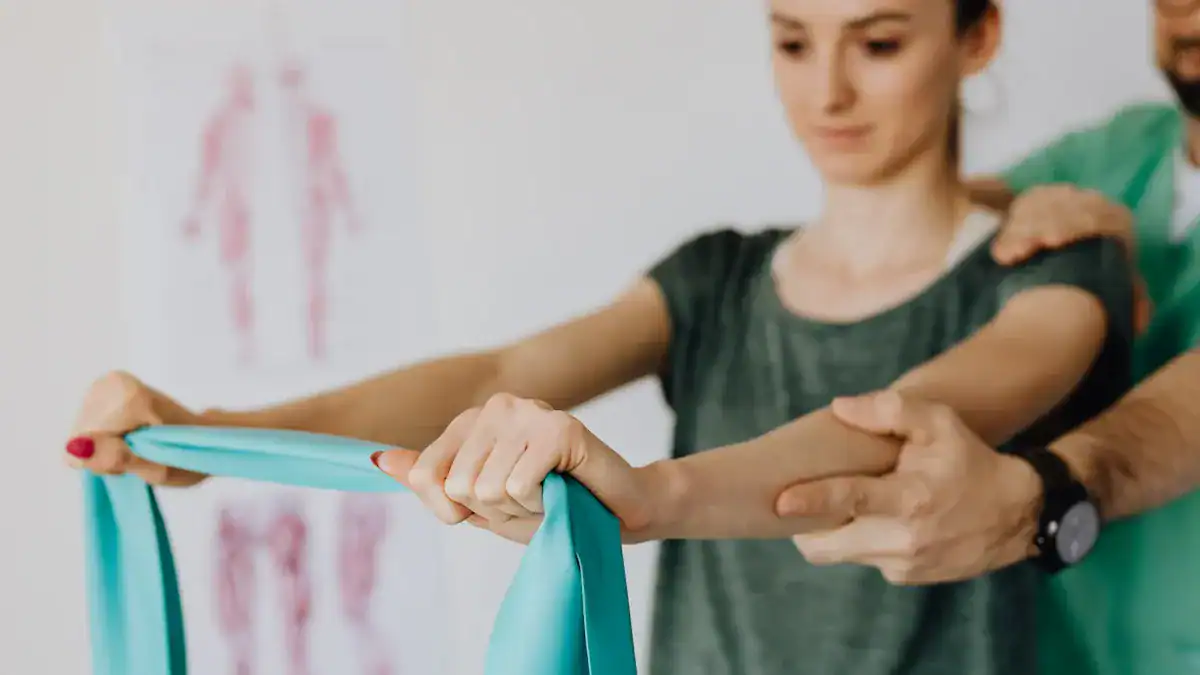
Consulting a physical therapist offers many advantages for your shoulder. Physical therapy helps prevent your rotator cuff tear from worsening. It also strengthens your rotator cuff muscles. A physical therapist trains you to avoid harmful positions. They determine when you can safely return to normal activities. Physical therapy can manage symptoms of chronic tears and improve shoulder function. For larger, irreparable tears, physical therapy teaches strategies to improve shoulder movement. If you do have surgery, physical therapy provides crucial post-surgery rehabilitation. This helps you safely regain full arm use. Physical therapy reduces pain and gently restores movement after surgery.
A physical therapist designs and guides you through a personalized exercise plan. This plan progresses from gentle exercises to activity-specific ones. Rotator cuff exercises, guided by a physical therapist, are crucial for rehabilitation. They offer numerous benefits. You will see improved range of motion. Gentle stretching and strengthening restore flexibility for smoother, pain-free movement. You will also gain increased strength. This bolsters muscle endurance and resilience. It reduces future injury vulnerability and enhances stability. Physical therapy provides pain relief. Tailored exercises alleviate pain by promoting blood flow, reducing inflammation, and releasing muscle tension. You will experience enhanced stability. This fortifies shoulder joint muscles. It reduces further damage risk and improves overall functionality. Studies show physical therapy leads to significant improvements in range of motion, pain management, and associated symptoms.
Re-evaluate Progress
Regularly re-evaluate your progress with your physical therapist or doctor. They can assess your healing. They can also modify your treatment plan. This ensures you continue to make progress. Your recovery journey is unique. Adjustments to your treatment are often necessary.
Recognize Red Flags
You must recognize red flags that indicate a need for immediate medical attention. These signs suggest your injury might be more severe. They may require different treatment.
Look for sudden and severe pain, especially after an injury or trauma. This could mean a fracture, dislocation, or severe rotator cuff tear. Persistent pain and stiffness that lasts for several weeks without improvement is another red flag. Loss of shoulder function, including difficulty moving your arm or a noticeable decrease in strength, needs attention.
Numbness, tingling, or a pins-and-needles sensation in your shoulder, arm, or hand suggests nerve compression or damage. Visible deformity, such as a bump or protrusion on your shoulder, is serious. Unexplained swelling, redness, and warmth around your shoulder joint, particularly with fever, also requires urgent care. An acute rotator cuff tear due to trauma is a significant red flag. It may require surgical intervention.
You can truly heal a torn rotator cuff naturally. Dedication to these steps makes it possible. Remember to prioritize rest, manage pain, and use gentle movement. Strengthen your shoulder, optimize nutrition, and improve posture. Seek professional guidance for your recovery.