Tai Chi is gaining popularity for its significant health benefits. This ancient practice balances your life energy, called ‘qi’, and promotes harmony between mind and body. Its slow, meditative movements, synchronized with your breath, help to lower heart rate and reduce stress. For beginners, focusing on a few core tai chi moves is the most effective way to start. This guide will explain these fundamental movements, show you how to perform them, and detail their benefits. Anyone can begin to practice Tai Chi, regardless of age or fitness level. This low-impact exercise improves your strength, flexibility, and balance, making it truly accessible for all.
Key Takeaways
Tai Chi is a gentle exercise for everyone. It improves your balance, strength, and flexibility.
Start with basic moves and practice regularly. This helps you learn and feel better.
Focus on your breath during Tai Chi. This calms your mind and reduces stress.
Consider finding a teacher. They can help you learn the moves correctly and safely.
Why Essential Tai Chi Moves?
Foundation for Learning
Think of learning Tai Chi like building a house. You need a strong foundation first. If you skip steps, like mastering balance and rooting, your movements become stiff. You will feel unstable. This makes it hard to achieve the soft, flowing movements Tai Chi needs. You should carefully study each body movement. Begin by building your balance and rooting. Do not rush to advanced techniques. Ensure your movements start from your legs and feet. Coordinate all body movement from your Dantian. This progressive approach is crucial. It helps you understand the core principles before trying more complex tai chi moves.
Immediate Health Benefits
You will notice immediate positive changes. Tai Chi helps reduce anxiety and depression symptoms. It lowers your stress levels. You gain better emotional stability. The mindfulness aspect brings a sense of calm. Your mood improves through breathwork and meditation. Physically, you release tension. Your heart rate lowers because you regulate your breath. These are some of the immediate health benefits of tai chi you can experience.
Accessible for All
Tai Chi is truly for everyone. It does not require special equipment. You can practice it almost anywhere. This makes it a free or low-cost exercise. The movements are low-impact. You do not need the flexibility of yoga. It is not as strenuous as other exercises. You can adapt the gentle movements for any ability. You can even perform some moves while seated or with support. This means beginners can practice regardless of your fitness level or health condition.
Core Tai Chi Principles
Mind-Body Connection
Tai Chi is more than just physical exercise. It teaches you to connect your mind and body. You learn to be aware of your internal states. This strong connection helps you direct energy. You can process difficult emotions. You channel vitality to parts of your body needing support. This practice moves energy downward from your head. It reduces excess thinking and stress. You feel more relaxed and grounded. Regular practice of Tai Chi offers many benefits:
Stress Reduction and Mental Well-being: Your slow movements and deep breathing activate your nervous system. This reduces stress hormones and improves your mood.
Enhanced Balance and Coordination: Focusing on body awareness improves your balance. It also enhances coordination, especially as you get older. This helps prevent falls.
Cognitive Benefits: Mindful movements and mental focus stimulate your brain. This improves memory and attention.
Learning tai chi “trains the brain to form connections between regions of the brain that regulate movement, mood and cognitive function, thus improving brain neuroplasticity,” according to a UCLA Health psychiatrist.
Gentle, Continuous Flow
Tai Chi movements are gentle and continuous. They flow smoothly from one to the next. This creates a meditative quality. It enhances both your physical grounding and mental clarity. This continuous movement brings many benefits:
Improved Blood Flow: Better blood flow means more oxygen and nutrients for your brain. You become more alert. Your attention, memory, and learning improve. You feel less tired.
Enhanced Brain Activity: Your brain forms new connections. This improves memory, learning, and processing speed.
Pain Reduction: Tai Chi releases natural chemicals in your body. These make you feel happy and reduce pain.
Stronger Body: Your muscles get stronger. Your balance improves. Your bones become denser. This helps with chronic pain and conditions like arthritis.
Rooting and Centering
Rooting and centering are fundamental to Tai Chi. They provide your stability. You focus your awareness on your dan tien. This is your energetic center below your navel. This focus improves your physical balance. It integrates your upper and lower body. You learn to drop your hips. You let go of your sacrum. You exhale deeply with awareness. This helps you find your center. Rooting your feet into the ground is crucial for stability. Anchoring your sacrum also helps. Occupying your physical center gives you energy for balanced tai chi moves. This practice is a ‘rooting, grounding art’. It gives you grace and stability in daily life. It strengthens your stabilizing muscles. It improves your body’s awareness of its position in space. This forms a strong foundation for your entire Tai Chi practice.
Understanding Basic Tai Chi Moves
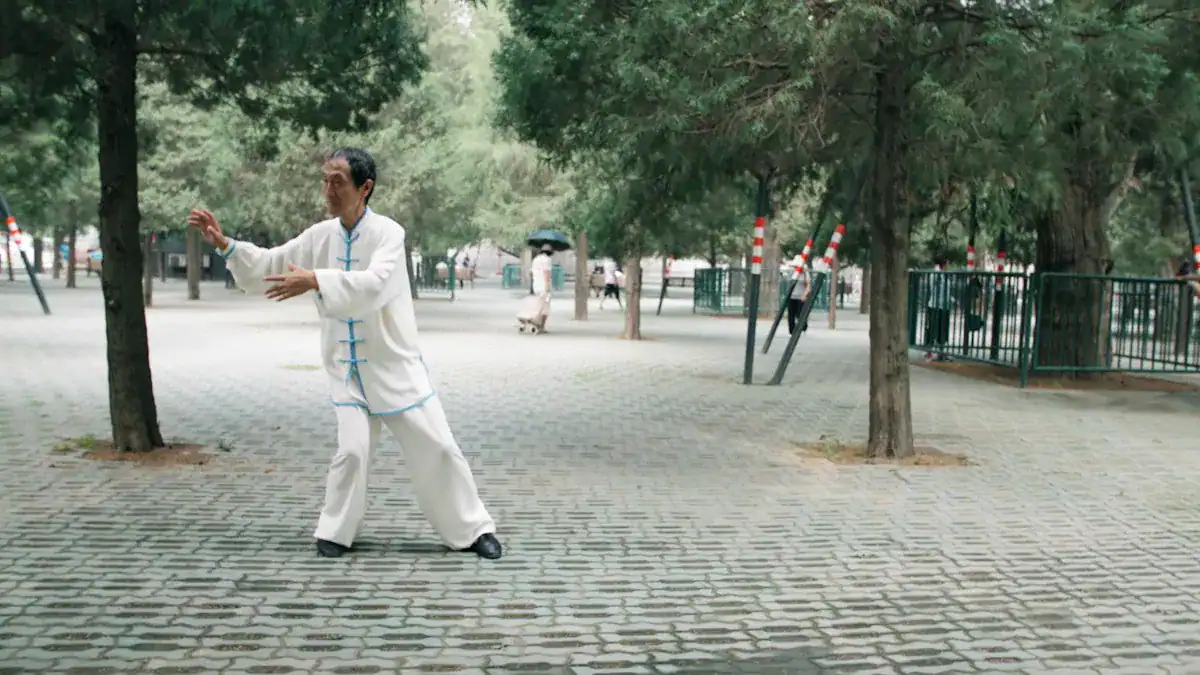
You learn specific basic tai chi moves to build your practice. Each movement has a purpose. It helps you develop strength, balance, and focus. You will learn how to perform each move. You will also understand its benefits.
Opening Form
The Opening Form is your first step in Tai Chi. It prepares your body and mind. You stand tall and relax your shoulders. Your feet are shoulder-width apart. You gently raise your arms. They float up to shoulder height. Then you slowly lower them. This movement centers your mind. It regulates your breath. You establish proper posture. This prepares your entire body and mind for the dynamic motions that follow. It is a crucial start to your practice.
Ward Off
The Ward Off movement is a fundamental defensive posture. It is part of the “Grasp Sparrow’s Tail” sequence. This sequence also includes Roll Back, Press, and Push. Practicing this sequence with deep, rhythmic breathing helps reduce anxiety.
Here is how you perform the Ward Off:
Establish Your Posture: You step to the left. Your feet are shoulder-width apart. Your toes point forward. You relax your knees. You tuck your tailbone. You soften your shoulders. You lift the crown of your head. You begin natural breathing.
Sun Rises, Moon Sets – Yin Yang Hands: You bring your left hand under your right. You form ‘Yin-Yang hands’. This symbolizes balance.
Hold the Ball and Shift Weight: You shift your weight onto your left leg. You imagine holding a ‘Tai Chi ball’ between your softly curved arms.
Execute the Ward Off (Peng): You step back with your right foot. Your heel touches first. You turn your back foot to a 45° angle. Your weight shifts to the right. You raise your right hand in a gentle forward arc. Your left hand supports it. You keep your spine upright. Your shoulder and knee align. Your torso faces forward.
Breath Coordination: You inhale as you prepare and lift your foot. You exhale as you sink and shift weight. You inhale while stabilizing the form. You exhale as you project the Ward Off energy forward.
Roll Back
The Roll Back movement follows Ward Off. You redirect incoming force. You shift your weight backward. Your arms move in a circular motion. You draw energy inward. This movement teaches you to yield. It helps you control an opponent’s energy. You maintain your balance. You prepare for the next action.
Press
The Press movement comes after Roll Back. You gather energy. You then project it forward. Your hands come together. They move in a pressing motion. You use your whole body for this power. This move strengthens your core. It improves your coordination. You learn to apply force effectively.
Single Whip
The Single Whip is a classic Tai Chi posture. It is excellent for improving balance and weight transfers. This move involves internal body mechanics. It uses principles like being grounded. It requires internal strength (Peng Jin). All body parts move together. It uses spiraling or silk-reeling energy. It opens and closes the Kua. Your Dantian directs all movement. This move promotes relaxation. It reduces stress. It improves mental focus. It enhances balance, coordination, and agility. It strengthens muscles. It improves flexibility. It promotes overall well-being.
Here are the steps for Single Whip:
Prepare & Set Posture: You sink into your stance. You step left to establish a stable base. You form ‘yin-yang hands’. Your left hand is under your right. You gently hold a ball.
Ward Off → Roll Back → Press & Pull: You initiate a ward-off movement forward from your yin-yang hands. You slightly roll back to gather energy in your waist. You then press and pull to set up the preparatory coil. You move from your waist, not just your arms.
Circular Single Whip Mechanics: You push your hands slightly forward. This creates space for adjusting your rear foot. You shift your weight to your front foot. You slide your left foot towards the center. You raise your left elbow to heart level. Your right hand turns under as your torso rotates centrally. Your feet angle 45° towards each other. You maintain a balanced stance.
Strike, Scoop & Gather: You open your left elbow from the coiled position. You drop your left hand. Your right hand floats and gathers. You scoop as your weight shifts to the right. You rise onto your left toe. You form a hook hand with your right hand. Your hook forms as you rise.
Step, Turn & Finish: You step left. Your eyes follow your hands for precise placement. You turn your left hand over. You shift your weight forward. You adjust your back foot to form a 45° bow stance. Your front knee is slightly behind your toes. Your pushing hand relaxes near your heart. You keep your eyes on the pressing hand. This unifies intent and movement.
Cloud Hands
Cloud Hands is a flowing, circular movement. It integrates various qigong principles. It helps loosen your body. It smooths your nervous system. It strengthens your ability to circulate energy. This movement enhances coordination between your upper and lower body. It improves overall body awareness and balance. The twisting and spiraling motions increase spine flexibility and strength. This leads to better posture. It reduces back and shoulder tension. It cultivates focus on energy flow and breath coordination. This promotes mental calmness. It reduces stress. It brings inner peace. The circular and deflecting movements can be used for self-defense. You redirect and neutralize attacks efficiently.
Here is how you perform Cloud Hands:
Preparation: You stand in a right-side horse stance. Your eyes look forward to the right. Your left hand is on your waist. Your elbow is slightly forward and down. Your right hand extends forward and rightward. Your elbow is slightly sunk. Your right arm is slightly bent. Your palm faces diagonally forward and downward. Your fingers are at a height between your shoulder and eyebrows. Your right hand and right foot coordinate up and down.
First Move: Elbow Withdrawal and Hand Coiling: Your eyes look forward to the right. Your internal qi slightly relaxes and sinks. Your waist and hips move with lifting and sinking force. Your body turns left. Your right elbow withdraws to your right rib. Your right hand coils and withdraws simultaneously. Your palm faces diagonally forward and downward. Your fingers are at a height between your shoulder and elbow. Your fingers lead the force. Your elbow should be relaxed and drooping.
Second Move: Combining Hand Press and Lean: Your eyes continue to look forward to the right. Your body continues to turn left. Your elbow slightly sinks. Your right hand coils and withdraws to about ten centimeters in front of your chest. Your palm does not cross your body’s midline. It faces diagonally leftward and upward. Your fingers lead the force. Your right shoulder and elbow generate pressing and leaning force. You maintain a central and upright posture.
Third Move: Right Turn and Press: Your eyes continue to look forward to the right. Your body turns right. Your elbow slightly sinks with a reverse coil of your hand. Your right hand positions about twenty to thirty centimeters in front of your right shoulder. Your palm faces diagonally forward and downward. Your fingers lead the force. Your elbow should be relaxed and sunk. It generates pressing and leaning force. The outside of your palm intends to move to the upper right. You maintain a central and upright posture.
Fourth Move: Right Turn and Press and Pluck: Your eyes continue to look forward to the right. Your body continues to turn right. Your right hand reverse coils. Your right hand positions about fifty centimeters in front and to the right of your shoulder. Your palm faces diagonally forward and downward. Your fingers lead the force. Your fingertips align with your right toe. Your right forearm and palm generate pressing and plucking force. You maintain a central and upright posture.
Brush Knee
Brush Knee is a foundational movement. It teaches you weight transfer and coordination. Long-term Tai Chi practice, when done correctly, optimizes how your knee distributes stress. This lowers the risk of localized meniscal damage. It teaches your knees to work smarter. It acts as a biomechanical training system. It is more than just a gentle exercise.
This move offers many benefits:
Physical Benefits: You improve balance and coordination through weight shifting. You strengthen lower body muscles from continuous weight shifts and controlled movements. You enhance flexibility in your shoulders, arms, and wrists. This comes from flowing and circular arm movements. You promote core stability by engaging core muscles.
Mental Benefits: You build a stronger mind-body connection. This comes through slow, deliberate movements and mindfulness. You get stress relief and reduced anxiety from calm and focused practice. You sharpen mental focus. You improve cognitive function. This is due to the concentration required for intricate coordination.
Emotional Benefits: You encourage relaxation and reduced tension. This comes through gentle, flowing movements. You boost self-confidence from mastering the movement. You promote emotional balance and regulation. This is through the meditative aspect of the practice.
Here are the steps for Brush Knee:
Lift Hands & Press Heel: You raise your hands as if holding a ball. You shift your weight slightly back into your rear heel. This sets your balance.
White Crane Spreads Wings: You separate your hands. One rises and one sinks. This mimics a crane unfurling its wings. You inhale during this expansive movement.
Heel Touch & Transition: You lightly touch your front heel down. You shift your weight. This prepares you for the next step. It acts as a ‘reset’.
Step, Brush, Push: You step in a small ‘C’ arc. You brush down across your knee with one hand. You push forward with the opposite hand from your shoulder. You exhale as you push.
Play Pipa (Strum the Lute): You shift back. You bring your hands into a lute-playing shape. One hand is forward. One hand is supporting. Your weight is mostly on your rear leg. Your front heel touches. This creates balance and readiness.
Repeat the Cycle: You alternate sides for Brush the Knee. You use Play Pipa as a transition. This resets you between repetitions.
You can also break down the foundation exercises for Brush Knee:
Feet Only: You practice the C-shaped step slowly. You focus on weight transfer. You corkscrew your back foot without using hands.
Hands Only: You stand still. You practice the hand movements: lifting, brushing, and pushing. You keep your hands rounded. Your movements are controlled.
Full Integration: You combine both feet and hand movements. You move slowly. You maintain natural breathing.
Rhythm Set: You practice five repetitions of Brush the Knee. You use two Play Pipa transitions. You focus on timing and flow.
Beginner Practice Tips
Start Slow and Patiently
You should start your Tai Chi journey slowly and patiently.
Begin with simple movements. Try the preparation stance and breathing. Practice pushing qi or cloud hands. This builds muscle memory. You will not feel overwhelmed.
Use step-by-step videos for clear demonstrations. They guide your pacing and breathing. You can pause and repeat sections.
Build a consistent home practice. Do short, manageable sessions. Ten to fifteen minutes daily is good. Consistency is more important than intensity.
Let go of perfectionism. The essence of Tai Chi is the experience. It is not about flawless poses. Accept imperfections. Focus on patience after mistakes. This helps beginners a lot.
Focus on Breath
Focusing on your breath enhances your Tai Chi. Deep rhythmic breathing cultivates ‘Qi’, your vital energy. It helps you achieve a deeply relaxed state. This practice coordinates your mind, movement, and breathing. Slow, deep breathing can reset your nervous system.
It shifts it towards a calm state. This reduces stress. It improves your mood. It restores balance in your body. You anchor your attention to sensations like breath. This helps you manage negative thoughts. It contributes to your overall well-being. Tai Chi’s slow, gentle movements help you integrate your breath. This enhances your bodily awareness. It also increases your mental focus.
Practice Regularly
Regular practice is key to seeing results. A supervised Tai Chi program often lasts 18 weeks. Participants practice three times per week. Live lessons are 90 minutes. Online sessions are 60 minutes. Many studies show significant results from regular practice. Tai Chi is more effective when you practice for 8 to 16 weeks. This is especially true for improving balance and strength in older adults. Medium-term interventions significantly improve balance and strength.
Consider an Instructor
Consider finding a qualified instructor. An instructor provides personalized feedback. They correct your posture and movements. This ensures you learn correctly. They can guide you through complex forms. They help you understand the deeper principles of your tai chi practice. Learning from an expert can accelerate your progress. It also prevents you from developing bad habits.
These essential tai chi moves are your building blocks for a successful practice. Consistent practice significantly improves your balance. You will see better static and dynamic balance. This helps you stay active and independent. Your spinal and lower body flexibility will also increase. This makes daily activities easier. Tai Chi also reduces stress and anxiety.
It effectively lowers stress and anxiety.
You can alleviate anxiety and depression symptoms.
Your memory and attention may improve.
Embrace this journey. Even short, regular practice sessions yield great results for beginners. Start your Tai Chi journey today.
FAQ
What should I wear for Tai Chi?
You should wear comfortable, loose-fitting clothing. Choose shoes that are flat and offer good support. This allows for free movement and proper grounding. Avoid restrictive clothes or shoes with thick soles.
What if I have balance issues?
You can modify many Tai Chi moves. You can hold onto a chair or wall for support. You can also practice while seated. Focus on gentle movements and building your stability slowly. Your balance will improve with consistent practice.
What is “Qi” in Tai Chi?
“Qi” is your vital life energy. Tai Chi helps you cultivate and move this energy throughout your body. This promotes health and well-being. You feel more balanced and energized when your Qi flows freely.
What if I forget the moves during practice?
Do not worry if you forget a move. You can simply pause and recall the next step. You can also return to the Opening Form. Focus on smooth, continuous movement. Consistency is more important than perfect recall.