


You just twisted your ankle. Is it a minor tweak or something more serious? This common ankle injury often leaves you wondering. Knowing the difference between an ankle sprain and a fracture is crucial for your recovery. For instance, a sprain with a concomitant fracture can average $4161 in treatment costs.
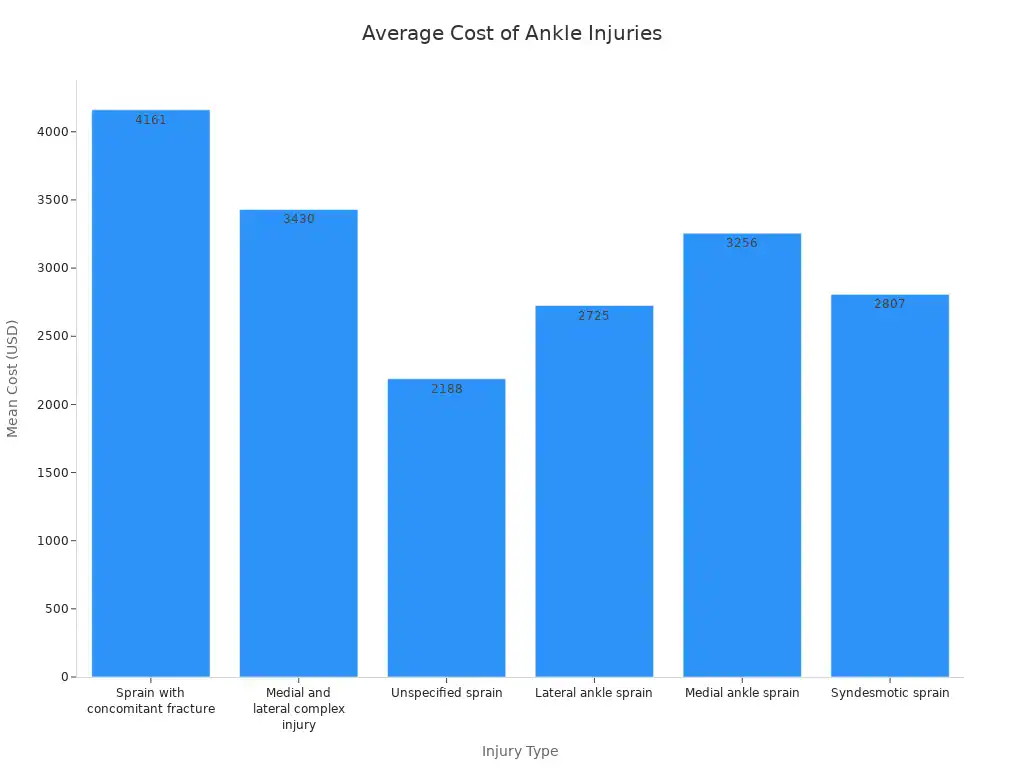
This blog provides an initial ankle injury diagnosis chart. It helps you identify potential ankle sprains or a fracture. Remember, this guide offers information only; it is not a substitute for professional medical advice.
Key Takeaways
An ankle sprain damages ligaments, which connect bones. A fracture means a bone is broken.
Look for signs like swelling, bruising, and deformity. Listen for pops or cracks. Notice if you can put weight on your ankle.
Use the R.I.C.E. protocol right after an injury. This means Rest, Ice, Compression, and Elevation.
See a doctor if you cannot walk, have severe pain, or see a visible deformity. The Ottawa Ankle Rules help decide if you need an X-ray.
Ankle Anatomy Basics
Key Ankle Bones
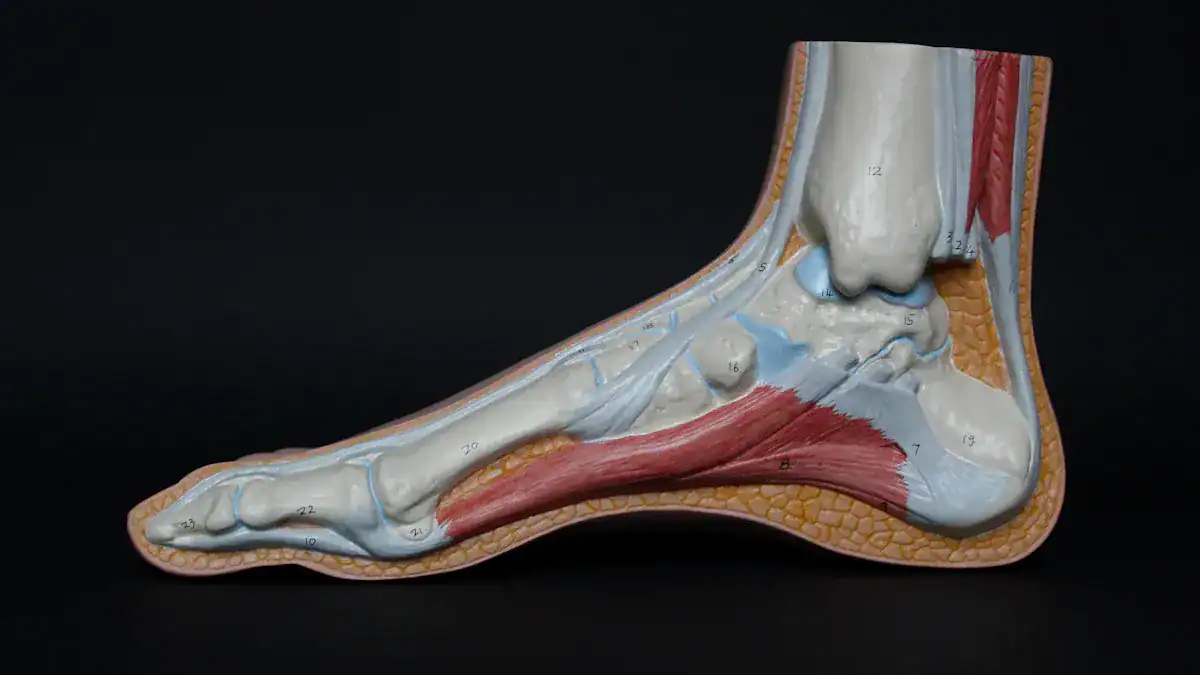
You need to understand the bones that make up your ankle. The primary bones are the tibia, fibula, and talus. The tibia is your shin bone. The fibula is the smaller bone next to it. The talus is a foot bone that sits between them. These three bones form the talocrural joint, which is your true ankle joint. The tibia and fibula create a bracket-shaped socket. This socket is called a mortise.
The talus fits securely into this mortise. This design makes your ankle joint stable. Bony bumps are called malleoli. The medial malleolus is on the inside, from the tibia. The lateral malleolus is on the outside, from the fibula.
Ligaments and Tendons Explained
Your ankle also has important soft tissues. Ligaments are strong cords. They connect bones to other bones. They keep your ankle bones in the correct position. Ligaments stabilize your ankle joint. They prevent twisting or collapsing. Tendons connect muscles to bones. They help your ankle move. You have several groups of ligaments in your ankle.
Lateral Ligaments: These are on the outside of your ankle. They include the anterior talofibular, calcaneofibular, and posterior talofibular ligaments. The anterior talofibular ligament is the one you most often injure.
Medial Ligaments (Deltoid Ligament): This is a strong, fan-shaped group on the inside of your ankle.
Syndesmotic Ligaments: These connect your tibia and fibula just above the ankle joint.
Common Injury Locations
Knowing your anatomy helps you understand injuries. Sprains usually affect ligaments. Most sprains happen on the outside. This occurs when your foot rolls inward. The lateral ligaments, especially the anterior talofibular ligament, are most vulnerable. Fractures involve a break in one or more bones.
You can break the lateral malleolus (outer part), medial malleolus (inner part), or posterior malleolus (back of the tibia). Sometimes, you break more than one of these bones.
Your Ankle Injury Diagnosis Chart: Sprain or Fracture?
You need to understand the differences between a sprain and a fracture. Both injuries cause pain, swelling, and instability. However, key nuances help you tell them apart. This section guides you through a systematic comparison of symptoms.
| Possible Injury Type | Common Symptoms | How It Might Happen | When to Seek Medical Help |
|---|---|---|---|
| Mild Sprain | Mild pain, some swelling, tender to touch | Twisting the ankle while walking, jogging, or during sports | If pain/swelling doesn’t improve in a couple days or walking hurts |
| Moderate Sprain | Noticeable swelling/bruising, pain when putting weight on it | Landing awkwardly after a jump or slipping | If you can’t put weight on it or swelling increases |
| Severe Sprain | Significant swelling, instability, trouble moving the ankle | Sudden forceful twist (like during sports) | Right away—medical attention recommended |
| Tendon Strain | Pain when moving foot or ankle, soreness after activity | Overuse, repetitive movements like running | If pain continues even after rest |
| Fracture (Broken Bone) | Severe pain, inability to stand, major swelling, ankle looks abnormal | Falling, heavy impact, landing hard | Immediately—emergency/urgent care needed |
Visual Signs: Bruising, Swelling, Deformity
Look closely at your ankle. Both a sprained ankle and a broken ankle will show swelling and bruising. However, the timing and appearance can differ.
Swelling and Bruising Onset:
A broken ankle often shows swelling and bruising more immediately.
A sprained ankle may develop swelling and bruising more gradually.
Ankle Deformity:
A broken ankle can result in a noticeable deformity. Your ankle joint loses its natural shape.
A sprained ankle typically retains its structure. This is true even if a ligament is damaged.
If your ankle appears crooked or uneven, you may have a broken ankle. A noticeable deformity, such as a lump or bump around the ankle joint, directly indicates a fracture. This distinguishes a fracture from a sprain. A sprain also causes swelling but usually lacks such a deformity.
Auditory Cues: Pops, Cracks, Snaps
Did you hear a sound when your ankle got injured? This can offer clues.
A ‘popping sound’ at the time of injury is more commonly linked to sprains.
If you heard a ‘cracking or snapping sound’ at the moment of injury, a fracture is more probable.
A ‘snapping or popping sound’ can occur when a joint is injured. A ‘pop’ specifically might indicate misalignment in your ankle, knee, or shoulder. This can happen even without a fracture.
Pain Characteristics: Sharp vs. Dull
You feel pain with both a sprain and a fracture. The type of pain can vary. A fracture often causes sharp, intense pain. This pain usually localizes to the bone break. A sprain might cause a duller, more widespread ache. However, some sprains can be very painful. The level of pain is not a reliable indicator for diagnosing an ankle injury diagnosis chart. Some sprains can be more painful than fractures.
Functional Impact: Weight-Bearing & Motion
Try to put weight on your ankle. Can you stand or walk?
Weight-Bearing:
If you cannot bear any weight on your ankle, a broken ankle is more likely.
With a sprained ankle, you might be able to put some weight on it. However, it will likely be painful.
Motion:
A fracture often severely limits your ankle’s range of motion.
A sprain might allow some movement, but it will be painful and restricted.
Injury Mechanism: How It Happened
Think about how your ankle got injured. The way it happened can help you determine the type of ankle injury diagnosis chart.
Inversion Sprains: These occur when your foot twists upward and your ankle rolls inward. Sudden twisting, awkward landings, or stepping on uneven surfaces commonly cause them. Lateral ligamentous injuries are extremely common. They make up about 85% of ankle injuries. The most common mechanism is foot inversion.
Eversion Sprains: These happen when your ankle rolls outwards. They injure the deltoid ligaments. Medial-sided ankle sprains are less frequent. They represent only 5% of ankle sprains.
Ankle Fractures: These typically result from rotational injuries (twisting forces), severe impact (falls, car accidents), direct trauma, or repetitive stress.
Ankle injuries, including sprains, strains, dislocations, and fractures, commonly result from inversion or eversion injuries, external forces, or direct trauma.
Immediate Steps: First Aid for Ankle Injuries
When you experience an ankle injury, immediate first aid can significantly impact your recovery. You should act quickly to manage pain and swelling.
R.I.C.E. Protocol
The R.I.C.E. protocol is your first line of defense for soft-tissue injuries. You should apply it during the initial 48 to 72 hours after the injury.
Component | Specific Steps |
|---|---|
Rest | Stop using your injured ankle immediately. Look for swelling or throbbing. These are signs to cease activity. |
Ice | Apply ice as soon as possible. Wrap it in a cloth. Apply for 20 minutes at a time, three times per day, for up to 72 hours. |
Compression | Use an elastic bandage to wrap your injured ankle after icing. Make sure it is snug but not too tight. You should not feel tingling or loss of feeling. Use it for 72 hours after the injury. |
Elevation | Raise your injured ankle above your heart. Lie down and place pillows under your lower leg. |
When to Immobilize
You might need to immobilize your ankle in certain situations. Immobilization is generally preferred for severe sprains. This is true if you cannot bear weight for at least three days. A cast can offer better benefits at three months. For ankle fractures, immobilization is a standard part of management. This often follows surgery or conservative treatment.
You can use easily removable devices. These include a plastic ankle-foot orthosis or a simple plaster posterior splint. These allow for early rehabilitation.
Air-filled or gel-filled ankle braces are also beneficial. They restrict inversion-eversion while allowing limited movement. For most ankle sprains, functional support is generally preferred.
When to See a Doctor for Your Ankle
You need to know when to seek immediate medical attention for your ankle. Certain “red flag” symptoms indicate a more serious injury. You should see a doctor right away if you experience severe pain. A visible deformity of your ankle is another critical sign.
If you cannot bear weight on your ankle, you need professional help. Swelling and ankle pain that persist beyond a few days, despite using the R.I.C.E. method, also warrant a doctor’s visit. You might also notice significant swelling that develops rapidly, within 30 minutes, or extensive bruising. Numbness, tingling, or a “pins and needles” sensation in your foot or ankle are also serious.
Red Flag Symptoms
You should watch for specific signs that require immediate medical attention.
You have severe pain.
You see a visible deformity in your ankle.
You cannot bear weight on your ankle for more than a few steps.
Your ankle pain and swelling persist beyond a few days without improvement.
You hear an audible ‘pop’ at the time of injury.
You experience numbness, tingling, or a ‘pins and needles’ sensation.
The Ottawa Ankle Rules
Doctors use the Ottawa Ankle Rules to decide if you need an X-ray. These rules help determine if a bone fracture is likely. You need an X-ray if you have pain in your malleolar zone (the bony bumps on either side of your ankle) and bone tenderness at the posterior edge or tip of the lateral or medial malleolus.
Also, if you cannot take four steps both immediately after the injury and in the emergency department, an X-ray is necessary. For midfoot pain, an X-ray is needed if you have bone tenderness at the base of the fifth metatarsal or the navicular bone. Again, if you cannot take four steps, you need an X-ray. These rules help avoid unnecessary X-rays while catching potential fractures.
What to Expect at a Clinic
When you visit a clinic for your ankle injury, doctors perform several diagnostic procedures. First, they take your medical history. They ask about how your injury happened and any past ankle problems. Next, they conduct a physical examination. They look for swelling, deformity, and bruising.
They also check your ankle’s stability. Doctors use X-rays to rule out a fracture. They follow the Ottawa Ankle Rules to guide this decision. After excluding a fracture, they might perform ligament tests.
These tests check the stability of your ankle ligaments. Sometimes, if the injury is complex or severe, they might recommend advanced imaging like an MRI. An MRI can show soft tissue damage, like ligament ruptures, or subtle fractures.
Ankle Injury Types and Recovery

You need to understand the different types of ankle injuries. This helps you know what to expect for recovery. Ankle injuries range from mild sprains to severe fractures.
Ankle Sprain Grades (1, 2, 3)
Doctors classify an ankle sprain into grades based on ligament damage. You can have a mild sprain or a very severe one.
Grade | Ligament Damage | Symptoms |
|---|---|---|
Grade 1 | Slight stretching, no tears | Mild pain, swelling, tenderness, bruising; you can bear weight and remain stable. |
Grade 2 | Partial tear | Pain, bruising, tenderness, swelling; you have difficulty bearing weight; stability is compromised. |
Grade 3 | Complete tear or rupture | Severe pain, tenderness, bruising, swelling; you find it very difficult to bear weight; stability is severely impacted. |
A sprained ankle can cause significant discomfort. A broken ankle is often more severe than a typical sprain.
Common Ankle Fracture Types
An ankle fracture means you have a broken bone in your ankle. These injuries commonly involve the tibia (shinbone), fibula (smaller lower leg bone), and talus (foot bone). Specific parts of the tibia and fibula form the ankle. These include the medial malleolus (inside tibia), posterior malleolus (back tibia), and lateral malleolus (end of fibula). You might have a lateral malleolus fracture (end of fibula) or a bimalleolar fracture (both tibia and fibula broken).
A broken ankle can affect the main ankle joint or the syndesmosis joint. Sometimes, you might hear it called an ankle break. A severe broken ankle needs immediate attention.
Healing Timelines and Rehabilitation
Your ankle recovery time depends on the injury type. A mild ankle sprain (Grade 1) heals in 1 to 3 weeks. A moderate ankle sprain (Grade 2) takes 3 to 4 weeks. A severe ankle sprain (Grade 3) takes 3 to 6 months. For an ankle fracture, non-surgical cases may heal in 12 to 16 weeks. A complex broken ankle needing surgery might take up to two years for full recovery. This type of ankle break requires extensive care. You must follow your doctor’s advice for a broken ankle.
Rehabilitation helps you regain strength and movement. You start with gentle motion, like ankle pumps. Then, you progress to strengthening exercises using resistance bands. Balance exercises, like standing on one leg, improve stability. Finally, you work on functional training to return to daily activities. This step-by-step approach helps your ankle heal properly.
Accurately assessing your ankle injury is critical. Even minor ankle injuries can have long-term consequences if mismanaged. You could face chronic instability, persistent pain, difficulty with balance, or even develop osteoarthritis in your ankle. Remember, a sprain involves ligament damage, while a fracture means a broken bone. This ankle injury diagnosis chart offers initial guidance.
However, a definitive diagnosis and proper treatment for your ankle always require professional medical evaluation. Prioritize your ankle health. Seek timely medical consultation for any suspected fracture or severe ankle sprain to protect your ankle. This ankle injury diagnosis chart helps you start.
FAQ
What is the main difference between an ankle sprain and a fracture?
An ankle sprain involves damage to your ligaments. These are the strong tissues connecting bones. A fracture means you have a broken bone. You can have a break in your tibia, fibula, or talus.
What are the immediate steps you should take after an ankle injury?
You should follow the R.I.C.E. protocol. This means Rest, Ice, Compression, and Elevation. You should stop activity, apply ice, wrap your ankle, and keep it elevated. This helps reduce swelling and pain. 🧊
When should you definitely see a doctor for your ankle?
You should see a doctor if you cannot bear weight on your ankle. Also, seek medical help if you see a visible deformity. Severe pain or persistent swelling also means you need a doctor’s visit. 🏥
What are the Ottawa Ankle Rules?
The Ottawa Ankle Rules help doctors decide if you need an X-ray. They check for bone tenderness in specific areas of your ankle and foot. They also check if you can take four steps. This helps avoid unnecessary X-rays.
What does “immobilization” mean for an ankle injury?
Immobilization means keeping your ankle still. Doctors use casts, splints, or braces for this. It helps your bones or ligaments heal properly. This is especially important for severe sprains or fractures. 🦵