

You want an effective antiseptic rinse that actually lowers plaque and protects gums, so choose based on evidence and needs: Listerine Freshburst (powerful essential oils, ADA‑accepted), Listerine Gum Therapy (proven gingivitis reversal), Amazon Basics Fresh Breath Blue Mint (budget antiseptic), Colgate Peroxyl (1.5% hydrogen peroxide for wounds, alcohol‑free), and Amazon Basics alcohol‑free Fresh Mint (gentler for sensitivity). Pick based on active ingredient, alcohol content, and intended use — keep going to see specifics and dosing.
| Listerine Freshburst Antiseptic Mouthwash 2×1L |

| Best Overall | Purpose: Antiseptic mouthwash — kills germs, reduces plaque/gingivitis, freshens breath | Use Frequency: Twice daily (30 seconds morning and night) | Breath Freshening: Yes — intense spearmint flavor, freshens breath | VIEW LATEST PRICE | Read Our Analysis |
| Listerine Gum Therapy Antiplaque & Anti-Gingivitis Mouthwash |

| Best for Gums | Purpose: Antiplaque & anti-gingivitis mouthwash — reverses early gingivitis, freshens breath | Use Frequency: Twice daily (morning and night, 20 mL) | Breath Freshening: Yes — glacier mint flavor, provides fresh breath | VIEW LATEST PRICE | Read Our Analysis |
| Amazon Basics Fresh Breath Blue Mint Antiseptic Mouthwash |

| Best Large Supply | Purpose: Antiseptic mouthwash — controls plaque that can lead to gingivitis, freshens breath | Use Frequency: Morning and night use (part of daily routine) | Breath Freshening: Yes — blue mint, freshens breath | VIEW LATEST PRICE | Read Our Analysis |
| Colgate Peroxyl Alcohol-Free Antiseptic Mouth Rinse (6) |

| Best for Sores | Purpose: Antiseptic mouth rinse — oxygenating antiseptic for wound/sores, cleanses oral cavity | Use Frequency: As directed for oral wounds/sores (frequent use for healing; follow label) | Breath Freshening: Yes — mild mint flavor, palatable while treating sores | VIEW LATEST PRICE | Read Our Analysis |
| Amazon Basics Alcohol-Free Fresh Mint Antiseptic Rinse |
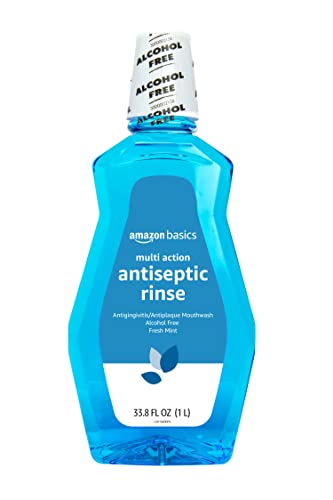
| Best Alcohol-Free | Purpose: Multi-action antiseptic rinse — controls plaque that leads to gingivitis, freshens breath | Use Frequency: Morning and night use (follow label directions) | Breath Freshening: Yes — fresh mint flavor, freshens breath | VIEW LATEST PRICE | Read Our Analysis |
More Details on Our Top Picks
Listerine Freshburst Antiseptic Mouthwash 2×1L
Should you want a powerful, dentist-recommended option for daily oral care, Listerine Freshburst Antiseptic Mouthwash 2×1L delivers a clinical-strength spearmint rinse that kills 99.9% of germs, reduces plaque up to 52% and gingivitis by 21% more than brushing and flossing alone, and gives a lasting fresh-mouth feeling with twice-daily 30-second rinses. You’ll get two 1 L bottles of intense spearmint that leave your mouth feeling clean and help combat bad breath. ADA-accepted for plaque and gingivitis prevention, it gives a dentist-clean sensation upon rinsing morning and night as directed.
- Purpose:Antiseptic mouthwash — kills germs, reduces plaque/gingivitis, freshens breath
- Use Frequency:Twice daily (30 seconds morning and night)
- Breath Freshening:Yes — intense spearmint flavor, freshens breath
- Alcohol Content (presence or absence):Contains antiseptic (implied alcohol-containing typical Listerine formula)
- Bottle Size / Pack:2 × 1 L bottles (convenience pack)
- ADA / Clinical Claims:ADA accepted; clinical stats (reduces plaque up to 52%, gingivitis 21%)
- Additional Feature:Intense spearmint flavor
- Additional Feature:#1 dentist-recommended brand
- Additional Feature:Dentist-clean feeling
Listerine Gum Therapy Antiplaque & Anti-Gingivitis Mouthwash
Should you’ve got initial gum irritation or bleeding, choose Listerine Gum Therapy Antiplaque & Anti-Gingivitis — its ADA-accepted formula is proven to reverse initial gingivitis signs and deliver noticeably healthier gums in as little as three weeks whenever you rinse twice daily. You’ll get glacier mint flavor in a generous 1 L bottle with a child-resistant cap and water-resistant label. Rinse full strength with 20 mL morning and night, don’t dilute or swallow. It reduces bleeding, redness, and inflammation, delivers a whole-mouth clean and fresher breath, and offers antiplaque action reportedly five times better than flossing to support long-term gum health.
- Purpose:Antiplaque & anti-gingivitis mouthwash — reverses early gingivitis, freshens breath
- Use Frequency:Twice daily (morning and night, 20 mL)
- Breath Freshening:Yes — glacier mint flavor, provides fresh breath
- Alcohol Content (presence or absence):Contains antiseptic (standard Listerine Gum Therapy; not alcohol-free)
- Bottle Size / Pack:1 L bottle
- ADA / Clinical Claims:ADA accepted; claims 4× healthier gums in 3 weeks, 5× antiplaque vs flossing
- Additional Feature:Glacier mint flavor
- Additional Feature:Child-resistant cap
- Additional Feature:Reverses early gingivitis
Amazon Basics Fresh Breath Blue Mint Antiseptic Mouthwash
You’ll find the Amazon Basics Fresh Breath Blue Mint Antiseptic Mouthwash is a smart pick whenever you want a budget-friendly, large‑volume antiseptic rinse that still controls plaque and freshens breath. You’ll get a 1.5 L (50.7 fl oz) bottle formerly sold as Solimo, designed for morning and night use as part of your daily oral routine. Its antiseptic formula helps control plaque that can lead to gingivitis while managing bad breath. The large, easy-to-use bottle offers long-lasting supply and Alexa reorder makes restocking simple. Should you like Listerine, try this lower-cost Amazon Basics alternative.
- Purpose:Antiseptic mouthwash — controls plaque that can lead to gingivitis, freshens breath
- Use Frequency:Morning and night use (part of daily routine)
- Breath Freshening:Yes — blue mint, freshens breath
- Alcohol Content (presence or absence):Antiseptic (likely contains alcohol — comparable to Listerine antiseptic)
- Bottle Size / Pack:1.5 L bottle (single)
- ADA / Clinical Claims:Claims antiseptic action to control plaque leading to gingivitis (positioned as comparable to Listerine)
- Additional Feature:Large 1.5 L bottle
- Additional Feature:Alexa reorder enabled
- Additional Feature:Previously sold as Solimo
Colgate Peroxyl Alcohol-Free Antiseptic Mouth Rinse (6)
For anyone needing gentle, alcohol-free care for mouth sores or oral irritations, Colgate Peroxyl is a practical pick thanks to its 1.5% hydrogen peroxide formula that oxygenates and cleanses the mouth to speed healing. You’ll use it to rinse away debris, promote healing of minor wounds, soothe gum inflammation after dental work, and relieve irritation from dentures or braces. Its mild mint flavor keeps it palatable, and the alcohol-free formulation reduces sting. Each 8.45-ounce bottle in the six-pack provides repeated treatments, making it convenient and cost-effective for ongoing oral care during recovery.
- Purpose:Antiseptic mouth rinse — oxygenating antiseptic for wound/sores, cleanses oral cavity
- Use Frequency:As directed for oral wounds/sores (frequent use for healing; follow label)
- Breath Freshening:Yes — mild mint flavor, palatable while treating sores
- Alcohol Content (presence or absence):Alcohol-free (1.5% hydrogen peroxide formula)
- Bottle Size / Pack:8.45 oz bottles, pack of 6 (each 8.45 oz)
- ADA / Clinical Claims:Clinical/therapeutic claim for wound healing via oxygenating (1.5% hydrogen peroxide)
- Additional Feature:1.5% hydrogen peroxide
- Additional Feature:Promotes wound healing
- Additional Feature:Pack of six bottles
Amazon Basics Alcohol-Free Fresh Mint Antiseptic Rinse
Frequent users who prefer an alcohol-free rinse will appreciate Amazon Basics Multi Action Antiseptic Rinse’s fresh mint formula, which helps control plaque that leads to gingivitis. You’ll get a 1-liter, alcohol-free antiseptic designed for morning and night use to support better oral hygiene. In case you like Listerine Antiseptic, this Amazon Basics option offers a similar multi-action approach at a value price. It’s intended for oral rinse use—follow the label for frequency and amount. Ordering’s easy with Alexa voice shopping: say, “Alexa, reorder Amazon Basics Antiseptic Rinse.” Give it a try should you want a straightforward, no-alcohol antiseptic rinse.
- Purpose:Multi-action antiseptic rinse — controls plaque that leads to gingivitis, freshens breath
- Use Frequency:Morning and night use (follow label directions)
- Breath Freshening:Yes — fresh mint flavor, freshens breath
- Alcohol Content (presence or absence):Alcohol-free (explicitly alcohol-free)
- Bottle Size / Pack:1 L bottle (single)
- ADA / Clinical Claims:Claims control of plaque that leads to gingivitis; positioned as comparable alternative to Listerine
- Additional Feature:Alcohol-free formula
- Additional Feature:1 L convenient size
- Additional Feature:Alexa reorder enabled
Factors to Consider When Choosing Antiseptic Mouthwashes
Upon choosing an antiseptic mouthwash, you’ll want to check the active ingredients and their antiseptic strength to match your needs. Consider whether alcohol or alcohol-free formulas suit your sensitivity and how flavor and mouthfeel affect regular use. Finally, look for clinical effectiveness data so you’re selecting a product with proven benefits.
Active Ingredients List
Several key active ingredients appear repeatedly on mouthwash labels, and grasping what each does helps you choose the right product. Essential oils like thymol, eucalyptol, and menthol offer broad antiseptic effects and help reduce plaque and gingivitis. Cetylpyridinium chloride (CPC) is a quaternary ammonium antiseptic that targets plaque bacteria, reducing bad breath and gingival inflammation. Chlorhexidine gluconate is a prescription-strength option with strong, long-lasting antimicrobial activity used short-term for gingivitis or post‑procedural care. Hydrogen peroxide (about 1.5%) acts as an oxygenating antiseptic to cleanse wounds, aid healing of mouth sores, and lower microbial load through releasing oxygen. Should you’re sensitive to alcohol or peroxide, look for alcohol‑free or peroxide‑free formulations using CPC, chlorhexidine, or essential oils for gentler care.
Antiseptic Strength Levels
You’ve just reviewed what the main active ingredients do; now consider how much of those agents you need. Antiseptic strength hinges on the concentration of active antimicrobials—essential oils, cetylpyridinium chloride, hydrogen peroxide, or chlorhexidine—and higher concentrations usually kill more bacteria. Clinical data show validated, stronger formulations can cut plaque greater than 50% and gingivitis about 20% versus brushing alone. Stronger levels give faster, longer reductions in bacterial load and malodor compounds but raise risks like taste changes, irritation, or staining. Use higher-strength agents short-term for procedures or active gingivitis under professional guidance, and stick with lower-strength options for daily maintenance. Always follow label directions for volume, frequency, and duration to protect normal oral flora.
Alcohol Vs Alcohol‑Free
Although both alcohol-containing and alcohol-free antiseptic mouthwashes reduce bacteria and freshen breath, choosing between them comes down to trade-offs in sensation, side effects, and suitability for specific users. You’ll find alcohol-containing rinses often give strong antiseptic action but can cause burning or mucosal dryness from ethanol. Alcohol-free formulations use alternatives — cetylpyridinium chloride, essential oils in non‑alcohol vehicles, or hydrogen peroxide — to control plaque while minimizing irritation. In case you have xerostomia, oral mucositis, or sensitive tissues, pick alcohol‑free to avoid worsening dryness or stinging. Alcohol rinses are inappropriate for young children, recovering alcoholics, and some clinical scenarios because of ingestion risk, so favor alcohol‑free for those groups. Ultimately compare clinical results: the active ingredient and formulation determine efficacy against plaque and gingivitis.
Flavor And Sensation
Pick a mouthwash that feels good to you, because flavor and oral sensations strongly affect whether you’ll use it twice daily. Pay attention to intensity: strong spearmint or menthol gives long-lasting freshness but can be too intense should you have a sensitive mouth. Alcohol-containing rinses often cause a burning or warming sensation; some users take that as potency, while others find it off-putting. In case you have oral sores, dry mouth, or sensitive tissues, choose milder mint or alcohol-free formulations to reduce stinging. Consider aftertaste and immediate cooling sensations—pleasant, not overpowering flavors enhance adherence, and cooling agents can mask bad breath temporarily. Balance your sensory preference with known antiseptic properties so you’ll keep using the product consistently.
Clinical Effectiveness Data
While evaluating clinical effectiveness, look for consistent, peer‑reviewed trials that quantify how much a mouthwash adds to brushing and flossing — most high‑quality studies report roughly up to a 50% additional plaque reduction and about a 20% improvement in gingivitis versus mechanical care alone. You should check trial duration and outcome measures: studies typically run weeks to months and use standardized indices (plaque index, gingival index, bleeding on probing) so you can compare results. Note the rinse protocol—frequency and seconds per use (commonly twice daily for 30–60 seconds) influence results. Prefer products backed by randomized controlled trials and professional endorsements. Consistent, replicated data showing meaningful reductions in plaque, gingivitis, or pathogens is the strongest evidence to guide your choice.
Intended Oral Concerns
Upon choosing an antiseptic mouthwash, start with matching the product to the oral problem you want to address—gingivitis, plaque, post‑procedure healing, halitosis, or sensitivity—and pick formulations supported through evidence for that specific need. Should preventing or reducing gingivitis be your goal, choose rinses proven to lower gingival inflammation and bleeding whenever used twice daily. For plaque control, pick formulas shown to reduce plaque accumulation more than brushing alone. After procedures or for oral sores, consider oxygenating (hydrogen peroxide–based) or antiseptics specifically indicated to cleanse and promote tissue healing. For chronic halitosis, select agents that kill bacteria producing volatile sulfur compounds rather than merely masking odors. In the event you’re sensitive to alcohol or irritation, choose alcohol‑free antiseptic options to reduce stinging and dryness.
Usage Frequency Guidelines
Now that you’ve matched a mouthwash to your oral concern, decide how often and how long to use it so you get the expected benefits without upsetting your oral microbiome. Use antiseptic mouthwash twice daily—morning and night—as a standard regimen to control plaque and gingivitis while preserving microbial balance. Rinse for the full labeled time, commonly 20–30 seconds, so active ingredients contact tissues adequately. Measure the recommended dose, typically 15–20 mL, and don’t dilute the product; dilution reduces antiseptic strength. Never swallow mouthwash, and wait at least 30 minutes after rinsing before eating or drinking to let antimicrobial effects persist. For short-term needs like wound care or post-procedure therapy, follow your clinician’s specific frequency and duration instructions.
Packaging And Value
A few practical packaging features will determine how much value you actually get from an antiseptic mouthwash: bottle size and unit count affect cost per rinse and refill frequency, child‑resistant caps and water‑resistant labels improve safety and durability, and clear dosing marks or a measuring cap make it easy to use the correct volume without waste. Compare fluid ounces or liters and total bottles to calculate cost per rinse; larger bottles (1 L or more) usually give better value for frequent use but aren’t as portable. Look for measured dosing markers or included caps to avoid overpouring. Multipacks or bundle offers often lower unit price and cut shopping trips, but always check expiration dates so you’ll finish product before it expires and avoid waste.