

A chlorine taste in your morning coffee or a noticeable odor at the kitchen sink can make every glass feel less inviting. Carbon filtration targets those everyday concerns, but the cartridge must match your housing, water source, and replacement routine. These seven options split into two clear groups: standard 10 x 2.5-inch whole-house cartridges and gravity-system elements for countertop reservoirs.
The Choices Worth Comparing

PUREPLUS 1 Micron Whole House CTO Carbon Filter 4 Pack
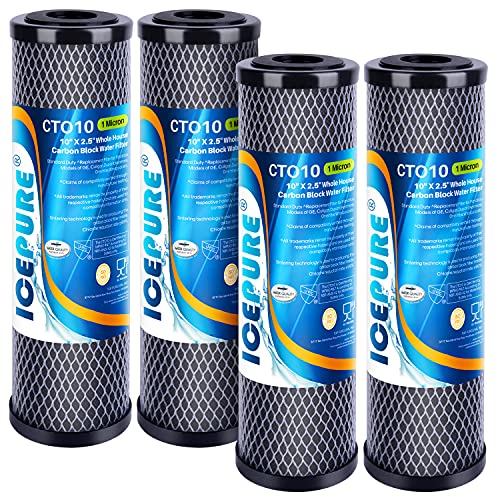
ICEPURE 1 Micron CTO Whole House Water Filter 4 Pack
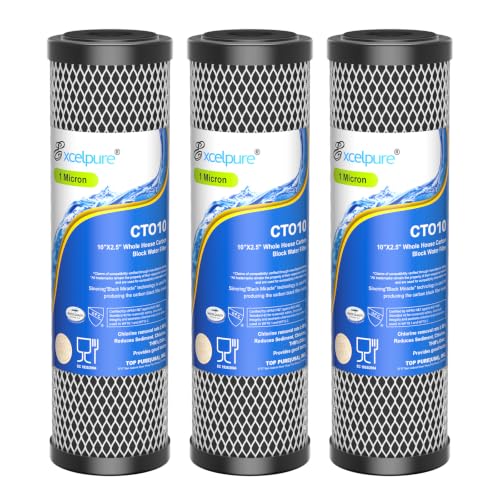
EXCELPURE 1 Micron Whole House CTO Carbon Filter 3 Pack

Larayci BB9-2 Black Carbon Filters 4 Pack

EXCELPURE 1 Micron Whole House CTO Carbon Filter 4 Pack

EXCELPURE 1 Micron Whole House CTO Carbon Filter 2 Pack

Virego BB9-2 Black Purification Elements 2 Pack
Taking A Closer Look At The Options
For a standard 10 x 2.5-inch housing, this four-pack is built around a 1-micron CTO carbon block. CTO refers to chlorine, taste, and odor reduction, while the 1-micron rating describes its fine filtration level for suspended material.
Coconut-shell activated carbon gives the cartridge its adsorption surface, which is useful for homes where chlorinated tap water affects drinking water and cooking. The honest read is that it suits scheduled whole-house maintenance better than a system dealing with heavy well-water sediment.
Advantages To Know
- Fits standard 10 x 2.5-inch whole-house and RO housings.
- Four cartridges help you keep replacements ready between service dates.
- Carbon-block construction targets chlorine-related taste and odor concerns.
- Its stated 13,000-gallon capacity supports longer planning intervals, depending on water conditions.
Things To Consider
- Replacement timing is suggested at three to six months, so mark the installation date.
- Confirm your housing accepts the standard 10 x 2.5-inch cartridge format before opening the pack.
ICEPURE follows the same standard 10 x 2.5-inch format as the PUREPLUS cartridge, yet it speaks more directly to municipal tap-water setups. Its coconut-shell carbon block uses sintering, a heat-and-pressure process that forms the carbon into a dense filtering structure.
That makes it a sensible fit for your kitchen line or whole-house housing where chlorine taste is the main nuisance. For homes on well water with visible sand or mud, you may need a sediment stage ahead of this type of carbon cartridge.
Notable Upsides
- Designed for standard 10 x 2.5-inch housings and several familiar cartridge replacements.
- 1-micron carbon media addresses fine sediment alongside taste and odor.
- The stated six-month change interval can simplify maintenance reminders.
- Four filters create a practical reserve for a busy household.
- Food-grade housing supports a tap-water-focused installation.
Worth Noting
- Well water with larger sediment can clog a dense carbon cartridge sooner.
A three-pack can make more sense than a larger carton when you have limited utility-room storage. EXCELPURE uses the familiar 10 x 2.5-inch whole-house CTO shape, placing it in the same housing category as the first two cartridge options.
Its 1-micron filtration claim covers chlorine, sand, rust, sediment, and color concerns. For city-water households, that combination may be a practical middle ground, while a well-water system benefits from checking sediment conditions first.
The Case For It
- Three cartridges support planned changes without storing an oversized reserve.
- Standard dimensions suit many whole-house and RO filter housings.
- Targets visible sediment concerns alongside chlorine-related taste changes.
Trade Offs
- Heavy mud or sand in well water may shorten cartridge life.
- Confirm your existing housing uses the 10 x 2.5-inch slim profile.
- The three-pack contains fewer scheduled replacements than the four-pack EXCELPURE option.
Who It Suits Best
You benefit most from this pack when your standard whole-house system uses city water and you prefer a moderate replacement reserve.
Where Another Pick Suits Better
PUREPLUS 1 Micron Whole House CTO Carbon Filter 4 Pack fits households that want one additional cartridge stored for the next change.
Larayci moves away from cartridge housings entirely. These black elements are made for compatible gravity reservoirs, including Berkey-style systems and certain Purewell and Waterdrop gravity units, so they suit countertop use, cabins, and travel setups.
The 1-micron coconut-shell carbon elements install with washers and wing nuts, and no priming is required. That is convenient, though the maintenance routine includes weekly full submersion to keep the drip system siphoning properly.
Everyday Perks
- Fits several gravity reservoir series rather than a plumbed filter housing.
- Wing-nut mounting supports straightforward installation.
- No priming requirement shortens the initial setup process.
- Four replacement elements can support households running multiple reservoirs or planning ahead.
- Coconut-shell carbon targets taste, odor, sediment, sand, and rust.
Minor Gripes
- Weekly submersion is an ongoing ownership task for proper drip operation.
- Check your reservoir model and hole configuration before installation.
- This gravity format does not replace a 10 x 2.5-inch whole-house cartridge.
This EXCELPURE set takes the same 1-micron, 10 x 2.5-inch direction as its three-pack sibling but adds a fourth cartridge. That small difference matters for your calendar: a four-pack gives you more spare filters without mixing cartridge types.
It is geared toward tap-water filtration and lists reduction of chlorine, sand, rust, sediment, and color. For most homes with municipal water, that is a clear routine-maintenance choice rather than a specialty solution for heavy sediment.
A Few Highlights
- Four matching filters make it easier to follow a consistent replacement schedule.
- 1-micron media addresses visible sediment alongside chlorine-related taste concerns.
Room For Improvement
- Dense carbon filtration is better matched to city water than water carrying substantial mud or sand.
- Allow shelf space for four full-size cartridges.
- Use only with compatible 10 x 2.5-inch housings.
- The larger pack may be unnecessary for a lightly used secondary system.
The two-pack version is the least storage-heavy EXCELPURE choice here. It keeps the same 1-micron, 10 x 2.5-inch CTO cartridge format as the three- and four-pack options, but you are not committing cupboard space to a larger reserve.
Its high-density construction is positioned for city water. One thing worth considering is your replacement rhythm: a two-pack works neatly for a small household or secondary system, yet frequent replacements can make a larger pack more convenient.
A Few Strong Suits
- Two cartridges take up less storage room than the larger EXCELPURE packs.
- The 10 x 2.5-inch size suits standard slim housings.
- High-density carbon construction aligns with municipal water use.
- A paired supply lets you replace one cartridge while keeping another ready.
Points To Note
- Well water with larger sediment may need a dedicated sediment-focused stage first.
- You will restock sooner than with the three- or four-pack alternatives.
Made For
You will appreciate this quantity most in a smaller household, apartment utility closet, or lightly used standard cartridge system.
Consider Something Else When
EXCELPURE 1 Micron Whole House CTO Carbon Filter 4 Pack suits households that prefer to store more scheduled replacements at once.
Virego is another gravity-reservoir option, so it belongs beside Larayci rather than the 10 x 2.5-inch cartridges. The two-pack format suits compatible BB9-2-style systems that use paired black elements in Travel, Big, Royal, Imperial, Crown, or Light reservoir formats.
Natural coconut-shell activated carbon is the filtering medium, with stated reduction of odor, color, residual chlorine, sediment, and large particles. You may find this pair more practical than a four-element set when your reservoir only needs two filters at a time.
What Works In Its Favor
- Two elements align with common paired gravity reservoir arrangements.
- Coconut-shell carbon targets taste, odor, and color changes.
- Stated 6,000-gallon replacement guidance helps track ongoing maintenance.
Softer Spots
- These elements require a compatible gravity reservoir, not a standard cartridge housing.
What Matters Before Adding a Carbon Filter
Match the Physical Format
Start with your existing system, not the filter claim. Whole-house and RO housings commonly use the 10 x 2.5-inch cartridge format shown by PUREPLUS, ICEPURE, and EXCELPURE, while Larayci and Virego elements need compatible gravity reservoirs. A cartridge that does not match the housing dimensions or mounting design cannot serve its intended role.
Consider Your Water Source
Carbon blocks fit municipal water concerns such as chlorine taste and odor. Well water containing visible mud, sand, or heavier sediment can load a carbon element sooner, so a sediment-focused stage may be useful before carbon filtration. Check your water conditions before treating a carbon cartridge as the only stage your system needs.
Plan the Maintenance Rhythm
Capacity figures depend on water quality and household use, so installation dates matter. Four-packs suit homes that prefer a deeper replacement reserve, while two-packs reduce storage needs. Gravity elements also have their own maintenance steps, including reservoir compatibility and, for Larayci, weekly submersion.
Know What Carbon Does Differently
Activated carbon works by adsorption, meaning compounds collect on the carbon’s highly porous surface. That makes it especially relevant for taste, odor, and chlorine concerns. It does not make every water-quality measurement move in the same direction, so judge your setup by the specific concern you want to address.
Details That Prevent a Mismatch
Common Shopping Slip Ups
A frequent mistake is confusing a gravity element with a cylindrical whole-house cartridge. Measure the housing or identify the reservoir model before selecting a replacement. Also, do not overlook pack quantity, especially in a tight utility closet.
Where the Extra Money Goes
Higher-tier filtration setups can add dedicated sediment stages, larger housings, or more complex plumbing components. Those additions matter most for water with heavier visible particulate or for homes managing several filtration stages. For straightforward municipal water, a correctly sized carbon block may be enough for your stated taste and odor priorities.
Final Thoughts
Your setup determines the right direction here. Choose a standard 10 x 2.5-inch carbon cartridge for a compatible whole-house or RO housing, and choose black elements only for a matching gravity reservoir. PUREPLUS and ICEPURE make sense for established cartridge systems, while Larayci and Virego serve countertop gravity filtration needs.