

A desk chair can look supportive yet leave you shifting by midafternoon, especially during long work sessions, study blocks, or gaming nights. Your setup needs support that matches how you sit, whether that means upgrading the chair itself or improving an existing seat with a cushion, lumbar pillow, or footrest. The seven options below cover full mesh chairs, adjustable lumbar systems, and practical accessories for home offices, cars, and shared workspaces.
The Shortlist At A Glance
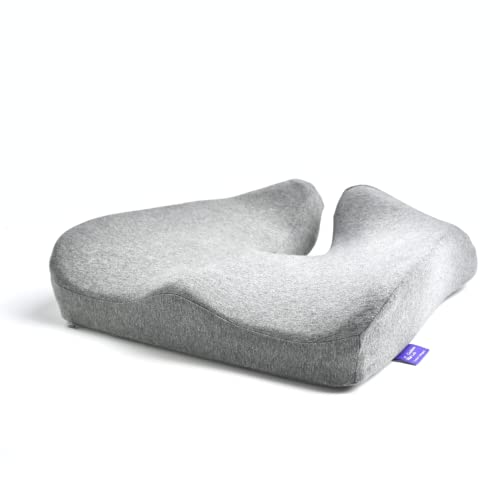
C CUSHION LAB Pressure Relief Seat Cushion Light Grey

C CUSHION LAB Extra Dense Lumbar Pillow Green

KLASIKA Ergonomic Mesh Office Chair with Flip-Up Armrests (8PK)

Ergonomic Mesh Office Chair 400 lbs Black Without Headrest

C CUSHION LAB Ergonomic Foot Rest Memory Foam

ELABEST X100 Ergonomic Mesh Office Chair with Footrest

Marsail Ergonomic Office Chair High Back Mesh
Inside Each Recommended Option
Your current chair may have a usable backrest but a flat, firm seat that makes long sitting feel tiring. This contoured seat cushion uses extra-dense charcoal memory foam, a pressure-responsive foam that reshapes under your weight, to support the thighs and hips while creating a cutout area around the tailbone.
That makes it a practical starting point for a home-office chair, car seat, wheelchair, or mobility scooter. For long commutes or kitchen-table workstations, you may appreciate the portability more than a bulky chair replacement.
Key Advantages
- Contoured form supports the hip and thigh area rather than adding flat padding.
- Extra-dense memory foam suits extended desk sessions.
- Works across office chairs, vehicles, wheelchairs, and mobility scooters.
- Charcoal-infused foam is designed for low-odor use.
Things To Consider
- Your seat height rises once the cushion is added, so desk and armrest alignment deserve a quick check.
Unlike the seat-focused C CUSHION LAB cushion, this pillow addresses the gap between your lower back and the chair. Its multi-region shape supports the lower, middle, and upper-middle back, while dense Hyperfoam provides a firmer feel than loose-fill pillows.
An adjustable strap keeps it positioned on an office chair or car seat, and the removable polyester-rayon cover can be washed. For frequent travel, the same strap can also secure the pillow to luggage, which is a genuinely useful touch.
A Few Strong Suits
- Sectioned contouring supports more than the lumbar area alone.
- Adjustable strap helps keep the pillow from drifting during work.
- Removable cover makes routine cleanup more manageable.
Worth Noting
- Its firmer foam profile suits you better than a soft, deeply compressible pillow.
- Check that your chair back has a shape where the strap can sit securely.
Who It Suits Best
You benefit most from this pillow during car commuting, sofa work, or desk days on chairs with limited lumbar shaping.
Where Another Pick Suits Better
C CUSHION LAB Pressure Relief Seat Cushion Light Grey suits you better when your seat base, rather than your chair back, needs added contouring.
A full chair makes more sense than an accessory once your desk setup needs height adjustment, arm support, and rolling movement. KLASIKA combines a mesh back with a height-adjustable backrest, allowing about 2.3 inches of vertical movement to better meet your lumbar area.
Its flip-up armrests are the standout detail for a narrow home office because they rotate upward for under-desk storage. The honest read is that this design favors adaptable everyday desk use over lounge-style reclining.
Real-World Strengths
- Mesh back promotes airflow during warmer work sessions.
- Backrest height adjustment helps you tune lumbar placement.
- Armrests flip upward to help the chair slide beneath a desk.
- 360-degree swivel supports shared worktables and active tasks.
- Chair supports up to 350 pounds.
Trade Offs
- The 30-degree recline is modest for long relaxation breaks.
- Assembly requires using the included tools and instructions.
- Raised armrests still need clearance beneath your particular desk.
More seat room is the central appeal here. The ventilated mesh backrest measures 19.7 by 19.7 inches, paired with a 2.75-inch high-density foam cushion and a stated 400-pound capacity.
Compared with the KLASIKA chair, this model puts greater emphasis on seat dimensions and capacity. You may find it especially suitable for long desk days where a narrow seat feels restrictive, though the Black Without Headrest version deserves careful confirmation before purchase.
Reasons It Performs
- Wide mesh back gives your upper body more surface area.
- Thicker foam seat suits prolonged computer work.
- Split lower-back structure concentrates support around the waist area.
- Nylon frame supports a stated 400-pound capacity.
- Lumbar pad moves vertically for better positioning.
- Mesh construction supports airflow around the backrest.
Points To Note
- Confirm the listed configuration matches your preferred headrest setup.
- The larger 19.7-inch backrest can take more room than a compact task chair.
Back support begins lower than your backrest because your foot position affects how you settle into a chair. This under-desk footrest raises your feet on pressure-absorbing memory foam and uses raised WaveMassage ridges for a textured resting surface.
It complements the C CUSHION LAB seat cushion rather than replacing it. Shorter desk users, recliner users, and anyone whose feet do not rest comfortably on the floor may find that added elevation useful.
Useful Strengths
- Memory foam creates a softer foot platform than a hard stool.
- Raised ridges add texture beneath your feet during seated work.
Softer Spots
- Added height changes knee and desk clearance, so measure your under-desk space first.
- The textured surface suits bare feet or socks more than every footwear preference.
- You still need a chair set to an appropriate desk height.
Made For
You get the most from this footrest at a desk or recliner where your feet benefit from a raised, cushioned resting point.
Consider Something Else When
ELABEST X100 Ergonomic Mesh Office Chair with Footrest suits you better when you want built-in leg support within a full chair.
The ELABEST X100 is built around adjustment rather than a fixed sitting position. Its 3D lumbar support changes depth, height, and rotation, while 5D armrests adjust across several directions and flip upward for desk clearance.
An 18-inch extendable footrest adds a separate posture option for breaks between focused tasks. For a dedicated workstation, you may value that range of controls, though it asks more from your setup than a simple mesh task chair.
Why It Works Well
- 3D lumbar system changes depth, height, and angle.
- Five-direction armrest adjustments accommodate different desk positions.
- Flip-up armrests help the chair move closer to a desk.
- Extendable footrest supports a more relaxed seated posture.
Small Caveats
- More controls mean you will spend time dialing in your preferred position.
- Extended footrest use requires open space in front of the chair.
- Its feature set may exceed what you need for occasional computer use.
- Check desk clearance before relying on the flip-up arm function.
Marsail takes a more streamlined route than the control-heavy ELABEST X100. You get a high mesh back, adjustable 2D headrest, 3D armrests, and lumbar support that moves forward, backward, upward, and downward.
Its 90 to 120-degree recline supports posture changes through a regular workday without turning the chair into a recliner. For most desk workers, that balance between adjustment and a familiar task-chair layout is enough.
Useful Highlights
- Lumbar support adjusts in depth and height.
- Mesh back provides responsive support with airflow.
- 3D armrests accommodate changing keyboard and mouse positions.
- High-density foam seat measures 3.14 inches thick.
- Chair has a stated 330-pound capacity.
Areas To Watch
- The recline range stops at 120 degrees, so it is less suited to deep lounging.
What Matters Before You Settle on Back Support Seating
Match Support to Your Existing Setup
A lumbar pillow improves the chair back, while a seat cushion changes the sitting surface beneath you. Your current chair may only need one of those changes. Full chairs make more sense where seat height, arm placement, rolling movement, and back support all need attention.
Check Adjustment Range, Not Just Padding
Adjustable lumbar support matters because your torso length and desk height affect where the support lands. A depth adjustment changes how prominently the support meets your back, while height adjustment changes its vertical placement. Mesh backs suit warmer rooms, but foam seats can feel more substantial during long stationary sessions.
Measure Desk Clearance First
Flip-up arms help only when your desk has enough space for the chair to tuck beneath it. Footrests also require room in front of the chair, particularly extendable styles. Before changing your setup, check armrest height, desktop clearance, and the floor space behind and in front of the chair.
Keep Your Daily Routine in Mind
Car commuting calls for portable cushions or a strapped lumbar pillow rather than a large office chair. A shared desk benefits from simple height controls and flip-up arms. Dedicated home offices can justify deeper adjustments such as armrest movement, lumbar depth, recline settings, and an integrated footrest.
Details That Change the Decision
Common Shopping Slip Ups
Avoid selecting a chair based only on thick foam or a tall back. Your actual fit depends on lumbar placement, seat width, arm clearance, and how the chair meets your desk. Accessories also change seat height, which can alter keyboard and monitor positioning.
Where the Extra Money Goes
Higher-tier chairs often add multi-direction lumbar systems, adjustable armrests, larger mesh panels, and integrated footrests. Those features suit long daily computer sessions because you can change position without changing chairs. A simpler model remains sensible for occasional desk work or compact rooms.
Final Thoughts
Your strongest match depends on whether you need to improve an existing chair or replace it entirely. C CUSHION LAB accessories suit portable, lower-commitment changes, while KLASIKA, ELABEST, Marsail, and the 400-pound mesh chair address complete desk setups. Start with the part of your sitting position that needs the most attention, then choose the support that fits your workspace.