

A stuffy nose before school, a cough at bedtime, and a sore throat can call for very different label features. Your child’s age, symptoms, and preferred format matter more than a long ingredient list. The six options below include day-and-night liquids, a chewable format, and one choice for ages 12 and up.
A Side-By-Side Look

Hyland’s Kids Cold & Cough Syrup 2-Pack Day/Night, Ages 2+, 8 fl oz

Mucinex Fast-Max Cold & Flu Day/Night Value Pack, Ages 12+
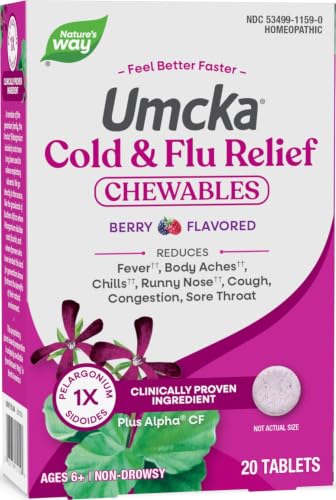
Nature’s Way Umcka Cold and Flu Chewables

VICKS DayQuil and NyQuil Kids Grape Cold & Cough Co-Pack, Ages 6+

VICKS Kids DayQuil & NyQuil Cold & Cough Liquid Co-Pack, Ages 6+, 2x6oz

Mucinex Cold & Cough Children’s Multi-Symptom Day/Night Liquid, Very Berry, 8oz
The Picks, Examined More Closely
Two labeled bottles make this pack easier to place into a school-day and bedtime routine. The daytime and nighttime liquids are intended for children ages 2 through 12, which gives this set a younger starting age than the VICKS and Nature’s Way choices.
Each 4-fluid-ounce bottle provides up to 23 doses. For a household with more than one young child, that split format may feel more practical than keeping a single all-purpose bottle on hand.
What Makes Sense
- Separate day and night syrups help keep routines clear.
- Age range begins at 2 years old.
- Liquid form suits children who cannot manage chewables.
- Both bottles address cough, congestion, runny nose, sneezing, and sore throat symptoms.
- Up to 23 doses per bottle supports repeat household use.
Things To Consider
- Two bottles require careful label checks at each dose.
- The homeopathic active ingredients differ from conventional multi-symptom formulas.
This Mucinex pack belongs in the teen category, not the younger-child category. Its 12-and-up label makes it a clear fit for households managing symptoms for an older child who needs separate daytime and nighttime liquids.
The daytime liquid includes guaifenesin, an expectorant that loosens mucus, while both bottles include acetaminophen, dextromethorphan HBr, and phenylephrine HCl. The honest read is that its wider ingredient list makes label checks especially important.
What Stands Out
- Daytime formula includes guaifenesin for chest congestion.
- Both liquids address cough and nasal congestion.
- Nighttime formula includes triprolidine HCl for runny nose and sneezing.
Worth Noting
- Use begins at age 12, unlike every child-focused option here.
- Multiple active ingredients call for extra care around other medicines.
- The two 6-fluid-ounce bottles take more cabinet room than the 4-ounce sets.
Who It Suits Best
Teens ages 12 and up with cough, stuffiness, chest congestion, aches, or fever fit this more complex day-night format.
Where Another Pick Suits Better
Hyland’s Kids Cold & Cough Syrup 2-Pack Day/Night suits households needing an option labeled for children under 12.
A berry chewable changes the routine completely for children who push back on liquid medicine. Nature’s Way Umcka is intended for ages 6 and up, and it can be chewed or allowed to dissolve in the mouth.
Compared with the day-night bottle pairs, this is a single non-drowsy format. It may suit a school bag or travel kit more naturally, though a child must be comfortable chewing tablets rather than swallowing them whole.
A Strong Showing
- Berry chewable form avoids measuring a liquid dose.
- Non-drowsy format fits daytime routines.
- Children ages 6 to 12 take one tablet twice daily.
- Phenylephrine-free formula may help narrow ingredient preferences.
Trade Offs
- Not intended for children under 6.
Fever changes the decision, and this VICKS co-pack specifically includes cough, sore throat, minor aches, pains, and fever among its stated uses. The paired grape-flavored liquids are formulated for ages 6 and up.
Unlike the dye-free VICKS pair below, this set centers on fever coverage rather than an acetaminophen-free approach. For a child with a fever alongside cough symptoms, that distinction can guide the shortlist quickly.
Everyday Perks
- Daytime and nighttime bottles support different parts of the day.
- Addresses cough, sore throat, minor aches, pains, and fever.
- Grape flavor may make a liquid routine easier.
- Formula is made without aspirin or high-fructose corn syrup.
- Two 8-ounce bottles provide a larger pack than the 6-ounce VICKS set.
- Nighttime liquid also addresses sneezing and runny nose.
Minor Gripes
- Use begins at age 6, so it does not cover preschool-age children.
- Fever-focused formulas require careful coordination with any separate acetaminophen product.
VICKS DayQuil and NyQuil Kids Grape Cold & Cough Co-Pack, Ages 6+
This VICKS pair takes a different route from the fever-support co-pack: it is made without artificial dyes, high-fructose corn syrup, alcohol, and acetaminophen. That makes it a focused choice for households already managing acetaminophen through another labeled product.
Daytime support targets cough, mucus, and chest congestion, while nighttime support targets cough, sneezing, and runny nose. The four-hour stated duration may suit a planned home routine, though you’ll want to follow the bottle directions closely.
Key Advantages
- Formula excludes artificial dyes, alcohol, acetaminophen, and high-fructose corn syrup.
- Daytime liquid addresses mucus and chest congestion.
Room For Improvement
- It does not cover fever or aches through acetaminophen.
- Two flavors, berry by day and grape by night, may not suit every child.
- Use begins at age 6.
- The stated four-hour relief period makes schedule planning more relevant.
Made For
Families with children ages 6 and up who prefer a day-night liquid without acetaminophen may find this the clearer fit.
Consider Something Else When
VICKS DayQuil and NyQuil Kids Grape Cold & Cough Co-Pack, Ages 6+ suits children who need a formula addressing fever and aches.
The day bottle in this Mucinex set puts chest congestion and mucus first, while the night bottle expands toward fever, runny nose, sneezing, and sore throat. That division is more symptom-specific than the single-format Umcka chewable.
Guaifenesin in the daytime bottle loosens mucus, and dextromethorphan HBr is a cough suppressant. For a child whose symptoms shift from a congested afternoon to a restless night, the split approach may be useful.
Why It Works Well
- Daytime formula addresses chest congestion and mucus.
- Nighttime formula includes fever, runny nose, sneezing, and sore throat support.
- Two 4-ounce bottles separate daytime and bedtime routines.
- Very Berry flavor gives both bottles a consistent flavor profile.
Points To Note
- Separate formulas mean you need to select the correct bottle each time.
- Its nighttime ingredient list differs from the daytime bottle, so careful label reading matters.
- The 8-ounce total pack is smaller than the 16-ounce VICKS grape co-pack.
What Matters Before Selecting Childrens Cold Medicine
Start With the Age Label
Age ranges are the first filter, not an afterthought. Hyland’s begins at age 2, several choices begin at age 6, and Mucinex Fast-Max begins at age 12. A child’s age can remove several options from consideration immediately.
Match the Symptoms, Not the Bottle Color
A daytime formula may emphasize cough, chest congestion, or mucus, while a nighttime formula can add runny nose and sneezing support. Fever and aches are a separate distinction, since the VICKS grape co-pack and Mucinex Children’s nighttime liquid list those uses, while the dye-free VICKS set does not include acetaminophen.
Compare Active Ingredients Carefully
Dextromethorphan HBr is used as a cough suppressant, while guaifenesin is an expectorant that loosens mucus. Phenylephrine HCl is listed in several formulas for stuffy nose support. A shorter ingredient list may suit your household routine better, especially where another labeled medicine is already being used.
Consider the Format at Home
Liquid medicine requires measuring and bottle identification, particularly in a day-night pair. Chewables remove the measuring step but require a child to chew or dissolve the tablet as directed. Storage also matters, since a two-bottle pack takes more room than a single container.
Details That Shape Your Shortlist
Common Shopping Slip Ups
Skipping the age label is the easiest mistake to avoid. You’ll also want to separate congestion-focused choices from options that list fever and aches, rather than assuming every cold medicine covers the same symptoms.
Where the Extra Money Goes
Larger co-packs and day-night systems can include separate formulas for different symptom patterns. That added structure can be worthwhile for a household that needs both daytime and bedtime coverage, but a single chewable may be enough for a simpler routine.
Frequently Asked Questions
What age can use Hyland’s Kids Cold & Cough Syrup 2-Pack?
Hyland’s labels this day-night syrup pack for children ages 2 through 12. Check the bottle directions before each use.
Which choice is intended for children ages 12 and up?
Mucinex Fast-Max Cold & Flu Day/Night Value Pack is labeled for ages 12 and up. It is not positioned as a younger-child formula.
Which option comes as chewable tablets?
Nature’s Way Umcka Cold and Flu Chewables comes in a berry-flavored chewable format. It is intended for ages 6 and up.
Which VICKS pack lists fever support?
VICKS DayQuil and NyQuil Kids Grape Cold & Cough Co-Pack lists fever, aches, sore throat, and cough among its uses. The dye-free VICKS co-pack takes a different formula approach.
What does guaifenesin do in a daytime formula?
Guaifenesin is an expectorant, meaning it helps loosen mucus. The Mucinex daytime formulas list it for chest congestion and mucus support.
The Takeaway
Your clearest route is to start with the age label, then match the medicine to the symptoms that are actually present. Hyland’s suits younger children, Nature’s Way changes the format with chewables, and the VICKS and Mucinex pairs give you distinct day-night approaches. Careful label reading keeps the choice grounded in your child’s needs.