

You’ve got great raspberry protein options in 2026. For light, low‑cal refreshment, try WAAY Lemon Raspberry Sparkling Protein Drink, Clear Peach Raspberry Protein Water, or Jive Clear Grass‑Fed Whey Isolate. Want something creamier and more filling? Premier Protein Indulgence White Chocolate Raspberry Shakes hit that dessert vibe. For energy plus hydration, Protein2o Blue Raspberry adds caffeine, L‑theanine, and electrolytes. From macros to sweeteners and use cases, there’s more that can fine‑tune your choice.
| WAAY Lemon Raspberry Sparkling Protein Drink (12-Pack) |

| Best On-the-Go Can | Protein per Serving: 10 g protein per 12 fl oz can | Calories per Serving: 45 calories | Protein Type: Whey protein isolate + collagen | VIEW LATEST PRICE | Read Our Analysis |
| Clear Peach Raspberry Protein Water 20g Grass-Fed Whey |

| Best Mix-and-Sip | Protein per Serving: 20 g protein per scoop | Calories per Serving: 90 calories | Protein Type: 100% whey protein isolate (grass-fed) | VIEW LATEST PRICE | Read Our Analysis |
| Jive Clear Grass-Fed Whey Isolate Protein Powder |

| Best Electrolyte Boost | Protein per Serving: 22 g protein per serving | Calories per Serving: 100 calories | Protein Type: Grass-fed clear whey isolate | VIEW LATEST PRICE | Read Our Analysis |
| Premier Protein Indulgence White Chocolate Raspberry Shakes |

| Dessert-Lover’s Pick | Protein per Serving: 30 g protein per 11 fl oz bottle | Calories per Serving: 170 calories | Protein Type: Milk protein + casein blend | VIEW LATEST PRICE | Read Our Analysis |
| Protein2o Whey Protein Hydration Drink Blue Raspberry |
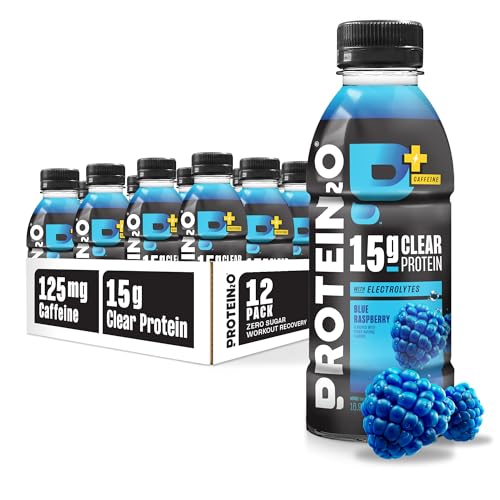
| Energy + Focus Choice | Protein per Serving: 15 g protein per 16.9 fl oz bottle | Calories per Serving: 70 calories | Protein Type: Whey protein isolate | VIEW LATEST PRICE | Read Our Analysis |
More Details on Our Top Picks
WAAY Lemon Raspberry Sparkling Protein Drink (12-Pack)
Should you want a light, fizzy way to improve protein without sugar or caffeine, WAAY’s Lemon Raspberry Sparkling Protein Drink is built for you. Each slim 12 fl oz can delivers 10g of protein from whey isolate and collagen, with just 45 calories and 0g sugar. You won’t find sucralose or sugar alcohols, so it fits clean-label preferences.
You’ll get a lemonade-stand lemon base with a raspberry twist, retro citrus vibes, and a soda-like mouthfeel. It’s ideal whenever you’re rushing between meetings, need a mid-afternoon lift, or want a post-workout refuel without heavy shakes or blenders.
- Protein per Serving:10 g protein per 12 fl oz can
- Calories per Serving:45 calories
- Protein Type:Whey protein isolate + collagen
- Format:Ready-to-drink sparkling 12 fl oz cans (12-pack)
- Sweetening Approach:0 g sugar; no sucralose or sugar alcohols (exact sweeteners not specified)
- Primary Use Case:Light, fizzy daily protein boost; with lunch, mid-afternoon, or post-workout
- Additional Feature:Sparkling soda-like fizz
- Additional Feature:Caffeine-free refreshment
- Additional Feature:Ultra-light 45-calorie option
Clear Peach Raspberry Protein Water 20g Grass-Fed Whey
Clear Peach Raspberry Protein Water is ideal should you want high-quality protein without the heaviness of a traditional shake. Each scoop gives you 20 g of grass-fed, non-GMO whey protein isolate with just 90 calories, filtered to remove most fat, carbs, and lactose. You get fast-absorbing, complete protein that supports lean muscle and sits light on your stomach.
You’ll taste clean peach-raspberry flavor, naturally sweetened with Reb M, monk fruit, and allulose—no artificial flavors, sweeteners, or sugars. Mix one scoop with 14–18 ounces of water in a shaker, let foam settle, and pour over ice for a crisp, water-like drink.
- Protein per Serving:20 g protein per scoop
- Calories per Serving:90 calories
- Protein Type:100% whey protein isolate (grass-fed)
- Format:Powder; mix 1 scoop with water (20 servings)
- Sweetening Approach:Naturally flavored; sweetened with Reb M, monk fruit, allulose; no artificial sweeteners
- Primary Use Case:Post-workout or daily lean muscle recovery with water-like consistency
- Additional Feature:Water-like consistency formula
- Additional Feature:Minimal foam preparation
- Additional Feature:Grass-fed non-GMO whey
Jive Clear Grass-Fed Whey Isolate Protein Powder
In case you want a raspberry protein drink that tastes like a juicy refresher instead of a heavy shake, Jive Clear Grass-Fed Whey Isolate Protein Powder is your match. Its Blue Raspberry flavor drinks more like lightly flavored water than a milky shake, with zero chalk, grit, or dry aftertaste and a flawlessly smooth finish.
Each serving gives you 22 g of grass-fed clear whey isolate at just 100 calories, with 0 g fat, 3 g carbs, and zero added sugar. You’ll also get 895 mg electrolytes for sweaty sessions, plus a clean label: no artificial sweeteners, colors, or flavors.
- Protein per Serving:22 g protein per serving
- Calories per Serving:100 calories
- Protein Type:Grass-fed clear whey isolate
- Format:Powder; clear whey isolate to mix with water
- Sweetening Approach:No artificial sweeteners; zero added sugar (exact sweeteners not specified)
- Primary Use Case:Complete recovery drink with protein + electrolytes; gentle on stomach
- Additional Feature:895 mg electrolytes included
- Additional Feature:Zero chalky aftertaste
- Additional Feature:Not milky, refreshing
Premier Protein Indulgence White Chocolate Raspberry Shakes
Should you want a raspberry protein drink that doubles as a dessert-level treat, Premier Protein Indulgence White Chocolate Raspberry Shakes are an easy fit. You get a rich white chocolate raspberry flavor in an 11 fl oz bottle, packed in convenient 4-packs. Each shake delivers 30 grams of protein with just 3 grams of sugar and about 6–7 grams of carbs, for 170 calories.
The milk protein and casein blend supplies all essential amino acids for muscle repair and satiety. You’ll also get 24 vitamins and minerals in a keto-friendly, gluten-free formula that works as an afternoon snack or late-night dessert swap.
- Protein per Serving:30 g protein per 11 fl oz bottle
- Calories per Serving:170 calories
- Protein Type:Milk protein + casein blend
- Format:Ready-to-drink 11 fl oz bottled shake (4-pack)
- Sweetening Approach:3 g sugar; low-sugar shake (individual sweeteners not specified)
- Primary Use Case:High-protein snack or dessert-like treat; supports satiety and recovery
- Additional Feature:Dessert-craving satisfaction focus
- Additional Feature:24 added vitamins/minerals
- Additional Feature:Keto-friendly, gluten-free
Protein2o Whey Protein Hydration Drink Blue Raspberry
Busy lifters and desk-bound grinders who want protein, hydration, and a smooth energy lift in one bottle will gravitate to Protein2o Whey Protein Hydration Drink in Blue Raspberry. Each 16.9 oz bottle delivers 15 g of fast-absorbing whey isolate with zero sugar and just 70 calories, so you can support lean muscle and weight-management goals without a heavy shake.
You’ll also get 125 mg of caffeine and 250 mg of L-theanine for clean, focused energy, plus 350 mg of electrolytes for hydration. It drinks like lightly flavored water, making it ideal for the gym, office, or travel.
- Protein per Serving:15 g protein per 16.9 fl oz bottle
- Calories per Serving:70 calories
- Protein Type:Whey protein isolate
- Format:Ready-to-drink 16.9 oz bottled protein water
- Sweetening Approach:Sugar free; flavored water–style drink (individual sweeteners not specified)
- Primary Use Case:On-the-go protein hydration with energy + focus for workouts, work, or travel
- Additional Feature:125 mg caffeine boost
- Additional Feature:250 mg L-theanine focus
- Additional Feature:350 mg electrolytes hydration
Factors to Consider When Choosing Raspberry Protein Drinks:
At the point you’re comparing raspberry protein drinks, you’ll want to look closely at the protein type and quality, how they’re sweetened, and the overall calorie and macro balance. You should also pay attention to flavor and aftertaste because they can make or break whether you’ll actually stick with a drink. Finally, consider the texture and mouthfeel so each sip feels smooth and enjoyable, not chalky or gritty.
Protein Type And Quality
Although flavor often grabs your attention initially, the protein type and quality in a raspberry protein drink ultimately determines how well it supports your goals. Whey protein isolate absorbs quickly, delivers a complete amino acid profile, and usually keeps fat and lactose low, so it’s excellent right after training.
Collagen brings glycine and proline that support joints, skin, and connective tissue, but it’s incomplete for muscle building, so you’ll want it combined with a complete protein. In case you prefer plants, look for blends of pea, rice, or soy that create a complete amino acid profile and list digestibility information.
Aim for 20–30 g protein per serving for muscle support. Check labels for isolate or hydrolyzed forms, transparent sourcing, and third‑party testing.
Sugar And Sweeteners
Even before you consider about flavor, the sugar and sweeteners in a raspberry protein drink shape its calories, blood‑sugar impact, and how your stomach feels afterward. Start through checking sugar grams per serving; products range from sugar‑free to several grams, which can quickly change your daily intake and glucose response.
Then look at *which* sweeteners appear: natural sugars, sugar alcohols, high‑intensity options (like sucralose or stevia), or newer choices such as allulose, monk fruit, or Reb M. “Zero sugar” on the front can still mean sugar alcohols or polyols that bother sensitive stomachs.
If you manage insulin, diabetes, or follow keto, choose low‑ or no‑sugar formulas with non‑glycemic sweeteners, and always confirm total carbs. Expect taste tradeoffs: ultra‑low sugar often means sharper aftertastes.
Calorie And Macro Balance
As you compare raspberry protein drinks, focus on their calorie and macro balance so each serving actually fits your goals. Check calories initially: around 40–100 kcal works for light refueling or between-meal support, while 150–300 kcal makes more sense for meal replacement or muscle gain phases.
Next, look at protein density. You’ll get more efficient nutrition from drinks offering roughly 10–30 g protein within about 40–170 kcal. Then scan carbs and sugars: 0 g added sugar and about 0–7 g total carbs suit weight control or low‑carb plans, while higher carbs help restore glycogen after long training sessions.
Finally, weigh fat and protein type. Low fat cuts calories, but moderate fat and slower-digesting blends increase fullness and stagger amino acid release.
Flavor And Aftertaste
As you move past the macros and calories, flavor and aftertaste decide whether you’ll actually stick with a raspberry protein drink. Start by asking whether the raspberry is natural and fruit-forward or more candy-like. Natural flavors usually taste softer and slightly tart, while artificial versions hit harder and can leave a sugary echo.
Scan the label and reviews for sweeteners. Sugar alcohols and high-intensity sweeteners like sucralose or stevia/Reb M can bring metallic, cooling, or lingering sweetness that reshapes the raspberry observation.
Consider the protein base, too. Milk or casein often soften and cream out the fruit, while whey isolates and collagen keep the raspberry sharper. Finally, watch for comments about bitterness or astringency—some puckering finishes feel invigorating, others just harsh.
Texture And Mouthfeel
Texture and mouthfeel quietly determine whether your raspberry protein drink feels invigorating or like a chore to finish. Scan the label for clues: terms like “clear” or “sparkling” usually mean a light, water-like or fizzy sip, while “shake” or “creamy” signals a thicker, milky texture.
Protein type matters. Isolate and hydrolyzed proteins typically feel thinner and less chalky; concentrates and casein lean richer and heavier. Higher protein per serving, plus more calories from fats or carbs, usually create a fuller, more satisfying body.
Carbonation and electrolytes can brighten the drink, making it feel lighter and more rejuvenating. Meanwhile, collagen or glycerin might add noticeable viscosity. Also observe that sugar alcohols often leave a slight cooling or drying finish.
Additives And Ingredients
Even before you consider about flavor or texture, the ingredient list on a raspberry protein drink quietly reveals how it’ll affect your body and routine. Start with the protein source: whey isolate, grass‑fed whey, collagen, or milk protein/casein all differ in amino acid profile, digestion speed, and how they sit with lactose sensitivity.
Next, check sugars and sweeteners. Take note grams of added sugar per serving and whether the drink uses sugar alcohols or high‑intensity sweeteners like sucralose, Reb M, monk fruit, or allulose.
Then look for electrolytes (sodium, potassium, magnesium) in case you want hydration support. Finally, decide how you feel about thickeners, gums, colors, and preservatives, especially in case you prefer a clear, water‑like drink.
Caffeine And Energy Support
While raspberry protein drinks might look similar on the shelf, their caffeine and energy support can feel very different once you drink them. You’ll want to check caffeine per serving—anything from 0 to 125+ mg—so it fits your tolerance and time of day. Go low or caffeine‑free at night, and stick to roughly 50–150 mg for pre‑workout or mid‑day focus.
Look for extras like L‑theanine should you want smoother, sustained energy with fewer jitters. Read the label to see whether stimulation comes only from caffeine or also from other stimulants or sugar; blends can hit harder and could bother sensitive users. Weigh calorie and sugar levels, and total your daily caffeine so you stay under about 400 mg.
Convenience And Use Cases
Because raspberry protein drinks come in everything from ready‑to‑drink cans to big tubs of powder, you’ll want to match the format to how and at what point you’ll actually use them. Should you be commuting, heading to the gym, or flying, grab canned or bottled raspberry RTDs for instant, no‑mix protein—typically 10–30 g per serving with zero prep.
Use powders when you want flexibility: larger 20+ g scoops, custom serving sizes, and easy blending into smoothies or recipes. Keep in mind they require a shaker or blender, a water source, and a brief mix or rest time. For midday refueling, choose lighter, low‑calorie raspberry protein waters. For meal replacement or intense post‑workout recovery, opt for higher‑calorie, creamier raspberry shakes.