

Standing aids make getting up, transferring, and taking short walks safer and easier.
Gait belts with handles, portable standing rails, couch assist rails, and sit‑to‑stand lifts offer practical support at home.
Choose sturdy, corrosion‑resistant materials with padded, non‑slip grips and weight ratings about 25–30% above body weight.
Check seams, buckles, and finishes often, and pick adjustable, portable options that fit your space and any extra medical gear.
| Gait Transfer Belt with Handles for Seniors |
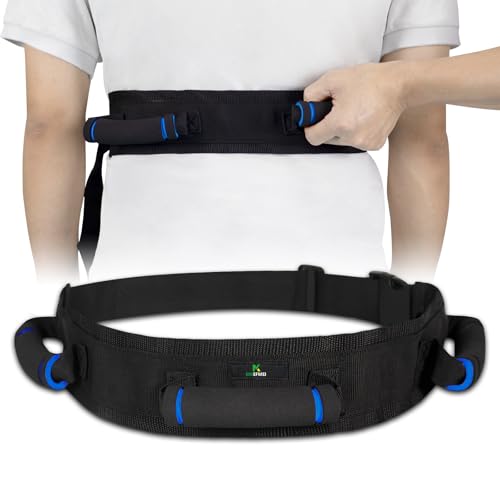
| Caregiver-Friendly Assist | Primary Use: Transfer/standing support for transfers and walking | Target Users: Seniors, post-surgery, injured, disabled, limited mobility | Portability / Home Use: Suitable for home and professional use; machine-washable belt | VIEW LATEST PRICE | Read Our Analysis |
| RTOSY Portable Standing Aid for Seniors |

| Heavy-Duty Support | Primary Use: Assist standing up from floor; rise support | Target Users: Seniors and people with limited standing ability or disabilities | Portability / Home Use: Lightweight, portable, easy to carry and install | VIEW LATEST PRICE | Read Our Analysis |
| Adjustable 4-Prong Couch Stand Assist Rail (30–36″) |

| Most Stable Stand | Primary Use: Sit-to-stand and steadying/standing aid (couch/bed) | Target Users: Seniors, balance-impaired, post-surgery recovery users | Portability / Home Use: Portable; no permanent installation required; easy assembly | VIEW LATEST PRICE | Read Our Analysis |
| Lumex LF1600 Sit-to-Stand Patient Lift for Seniors |

| Clinical-Grade Lift | Primary Use: Sit-to-stand patient lift and transfer assistance | Target Users: Adults and elderly seniors needing transfer assistance | Portability / Home Use: Maneuverable through doorways and around furniture (home use) | VIEW LATEST PRICE | Read Our Analysis |
| HeywoodCabin 2-in-1 Standing Rail & Cane |

| Versatile Everyday Aid | Primary Use: Sit-to-stand and walking support (2-in-1 cane/rail) | Target Users: Elderly users needing sit-to-stand and walking support | Portability / Home Use: Compact and easy to move between rooms or car | VIEW LATEST PRICE | Read Our Analysis |
More Details on Our Top Picks
Gait Transfer Belt with Handles for Seniors
Should you help someone with limited mobility or recovering from surgery, a gait transfer belt with handles is a practical choice because it gives you sturdy, padded grip points to steady and lift safely during transfers and walking. You’ll use a durable 80% polyester, 20% nylon belt with reinforced stitching and three soft sponge–grip handles to support beds, chairs, wheelchairs, cars, and walking. The polymer locking teeth on the quick‑release buckle resist rust and deformation, and the belt fits waists 29–48 inches. It’s machine‑washable and dryable, cuts caregiver strain, and lowers fall and injury risk during therapy and daily care.
- Primary Use:Transfer/standing support for transfers and walking
- Target Users:Seniors, post-surgery, injured, disabled, limited mobility
- Portability / Home Use:Suitable for home and professional use; machine-washable belt
- Adjustability:Belt fits waist sizes 29–48″ (adjustable fit)
- Stability / Safety Features:Reinforced stitching, three padded handles, polymer buckle
- Weight Capacity or Support Limit:Designed to assist/secure user transfers (no explicit max weight given)
- Additional Feature:Three padded handles
- Additional Feature:Polymer quick-release buckle
- Additional Feature:Machine-washable fabric
RTOSY Portable Standing Aid for Seniors
Provided you need reliable help getting up from the floor or extra stability for sore knees, the RTOSY Standing Aid from Floor is built for you — it’s portable, height‑adjustable, and lets you push up with one or both hands. You’ll appreciate its sturdy construction and two‑base threaded design that gives more stability than single‑base models. With an 800‑pound capacity it supports heavier users safely. It’s lightweight, easy to install thanks to the updated threaded base, and simple to carry between rooms or trips. Use it at home or on the go to regain independence and make daily standing tasks easier and safer.
- Primary Use:Assist standing up from floor; rise support
- Target Users:Seniors and people with limited standing ability or disabilities
- Portability / Home Use:Lightweight, portable, easy to carry and install
- Adjustability:Height-adjustable base to suit different users/scenarios
- Stability / Safety Features:Two-base threaded design, sturdy construction, 800 lb capacity
- Weight Capacity or Support Limit:Maximum user capacity 800 lbs
- Additional Feature:800 lb capacity
- Additional Feature:Two-base threaded design
- Additional Feature:Height-adjustable portability
Adjustable 4-Prong Couch Stand Assist Rail (30–36″)
Provided you need sturdy, non‑slip support to rise from a couch or recliner, the adjustable 4‑prong stand assist rail (30–36″) gives you a wide, stable base and a padded handle that make sit-to-stand movements safer and easier. You can use it as a cane, bedside rail, or grab-bar alternative after hip, knee, or abdominal surgery, for vertigo, arthritis, or weak knees. The four rubber-capped prongs grip hardwood, tile, and concrete. It adjusts 30″–36″, stores essentials in a double side pouch, weighs 5 lbs, and supports up to 350 lbs. No permanent installation; easy assembly and toll-free support.
- Primary Use:Sit-to-stand and steadying/standing aid (couch/bed)
- Target Users:Seniors, balance-impaired, post-surgery recovery users
- Portability / Home Use:Portable; no permanent installation required; easy assembly
- Adjustability:Height adjustable 30″–36″
- Stability / Safety Features:Four-prong base with non-slip rubber caps, padded handle
- Weight Capacity or Support Limit:Supports up to 350 lbs
- Additional Feature:Four-prong non-slip base
- Additional Feature:Built-in storage pouch
- Additional Feature:Tool-free easy assembly
Lumex LF1600 Sit-to-Stand Patient Lift for Seniors
Should you need a reliable sit-to-stand aid that lets moderately mobile adults stand with minimal help, the Lumex LF1600 delivers stable, cushioned support and ergonomic handbars so users can actively participate in transfers while caregivers reduce strain. You’ll restore independence and confidence for seniors who can stand with minimal assistance; cushioned knee pads stabilize legs and a padded seat adds comfort. Its heavy-duty steel frame supports up to 400 lbs and users 51″–66″ tall, and it maneuvers through most doorways. Use it for sit-to-stand, chair-to-chair, or steady standing support. Lumex’s 50+ years of trust backs reliable, safe performance.
- Primary Use:Sit-to-stand patient lift and transfer assistance
- Target Users:Adults and elderly seniors needing transfer assistance
- Portability / Home Use:Maneuverable through doorways and around furniture (home use)
- Adjustability:Supports users 51″–66″ tall (built for range of heights)
- Stability / Safety Features:Heavy-duty steel frame, cushioned knee pads, ergonomic handbars
- Weight Capacity or Support Limit:Maximum user weight 400 lbs
- Additional Feature:Cushioned knee pads
- Additional Feature:Padded seat included
- Additional Feature:Heavy-duty steel frame
HeywoodCabin 2-in-1 Standing Rail & Cane
In case you need a compact, dependable aid to help you stand up safely around the house, the HelloWoodCabin 2-in-1 Standing Rail & Cane fits the bill: its 10 height settings, 3-level handle spacing, and 7-level base adjustment let you dial in a comfortable, secure fit for sit-to-stand moves without leaning on walls or a caregiver. You’ll appreciate the anti-slip thickened foam handle and wide non-slip base that protect floors and provide traction. The carbon steel frame holds up to 300 lb with minimal wobble. It assembles tool-free in five steps, packs easily for transport, and includes customer support.
- Primary Use:Sit-to-stand and walking support (2-in-1 cane/rail)
- Target Users:Elderly users needing sit-to-stand and walking support
- Portability / Home Use:Compact and easy to move between rooms or car
- Adjustability:10 height settings (34″–45″) and adjustable handle/base
- Stability / Safety Features:Wide non-slip base, anti-slip foam handle, carbon steel frame
- Weight Capacity or Support Limit:Supports up to 300 lbs
- Additional Feature:10 height settings
- Additional Feature:Carbon steel frame
- Additional Feature:Tool-free five-step assembly
Factors to Consider When Choosing Standing Aids Supports
Whenever choosing a standing aid, you’ll want to check weight capacity limits to make sure it safely supports you. Look at the stability and base design, adjustability options, and handle comfort grip so it fits your body and needs. Also consider portability and size for storage and travel.
Weight Capacity Limits
Although it might seem convenient to match a standing aid to your current weight, pick a model rated at least 25–30% above your body weight to give a safe margin for variable loads, transfers, and unexpected shifts. Also confirm the stated capacity applies to real-use conditions—not just ideal lab tests—so single-leg loading, angled pulls, or one-handed use are covered. Check whether height settings, extended bases, or accessories change the limit; some configurations reduce safe load. Add the weight of assistive items (catheters, oxygen, bags) to your body weight when evaluating capacity. Finally, inspect the device regularly for wear, corrosion, or loose fasteners, since damage can reduce actual load-bearing ability even though the printed rating remains the same.
Stability And Base
A stable base is the foundation of any safe standing aid, so look for designs that resist tipping and slipping while you transfer or reach. Choose wider bases with multiple contact points—four-prong or dual-base styles give much better lateral stability than single-point supports. Prefer low center-of-gravity frames and close-to-floor bases to resist forward or backward tipping whenever you push or pull on the handle. Check that non-slip, high-friction materials or rubber caps are fitted to the feet so the unit grips tile, hardwood, and carpet without sliding during weight-bearing transfers. Verify the rated weight capacity exceeds your weight by a 20–30% safety margin to account for dynamic forces. Multi-point contact configurations let you adapt stability to tasks and room layouts.
Adjustability Options
Stable base choices set the groundwork, but you’ll need adjustability to make a standing aid fit your body, seating, and home environment. Check height adjustability—aim for 6–12 inches of travel or multiple presets so transfers and various chairs work. Look for multiple handle positions or adjustable spacing in inch increments to find an ergonomic grip that reduces shoulder and back strain. Choose bases with adjustable width or multi-prong options so you can fine-tune stability on different floors and for varying balance needs. Verify weight capacity whenever components are extended; many rate 300–800 lbs, but confirm the rating holds at all settings. Prefer quick-release or tool-free adjustments for ease, plus lockable mechanisms to prevent unintended movement during use.
Handle Comfort Grip
Often you’ll observe that handle comfort makes the biggest difference in daily use, so pick grips that cushion pressure, resist slipping, and fit the size and strength of the user’s hands. Look for padded, contoured handles with soft foam or sponge coverings to cut pressure points and prevent hand fatigue during repeated use. Choose non‑slip textured surfaces or rubberized coatings so you keep a secure hold whenever hands are sweaty or damp. Match handle diameter and shape to the user’s hand—about 1–1.25 inches for weaker grips, up to 1.5 inches for arthritic hands. Prefer angled or multi‑position designs to vary wrist orientation and reduce joint strain throughout transfers. Finally, verify padding is durable and washable or replaceable to preserve hygiene and comfort.
Portability And Size
Consider where you’ll use and store the standing aid before you buy it: check both folded and assembled dimensions so it fits through doorways, between furniture, and into vehicle trunks, and compare the unit’s weight to what you or your caregiver can safely lift—lighter models (typically under 10–15 lbs) travel easier, while heavier frames can feel steadier. Measure height, width, and depth against tight spaces, and confirm the folded profile is compact enough for closets or car trunks. Prefer quick-release or tool-free folding for solo handling, and detachable or telescoping components to reduce bulk whilst traveling. Check built-in handles, straps, or carrying bags so routine relocation stays manageable. Match portability features to your lifting ability and storage limits.
Material Durability Quality
As you’re evaluating a standing aid, focus initially on the materials and construction—they determine how long the unit will safely perform under daily use. Choose frames of high-strength steel, reinforced carbon steel, or heavy-gauge aluminum so tensile strength and bend resistance support long-term use. Inspect connection points, welds, and stitching; continuous welds, heavy-duty rivets, and reinforced seams cut failure risk from repeated loads. Pick handles and grips in closed-cell foam, medical-grade silicone, or dense rubber that resist compression, tearing, and retain tackiness. Prefer corrosion- and wear-resistant finishes like powder coating or anodizing, stainless components, and polymer buckles rated for repeated stress. Finally, verify weight- and cycle-load ratings and follow manufacturer inspection intervals to assess expected service life.
Ease Of Cleaning
Because standing aids see frequent skin contact and spills, you’ll want surfaces and components that clean easily without degrading. Choose machine-washable or wipeable materials—polyester/nylon blends, vinyl, or coated fabrics—so regular cleaning and disinfection won’t damage them. Look for removable covers and components like cushions, pads, and straps so you can launder or replace parts separately to keep hygiene high. Check manufacturer cleaning instructions and temperature limits: some fabrics tolerate machine wash and tumble dry, others need low-heat or cold wash to prevent shrinkage. Prefer reinforced stitching and polymer or stainless hardware that resist rust and odors after repeated cleaning. Consider antimicrobial or moisture-wicking fabrics for frequent skin contact, and avoid materials that trap dirt or moisture, such as untreated open-weave meshes.
Intended Use Scenario
Keeping surfaces clean matters, but you also need to pick a standing aid that suits how and where it’ll be used. Match the device to the primary task—floor-to-stand, sit-to-stand, walking support, or short stabilization—because each is engineered for specific motions and force directions. Consider the environment: room layout, flooring, door widths, clearance, and whether you need portability or non-slip stability. Check typical body positions and height ranges so handhold height, knee support, or mechanical advantage fit the user. Consider frequency and who operates it: daily independent use demands greater durability and easier setup than occasional caregiver-assisted transfers. Finally, confirm the user’s balance, strength, weight-bearing capacity, pain, and joint limits to guarantee safe mechanical advantage.