

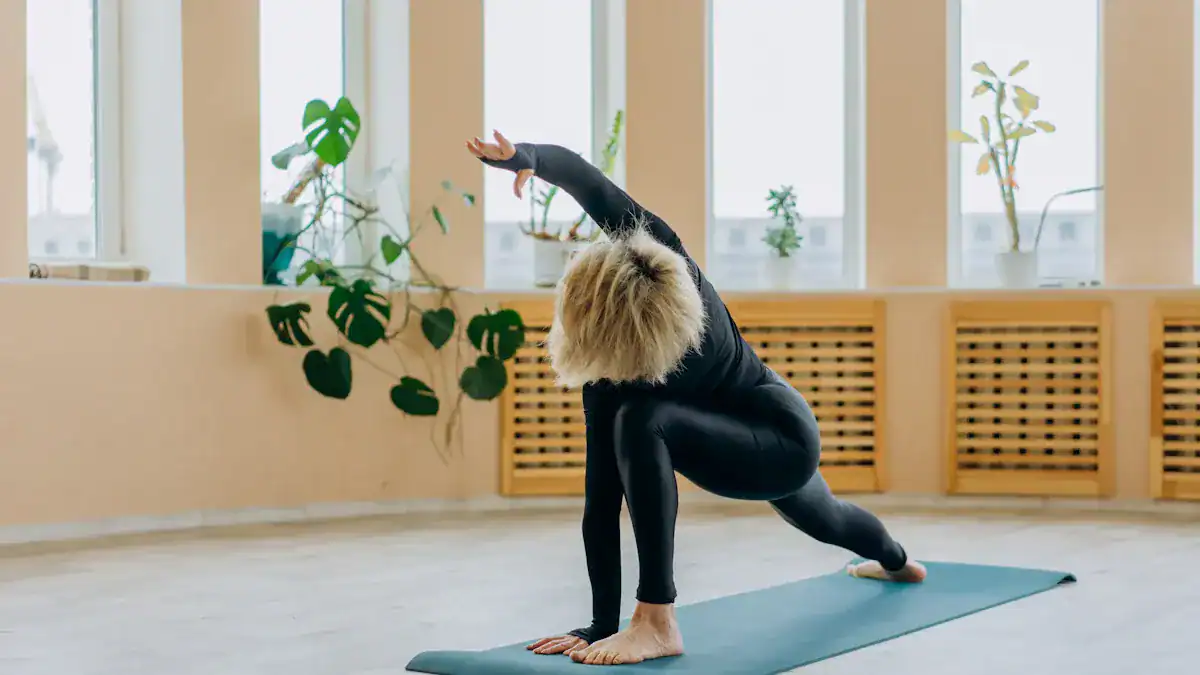
Starting a fitness journey can feel overwhelming. Many beginners face anxieties and uncertainty. You are not alone; almost half of individuals discontinue their exercise program within six months. Psychological barriers often arise:
You might feel you lack enough time.
Fear and self-doubt can hold you back.
An all-or-nothing mindset often destroys fitness goals. This guide empowers you to begin slowly, safely, and effectively. It provides actionable steps and simple workout plans for beginners. You will discover the best workout routines for beginners. Learn how to start strong at the gym. Build a solid foundation for every workout you do.
Setting Your Beginner Fitness Goals
Realistic Goal Setting
You need clear goals when you start your fitness journey. Setting realistic goals helps you stay motivated. The SMART method is a great way to set goals. Your goals should be Specific, Measurable, Attainable, Relevant, and Timely. You can also add an Emotional component to make them more personal.
For example, instead of “exercise more,” aim to “complete three 30-minute strength workout sessions each week.” This makes your goal clear.
Break down your goals into smaller, manageable steps. For beginners, this is very important. You can aim for consistent workouts, like three times a week. Schedule these sessions and set reminders. You might want to run a mile. Start with shorter distances and slowly increase them.
Discovering a workout routine you enjoy is also a good goal. Try different activities like yoga or kickboxing. You can also aim for daily steps, like 10,000 steps a day. Focus on a monthly average to reduce pressure. Mastering push-ups is another great goal. Start with incline or knee push-ups. Gradually increase your strength. Remember to include rest days. Your body needs time to recover. Stretching for 15 minutes can improve flexibility. Holding a plank for one minute is a good strength goal. Start with 20-30 seconds and build up.
Monitoring Early Progress
Tracking your progress keeps you motivated. It shows you how far you have come. You can track simple things. If you did 3 sets of 10 push-ups last week, try for 31 total push-ups this week. If you lifted 135 pounds for squats, aim for 136 pounds or more next time. These small increases show you are getting stronger.
Look for fitness milestones. Completing your first pull-up or running a faster mile are big achievements. Pay attention to your flexibility. Can you touch your toes more easily? Can you squat deeper? These are signs of improvement. Notice how your clothes fit. Changes around your waist or hips show shifts in your body. You can also track your body measurements monthly. Use a tape measure for your waist, hips, chest, or arms.
Focus on consistency, not perfection. Set realistic weekly goals. Prioritize showing up for your workout. Use fitness trackers for reminders, not just numbers. Celebrate small wins. Finishing a tough workout or improving your flexibility are reasons to celebrate. These steps help you succeed with your workout plans for beginners.
Effective Workout Plans for Beginners
You need structured approaches to achieve your fitness goals. This section details effective workout plans for beginners. These plans help you build muscle, burn fat, and boost endurance. They also include flexible tips, weekly schedules, and strength routines to build your confidence.
Why Full-Body Workouts are Best
Full-body workouts are excellent for beginners. They engage many muscles in one session. This approach helps you learn movements faster. It also reduces your risk of injury. You train your entire body, which means you hit each muscle group more often.
Research supports full-body training for beginners. A 2024 study in the European Journal of Sport Science showed that a full-body workout group lost more fat than a split-body group. The full-body group lost an average of 0.775 kg of fat. The split-body group gained an average of 0.317 kg. The study also found that full-body workouts caused much less delayed onset muscle soreness (DOMS). The split-body group had up to 7.5 times higher soreness in their lower body.
Full-body workouts burn more calories. They use more muscle mass. This leads to higher calorie burn during and after your workout. This is great for your body composition goals. Training large muscle groups also releases more anabolic hormones. These hormones, like testosterone and growth hormone, help your muscles repair and grow. You also increase your training frequency for basic movements like squatting, pushing, and pulling. This helps you learn proper form quickly and reduces injury risk. A full-body workout is a smart choice for you.
Sample Weekly Workout Plans for Beginners
You can start with a simple, effective workout plan. These workout plans for beginners focus on consistency and proper form. A basic full-body circuit workout plan for beginners includes:
Squats: 3 sets of 10 reps
Push-ups: 2 sets of 12 reps
Seated Row: 3 sets of 10 reps
Plank: 2 holds of 20 seconds
Rest for 30 to 90 seconds between sets. Adjust the weight if you can easily do 15 reps. Also adjust if you struggle to reach 8 reps with good form.
Here is a simple 7-day beginner-friendly workout plan:
Monday: Full-body strength (e.g., squats, push-ups, seated rows)
Tuesday: Light cardio (20–30 minutes of walking or cycling)
Wednesday: Rest or gentle stretching
Thursday: Lower-body strength (e.g., lunges, glute bridges, calf raises)
Friday: Upper-body strength (e.g., bench press, lat pulldowns, dumbbell curls)
Saturday: Cardio (any machine)
Sunday: Rest or foam rolling
You can also include a 40-minute moderate-pace jog or brisk walk on cardio days. Add shorter walks on rest days. To avoid plateaus, vary your workout. Alternate between different types of full-body workouts. For example, one workout could focus on barbell lifts. Another could use dumbbells and single-leg variations. This keeps your body challenged.
A 4-week plan can help you build muscle. This plan gradually increases volume and intensity.
Week | Split Type | Frequency | Goal |
|---|---|---|---|
1 | Full-Body | 3 days | Learn basic movements and build a foundation |
2 | Two-Day (Upper/Lower) | 4 days | Increase volume and target muscles from multiple angles |
3 | Three-Day (Push/Pull/Legs) | 6 days | Further increase volume and focus on specific muscle groups |
4 | Four-Day (Full Body Focus) | 4 days | Maximize volume and intensity for muscle growth |
For Week 1, perform 3 sets of 8–12 reps for exercises like squats, bench press, and bent-over rows. Rest 60–90 seconds between sets. This balanced beginner workout helps you build a strong foundation.
Recommended Beginner Strength Programs
Many effective workout plans for beginners exist. Fitness experts recommend several programs. These programs help you build strength and confidence. General principles for beginners include:
Perform 2-3 full-body workouts per week.
Include 4-5 compound exercises that work multiple muscles.
Aim for 8-10 moderately challenging reps for 1-3 sets.
Popular programs include Starting Strength and StrongLifts 5×5. Starting Strength is a gold standard for beginner barbell training. It is simple and effective. You do three workouts per week. Each session focuses on core lifts like squats, bench press, and deadlifts. Sessions usually last an hour.
This program builds significant strength through progressive overload. However, you need specific equipment like a barbell and squat rack. The program can also be physically challenging and repetitive. It might also increase your hunger, leading to weight gain if you do not manage your diet.
StrongLifts 5×5 gradually introduces weight. It helps you master your form. Jim Wendler’s 5/3/1 offers flexibility for exercise selection. It addresses personal weaknesses. You can also start with a Beginner Bodyweight Workout.
Personal trainer Stephanie Mansour suggests bodyweight strength training for beginners. Bodyweight exercises are effective for building muscle and toning. They reduce injury risk. They also help you focus on proper form without needing equipment. These best workout routines for beginners help you start your fitness journey safely.
Essential Strength Exercises for Beginners
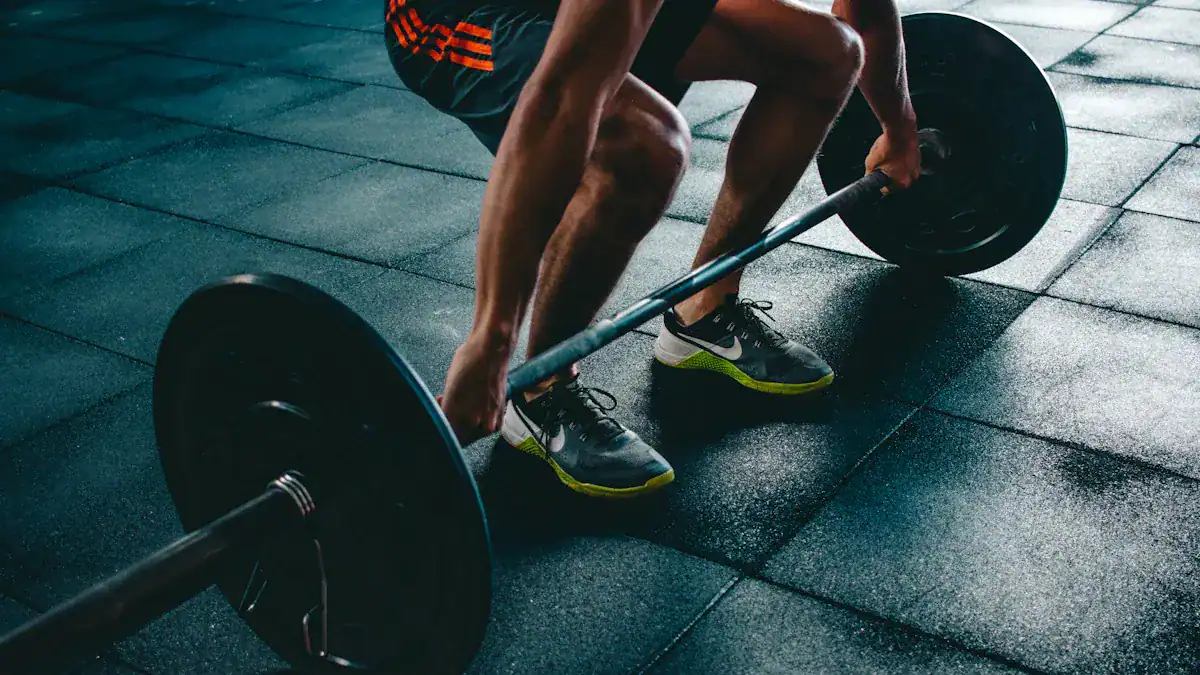
You need to learn specific exercises to build a strong foundation. These exercises help you develop strength and proper movement patterns. You will start with bodyweight movements. Then you will move to machines. Finally, you will learn how to use free weights.
Foundational Bodyweight Movements
Bodyweight exercises are perfect for beginners. They use your own body as resistance. This makes them cost-effective because you do not need equipment. You can do them anywhere.
They also promote body awareness. You learn how your body moves. This helps you recognize when you are ready for more challenging exercises. Bodyweight exercises also have a lower risk for injury. You focus on form without heavy weights. They are efficient. They can even double as strength and cardio workouts when you perform them quickly. You can adapt these exercises to your current fitness level.
Here are some foundational bodyweight movements:
Modified Push-up: This works your chest, shoulders, triceps, and core. You can drop to your knees or use an elevated surface to make it easier. Keep your body in a plank position. Maintain a 45-degree angle with your elbows.
Superhuman: This strengthens your back muscles, especially the erector spinae. These muscles help you bend, flex, and rotate your back. Lie on your stomach. Extend your arms overhead. Engage your core as you lift.
Dead Bug: This activates your deepest core muscle, the transverse abdominis. Lie face-up. Extend one arm and the opposite leg. Keep your lower back pressed to the floor.
Bird Dog: This strengthens deep core muscles, your back, hip-stabilizing muscles, and glutes. It teaches core stability. You learn to maintain a neutral spine. Extend one arm and the opposite leg from a tabletop position.
Mountain Climber: This is a dynamic plank variation. It increases core intensity. It strengthens your shoulder stabilizers. Drive your knees towards your chest from a high plank position.
Bodyweight Squat: This targets your quads, glutes, hamstrings, calves, and core. Stand with your feet hip-width apart. Push your hips back. Bend your knees as if sitting in a chair. Make sure your knees track over your feet.
Lateral Lunge: This strengthens your quads, glutes, and hip adductors. Step out to the side. Bend one knee into a squat. Keep your other leg straight.
Hip Bridge: This strengthens your glutes and hamstrings. It also acts as a core exercise. Lie on your back. Bend your knees. Lift your hips to form a straight diagonal line from your shoulders to your knees.
You might make some common mistakes when you perform bodyweight squats. You can correct these mistakes to improve your form and prevent injury:
Mistake: Knees rotate in or out.
Correction: Keep your hips stacked over your heels. Keep your knees over your ankles. A shoulder-wide stance can help. Adjust your stance based on your hip mobility. Keep your toes forward. This prevents pressure on your IT band. It also ensures glute engagement.
Mistake: Knees push past toes.
Correction: Sit back more. Ensure you can see the tips of your toes when you look down. Focus on leading with your hips going back. This primarily engages your glutes, not just your quads.
Mistake: Squatting too low.
Correction: Lower to 90 degrees as a beginner. This avoids excessive stress on your knees and quads. It also helps you maintain leverage for glute engagement. You can use a stability ball against a wall. This helps you maintain proper alignment.
Mistake: Lifting onto toes.
Correction: Press through your heels. This generates power. It engages your glutes. It prevents knee injury, overstressed ankles, and quad dominance.
Mistake: Ignoring your core.
Correction: Engage your core. Drive through your abdominals as you stand. Maintain a neutral spine. Stabilize your inner core muscles. Engage intra-abdominal pressure (IAP). Think of expanding your abdomen like a balloon by breathing deeply into your stomach.
Mistake: Dropping your chest.
Correction: Maintain good posture. Keep your head straight. Lift your chest. A slight forward lean is normal. Avoid overly rounding your back. Use a mirror to check your alignment.
Mistake: Squatting too fast.
Correction: Control the movement. Do not rush. Allow for ample recovery between sets. This maximizes effectiveness. It prevents injury.
Mistake: Forgetting to breathe.
Correction: Breathe into your belly (diaphragmatic breathing). This stabilizes your core. Inhale gradually as you squat down. Exhale slowly as you press up through your heels.
Safe Machine Exercises
Machine exercises offer a safe and effective way for beginners to build foundational strength. Machines reduce your risk of injury. They control your range of motion. Most machines have instructions and diagrams. These guide you on how to use them. Machines also isolate specific muscles. This makes them ideal for beginners. Mastering machine exercises can boost your confidence. You will feel ready to try free weights later.
Here are some beneficial machine exercises for your workout:
Exercise | Muscles Worked | Reps | Sets |
|---|---|---|---|
Leg Press | Quads, hamstrings, glutes | 10-12 | 3 |
Chest Press | Chest, shoulders, triceps | 10-12 | 3 |
Lat Pulldown | Lats, biceps, shoulders | 10-12 | 3 |
Seated Leg Curl | Hamstrings | 10-12 | 3 |
Shoulder Press | Shoulders, triceps | 10-12 | 3 |
Abdominal Crunch Machine | Abs | 12-15 | 3 |
Introducing Free Weights
You can transition to free weights once you feel comfortable and stronger with machines. Free weights offer more functional movement. They engage more stabilizing muscles. This makes your workout more effective.
Here is a recommended progression for you:
Begin with machine exercises. This builds strength and confidence.
Transition to free weights once you are comfortable and stronger.
Consider swapping specific machine exercises for their free-weight counterparts. For example, replace a leg press with a squat.
Consult a personal trainer for further guidance. You can also use a beginner’s guide to free weights.
When you start with free weights, aim for 3 sets of 10-12 repetitions for each exercise. Use light free weights. Rest for 1 minute between sets. Increase the weight of the free weights when these repetitions become easy. You can progress to intermediate routines once you have increased the weight multiple times. You will feel strong in the movements. This gradual approach helps you build strength safely. It also ensures proper form in your workout.
Integrating Cardio into Your Beginner Routine

Benefits of Cardiovascular Exercise
Cardiovascular exercise is vital for your overall health. You improve your cholesterol and blood pressure levels. You also reduce your risk of many diseases, such as heart and blood vessel conditions. Regular cardio helps you live longer. It strengthens your heart and lungs.
You complete everyday tasks, like carrying a full laundry basket or climbing stairs, with less effort. Cardio also improves your brain function. You increase feelings of emotional well-being. This improves your quality of life. You strengthen your bones, muscles, and joints. Cardio helps manage your weight. This lowers your risk of heart disease, type 2 diabetes, and some cancers. You increase your energy levels. You sleep better. You also lower your risk of dementia later in life.
Beginner-Friendly Cardio Options
For beginners, low-impact cardio options are ideal. These activities protect your joints while still providing a great workout. You can try swimming; the water’s buoyancy reduces body weight effect on your joints.
Cycling minimizes stress on your lower joints. Rowing also limits stress on your body. Elliptical machines protect your joints with a gliding motion. Vertical climbers mimic mountain climbing with almost zero impact. Walking puts significantly less stress on your ankles, knees, and hips compared to running. Hiking on softer trail surfaces also reduces strain. You can also consider shadowboxing for a physical and mental challenge. Yoga and Pilates improve mobility, flexibility, and core strength safely.
How Often to Include Cardio
You should aim for at least 150 minutes of moderate-intensity physical activity each week. This means about 30 minutes, five days a week. You can achieve this weekly goal by performing your workout in 10- or 15-minute blocks throughout the day.
For instance, you can do 10 minutes before breakfast, 10 minutes during your lunch break, and 10 minutes after dinner. Or, you can do 15 minutes in the morning and 15 minutes in the afternoon. If you have been inactive, start with short, low-intensity workouts. As your endurance improves, you increase the duration of your workouts before increasing their intensity. Once you are accustomed to longer sessions, you can gradually increase your cardio’s intensity.
Maximizing Your Beginner Workout Success
Finding Your Optimal Workout Time
Finding the best time for your workout is a personal choice. Some people prefer morning workouts. They feel energized for the day. Others find evening workouts help them unwind.
The most important thing is to choose a time you can stick with consistently. Integrate your workout into your daily routine. Treat it like an important appointment. This helps you commit to your fitness journey. Effective workout plans for beginners fit into your life.
The Importance of Consistency
Consistency is key to long-term fitness success. Regular effort brings results. You build habits. You also see progress. Focus on your deeper motivations for exercising. This helps you stay driven.
Create a realistic weekly schedule. Shorter, consistent sessions prevent burnout. Prepare in advance. Set out clothes or pack your gym bag. This reduces mental resistance. Develop accountability. Use a workout partner or online communities.
Follow a flexible yet structured exercise plan. This removes guesswork. Reframe setbacks positively. View missed workouts as rest opportunities. Return to your schedule without guilt. Find exercises you enjoy. This maintains enthusiasm. Track your progress. Note mood, energy levels, or stress reduction. This reinforces a positive relationship with your workout.
Listening to Your Body and Preventing Injury
Pay close attention to your body. It gives you important signals. Beginners should recognize signs of overtraining or potential injury. Look for a plateau or decline in workout performance.
Notice increased perceived exertion for normal workouts. Persistent fatigue and low energy are warning signs. Unusual muscle heaviness or soreness can indicate a problem. Recurrent injuries like sprains also signal issues. Persistent pain, even after rest, could mean a more serious bone issue. Prioritize proper warm-up and cool-down. Gradually increase intensity. This allows your muscles to adapt.
Nutrition and Recovery for Beginners
Proper nutrition fuels your body. It supports muscle repair and growth. Protein is essential. Aim for 1.2–2 grams per kilogram of body weight. Get it from chicken, fish, or eggs. Carbohydrates provide energy for your workout. Consume 45–65% of daily calories from complex carbs.
Choose fruits, whole-grain bread, or sweet potatoes. Healthy fats aid hormone production. They provide steady energy. Include avocado, nuts, or olive oil. Micronutrients support overall health. Eat colorful vegetables and fruits. Hydration is crucial. Drink water consistently.
Recovery is vital for muscle repair. It reduces soreness. Aim for 7-9 hours of sleep nightly. This is essential for muscle recovery. Stay hydrated. Drink plenty of water. Engage in low-intensity activities on rest days. This is active recovery. Use foam rolling to release tension. Stretching improves flexibility. These strategies help you maximize your beginner workout plans for beginners.
Starting small and staying consistent is crucial for your long-term fitness success. Embrace patience and self-compassion on your journey. A regular workout routine improves your health, energy, and mood. You now understand the best workout routines for beginners. These are the best workout routines for beginners to build a strong foundation. Take the first step today. Consider a personal trainer or online resources for more guidance on your workout.