You may have noticed your blood pressure readings change depending on if you are lying down, sitting, or standing. These blood pressure variations are not random. You might wonder why these differences occur and what they mean for your health.
Understanding how your body position affects your blood pressure is crucial for accurate monitoring and managing your health. For instance, supine systolic blood pressure is often 2–3 mmHg higher than sitting blood pressure. This knowledge helps you track your overall blood pressure more effectively. We will explore how blood pressure changes in different positions.
Key Takeaways
Your blood pressure changes based on if you are lying down, sitting, or standing. These changes are normal.
Measuring blood pressure correctly is important. Use the right position and cuff size for accurate readings.
High blood pressure when lying down (supine hypertension) can be risky for your heart, even if sitting readings are normal.
A big drop in blood pressure when you stand up (orthostatic hypotension) can make you dizzy. It might signal a health issue.
Check your blood pressure regularly and talk to your doctor about any unusual readings or concerns.
Understanding Blood Pressure Basics
What is Blood Pressure
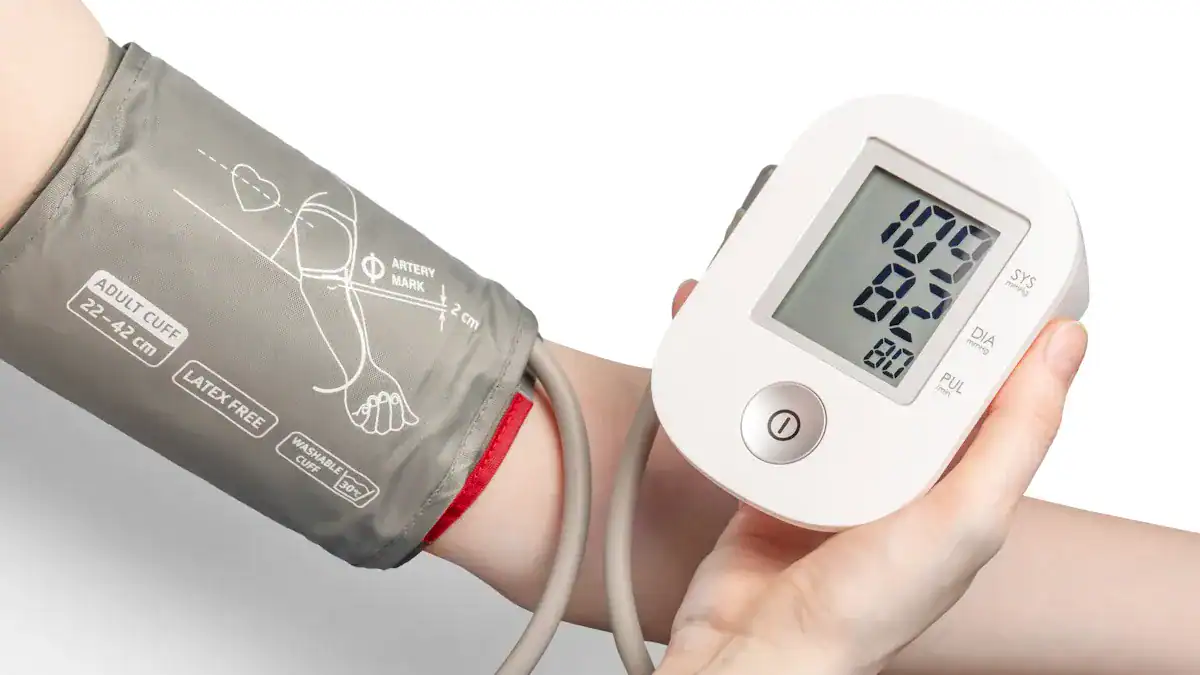
Blood pressure is the force of blood pushing against the walls of your arteries. It is the pressure exerted by circulating blood upon the walls of arteries. This pressure primarily results from your heart pumping blood through your circulatory system.
Your blood pressure is a vital sign. It shows how hard your heart works to move blood throughout your body. Understanding your blood pressure is key to good health.
Key Components of Readings
When you get your blood pressure readings, you see two numbers. These numbers tell you different things about your blood pressure. The top number is your systolic blood pressure.
It measures the pressure against artery walls when your heart beats. The bottom number is your diastolic blood pressure. It measures the pressure against artery walls when your heart is resting between beats. Both numbers are important for assessing your overall blood pressure.
Factors Influencing Blood Pressure
Many factors influence your blood pressure. Your heart’s pumping strength, called cardiac output, directly impacts your blood pressure. A higher cardiac output increases the volume of blood in your vessels, which raises your blood pressure. The tightness of your blood vessels, known as total peripheral resistance, also plays a role. Narrower vessels increase resistance and, consequently, your blood pressure. Your body has a system, the autonomic nervous system, that quickly adjusts your blood pressure. It uses sensors to detect changes.
Other systems, like the Renin-Angiotensin-Aldosterone System and Anti-diuretic hormone, regulate your blood pressure over time. Imbalances in these systems can lead to high blood pressure. Maintaining normal blood pressure is crucial for your heart health and to prevent cardiovascular disease.
Blood Pressure Variations by Position
Your blood pressure changes depending on your body position. These blood pressure variations are normal. Understanding these shifts helps you get accurate readings and manage your health better. You will see significant differences in blood pressure when you lie down, sit, or stand.
Blood Pressure When Lying Down: Supine Readings
When you measure your blood pressure when lying down, you take a supine reading. This position can sometimes show health issues that seated readings miss. For example, supine hypertension, or high blood pressure only when lying down, links to serious heart problems.
“We think that this study is really important because it highlights that this could be an . . . occult form of hypertension that can be detected by patients or clinicians very readily,” Juraschek said. He noted that patients could measure supine blood pressure at home with a good device.
Research shows that supine hypertension increases your risk for heart disease, heart failure, stroke, and even death. This risk is present even if your seated blood pressure is normal. Having high blood pressure only when lying down can be as risky as having it in both positions. It often carries more risk than just having high blood pressure when sitting. The ARIC study looked at heart risks in adults. It found supine hypertension in many people, even those without high seated blood pressure. This shows how lying down affects blood pressure and why checking your blood pressure when lying down is important.
Blood Pressure When Sitting
Doctors usually measure your blood pressure when sitting. Most research linking high blood pressure to heart problems uses seated measurements. This includes many large studies. Guidelines for target blood pressure numbers also come from seated readings.
To get an accurate blood pressure when sitting, you should:
Relax and sit with your back supported.
Keep your legs uncrossed.
Support your arm at heart level.
Remove all clothing covering the cuff area.
Place the middle of the cuff on your upper arm, level with your heart.
Avoid talking during the measurement.
Blood Pressure When Standing
Your blood pressure changes when you stand up. Typically, your systolic blood pressure decreases more when you stand compared to sitting. Your diastolic blood pressure, however, tends to increase when you move from sitting to standing.
Blood Pressure Parameter | Position | Time Interval (seconds) | Change (mm Hg) | 95% Confidence Interval |
|---|---|---|---|---|
Systolic Blood Pressure (SBP) | Standing | 0-44 | -11.5 | -17.0, -5.9 |
Systolic Blood Pressure (SBP) | Sitting | 0-44 | -8.7 | -14.2, -3.2 |
Diastolic Blood Pressure (DBP) | Sitting | 75-224 | 4.1 | 1.4, 6.9 |
Diastolic Blood Pressure (DBP) | Sitting | 75-224 | 3.3 | 0.6, 6.0 |
Diastolic Blood Pressure (DBP) | Sitting | 75-224 | 4.5 | 1.8, 7.2 |
Diastolic Blood Pressure (DBP) | Sitting | 75-224 | 4.3 | 1.6, 7.0 |
Diastolic Blood Pressure (DBP) | Sitting | 75-224 | 4.4 | 1.7, 7.1 |
Physiological Reasons for Positional Changes
Your body has clever ways to manage blood pressure changes when you shift position. When you stand up, gravity pulls about 700 mL of blood into your legs and abdomen. This reduces the blood returning to your heart. Your heart then pumps less blood, and your arterial pressure drops.
Here is how your body responds:
Muscle Contraction: Your leg and belly muscles contract when you stand.
Reduced Vagal Tone: This muscle activity causes your heart rate to increase quickly.
Blood Pooling: Gravity causes blood to collect in your lower body.
Decreased Cardiac Output and Arterial Pressure: Less blood returns to your heart, so your heart pumps less. Your blood pressure can drop by up to 20 mmHg within 10 seconds.
Baroreflex Activation: Your body senses this drop in pressure. It activates your baroreflex, which causes another increase in heart rate.
Increased Sympathetic Tone: Your body also increases sympathetic tone. This makes your heart pump stronger and tightens your blood vessels. These actions help stabilize your blood pressure close to what it was when you were lying down, usually within 30 seconds.
Heart Rate Stabilization: Your blood pressure then stabilizes, and your heart rate settles at a level higher than when you were lying down.
These blood pressure variations show your body’s amazing ability to adapt. Understanding how lying down affects blood pressure and how your body adjusts to different positions helps you interpret your blood pressure readings more accurately.
Health Implications of Positional Variations
Understanding your blood pressure variations is vital for your overall health. Sometimes, these shifts signal an underlying health issue. You need to know when a blood pressure change is normal and when it indicates a problem.
Orthostatic Hypotension: Causes and Symptoms
Orthostatic hypotension happens when your blood pressure drops significantly upon standing. This condition can make you feel unwell. You might experience dizziness or lightheadedness when you stand up. This feeling often improves when you sit or lie down. Other symptoms include fainting, blurred vision, chest pain, or difficulty concentrating. You might also feel fatigue, headaches, heart palpitations, nausea, or shortness of breath.
Many factors can cause orthostatic hypotension. Some common causes include dehydration or low blood volume. Certain medications can also contribute, such as alpha blockers, antidepressants, or other antihypertensive drugs. Prolonged bed rest, anemia, or vitamin B12 deficiency are other possibilities. Some neurodegenerative disorders, like Parkinson’s disease, can also lead to this condition.
Doctors diagnose orthostatic hypotension based on your symptoms and bedside testing. They look for a decrease in systolic pressure of 20 mm Hg or more. They also check for a decrease in diastolic pressure of 10 mm Hg or more. These changes must happen within three minutes of standing from a lying position. If you have supine hypertension, a reduction in systolic pressure of 30 mm Hg or more often defines classic orthostatic hypotension. A detailed medical history and physical exam are crucial. This helps identify any related conditions or medications. If bedside screening is not clear, repeated measurements or specialized testing may be necessary.
Supine Hypertension: Risks and Concerns
Supine hypertension means you have high blood pressure specifically when you are lying down. Doctors diagnose it if your systolic reading is 140 mm Hg or higher, or your diastolic reading is 90 mm Hg or higher, after five minutes in a lying position. Your pressure stays high while you are lying down, often during sleep or rest. It then returns to normal when you stand or sit. This differs from typical blood pressure behavior, which often decreases when you lie down.
This condition carries significant risks for your heart health. Supine hypertension alone can pose similar dangers as having high blood pressure in both lying and sitting positions. It presents greater risks than just having elevated pressure when seated.
Cardiovascular Outcome | Hazard Ratio (HR) | 95% Confidence Interval (CI) |
|---|---|---|
Incident Coronary Heart Disease (CHD) | 1.60 | 1.45-1.76 |
Heart Failure | 1.83 | 1.68-2.01 |
Stroke | 1.86 | 1.63-2.13 |
Fatal CHD | 2.18 | 1.84-2.59 |
All-Cause Mortality | 1.43 | 1.35-1.52 |
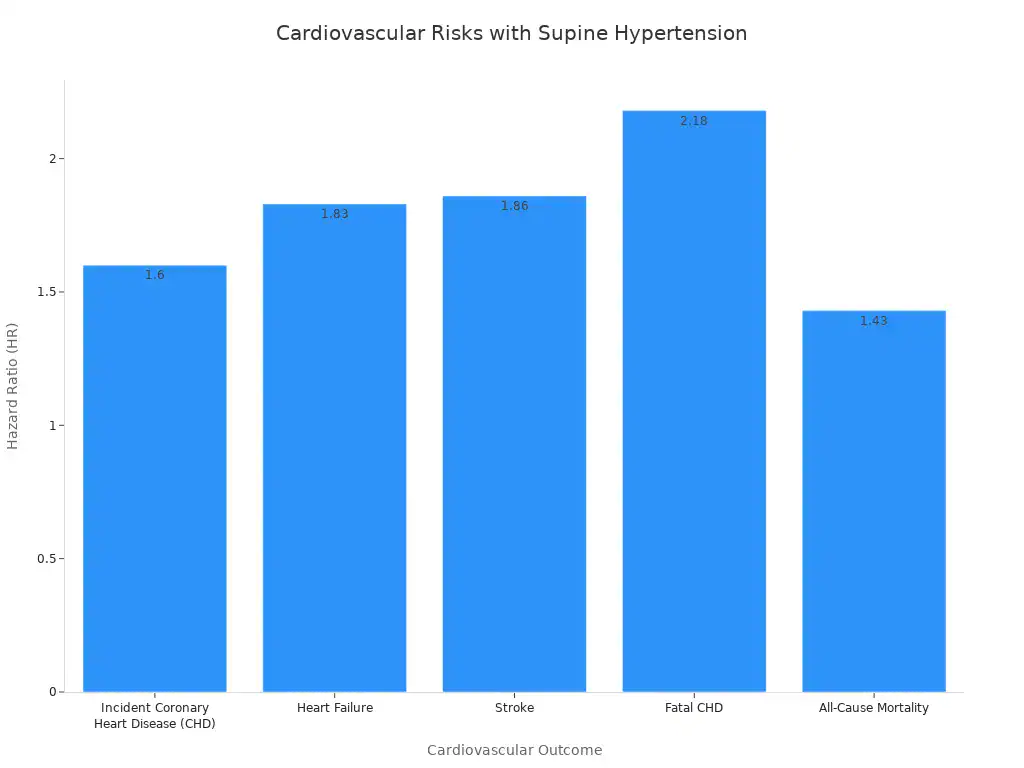
As you can see, supine hypertension significantly increases your risk for serious cardiovascular disease events. These include coronary heart disease, heart failure, and stroke. It also increases the risk of fatal coronary heart disease and all-cause mortality. This holds true even if you take medication for high blood pressure or if your seated readings are normal.
When Positional Changes Signal a Problem
Sometimes, your blood pressure changes indicate a deeper issue. You should pay attention to certain patterns. Erratic readings show unpredictable and extreme fluctuations. Your pressure might be high one moment and much lower hours later, without a clear pattern.
Orthostatic or postural hypotension is another signal. This happens when your blood pressure regularly drops too low, below 90/60 mmHg, upon standing. Conversely, labile hypertension occurs when your readings frequently spike too high, above 140/90 mmHg.
Blood pressure swings in both directions can point to autonomic dysfunction. This means your body has trouble regulating involuntary functions like heart rate or breathing. Underlying medical conditions can also cause these fluctuations. These include sleep apnea, cardiovascular disease, kidney disease, or adrenal gland problems. If you notice these types of variations, you should consult your doctor.
Accurate Blood Pressure Readings
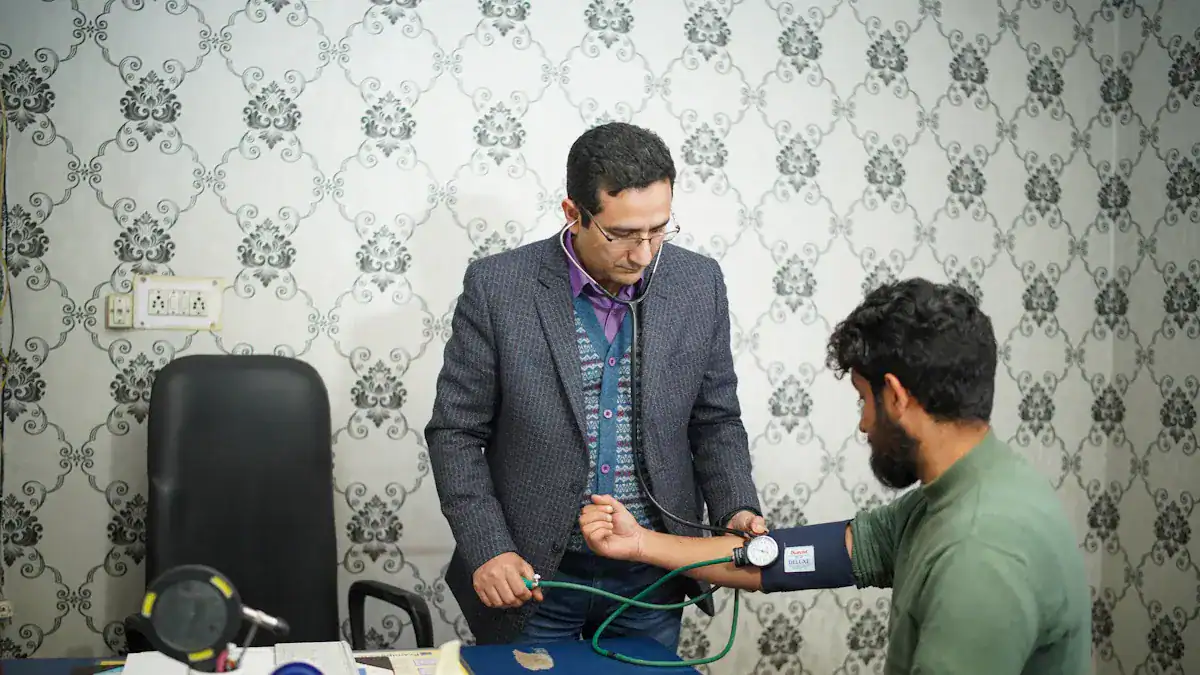
You need proper technique for accurate blood pressure readings. Improper positioning can misclassify millions of people. This means you might get a wrong diagnosis or treatment. Knowing how to measure your blood pressure correctly is very important for your health and for effective blood pressure monitoring.
Best Position for Measurement
For accurate clinical blood pressure measurement, sit comfortably. Your back should have support, and your upper arm should be bare. Do not cross your legs. Support your arm at heart level. The cuff’s bladder must cover at least 80% of your arm’s circumference. Blood pressure measurements vary by position. Your diastolic pressure is about 5 mm Hg higher when you sit compared to lying down.
Your systolic pressure is about 8 mm Hg higher when you lie down than when you sit upright, if your arm is at heart level. Lack of back support can increase your diastolic pressure by 6 mm Hg. Crossing your legs may raise your systolic pressure by 2–8 mm Hg. Arm position is crucial. If your upper arm is below heart level, your readings will be too high. If it is above heart level, your readings will be too low. These differences can be 2 mm Hg for every inch above or below heart level.
At-Home Monitoring Best Practices
Follow these best practices for checking blood pressure at home. Use a validated, automatic upper arm cuff monitor. Ensure the cuff is the right size for your arm.
Measure your arm circumference at the midpoint to find the correct cuff size. Before you measure, avoid physical activity, caffeine, or stimulants for 30 minutes. Empty your bladder. Then, rest quietly for five minutes without talking or texting.
Place the cuff snugly on your bare arm, centered over your brachial artery. During measurement, stay silent. Sit with your back supported, legs uncrossed, and feet flat. Rest your arm on a flat surface at heart level. For diagnosis, take two measurements at least one minute apart, twice daily, for three to seven days. Then, average the readings. Bring your device and blood pressure readings to your doctor’s appointments. This helps them understand your normal blood pressure.
Step-by-Step Self-Measurement Guide
Prepare: Avoid exercise, caffeine, and smoking for 30 minutes. Empty your bladder. Rest quietly for 5 minutes.
Position: Sit with your back supported and feet flat. Do not cross your legs. Place your arm on a table so the cuff is at heart level.
Cuff Placement: Put the cuff directly on your bare upper arm, snug but not too tight.
Measure: Press start. Stay still and silent.
Record: Write down your blood pressure readings, date, and time.
Repeat: Wait one minute, then take a second measurement.
Consistency: Measure your blood pressure twice a day, morning and evening, for several days. This gives you a better picture of your normal blood pressure reading.
When to Consult a Doctor
Understanding your blood pressure variations is important. You need to know when to seek medical advice. Sometimes, your body sends clear signals that something is wrong.
Recognizing Concerning Symptoms
You should seek immediate medical help if you experience certain symptoms. These include:
Sudden severe headache
Severe chest pain or discomfort
Difficulty speaking or understanding speech
Numbness or weakness, especially on one side of your body
Vision changes, such as blurred or double vision, eye pain, or loss of vision
Shortness of breath
Heart palpitations or an irregular heartbeat
Dizziness or altered mental status
Swelling (edema)
Peeing less than usual
Seizures
These symptoms can indicate a serious problem related to your blood pressure. Do not delay seeking care.
Interpreting Unusual Readings
Your blood pressure naturally fluctuates throughout the day. Activities, stress, medications, or underlying health conditions cause these changes. While many changes are normal, consistent fluctuations between unusually low or high blood pressure readings may signal potential issues. You should consult a doctor even if you have no symptoms. Blood pressure readings exceeding 180/120 mmHg are considered stroke-level. These readings necessitate immediate medical attention. This is a critical threshold for your health.
The Role of Regular Check-ups
Regular check-ups are crucial for monitoring your blood pressure. They help you maintain normal blood pressure. The frequency of these checks depends on your age and risk factors.
Age Group / Risk Factors | Recommended Frequency |
|---|---|
Adults 18-39 years, not at increased risk, with normal blood pressure | Every 3 to 5 years |
Adults 40 years or older, or at increased risk (e.g., Black persons, high-normal blood pressure, overweight/obese) | Annually |
If your top number is 120-129 mmHg or your bottom number is 70-79 mmHg, you should check your blood pressure more often. This also applies if you have diabetes, heart disease, kidney problems, or are overweight. Your doctor can guide you on the best schedule for your individual needs.
Your blood pressure naturally varies with your body position. Understanding these blood pressure variations is crucial for your health. Consistent and accurate blood pressure readings are important for managing your blood pressure, both at home and with your doctor.
We discussed orthostatic hypotension and supine hypertension, key health implications of blood pressure changes. Be proactive in monitoring your blood pressure. Consult a healthcare professional for any concerns or unusual high blood pressure. Managing your blood pressure leads to overall well-being. Your blood pressure is a vital sign. Always check your blood pressure.