When should one seek immediate medical attention for sharp pain in your upper abdomen? This question is crucial. Sharp upper stomach pain can signal a serious medical emergency. Acute abdominal pain accounts for a significant portion of emergency department visits.
Studies show it makes up 5.76% to 10% of all emergency department visits. This percentage increased by 7.6% from 1999 to 2008.
This blog outlines urgent causes of sharp pain in upper stomach. It helps readers understand the potential seriousness and act promptly. Recognizing these red-flag symptoms can save lives. Severe abdominal pain demands immediate evaluation.
Key Takeaways
Sharp upper stomach pain can be a sign of a serious health problem. It needs quick medical help.
Look for red flags like very bad pain, throwing up blood, fever, or trouble breathing. These mean you need to go to the emergency room right away.
Conditions like a heart attack, a burst blood vessel, or a hole in your stomach can cause this pain. They are very dangerous.
Problems with your gallbladder, pancreas, or even appendicitis can also cause sharp upper stomach pain. These also need fast medical care.
Never try to guess what is wrong. Always see a doctor if you have severe upper stomach pain. Getting help quickly can save your life.
Life-Threatening Causes of Upper Stomach Pain

This section focuses on conditions that are immediate medical emergencies. Each condition requires urgent medical care. Recognizing these critical situations can help save lives.
Heart Attack
A heart attack occurs when blood flow to a part of the heart stops. This often happens due to a blockage in one or more of the heart’s arteries. While chest pain is a classic symptom, a heart attack can also cause sharp pain in upper stomach. People may mistake this for indigestion or heartburn.
The pain from a heart attack often feels like a cramping or squeezing sensation in the center of the chest. This pain can spread to the upper stomach area. Sometimes, a person only feels it in their stomach area and not in their chest at all. This pain may worsen with even minor activity.
Other symptoms include shortness of breath, sweating, nausea, and lightheadedness. Experiencing severe pain or pressure in the upper abdomen, especially with other heart attack symptoms, demands immediate emergency medical attention.
Aortic Aneurysm Rupture
An aortic aneurysm is a bulge in the aorta, the body’s main artery. A rupture happens when this bulge tears or bursts. This is a life-threatening event. A ruptured aortic aneurysm causes sudden, intense abdominal pain. The pain often feels like a tearing sensation. It can spread to the back or legs.
A ruptured aortic aneurysm leads to massive internal bleeding. This condition requires immediate surgery. For patients who experience an abdominal aortic aneurysm rupture and receive repair, the perioperative mortality rate is very high, around 58%. Only a fraction of patients with a ruptured aneurysm even get the chance for repair. This highlights the extreme urgency of this condition.
Perforated Ulcer
A perforated ulcer occurs when an open sore in the stomach or small intestine erodes completely through the organ wall. This allows stomach acids and bacteria to leak into the abdominal cavity.
This leakage causes a severe infection called peritonitis. The most common causes of ulcers are infection by Helicobacter pylori (H. pylori) bacteria and the regular use of nonsteroidal anti-inflammatory drugs (NSAIDs) like aspirin or ibuprofen. These two factors account for about 99% of stomach ulcers. Less common causes include other infections or conditions like Zollinger-Ellison syndrome, which causes too much stomach acid.
A perforated ulcer typically causes sudden, severe abdominal pain. This pain often starts in the upper abdomen and spreads quickly. It can feel like a stabbing sensation. The abdomen may become rigid and tender to the touch. This condition is a medical emergency. It requires immediate surgery to close the perforation and prevent widespread infection.
Acute Pancreatitis
Acute pancreatitis is a sudden inflammation of the pancreas. The pancreas is a gland located behind the stomach. It produces enzymes for digestion and hormones like insulin. When the pancreas becomes inflamed, its digestive enzymes can start to digest the pancreas itself. This causes significant pain and damage.
The symptoms of acute pancreatitis often include intense upper abdominal pain. This pain can radiate to the back. It may worsen after eating. Other symptoms include nausea, vomiting, fever, and a rapid pulse.
Doctors diagnose acute pancreatitis when a patient meets at least two of three criteria. These criteria include epigastric abdominal pain, elevated levels of certain enzymes (like lipase or amylase) in the blood, and imaging results showing pancreatic inflammation.
The American College of Gastroenterology guidelines state that a definitive diagnosis typically requires epigastric abdominal pain and serum lipase or amylase levels more than three times the normal limit. Imaging results also show pancreatic inflammation. This condition requires immediate medical attention and hospitalization.
Gastrointestinal Emergencies
Gastrointestinal emergencies involve the digestive system. These conditions can cause severe discomfort and require immediate medical attention. They often present with intense abdominal pain.
Gallbladder Issues
The gallbladder stores bile, a digestive fluid. Problems arise when gallstones form or block bile ducts. Gallstones are solid deposits of bile and other digestive fluid. They form in the gallbladder. They are a common cause of pain on the right side of your upper abdomen. When gallstones block the ducts, they cause a gallbladder attack, also known as biliary colic. This can result in sharp pain in upper stomach.
The pain caused by gallstones can be sudden and sharp. It may last for minutes or hours. Some people describe a dull or cramping pain that worsens in the upper right part of the abdomen.
The pain can also feel sharp in the middle of the abdomen, just below the breastbone. Sometimes, the pain is so intense it makes sitting still difficult. Biliary colic often feels like a severe gripping or gnawing pain in the right upper quadrant. It can spread to the epigastrium, around the lower ribs, or directly through to the back.
Acute cholecystitis, an inflammation of the gallbladder, presents with severe pain and tenderness in the right subcostal region. This pain lasts more than 12 hours and often comes with fever and an increased white blood cell count.
Bowel Obstruction
A bowel obstruction occurs when a blockage prevents food and liquid from passing through the small or large intestine. This blockage can be partial or complete. It causes significant abdominal pain.
A partial bowel obstruction often causes diarrhea. A complete bowel obstruction, however, leads to severe constipation. People cannot pass gas or stool with a complete obstruction. With a partial obstruction, some stool may still pass, though with difficulty. In a complete small bowel obstruction, nothing passes beyond the blockage. This condition requires urgent medical care.
Atypical Appendicitis
Appendicitis is an inflammation of the appendix. The appendix is a small, finger-shaped pouch projecting from the large intestine. Typically, appendicitis causes pain in the lower right abdomen. However, some people experience atypical presentations. This means the pain appears in an unusual location, such as the upper stomach.
The symptoms of appendicitis can vary. They include sudden pain that begins around the navel and shifts to the lower right abdomen. Nausea, vomiting, loss of appetite, fever, and constipation or diarrhea are also common. When appendicitis presents atypically, the pain might start or remain in the upper abdomen. This can make diagnosis challenging. Doctors must consider appendicitis even with unusual pain locations.
Gastric Volvulus
Gastric volvulus is a rare condition. It involves the stomach twisting on its axis. This twisting can block the passage of food and fluids. It also cuts off blood supply to the stomach. This condition causes sudden, severe upper abdominal pain.
The pain in your upper abdomen is often accompanied by unproductive vomiting and difficulty swallowing. Risk factors for gastric volvulus include congenital abnormalities. Congenital diaphragmatic hernia is the most common congenital abnormality.
Congenital heart disease is present in many patients. Omphalocele and intestinal atresia or web are also common in patients with malrotation. Gastric volvulus is a medical emergency requiring immediate intervention.
Organ-Related Urgent Conditions
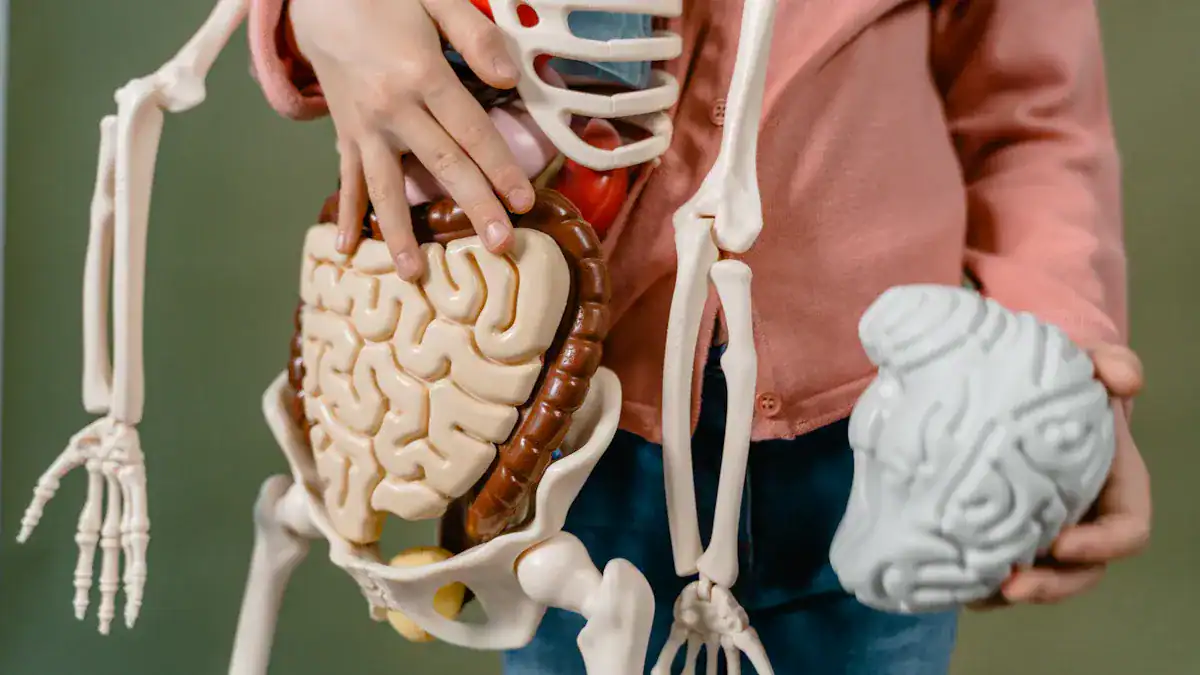
This section explores urgent conditions involving specific organs. These conditions can cause sharp pain in the upper stomach. They require prompt medical evaluation.
Kidney Stones
Kidney stones are hard deposits. They form from minerals and salts inside the kidneys. These stones can cause intense pain when they move through the urinary tract. The pain often starts in the back or side. It can then move to the lower abdomen and groin.
Sometimes, kidney stone pain can also present as sharp upper abdominal pain. This happens if the stone is high in the ureter. The pain comes in waves. It can be very severe. Other symptoms include nausea, vomiting, and blood in the urine.
Liver Abscess
A liver abscess is a pus-filled mass in the liver. It forms due to a bacterial, parasitic, or fungal infection. This condition can cause significant pain. The pain often appears in the upper right abdomen. It can also feel like a sharp pain in the upper stomach. Other symptoms include fever, chills, and jaundice. Many different bacteria can cause liver abscesses.
💡 Common Bacteria in Liver Abscesses:
Escherichia coli and Klebsiella pneumoniae are very common.
Enterococcus faecium and Enterococcus faecalis are also frequent.
Bacteroides species and Fusobacterium species are common anaerobes. These infections require immediate medical treatment.
Splenic Injury
A splenic injury involves damage to the spleen. The spleen is an organ located in the upper left abdomen. It filters blood and stores blood cells. Injuries to the spleen can cause internal bleeding. This leads to severe abdominal pain.
⚠️ Mechanisms of Splenic Injury:
Blunt abdominal trauma is the most frequent cause. This includes direct blows to the abdomen.
Activities like tackling in football or checking in hockey can cause injury.
Falling off a horse or hitting bicycle handlebars are also common causes.
An enlarged spleen, often due to mononucleosis, can rupture spontaneously. The pain from a splenic injury is often in the upper left abdomen. It can also radiate to the left shoulder. This is called referred pain. A splenic injury is a medical emergency.
Other Critical Causes of Sharp Pain in Upper Stomach
This section covers less common but equally urgent causes. These include systemic conditions or those with atypical presentations. Each condition can manifest as sharp pain in the upper stomach.
Ectopic Pregnancy
An ectopic pregnancy occurs when a fertilized egg implants outside the uterus. This usually happens in a fallopian tube. As the pregnancy grows, it can cause the tube to stretch or rupture. This leads to severe internal bleeding. Women often experience abdominal pain or pelvic pain.
This pain can start as colicky and localized to one side. It can become more generalized if the tube ruptures. Sometimes, this pain can present as sharp pain in upper stomach. Doctors use beta-human chorionic gonadotropin (β-hCG) levels to help diagnose this condition. A slower-than-expected increase or a decrease in β-hCG levels suggests an ectopic pregnancy.
Diabetic Ketoacidosis
Diabetic ketoacidosis (DKA) is a serious complication of diabetes. It happens when the body produces high levels of blood acids called ketones. This occurs when the body does not have enough insulin.
DKA can cause various symptoms, including nausea, vomiting, and upper abdominal pain. The severity of this pain directly links to the severity of metabolic acidosis. Metabolic acidosis is a key metabolic derangement contributing to the pain. The pain typically resolves once doctors correct the metabolic acidosis.
Severe Pneumonia
Pneumonia is an infection that inflames the air sacs in one or both lungs. These air sacs may fill with fluid or pus. While pneumonia typically causes chest pain and breathing difficulties, some types can cause referred pain. Lower lobe pneumonia can cause referred pain to the upper abdomen. This happens due to irritation of the diaphragm.
Community-acquired pneumonia can also present with acute abdominal pain. This pain sometimes mimics a surgical abdomen. Doctors must consider pneumonia when a patient has respiratory symptoms along with sharp upper stomach pain.
Individuals must not self-diagnose sharp pain in upper stomach. This type of abdominal pain can signal serious, life-threatening conditions. These conditions require prompt medical evaluation. People should seek immediate emergency medical attention if they experience severe pain or concerning symptoms. Timely medical consultation is crucial for accurate diagnosis and effective treatment.