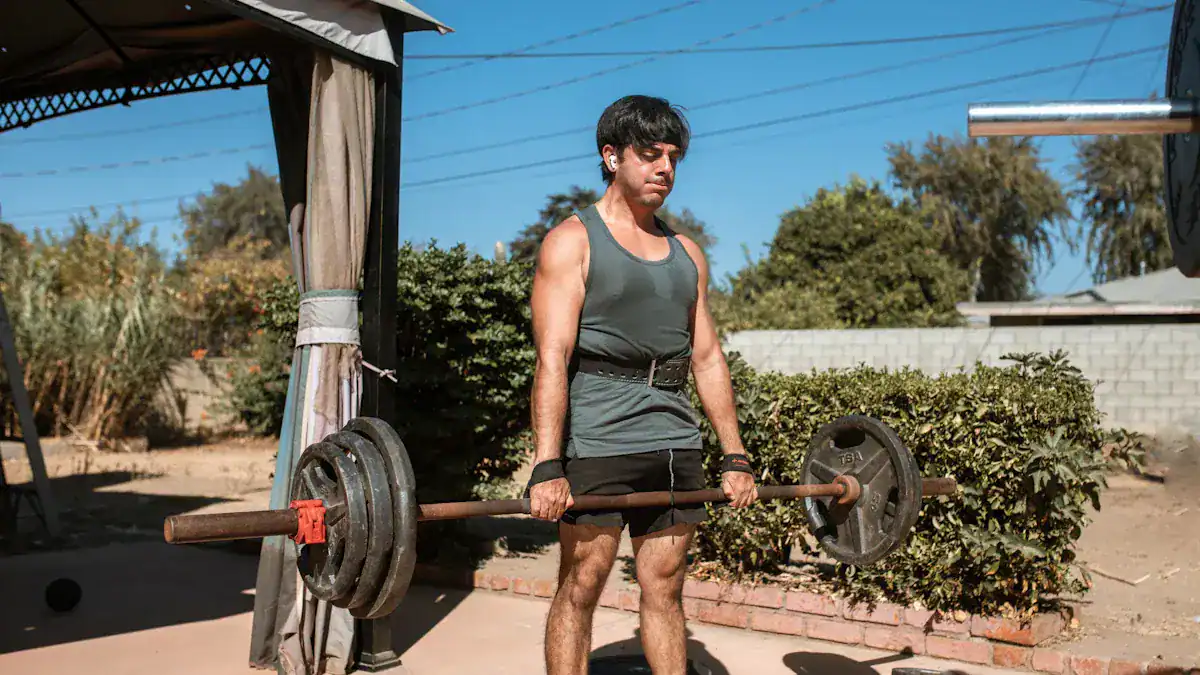
The farmer walk exercise looks deceptively simple, yet it holds immense power. You pick up heavy weights and walk, but this fundamental movement builds incredible full-body strength. It also develops impressive grip endurance and creates a rock-solid core. Master the farmer’s walk to unlock its full potential. This exercise offers practical, functional strength that extends far beyond the gym.
Key Takeaways
The farmer walk builds full-body strength. It also improves your grip and makes your core strong.
Use proper form to do the farmer walk. Stand tall, keep your core tight, and take small steps.
Avoid common mistakes like bad posture or swaying. These can cause injury or make the exercise less effective.
You can add the farmer walk to your workouts. Use it for strength, endurance, or as a workout finisher.
Try different types of farmer walks. These include carrying weights with one arm or over your head. This helps you get stronger.
Understanding the Farmer Walk Exercise and Its Benefits:
What is the Farmer Walk Exercise:
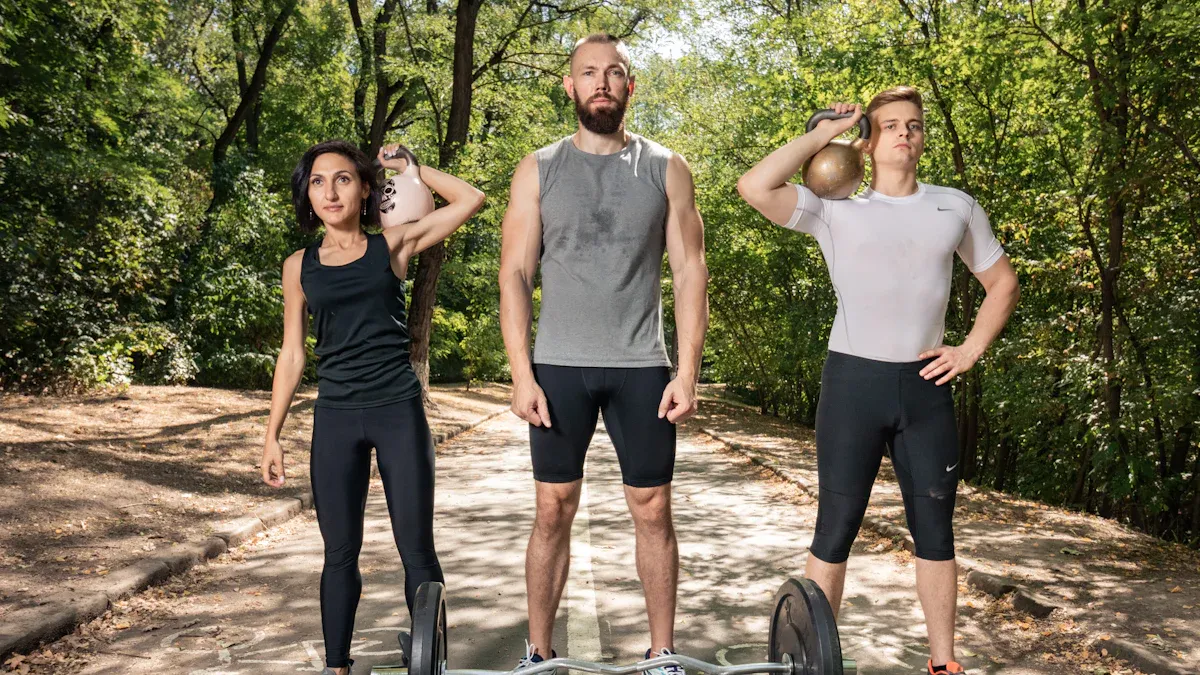
The farmer walk exercise is a simple yet powerful movement. You pick up a heavy weight in each hand. Then, you walk a set distance. This exercise mimics carrying heavy groceries or luggage. It tests your ability to hold heavy objects and move with them. Mastering the farmer walk exercise helps you build a powerful physique.
Why This Powerful Move Builds Total Body Strength:
This exercise offers many benefits. It is a full-body exercise. You build total-body strength. This exercise activates many muscle groups.
Your legs work hard. Your quads extend your knees. They help you lift the weights and move forward. Your hamstrings flex your knees and extend your hips. They are key for lifting and stabilizing. Your glutes extend your hips. They are vital for lifting and hip stability. Your calves stabilize your ankles.
Your back and core muscles are also very active. Your lats, the largest back muscles, help you keep a tall posture. They maintain a neutral spine. The erectors, muscles around your spine, help extend your spine. They stabilize your core. Your upper back and traps keep your shoulders back and down. This helps you stand tall. Your abdominals keep your core tight. They protect your spine.
Your arms get a workout too. Your biceps help with grip strength. They stabilize your elbow joint. Your triceps extend your arms. They work with your biceps to stabilize your arms. Your forearms and hand muscles are crucial for grip strength. They let you hold the weights tightly.
Scientific studies show this exercise builds grip strength and overall body strength. Research also notes that the farmer’s walk increases muscle compression and spinal loading. It activates key spinal muscles more than other carrying exercises. Factors like muscle mass predict performance. This shows its role in building strength across your body.
The farmer’s walk also improves your grip strength and endurance. You hold heavy weights for a long time. This makes your hands and forearms much stronger.
It boosts your core stability and posture. Holding heavy weight steady needs a strong core. Your rectus abdominis, obliques, and erector spinae work hard. These muscles keep your spine and pelvis stable. For example, the suitcase carry, a one-sided farmer’s walk, makes your obliques, quadratus lumborum, and hip abductor muscles work harder. They stop you from leaning. This helps you maintain good alignment.
This exercise increases your work capacity. It also improves your conditioning. Your heart rate goes up. This gives you “sneaky cardio” without traditional running. It is a great way to improve your fitness.
Finally, the farmer’s walk builds practical, functional strength. You use this strength in everyday life. Carrying groceries, moving furniture, or picking up children becomes easier. These are real-world farmer’s walk benefits.
How to Do a Farmer’s Walk with Perfect Form:
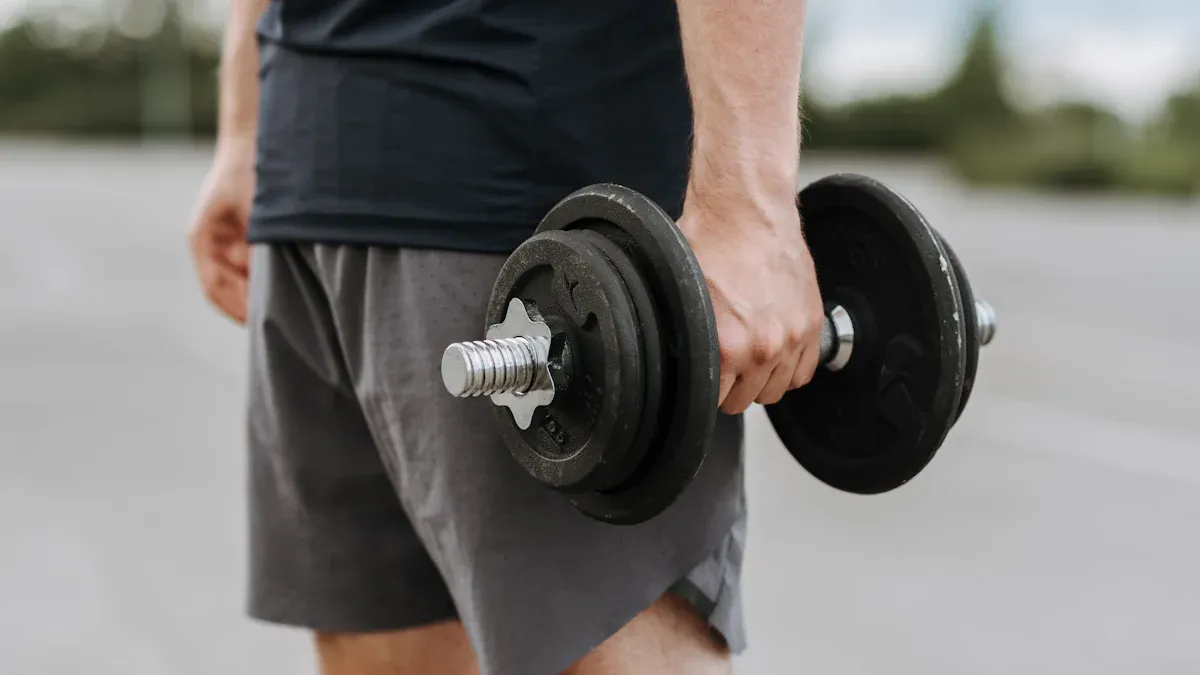
To truly master the farmer’s walk, you must understand each step. Proper technique ensures safety and maximizes your gains. This guide shows you how to do a farmer’s walk correctly.
Equipment and Weight Selection:
Choosing the right equipment is your first step. Different tools offer unique benefits.
Dumbbells: These are excellent for beginners. They have a symmetrical design. Weight distributes evenly. You find varied weight options for all experience levels.
Kettlebells: Kettlebells challenge you more. Their unique weight distribution demands greater core and balance engagement.
Trap Bar (Hex Bar): This bar promotes better posture. It keeps the weight closer to your body’s center.
Farmer Walk Handles: These are specialized tools. They are designed specifically for this exercise.
Barbells: You can use barbells. However, you may need slightly lower weights. They present balancing challenges.
Creative Alternatives: No traditional gym equipment? No problem. Use water jugs, sandbags, or any evenly weighted objects. These options emphasize balance.
Towels with Weight Plates: This is a simple and efficient option. It also enhances your grip strength.
Chains with Weight Plates: Use heavy chains, short pipes, and S-hooks. You can carry plates this way. This offers a good alternative.
Softball with Eye Bolt and Plates: This is a creative option. It can be challenging for carrying plates.
For weight selection, start light. Focus on your form first. As you get stronger, gradually increase the load. You want a challenging weight. This weight should allow you to maintain proper farmer’s walk form throughout your set.
Setup and Safe Lifting Technique:
Your setup is crucial for safety. It prevents injury.
Position the Handles: Place the handles directly by your legs.
Foot Placement: Stand with your feet equidistant from the handles. You can stand near the center of the handle. Or, stand slightly forward of center. Choose what feels most comfortable for you.
Grip: Squat down to pick up a weight in each hand. Take a moment to ensure your stance and grip are correct. This is crucial for the exercise.
Engage Your Core and Lats: Engage your core. Pull your shoulder blades down and back. As you stand up, maintain an upright posture. Think about rotating your shoulders outward. Keep your upper back tight. This deadlift-style pickup protects your back.
Mastering Your Farmer’s Walk Form:
Once you lift the weights, focus on your walking technique. This ensures proper farmer’s walk form.
Posture: Stand tall. Keep your chest elevated. Pull your shoulder muscles down and back. Push your chest forward. Open up your entire chest area. Your shoulders should be relaxed and retracted. Maintain a neutral spine. This means your spine is straight and aligned. Avoid any lean to either side.
Core Bracing: Engage your core consistently. Brace your core and glutes for stability. This prevents swaying. Swaying indicates a loss of core stability.
Gait: Take short, controlled steps. Avoid long strides. This helps you maintain balance and control.
Breathing Technique: Do not hold your breath. Inhale through your nose. Exhale through your mouth in rhythm with your steps. This supports endurance and stability.
Safe Weight Drop:
When you finish your walk, reverse the pickup motion. Squat down with control. Place the weights gently on the floor. Do not just drop them. This protects your back and the equipment.
Common Farmer’s Walk Form Tips and Mistakes to Avoid:
Mastering the farmer’s walk means understanding common pitfalls. You can prevent injuries and maximize your gains by avoiding these mistakes. These farmer’s walk form tips help you maintain proper technique.
Preventing Poor Posture and Back Strain:
Poor posture is a common issue. It reduces the exercise’s effectiveness and can cause injury. You might notice these signs of poor posture:
You lean forward or slouch.
You look down, which can round your upper back.
You lean forward at your waist.
Your shoulders are rounded.
Your shoulders are shrugged.
Fatigue often causes slumped and rounded shoulders. This leads to a loss of integrity and stability in your upper back. It reinforces bad posture. It also prevents proper breathing. This can lead to improper scapula position and rotator cuff inflammation. These issues happen when you get tired and lose proper form during a farmer’s walk. Jogging with weights during a farmer’s walk also puts much strain on your lower back. It stresses your joints, tendons, and ligaments. Your lower back works throughout carrying activities. Always maintain a tall chest and retracted shoulders.
Avoiding Excessive Swaying and Instability:
Excessive swaying indicates a loss of core stability. You might lean or sway from side to side. This reduces the exercise’s benefits. To prevent excessive swaying during the farmer’s walk, keep your core engaged. Direct your gaze forward. This helps you avoid the tendency to sway. Focus on a steady, controlled gait.
Choosing the Right Weight for Your Goals:
Selecting the correct weight is crucial. Choosing weights that are too heavy or too light impacts your training goals.
Begin with lighter weights and shorter distances.
Gradually increase the load as your strength and endurance improve.
Gradually increase the distance as your strength and endurance improve.
This progressive approach ensures you challenge yourself safely. It also helps you build strength effectively.
Integrating the Farmer’s Walk into Your Training Routine:
You can add the farmer walk exercise to your workouts in many ways. This helps you reach different fitness goals.
Programming for Strength, Endurance, and Conditioning:
You can program the farmer’s walk for specific outcomes. For pure strength, use heavy weights. Walk shorter distances. This challenges your muscles intensely. If you want to build endurance or conditioning, use lighter loads. Walk for longer distances or times. This elevates your heart rate. It improves your stamina. Limit your sessions to 2-3 times per week. This helps you avoid central nervous system fatigue. It also ensures optimal recovery.
Strategic Placement in Your Workout:
You can place the farmer’s walk strategically in your routine. Some people do them on off days. This gives them a dedicated session. You can also integrate them as a distinct session on training days. Many people include a few sets at the conclusion of their workout. This makes a great finisher. It taxes your grip and core after your main lifts.
Progressive Overload for Continuous Gains:
To keep making gains, you must use progressive overload. You can increase the weight you carry. You can also increase the distance you walk. Another way is to increase your time under tension. You can also reduce your rest periods. Increase the load relative to your bodyweight. You can use specific equipment like a trap bar. This allows for heavier loads. Variations like chains or a weighted vest also add overload. They challenge your traps, upper back, core, and legs. Always increase the distance traveled or the actual weight over time. This is how you build continuous strength.
Advanced Farmer’s Walk Variations:
You have mastered the basic farmer’s walk. Now, explore advanced variations. These moves challenge your body in new ways. They build even greater strength and stability.
Single-Arm Carry (Suitcase Carry):
You hold one heavy weight in one hand. This is like carrying a heavy suitcase. This variation provides both cardio and strength gains. It acts as a hybrid exercise. It builds strength and stability across your entire shoulder girdle. This helps prevent injuries. It also tests and improves your grip strength. Your core works harder. It prevents your body from leaning to one side. This increases core strength and stability. It prevents spinal twisting. You get more targeted muscle engagement. This reduces muscular imbalances.
Overhead Carry:
You hold weights directly above your head. You walk with them. This variation demands significant shoulder stability. It also builds upper back strength. It specifically recruits the lateral and posterior heads of your deltoids. Your core muscles, including your abdominals, obliques, and lower back, engage to keep your spine neutral. Your glutes are crucial for balance. They help you move forward with each step. This exercise targets your forearms, upper back, rotator cuff, and triceps. It also works all three deltoids. Your core, glutes, hamstrings, and calves also get a workout.
Mixed Grip Carry:
You hold one weight with an overhand grip. You hold the other weight with an underhand grip. This challenges your grip differently. It works your forearms and hands in unique ways. This variation helps you identify and correct grip imbalances.
Zercher Carry:
You hold a barbell or heavy object in the crook of your elbows. You keep it close to your body. This front-loaded position intensifies the demand on your abdominals and obliques. It requires greater anterior core stability. Your lats and upper back muscles are crucial. They help you maintain an upright torso. They assist your biceps in securing the load. This carry builds significant bracing strength. This strength transfers to other exercises like squats and deadlifts. It also helps in combat sports.
The farmer walk exercise is a foundational movement. It offers immense benefits for your strength, stability, and functional fitness. You now understand its mechanics. You also know how to avoid common pitfalls. You have learned proper form. Apply this knowledge. Progressively integrate the farmer’s walk into your routine. You will truly master this powerful move. You will achieve a new level of physical capability. Start carrying, start growing! 💪
FAQ
What is the main benefit of the farmer’s walk?
The farmer’s walk builds full-body strength. It also improves your grip endurance and core stability. You gain practical strength for daily tasks. This exercise works many muscles at once.
What equipment can you use for the farmer’s walk?
You can use dumbbells, kettlebells, or trap bars. Specialized farmer walk handles also work well. For creative options, try water jugs or sandbags. You can even use towels with weight plates.
What is a common mistake to avoid during the farmer’s walk?
A common mistake is poor posture. You might round your back or slouch. This reduces effectiveness and can cause injury. Always keep your chest tall and shoulders back. Maintain a neutral spine.
What is a suitcase carry?
A suitcase carry is a single-arm farmer’s walk. You hold one heavy weight in one hand. This challenges your core more. It helps you build anti-lateral flexion strength. Your body works hard to stay upright.