


Headaches are a common experience for many people. An estimated 65% of the global population aged 18 to 65 years experiences a headache disorder each year. This means you are not alone in seeking relief. In fact, headache disorders affected almost 3 billion people worldwide in 2023. You may want natural ways to ease your pain. This blog provides 12 simple home remedies for headaches. You will discover effective drug-free solutions. These tips focus on mild to moderate headaches.
Key Takeaways
Many headaches respond well to simple home remedies. These natural fixes can help you manage mild to moderate pain.
Staying hydrated, using cold or warm compresses, and getting enough sleep are easy ways to reduce headache pain.
Peppermint oil, lavender oil, and ginger tea offer natural relief. They have properties that can soothe pain and reduce inflammation.
Magnesium can help prevent headaches. Rest in a quiet, dark space and do gentle neck stretches to ease tension.
Know when to see a doctor. Seek medical help for severe headaches, new symptoms, or if your headaches become worse.
Understanding Headaches
Common Headache Types
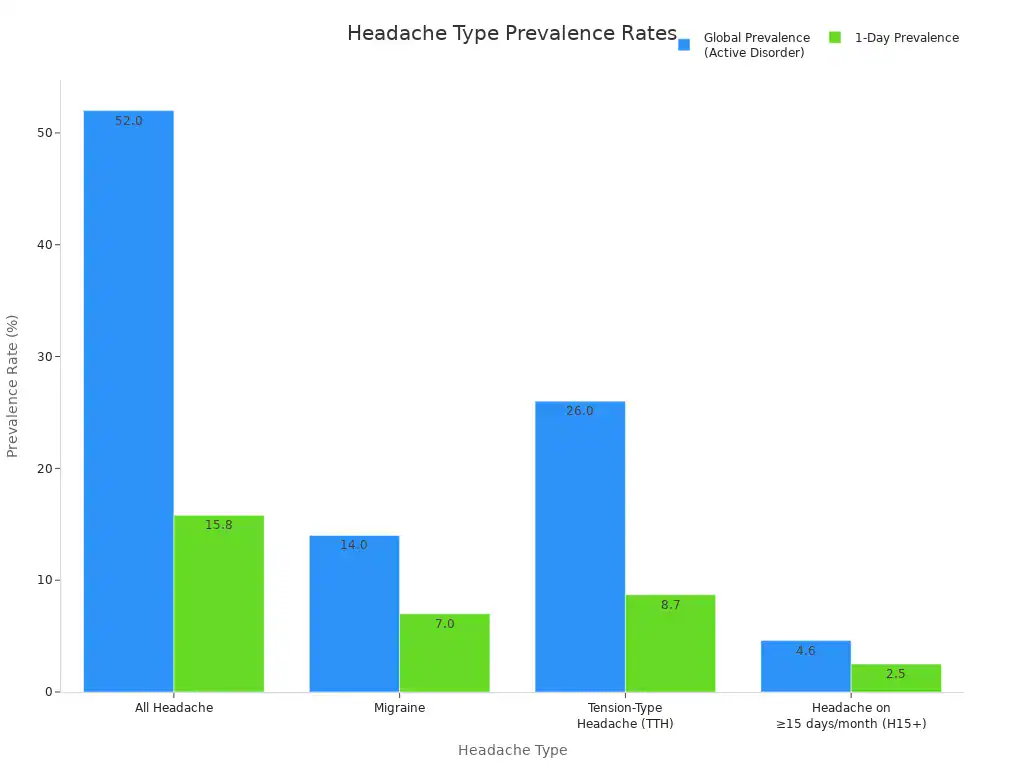
You experience headaches in different ways. Knowing the type of headache you have helps you find the best relief. The most common types are tension headaches, migraines, and cluster headaches. Look at how common these headaches are:
Headache Type | Global Prevalence (Active Disorder) | 1-Day Prevalence |
|---|---|---|
All Headache | 52.0% | 15.8% |
Migraine | 14.0% | 7.0% |
Tension-Type Headache (TTH) | 26.0% | 8.7% |
Headache on ≥15 days/month (H15+) | 4.6% | 2.5% |
Tension Headaches: These are the most common. You feel a dull, aching pain around your head. It feels like a tight band. Stress, poor posture, and lack of sleep often trigger them. Intense work or skipping meals can also cause them.
Migraines: These cause throbbing pain, usually on one side of your head. You might also feel sick to your stomach or be sensitive to light and sound. Hormonal changes, certain foods, stress, and weather changes can trigger migraines.
Cluster Headaches: These are less common but very severe. You feel intense pain around one eye. They happen in groups, or “clusters.” Alcohol, strong smells, and changes in your sleep pattern can trigger them.
When Natural Fixes Help
Natural remedies can help you with mild to moderate headaches. These fixes are often effective for everyday discomfort. For instance, studies show that ginger extract can significantly decrease headache intensity. Magnesium supplements may also help prevent migraines, with some research suggesting a daily dosage of 600 mg. Riboflavin (Vitamin B2) can reduce migraine attacks by about two per month. Even Vitamin D levels have been linked to headache frequency and severity.
You should try home remedies for headaches when your pain is not severe. They offer a gentle way to ease your symptoms. These natural solutions work best for common, less severe head pain. If your headaches are very painful, happen often, or come with other worrying symptoms, you should see a doctor. Always consult a healthcare provider before starting new supplements.
12 Easy Home Remedies for Headaches

You can find relief from many headaches using simple home remedies for headaches. These natural fixes help you manage mild to moderate pain.
Stay Hydrated
Dehydration often causes headaches. When you do not drink enough water, your body has a water deficit. This can stretch the dural veins in your brain, causing pain. Inadequate fluid intake also leads to “brain dehydration.” This pulls on pain-sensitive membranes and blood vessels.
Dehydration constricts blood vessels in your brain. This reduces blood flow and oxygen, which can trigger migraines and other headaches. Electrolyte imbalances, especially with sodium and potassium, can also disrupt your brain’s electrical activity, contributing to headaches.
To prevent dehydration-related headaches, you should drink plenty of water. Experts recommend drinking six to eight glasses of water each day. This is about 1.5 to 2 liters. Studies show that drinking 1.5 liters of water daily can significantly improve the quality of life for people with headaches. Increased water intake reduces the severity, frequency, and duration of headaches. Listen to your body’s thirst signals.
Cold Compress Therapy
A cold compress can help you relieve headache pain. When you apply cold to your forehead or neck, it causes blood vessels to narrow. This reduces blood flow and decreases inflammation. This is helpful for migraines and sinus headaches. Cold therapy also numbs the area, giving you temporary pain relief. It slows nerve activity and can ease muscle spasms. The cold decreases the speed of nerve signals, reducing the intensity of pain signals reaching your brain.
To use cold compress therapy, apply an ice pack for 15 to 20 minutes. Then, remove it for 15 to 20 minutes before reapplying. You can do this several times a day.
Warm Compresses & Showers
Warmth can also help you relieve headache pain, especially for tension headaches. Hot packs and heating pads relax tense muscles. This is particularly true in your neck and shoulders, where tension often builds. Warmth improves circulation and blood flow, bringing more nutrients and oxygen to affected areas. This helps ease discomfort. Heat therapy also promotes overall relaxation, reducing stress and anxiety, which often trigger headaches.
For sinus headaches, the steam from hot showers can open your nasal passages and sinuses. This loosens mucus and relieves pressure. Using a heating pad, warm compress, or hot shower provides immediate relief by deeply penetrating and easing tension. This method also helps you relax, leading to less stress and anxiety.
Caffeine in Moderation
Caffeine can sometimes help you get rid of a headache. It works by blocking certain receptors in your nervous system. This reduces the release of pain-causing substances. Caffeine also constricts blood vessels, which can counteract the widening of vessels that happens during some migraines. It can also reduce inflammation. Caffeine enhances the absorption of other pain relievers, allowing them to work better.
However, be careful with caffeine. Too much caffeine can actually cause or worsen headaches.
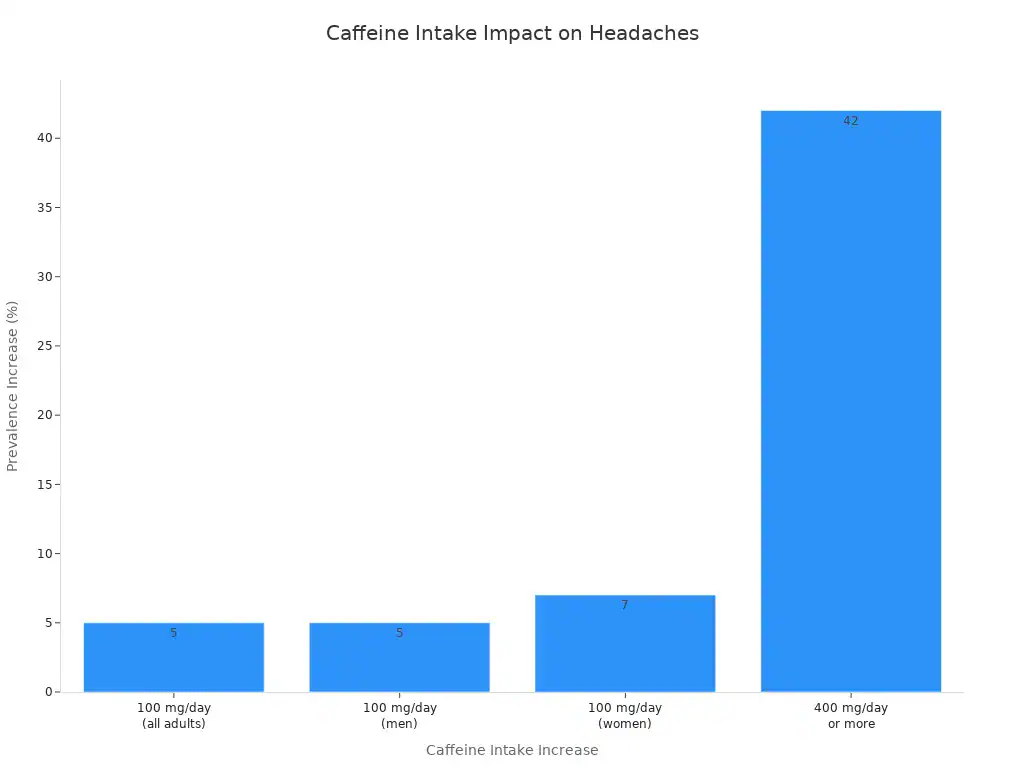
For example, increasing caffeine intake by 100 mg per day can increase the prevalence of severe headaches or migraines by 5% in men and 7% in women. Consuming 400 mg or more per day can lead to a 42% higher prevalence of severe headaches compared to those who consume very little. Chronic caffeine use can make your brain more sensitive to pain. It also increases your risk of developing headaches from overuse of pain relievers, chronic daily headaches, and physical dependence.
Peppermint Oil Application
Peppermint oil offers soothing, muscle-relaxing properties that can relieve headache pain. Studies show that peppermint oil can effectively control headache intensity. It helps you continue your daily activities without limitation. Peppermint oil creates a long-lasting cold effect on your skin by changing how your cold receptors work. It also increases blood flow to your forehead.
To use peppermint oil, dilute it first. Mix 1 to 2 drops of pure peppermint essential oil with one tablespoon of a carrier oil. Good carrier oils include coconut oil, almond oil, or jojoba oil. Then, dab a few drops of this mixture onto your fingers. Gently massage it onto your temples, across your forehead, or to the back of your neck. A gentle massage helps the oil absorb and relaxes your muscles.
Lavender Oil for Relief
Lavender oil has calming effects that can help you relieve a headache. Its aroma stimulates your limbic system, releasing neurotransmitters that lower pain perception. The pleasant scent can also distract you from pain. Lavender promotes relaxation through its soothing smell, encouraging deeper, slower breathing. It contains compounds like linalool and linalyl acetate, which have sedative, pain-reducing, and anti-inflammatory properties. These compounds may activate your parasympathetic nervous system.
You can use lavender oil by inhaling its scent directly from the bottle or by diffusing it in a room. You can also put a few drops on a tissue and inhale. For topical use, dilute it with a carrier oil and apply it to your temples or neck.
Ginger Tea Benefits
Ginger has strong anti-inflammatory properties that can reduce headache severity. Compounds in ginger like gingerols and shogaols are known for their anti-inflammatory effects. They inhibit pro-inflammatory substances in your body. Ginger also has antioxidant effects and lowers prostaglandin levels, which are involved in migraine pain.
To use ginger for headache relief, you can make ginger tea. Steep fresh ginger slices in hot water. A typical dose for headache relief is a 550 mg capsule at the first sign of a headache. You can repeat this once or twice. Half a teaspoon of freshly grated ginger is equal to a 500 mg dose of a standardized ginger extract. For acute migraine treatment, you can take 400 mg dry extract capsules orally as needed. Some studies used 400–500 mg twice daily.
Magnesium Intake
Magnesium plays a vital role in nerve function and muscle relaxation. It can help prevent headaches. Magnesium inhibits neuronal overexcitation and blood vessel spasms. It also reduces the formation of inflammatory substances. People with migraines often have lower magnesium levels. Magnesium deficiency strongly links to migraines.
Magnesium regulates neurotransmitters like serotonin, which are involved in migraine attacks. It acts as a natural calcium channel blocker, relaxing blood vessels and improving blood flow. This prevents the constriction and widening of blood vessels linked to migraines. Magnesium also has anti-inflammatory properties. The American Headache Society suggests a daily dosage of 400-500 milligrams of magnesium oxide for migraine prevention.
Rest in a Quiet, Dark Space
When a headache strikes, especially a migraine, finding a quiet, dark space can provide significant relief. Sensory deprivation helps your brain calm down. Bright lights, loud noises, and strong smells can worsen headache pain.
Lying down in a peaceful environment allows your body to rest and recover. Taking a nap can also help manage headache symptoms. This simple act of removing external stimuli can greatly reduce the intensity of your headache.
Neck & Shoulder Stretches
Muscle tension in your neck and shoulders often causes tension headaches. Relieving this tension can alleviate your pain. Gentle stretches can help relax these muscles. You can roll your shoulders forward and backward, or gently tilt your head from side to side.
Massaging your neck with tennis balls can also help. Lie on your back and place two tennis balls under your neck, just below the base of your skull. Gently roll your head from side to side to massage the tense areas. This helps release knots and improve blood flow.
Acupressure & Massage
Acupressure involves applying pressure to specific points on your body to relieve headache pain. These points can help reduce pain and promote relaxation.
Here are some key acupressure points and how to stimulate them:
Union Valley (LI-4): This point is between your thumb and index finger. Pinch this area firmly with the thumb and index finger of your opposite hand for 10 seconds. Then, make small circles with your thumb for 10 seconds in each direction. Repeat on the other hand.
Drilling Bamboo: These points are on the inside of each eyebrow, where your nose bridge meets your brow bone. Apply equal pressure with both index fingers, or stimulate one point at a time.
Gates of Consciousness: These are in the hollow spaces on either side of your spine, just beneath the base of your skull. Apply firm pressure with your index and middle fingers.
Third Eye: This point is between your eyebrows. Apply constant pressure or gently massage it in a circular motion.
Temple Massage: Gently massage your temples in a circular motion. This can help relax the muscles around your head.
You can also use acupressure devices like Aculief, a wearable clip for the LI-4 point, or Sea-Band Antinausea Wristbands for points on your wrist. These techniques can help you relieve headache pain and promote relaxation. You can also combine these with deep breathing or breathing exercises for added benefit.
Prioritize Sleep
Lack of sleep often triggers headaches. Poor sleep quality directly links to increased frequency and severity of headaches, especially for migraines. Sleep deprivation can make your brain more excitable, making you more prone to migraine attacks. Poor sleep quality can also increase the impact of tension headaches.
To prevent sleep-related headaches, prioritize consistent sleep. Aim for 7-9 hours of quality sleep each night. Practice good sleep hygiene:
Avoid alcohol and stimulants like nicotine and caffeine before bedtime.
Control your bedroom environment. Keep it dark, quiet, and cold.
Go to bed and wake up at the same time each day, even on weekends.
Only go to bed when you feel sleepy. If you cannot sleep after about 20 minutes, get out of bed and do something relaxing until you feel sleepy again.
Avoid napping during the day, as this can reduce your sleep drive at night.
Quick Ways to Get Rid of a Headache
When a headache strikes suddenly, you want to get rid of a headache fast. Several immediate techniques can help you find quick relief.
Immediate Relief Techniques
You can apply a cold compress to your forehead or temples for 15 to 20 minutes. This helps reduce inflammation and numb the pain. You can also apply ice to both sides of your neck and shoulders. If pain is present on your forehead and temples, apply it there too.
Drink a large glass of water. Dehydration often triggers headaches. Find a dark, quiet room and close your eyes. This helps reduce sensory input.
You can also try self-massage techniques. Gently massage your temples, neck, and the base of your skull. For a head massage, hook your thumbs a few inches behind your ears at the base of your skull. Gently rub until it hurts, then hold pressure for 10 seconds.
Repeat this 5-6 times. You can also push your shoulder blades back and squeeze them toward the center of your spine. Hold for 10 seconds. Repeat 5-10 times. Gentle neck stretches also help. Turn your head to look over one shoulder. Use your hand to apply pressure for a stretch.
Hold for 10 seconds. Repeat on the other side. Tilt your head to one side, dropping your ear towards your shoulder. Hold for 10 seconds. Repeat on the other side. Smelling peppermint or lavender essential oils can also provide comfort. A small amount of caffeine can help if you do not consume it regularly.
Combining Quick Fixes
You can combine several of these quick fixes to relieve a headache more effectively. For migraines, place a cold pack on your forehead. This can be ice cubes wrapped in a towel or a bag of frozen vegetables. Apply it for 15 minutes, then take a 15-minute break.
For tension headaches, place a hot heating pad on your neck or the back of your head. A warm shower can also relax tense muscles. For sinus headaches, hold a hot cloth to the painful area. A warm shower can also be effective. Practice deep breathing. Inhale for 4 counts, hold for 4, and exhale for 6. Combining these methods can provide faster and more comprehensive relief.
When to Seek Medical Help
Natural remedies offer great relief for many headaches. However, some headache symptoms signal a more serious problem. You need to know when to seek professional medical help.
Warning Signs for Headaches
You should pay attention to certain warning signs. These signs suggest your headache might be more than a simple ache. For example, you might have systemic symptoms like a fever or night sweats. You could also be immunocompromised or have other medical conditions.
New or unusual neurological signs, such as weakness in a limb, new numbness, or changes in your vision, are also concerning. A very sudden headache, especially one that reaches maximum intensity quickly (a ‘thunderclap’ headache), can indicate a serious vascular issue.
If you experience new headaches after age 50, or if your headaches become more severe or frequent over time, you should see a doctor. Swelling of the optic nerve, seen during an eye exam, indicates increased pressure around your brain. Headaches that change with body position or are triggered by coughing or straining also warrant attention. New headaches during or after pregnancy are also a concern.
Persistent or Severe Symptoms
Some headache symptoms require immediate medical attention. You should seek emergency care if you experience the “worst headache of your life.” This could signal bleeding in your brain or a stroke.
Headaches with dizziness, vision problems, slurred speech, or loss of balance also need immediate care. If your headache comes with a high fever, stiff neck, or vomiting, you should get help. A headache after a head injury, even a minor one, needs checking for concussion.
You also need to consult a doctor for persistent headaches. A chronic daily headache means you have pain at least 15 days a month for three months. This includes chronic migraines or tension-type headaches. You should see a doctor if your headache patterns change, or if headaches debilitate you.
If you average two or more headaches each week, or need pain medication most days, you should talk to a doctor. Taking more than the recommended dose of over-the-counter painkillers also means you need medical advice. A doctor can rule out other causes like infection, inflammation, or brain tumors. They can also address rebound headaches from medication overuse.
Many headaches respond well to simple natural methods. You can effectively manage your pain with these home remedies for headaches. Incorporating these 12 easy fixes into your routine helps reduce reliance on over-the-counter pain relievers. Listen to your body and experiment to find what works best for you. Always consult a healthcare professional if your headaches are severe, persistent, or have concerning symptoms.


