When you receive blood test results, you might see “Immature Grans ABS.” These are immature granulocytes, early-stage white blood cells. Healthy individuals typically do not have these cells in their peripheral blood. Their presence in a blood test indicates your body’s immune system is actively responding, often showing enhanced bone marrow activity. While seeing these results can be concerning, remember they are just one piece of your health puzzle. You need professional medical interpretation. This post will clarify what these immature granulocytes mean for your health.
Key Takeaways
Immature granulocytes are young white blood cells. Their presence in your blood means your body is fighting something.
Many things can cause high immature granulocytes. These include infections, inflammation, stress, and some medicines.
High immature granulocytes can also point to serious bone marrow problems. Your doctor will check for these.
Always talk to your doctor about your blood test results. They will help you understand what your numbers mean.
Treatment for high immature granulocytes focuses on the cause. Your doctor will find the problem and treat it.
What Are Immature Granulocytes?
Granulocytes: Your Immune System’s First Responders
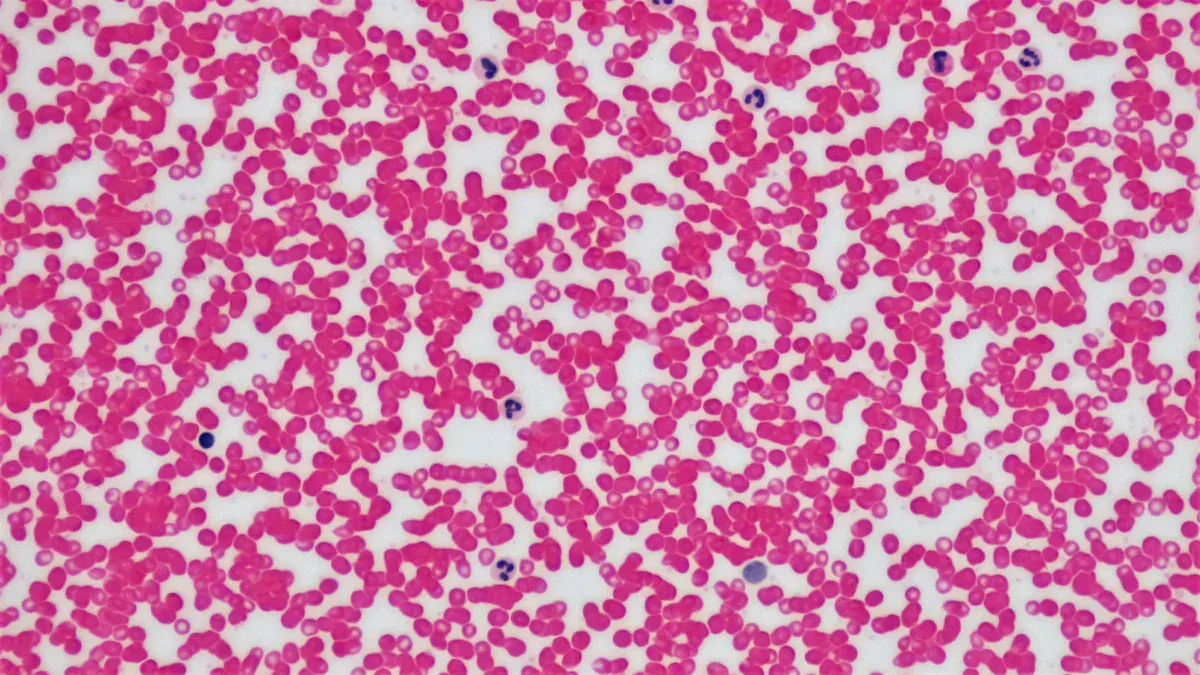
Your body has an amazing defense system. A key part of this system involves white blood cells. Among these, granulocytes act as your immune system’s first responders. These specialized granulocytes contain tiny granules filled with enzymes. These enzymes help them fight off infections and inflammation. When a threat appears, granulocytes rush to the site. They engulf and destroy harmful invaders like bacteria. Mature granulocytes do not live very long. Their lifespan in your bloodstream is typically short, ranging from a few hours to about five days.
Identifying Immature Granulocytes in Blood Tests
Immature granulocytes are simply granulocytes that have not fully grown up yet. Your bone marrow constantly produces new blood cells. Normally, only mature granulocytes leave the bone marrow and enter your bloodstream. When a routine blood test shows immature granulocytes, it means your bone marrow is working extra hard. It releases these younger cells into your blood earlier than usual. This often signals your body is fighting something, like an infection or inflammation.
The Significance of an Absolute Count (ABS)
When your blood test results show “Immature Grans ABS,” the “ABS” stands for “absolute count.” This number tells you the actual quantity of immature granulocytes present in a specific volume of your blood. It is not just a percentage. An absolute count gives your doctor a clearer picture of how many of these early-stage cells are circulating. For most healthy adults, a normal count for immature granulocytes is less than 100 per microliter. Doctors usually do not worry unless this number is higher, or if the percentage of these cells exceeds 2% of your total white blood cells.
Causes of High Immature Granulocytes
Infections and Inflammation
When your body faces an infection, your immune system kicks into high gear. This often leads to high immature granulocytes. Your bone marrow works overtime to produce more white blood cells. These cells fight off invaders like bacteria, viruses, or fungi. Elevated counts of immature granulocytes in your blood show increased bone marrow activity. This activity responds directly to a bacterial infection. For example, patients with a pulmonary bacterial infection often show a peak of these cells. High immature granulocytes can indicate serious bacterial infections, sepsis, or severe inflammatory conditions.
Consider specific bacterial infections. You might see high levels of immature granulocytes if you have ventilator-associated pneumonia. Thresholds of 18% or 2 G/L of immature granulocytes help identify these patients with high accuracy. During COVID-19, immature granulocyte concentrations can be higher than those found in bacterial sepsis. Both bacterial sepsis and severe COVID-19 can dysregulate your myeloid cell compartment. This causes circulating levels of immature granulocytes to increase.
Inflammation also causes high immature granulocytes. Many inflammatory conditions, including autoimmune diseases, can elevate these cell counts. For instance, Pemphigus, an autoimmune skin condition, shows a relationship between disease activity and immature granulocyte levels. You might also see higher immature granulocyte levels in conditions like Fibromyalgia (FM). This suggests these cells could be a biomarker for inflammation in this chronic disorder. Familial Mediterranean Fever (FMF) patients also show high immature granulocytes. This indicates subclinical inflammation. In rheumatoid arthritis, immature granulocyte numbers link to disease activity. Doctors use them to monitor progression. Ankylosing Spondylitis patients show a decrease in immature granulocytes after treatment. This helps assess treatment effectiveness.
Stress, Trauma, and Physical Demands
Your body responds strongly to severe physical trauma or surgical stress. This response can also cause high immature granulocytes. When you experience a major injury, granulocytes in your bone marrow quickly move to the injury site. This rapid movement empties the bone marrow.
It also creates space for new blood cell production. Your body then focuses on making more myelopoietic precursors. These cells can become mature granulocytes, macrophages, or dendritic cells. This process is called ’emergency myelopoiesis – granulopoiesis’. Growth factors and cytokines, like IL-6 and IL-17, drive this process during the early inflammatory response.
Emergency myelopoiesis also leads to myeloid-derived suppressor cells (MDSCs). These are activated immature myeloid cells. They have immunosuppressive functions. So, significant physical stress can lead to high levels of immature granulocytes.
Medications Affecting IG Counts
Certain medications can influence your blood cell production. Some drugs stimulate your bone marrow. This can lead to an increase in immature granulocytes. For example, growth factors like G-CSF (Granulocyte Colony-Stimulating Factor) are sometimes given to boost white blood cell counts.
These medications can cause your bone marrow to release immature granulocytes into your bloodstream. Always discuss any medications you take with your doctor. They can help you understand how these drugs might affect your blood test results.
Pregnancy and Newborn IG Levels
Pregnancy is a time of significant physiological change. Your body adapts in many ways. You might see slightly elevated immature granulocytes during pregnancy. This is often a normal response to the body’s increased demands. Newborns also commonly have higher immature granulocytes. Their immune systems are still developing. They are also adjusting to life outside the womb. These elevated levels in newborns are usually not a cause for concern. Doctors monitor these levels closely. They ensure the baby’s health.
Bone Marrow Disorders and Serious Conditions
Sometimes, high immature granulocytes point to more serious underlying conditions. These conditions often involve your bone marrow. Your bone marrow is where all blood cells originate. Disorders here can disrupt normal cell development.
For example, myeloproliferative neoplasms are a group of blood cancers. They cause your bone marrow to make too many blood cells. These conditions often show high levels of immature granulocytes. Specific types include:
Acute myeloid leukemia (AML)
Myeloproliferative neoplasms (MPN)
Myelodysplastic syndrome (MDS)
Myelodysplastic/myeloproliferative neoplasms (MDS/MPN)
Chronic myeloid leukemia (CML)
Primary myelofibrosis (PMF)
All these conditions involve abnormal production of blood cells. You will see high immature granulocytes in acute leukemia. Chronic myeloid leukemia also frequently presents with high immature granulocytes. Myelodysplastic syndromes are another group of disorders. They involve ineffective blood cell production. These syndromes can also lead to high immature granulocytes. The presence of these cells can be a key indicator for diagnosing these serious conditions. Your doctor will perform further tests to confirm any diagnosis.
Interpreting Your Immature Granulocytes Blood Test Results

IGs as Part of Your Complete Blood Count (CBC)
When you receive your blood test results, you often see a complete blood count (CBC). This test gives you a broad overview of your blood cells. It includes red blood cells, white blood cells, and platelets. Immature granulocytes (IGs) are a specific part of your white blood cell differential. They tell your doctor about your body’s immune response.
You should not view this number in isolation. Instead, consider it alongside other values in your CBC. These include your total white blood cell count, neutrophil count, and lymphocyte count. This comprehensive view helps your doctor understand what your body is doing.
Context: Other Blood Markers and Symptoms
Your immature granulocytes count becomes much more meaningful when you look at it with other blood markers and your symptoms. For example, doctors often look at how your Immature Granulocyte Count (IGC) correlates with other white blood cell differentials. This is especially true when they suspect an infection like bacteremia.
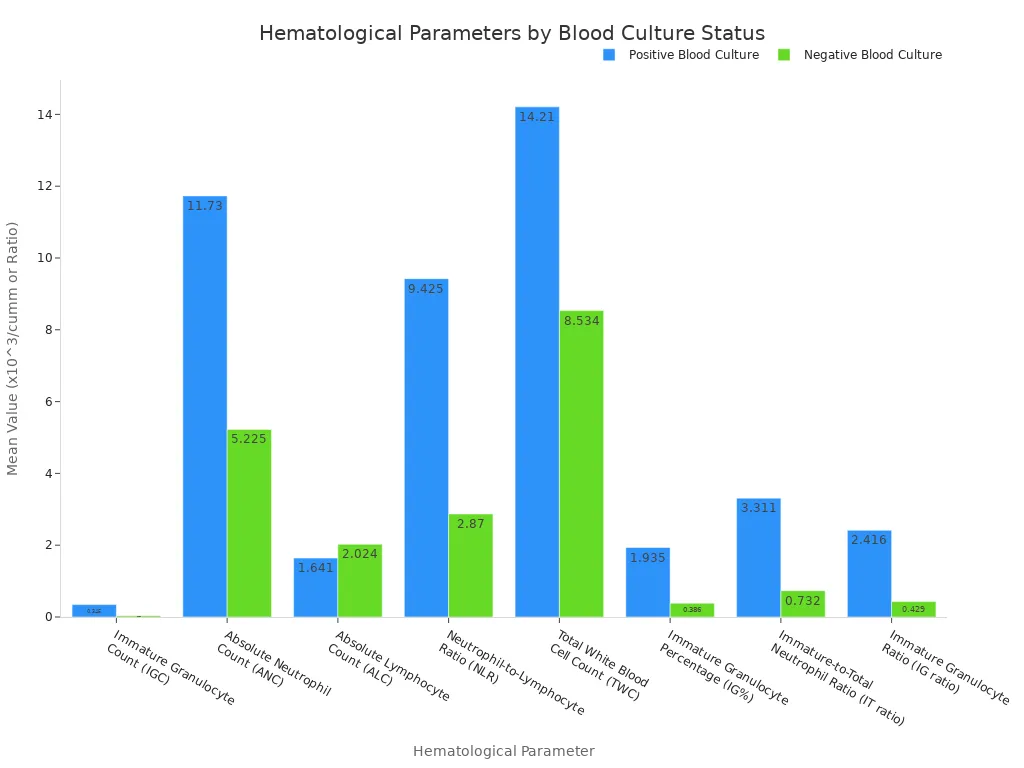
You can see how different blood parameters change when bacteria are present in your blood:
Hematological Parameter | Positive Blood Culture (Mean ± SD) | Negative Blood Culture (Mean ± SD) | p-value |
|---|---|---|---|
Immature Granulocyte Count (IGC) (×10^3/cumm) | 0.345 ± 0.58 | 0.036 ± 0.03 | <0.0001 |
Absolute Neutrophil Count (ANC) (×10^3/cumm) | 11.73 ± 7.81 | 5.225 ± 1.35 | <0.0001 |
Absolute Lymphocyte Count (ALC) (×10^3/cumm) | 1.641 ± 0.88 | 2.024 ± 0.57 | 0.0003 |
Neutrophil-to-Lymphocyte Ratio (NLR) | 9.425 ± 8.61 | 2.87 ± 1.49 | <0.0001 |
Total White Blood Cell Count (TWC) (×10^3/cumm) | 14.21 ± 8.14 | 8.534 ± 1.64 | <0.0001 |
Immature Granulocyte Percentage (IG%) | 1.935 ± 2.1 | 0.386 ± 0.27 | <0.0001 |
Immature-to-Total Neutrophil Ratio (IT ratio) | 3.311 ± 8.67 | 0.732 ± 0.58 | 0.0034 |
Immature Granulocyte Ratio (IG ratio) | 2.416 ± 5.74 | 0.429 ± 0.29 | 0.0007 |
This table shows that your Immature Granulocyte Count (IGC), Absolute Neutrophil Count (ANC), and Neutrophil-to-Lymphocyte Ratio (NLR) are significantly higher when you have a positive blood culture. This suggests your body is fighting an infection. Conversely, your Absolute Lymphocyte Count (ALC) tends to be lower in these cases.
While these parameters help, remember that increases in IGs and neutrophil counts are not only due to infections. You can also see them in other conditions. These include chronic inflammatory diseases, certain cancers, acute bleeding, and tissue damage. Combining IG measurements with other markers like your total white blood cell count or ANC can improve the accuracy of predicting microbial infections.
When you have high immature granulocytes, your doctor also considers your clinical symptoms. Certain symptoms, when present with elevated IG levels, can point to a more serious underlying condition. These symptoms include:
Fever
Leukocytosis (an elevated white blood cell count)
Neutrophilia (an increased number of neutrophils)
Left shift (an increase in immature neutrophils in your blood)
Toxic granulation (abnormal granules in your neutrophils)
Presence of Dohle bodies (inclusions in your neutrophils)
These signs, combined with high immature granulocytes, give your doctor important clues for a proper diagnosis.
When to Be Concerned About IG Levels
You should pay attention to your IG levels when they exceed certain thresholds. A normal reference range for IGs is typically less than 2% of your total white blood cells. Values higher than this 2% threshold suggest a severe immune response or ongoing bone marrow activity. This warrants medical attention.
For example, a count greater than 0.03 × 10^9/L for IGs was identified in patients with decompensated cirrhosis. This level was associated with significant differences in patient outcomes.
Doctors also use IG counts to help identify sepsis, a life-threatening condition. The diagnostic sensitivity and specificity of IG count for sepsis in adult patients are:
Metric | Value |
|---|---|
Sensitivity | 89.2% |
Specificity | 76.4% |
Context | Discriminating between infected and non-infected patients within the first 48 hours after SIRS onset |
This means the IG count is quite good at identifying patients who have sepsis (high sensitivity). It is also reasonably good at ruling out sepsis in those who do not have it (specificity). Another study found a sensitivity of 38.5% and a specificity of 90.9% with a cutoff of 2.0% IG%. These numbers show that while IG levels are a valuable indicator, they are not perfect on their own. Your doctor will use these blood test results along with other tests and your overall condition to make an accurate diagnosis.
Next Steps After Immature Granulocyte Results
Discussing Results with Your Healthcare Provider
You received your blood test results. Now, you need to talk to your doctor. They will explain what your immature granulocyte levels mean for you. Do not try to figure it out alone. Your doctor considers your full medical history. They also look at all your symptoms. This helps them make an accurate diagnosis. Ask questions. Make sure you understand the next steps.
Further Diagnostic Testing Options
Your doctor may order more tests. These tests help find the reason for your high immature granulocytes. For example, you might need more blood work. You could also need imaging scans. These scans look inside your body. Sometimes, you might need a bone marrow biopsy. This test takes a small sample of your bone marrow. Doctors examine it closely. These steps help pinpoint the exact cause of your elevated levels. This leads to a correct diagnosis.
Treatment Focuses on the Underlying Cause
The treatment for high immature granulocytes depends on what caused them. You do not treat the high levels directly. Instead, your doctor treats the underlying problem. If an infection caused the increase, you might take antibiotics. If inflammation is the cause, you might get anti-inflammatory medicine. For more serious conditions, like certain bone marrow disorders, you will need specific treatments. For example, treatment for leukemia involves specialized therapies. Always follow your doctor’s advice for your specific condition.
Immature granulocytes are early immune cells. Their presence in your blood indicates an active immune response. It also shows bone marrow activity. Elevated levels can come from many causes. These range from common infections to serious conditions. Your blood test results are not a diagnosis alone. They offer a valuable clue for your doctor. Always consider all blood test parameters. Look at your symptoms and medical history too. Consult a healthcare professional for personalized guidance. They will interpret your granulocytes levels correctly.
FAQ
What are Immature Granulocytes (IGs)?
Immature granulocytes are early-stage white blood cells. Your bone marrow makes them. Normally, you do not find many in your bloodstream. Their presence shows your body is actively fighting something, like an infection or inflammation.
What does “ABS” mean in Immature Grans ABS?
“ABS” stands for “absolute count.” This number tells you the exact quantity of immature granulocytes in your blood. It gives your doctor a clear picture of how many of these cells are circulating.
What causes high Immature Granulocytes?
Many things can cause high IGs. Infections, inflammation, and severe stress are common reasons. Certain medications, pregnancy, and bone marrow disorders can also elevate these levels. Your doctor will investigate the specific cause.
What do high IG levels mean for your health?
High IG levels mean your immune system is very active. It is responding to a challenge. This could be a simple infection or a more serious condition. Your doctor will look at all your test results and symptoms to understand what it means for you.
What should you do if your IG levels are high?
You should always discuss high IG levels with your healthcare provider. They will interpret your results in context. They might order more tests to find the underlying cause. Follow their guidance for diagnosis and treatment.