


You experience debilitating pain, numbness, and tingling from a pinched nerve, especially in your neck and shoulder. This constant pain disrupts your daily life. Gentle, targeted pinched nerve exercises can offer significant relief.
Chronic or severe compression can last for months, especially if left untreated. In some cases, long-term nerve damage can occur.
This post guides you through 10 easy stretches. These exercises provide comfort and improve mobility. You will find effective relief and regain control over your well-being.
Key Takeaways
Gentle exercises can help a pinched nerve. They reduce pain and improve movement.
Always talk to a doctor before starting new exercises. Stop if any movement causes more pain.
Perform stretches slowly and gently. Focus on good form to prevent more injury.
Combine exercises with good posture and an ergonomic workspace. This helps manage pain.
Seek medical help if symptoms get worse. This prevents lasting damage.
Understanding Pinched Nerves

What Is a Pinched Nerve
You might hear the term “pinched nerve” often. It describes a common problem. A pinched nerve happens when surrounding tissues put pressure on a nerve. These tissues can be bones, ligaments, or muscles. This pressure causes symptoms like numbness, tingling, and pain. While “pinched nerve” is a common term, doctors often use more specific names like “nerve entrapment.” This means a nerve is squeezed in a tight space in your body. This can happen in your neck, back, arms, or wrists.
Common Causes and Symptoms
Several things can cause a pinched nerve. One common cause is a herniated disc. Your spinal discs are like cushions between your vertebrae. When a disc slips out of place, it can press on a nerve. Bone spurs are another cause. These bony growths can form when cartilage wears away, often due to aging or conditions like osteoarthritis. Injuries can also lead to bone spurs.
When you have a pinched nerve, you will feel certain symptoms. You might feel sharp or radiating pain in your neck, back, arms, or legs. Many people describe numbness or a tingling sensation, like “pins and needles.” Sometimes, a hand, arm, or leg feels like it has “fallen asleep.” The pain can get worse with certain movements. For example, a pinched nerve in your lower back often causes sciatica, which is a type of sciatic nerve pain that travels down one leg.
Why Exercise Helps and When to Be Cautious
Gentle exercises can help a pinched nerve. These exercises create more space between your spinal bones. This takes pressure off your spinal discs and gives nerves more room to exit the spine. This movement also improves blood flow to the area.
Better blood flow helps irritated or damaged structures heal. Low-impact exercises, like swimming, and stretching improve circulation. Any movement helps keep blood flowing, which is important for healing and reducing pain. These pinched nerve exercises can offer relief. However, always be cautious. If any exercise increases your pain or causes new symptoms, stop immediately.
Before You Start: Important Safety Tips
You want relief from a pinched nerve. These exercises can help. But you must approach them with caution. Your safety is most important. Follow these guidelines before you begin any new routine.
Consult Your Doctor First
Always talk to your doctor or a physical therapist before you start any new exercise program. This is especially true when you have a pinched nerve. A healthcare professional can properly diagnose your condition. They can also rule out more serious issues. They will tell you if these pinched nerve exercises are safe for you. They might suggest specific movements or advise against others. A physical therapy expert can also guide you on the best approach for your unique situation.
Listen to Your Body: No Pain, No Gain
This common phrase does not apply here. You must listen to your body. Stop immediately if any stretch causes increased pain. You should also stop if you feel sharp pain.
New symptoms like numbness or tingling mean you need to stop. These are signs that the movement might be harmful. Gentle movements are good. Pushing through pain is not. Your goal is relief, not more discomfort.
Proper Form Is Key
Correct form prevents further injury. It also makes the exercises more effective. Each stretch has a specific way to perform it. You must follow these instructions carefully. Do not rush through the movements. Focus on slow, controlled motions. If you are unsure about the correct form, ask your doctor or physical therapist. They can show you how to do each exercise safely. This ensures you get the most benefit from your exercises.
10 Easy Pinched Nerve Exercises for Relief
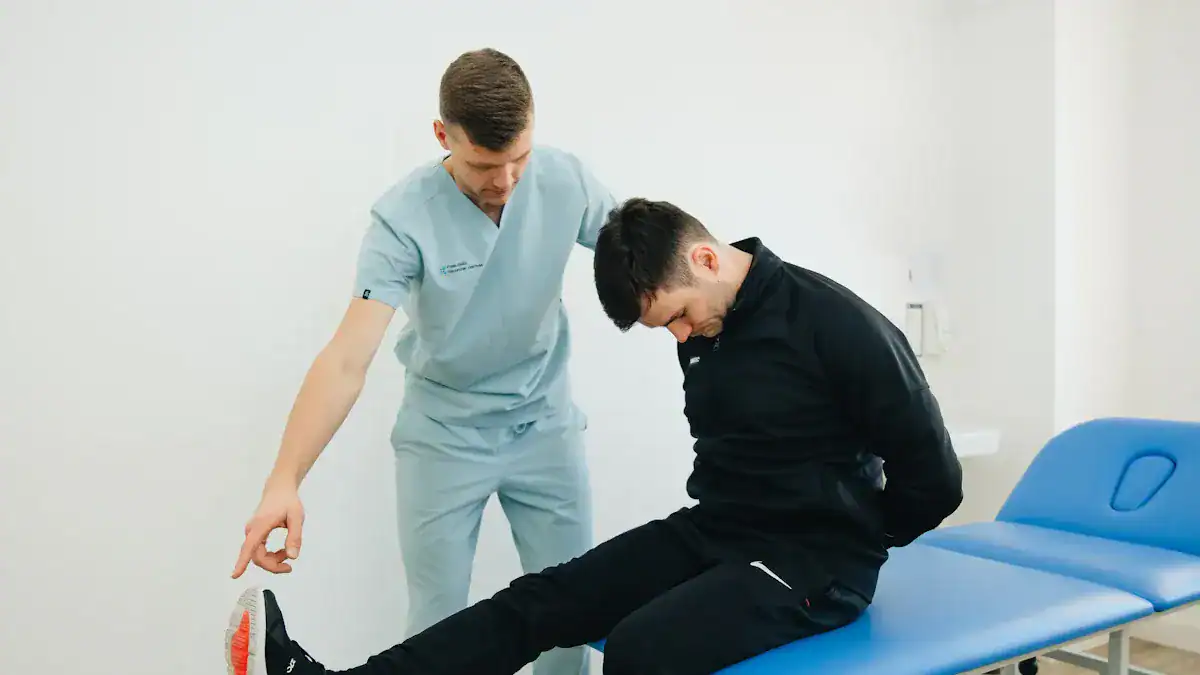
You can find significant relief from a pinched nerve with gentle, targeted movements. These pinched nerve exercises help decompress nerves, improve blood flow, and reduce pain. Remember to perform each stretch slowly and gently. Stop if you feel any sharp pain. These basic stretches are designed to help you relax your pinched nerve and regain comfort.
Neck Tilt Stretch for Cervical Pinched Nerves
This stretch targets pinched nerves in your neck. It helps release tension in your cervical spine.
How to perform it:
Sit or stand with your shoulders relaxed.
Slowly tilt your head to one side. Bring your ear towards your shoulder.
Hold this position for 15-30 seconds. You will feel the stretch on the opposite side of your neck.
Switch sides and repeat 3-5 times per side.
Keep your shoulders down and relaxed. This maximizes the benefit. You can also gently move your chin down and towards your chest. Pause, then return to the starting position. Repeat this 5 to 10 times. You can also tilt your head side to side and up and down.
Chin Tuck for Neck and Upper Back
This exercise strengthens deep neck muscles. It helps improve posture and reduces pressure on neck nerves.
How to perform it:
Sit upright. Look straight ahead. Align your ears over your shoulders.
Place a finger on your chin.
Without moving your finger, pull your chin and head straight back. You will feel a stretch at the base of your head and top of your neck. A gap should form between your chin and finger.
Hold this position for 5 seconds, if you can.
Bring your chin forward again to meet your finger.
Repeat this sequence for 10 times. Do as many as you can comfortably manage. You can make the exercise easier. Limit how far you retract your chin. You can also stand in a comfortable position. Slightly nod your head to bring your chin towards your chest. Retract or glide your chin backward. Ensure your jaw muscles remain relaxed. Relax your neck muscles to return to the start.
Shoulder Blade Squeeze for Upper Back
This stretch targets your upper back muscles. It helps improve posture and reduces tension that can contribute to a pinched nerve.
How to perform it:
Sit or stand up straight. Keep your arms at your sides.
Keep your shoulders relaxed and down. Do not shrug them.
Squeeze your shoulder blades down and together. Imagine holding a pencil between them.
Hold for about 6 seconds. Then relax.
Repeat 8 to 12 times. Aim for 2 sets of 12 repetitions. This can be done seated or standing. Squeeze your shoulder blades together as hard as possible. Hold for five seconds. Repeat ten times.
Cat-Cow Stretch for Spine Mobility
This gentle movement improves flexibility in your spine. It helps decompress your spinal discs.
How to perform it:
Start on your hands and knees. Place your hands under your shoulders. Place your knees under your hips.
Round your back. Tuck your chin toward your chest. Lift your ribs. Tuck your tailbone. This is your “cat” pose.
Slowly arch your back. Lift your tailbone. Drop your ribs. Lift your collarbone and head. This is your “cow” pose.
Alternate arching and rounding for 4-8 repetitions. Move for 2 to 3 seconds per each repetition. You can spread your shoulder blades and bend your neck as much as possible when rounding your back. Look up to slowly begin arching your back. Create as much spinal extension as possible. Squeeze your shoulder blades.
Child’s Pose for Spinal Decompression
This relaxing stretch gently lengthens your spine. It helps create space for compressed nerves.
How to perform it:
Begin on all fours. Your shoulders are over your hands. Your hips are over your knees. Widen your knees slightly wider than hip-width apart. Touch your big toes together.
As you exhale, sit back on your heels. Stretch your arms forward. Place your forehead on the ground.
Shift your hips back towards your heels as far as comfortable. Keep your torso long.
Walk your arms forward on the floor. Place your hands shoulder-width apart. Lightly squeeze your arms and shoulders inward. Firmly press your hands into the floor.
Tighten your lower abdominal muscles. Draw your ribs in.
Hold the stretch for a few deep breaths. Focus on the stretch in your back and spine. Hold for approximately 30 seconds. Repeat several times if needed.
Piriformis Stretch for Sciatica Pain Relief
This stretch targets the piriformis muscle. This muscle can sometimes compress the sciatic nerve, causing sciatica. This stretch helps improve sciatica pain.
How to perform it (lying down):
Lie on your back. Bend both knees. Keep your feet flat on the floor.
Cross one ankle over the opposite knee.
Grasp the back of your thigh behind the knee of the supporting leg.
Gently pull your thigh towards your chest.
Hold this position for 30 seconds.
Repeat on each side three times, twice daily. This is a type of seated glute stretch when performed in a chair. For comprehensive lower body flexibility that can improve sciatica pain, consider adding a seated glute stretch or a standing hamstring stretch to your routine. These basic stretches can complement your sciatica pain relief efforts.
How to perform it (seated):
Sit in a chair. Keep both feet flat on the floor.
Cross one ankle over the opposite knee.
Allow the crossed knee to drop downwards. Keep the ankle in place.
Gently push the knee down or lean forward. This intensifies the stretch in your buttocks.
Hold for 30 seconds.
Perform on each side three times, twice daily. You can also sit on a chair or bench with one leg extended forward. Cross your other leg over the extended leg. Position it close to your hip. Reach behind you with both hands. Firmly hold your thigh above the knee. Moving your hands closer to your heel will deepen the stretch. Maintain the stretch for 30 seconds. Then switch to the other side. This seated glute stretch is excellent for sciatica.
Knee-to-Chest Stretch for Lower Back
This stretch gently flexes your lower back. It helps relieve pressure and improve flexibility. It can help with sciatic nerve pain.
How to perform it:
Lie on your back. Bend both knees. Keep your feet flat on the floor. Keep your arms by your sides.
Slowly bring one knee to your chest. Use both hands to pull the knee in.
Hold for 20 seconds.
Return to the starting position.
Repeat with the opposite knee. Do 3 to 5 repetitions on each side. You can also sit in a chair. Keep your feet flat on the floor. Place your hands under one of your thighs. Use your hands to pull your knee up toward your chest. Hold the stretch for a few seconds. Keep your head and chest upright. Slowly lower your thigh back to your starting position. You should feel a slight stretch in the back of your hip, back, and butt muscles. This is similar to how a standing hamstring stretch can alleviate tension in the lower back and legs, contributing to overall pain relief. A regular standing hamstring stretch can also help with sciatica.
Seated Spinal Twist for Spinal Health
This twist gently mobilizes your spine. It helps improve flexibility and reduce stiffness.
How to perform it:
Sit on the floor. Extend your legs straight. Point your toes up.
Raise and bend your left leg. Cross it over your right leg. Your left foot is flat on the ground outside your right knee.
Twist your torso to the left from your lower back. Maintain a straight back.
Place your right elbow on the left side of your left knee. This deepens the twist.
Reach your left arm behind you. Post it on the ground for support.
Turn your head to face behind you.
You should feel a slight stretch in your trunk. You might also feel it in your glutes or hips.
Hold this position for the duration of the stretch.
Switch sides and repeat. Avoid jerking or forcing the movement. Twists should be gentle and fluid. Keep your hips grounded and facing forward. This isolates the twist in the spine. Breathe deeply. Use inhales to elongate and exhales to gently deepen the twist. Focus on maintaining a tall spine throughout the movement.
Nerve Glides for Nerve Mobility
Nerve glides help nerves move more freely through surrounding tissues. This can reduce irritation and pain. These exercises are specific for nerve mobility.
How to perform a Median Nerve Glide:
Start with your arm hanging down at your side. Keep your elbow straight. Your palm faces forward.
Slowly bend your wrist forward and back.
Use your other hand. Ensure your shoulder stays down and drawn back throughout the exercise.
Complete 2 sets of 15 repetitions. Mild pain is acceptable. It should subside soon after the exercise. If not, consult a physical therapist.
How to perform Ulnar Nerve Gliding Stretches:
Stand up straight.
Place your index finger on top of your thumb. This creates tension in your pinky and ring finger.
Lift the heel of your hand upwards towards your shoulder.
Lift your elbow up.
Rotate your head away.
As you come down, look down at your elbow.
Hold for 2 seconds. Then release.
Repeat 10 times.
How to perform Radial Nerve Gliding Stretches:
Stand up straight. Keep your arm down at your side.
Form a ‘waiter’s tip’ hand. Place your palm behind you.
Curl your fingers.
Look for your hand.
If you do not feel much stretch, bring your arm outward.
Bring the hand/arm forward.
As the hand comes forward and up towards your cheek, look away.
Hold the position for 2 seconds.
Repeat 10 times.
Wall Pec Stretch for Chest and Shoulder
This stretch opens your chest and shoulders. It helps relieve tightness that can contribute to a pinched nerve in the neck or upper back.
How to perform it (single arm at 90-degree angle):
Position your arm next to the wall at a 90-degree angle. Your elbow is at shoulder height. Place your palm and forearm against the wall.
Turn your face away from the wall. Look over your other shoulder.
Gently press into the arm placed on the wall.
Lift your chest outwards slightly. This deepens the stretch in your pectoral.
Hold for 30 seconds.
Repeat on the other side. Use a split stance instead of feet together for a deeper stretch and better chest opening. Simply turn your head over the shoulder furthest from the wall. Avoid pushing your neck and head excessively. This prevents injury.
How to perform it (in a corner):
Stand in the corner of a room. Face the wall.
Place your forearms and palms on either side of the wall. They should be approximately at shoulder level.
Position your feet roughly 1 foot away from the corner.
Keep your forearms and palms firmly against the wall. Keep your body straight. Lean your body towards the corner.
Lean only until you feel a stretch across your chest. Avoid pain or discomfort.
Hold for 5-10 seconds.
Move your arms further up the wall. Maintain the same forearm and palm position. Repeat the lean and hold.
Bring your arms back down to the initial shoulder-level position. Repeat.
Continue this sequence for a total duration of 30-40 seconds. Keep your body in a straight line and engaged. This prevents pressure on your lower back and potential injury.
Incorporating Exercises into Your Routine
You have learned about specific exercises that can help a pinched nerve. Now, you need to know how to fit them into your daily life. Consistency is key for lasting relief.
Frequency and Duration Recommendations
You should perform these exercises regularly. For example, you can do shoulder rolls 10 times in each direction. Hold Child’s Pose for 20–30 seconds, and repeat it 2–3 times.
For thoracic extension, hold for 5 seconds and repeat 5 times. You can do neck head turns 5 times on each side. Perform the Cat-Cow stretch 5–10 times. For the Knee-to-Chest stretch, repeat 3 times on each side. Hold the Seated Spinal Twist for 10 seconds, then repeat on both sides.
Do the Pelvic Tilt 10 times. For nerve glides, like ulnar nerve glides, perform them daily, 1–2 times a day with 5–10 repetitions. You can do general stretches 2–3 repetitions, once daily, especially after weeks 3-4. Strengthening exercises, if recommended by your doctor, can be done 10–15 repetitions, 3 times per week on non-consecutive days, after weeks 5-6. This consistent approach helps manage your pain.
Combining with Other Pain Management Strategies
These exercises work best when you combine them with other healthy habits. You should maintain good posture. Keep your shoulders back and your back straight. This prevents pressure on spinal nerves. Set up an ergonomic workspace. Use furniture that supports your spine.
Minimize awkward stretching and bending. Take breaks often. Relax, stretch, walk, or change your position. This is especially important for sedentary jobs or repetitive actions. It prevents stiffness and reduces nerve pressure. Lift heavy objects properly. Use your legs, not your back. Maintain a healthy weight. This reduces strain on spinal nerves.
Use a supportive mattress and pillows. They keep your spine aligned while you sleep. These strategies help prevent and alleviate symptoms of sciatica. They also reduce general nerve pain.
When to Seek Professional Help
Sometimes, exercises and lifestyle changes are not enough. You need to know when to seek professional medical help. If your symptoms persist or worsen over time, consult a doctor. This means if symptoms have been present for several days or weeks without improvement.
Loss of bladder or bowel control is a severe symptom. This indicates a medical emergency. It requires immediate attention, especially if you have a pinched nerve in your lower back. This could be cauda equina syndrome. If you continue to experience warning signs, like persistent sciatica, consult a primary care doctor or physical therapist. They can provide timely diagnosis and treatment. This helps prevent lasting damage.
Consistent, gentle pinched nerve exercises offer significant relief from pain, numbness, and tingling. You improve overall comfort and mobility. Incorporating these easy stretches into your daily life brings many benefits.
Each stretch helps decompress nerves. You can reduce your pain. Take proactive steps to manage your pinched nerve symptoms. Always prioritize safety. Listen to your body during each stretch. If a stretch causes discomfort, stop that stretch. Consult a healthcare professional for personalized advice and ongoing care. This ensures you perform each stretch correctly. You can find lasting relief with the right stretch. This gentle stretch is for you.