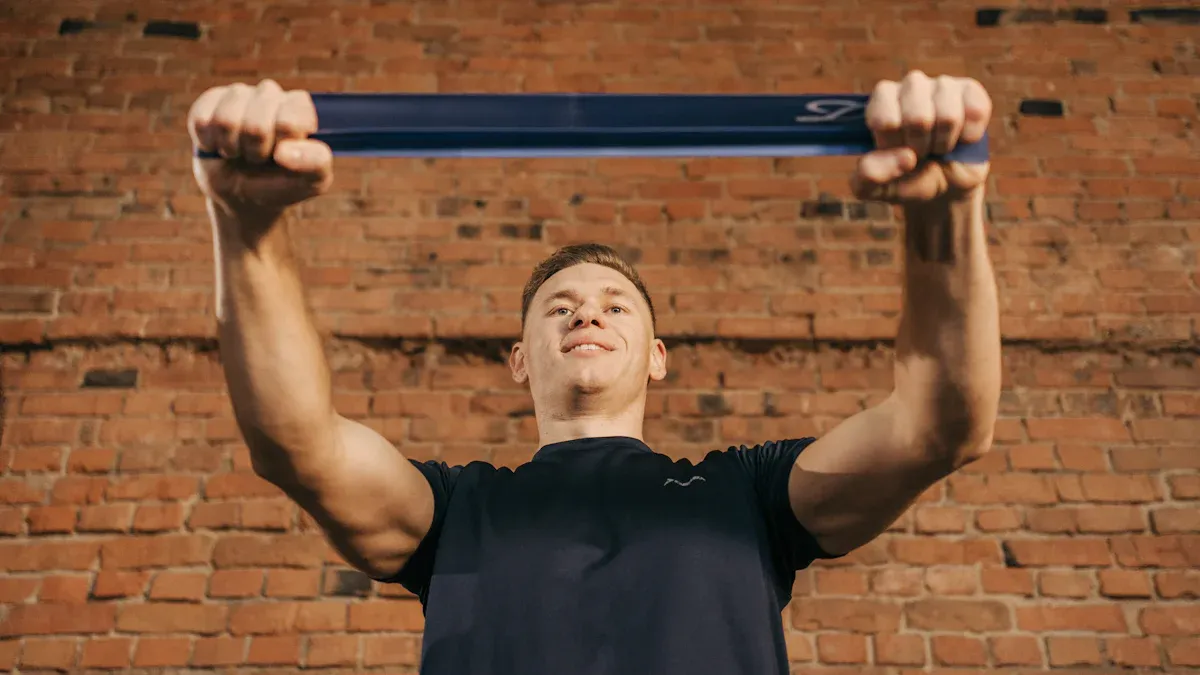
Do your shoulders ever ache or feel unstable? You are not alone; annual prevalence estimates for shoulder pain range from 4.7% to 46.7%, affecting many people. Common issues like rotator cuff tears or shoulder impingement can severely limit your movement. Fortunately, you can improve your shoulder health with specific exercises.
Enter scapular push-ups, a foundational movement for building crucial shoulder stability and upper body strength. These are not your typical push-ups; they focus on precise shoulder blade movement. Mastering scapular push-ups helps you prevent injuries and improve overall shoulder function.
Key Takeaways
Scapular push-ups strengthen muscles around your shoulder blades. They improve shoulder stability and control.
This exercise focuses on moving only your shoulder blades. Your elbows stay straight. This is different from regular push-ups.
Scapular push-ups help improve your posture. They also prevent shoulder injuries. They make your shoulders more stable.
You can start with easier versions. You can make them harder as you get stronger. Add them to your workout routine.
Understanding Scapular Push-Ups
Scapular push-ups are a shoulder stabilizing exercise. They focus on proper upper body alignment. You use them to strengthen the muscles around your shoulder blades. These exercises are different from regular push-ups. They help you gain better control over your shoulders.
Defining Scapular Movement
Scapular movement refers to how your shoulder blades move on your back. Two key movements are protraction and retraction. Protraction means your shoulder blade moves away from your spine. It slides laterally and anteriorly along your chest wall. You can think of this as rounding your shoulders forward.
This movement is also called abduction of the scapula. When you throw a punch, your scapula protracts. The serratus anterior muscle is the primary muscle for this movement. It sits along your upper eight ribs. Other muscles like the pectoralis minor and pectoralis major also help. Retraction is the opposite. Your shoulder blade moves closer to your spine.
How They Differ from Regular Push-Ups
Scapular push-ups are often called “push-up plus.” They differ greatly from regular push-ups. In a regular push-up, you bend your elbows and lower your whole body. In a scapular push-up, your elbows stay straight. You do not lower your body. Instead, you move only your shoulder blades.
You push your shoulders away from the floor, causing your shoulder blades to spread apart (protract). Then, you let your shoulder blades come together (retract) without bending your arms. This exercise specifically targets the serratus anterior muscle. This muscle is crucial for shoulder blade movement and overall shoulder stability. It helps you control your shoulders better.
Mastering Scapular Push Ups Technique
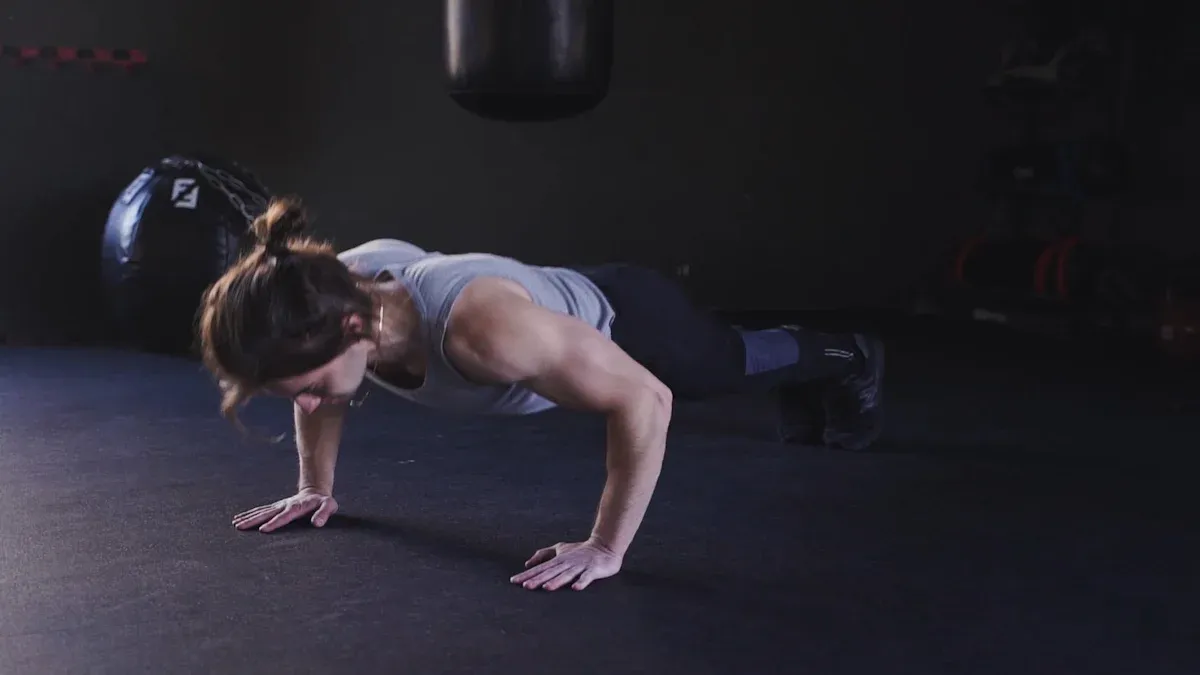
You need to understand the correct technique to get the most out of scapular push-ups. This exercise focuses on precise movements of your shoulder blades. Follow these steps to perform them effectively.
Proper Starting Position
Begin by getting into a high plank position. Place your hands directly under your shoulders. Your fingers should point forward. Extend your legs straight back. Your body should form a straight line from your head to your heels. Do not let your hips sag or rise too high.
Engage your core muscles. This keeps your spine neutral. Your elbows should remain straight throughout the entire exercise. This starting position is crucial for the correct technique.
Executing Protraction and Retraction
Now, you will move only your shoulder blades. First, allow your chest to sink slightly towards the floor. Your shoulder blades will move closer together. This is scapular retraction. Remember, your elbows stay straight. Do not bend your arms. Next, push the floor away from you.
Your shoulder blades will spread apart. Your upper back will slightly round. This is scapular protraction. You are pushing your body up using only your shoulder blades. Think about sliding your shoulder blades away from each other. Then, bring them back together. This specific movement is the core of scapular push-ups. Focus on this controlled motion. This ensures you use the correct technique.
Breathing and Core Engagement
Proper breathing enhances your performance. It also helps with core stability. Inhale as you retract your shoulder blades. This means you breathe in as your chest lowers slightly. Exhale as you protract your shoulder blades. You breathe out as you push away from the floor. Keep your abdominal muscles tight throughout the movement. This maintains a stable torso. A strong core supports your spine. It also helps you isolate the shoulder blade movement. This breathing pattern is part of the correct technique.
Common Mistakes to Avoid
Many people make mistakes when performing scapular push-ups. Avoiding these errors ensures you get the full benefit.
Shrugged Shoulders: You might elevate your shoulders towards your ears. This overworks muscles like your upper traps. It can lead to poor shoulder function. Keep your shoulders down and away from your ears.
Maintained Retracted Scapula: Some people keep their shoulder blades squeezed together. This is incorrect. Your shoulder blades need to move freely. They should retract as you lower. They should protract as you push up. This allows for optimal shoulder positioning.
Improper Scapular Movement (Keeping The Shoulder Blades Pinned): Aggressively locking your shoulder blades together limits your range of motion. It puts unnecessary stress on your shoulders. Other body parts might compensate.
Improper Scapular Movement (Rounding The Spine Instead Of Protracting): You might round your upper back instead of spreading your shoulder blades. This is not proper scapular movement. Focus on the shoulder blades moving, not your spine.
Tips for Optimal Form
To achieve the correct technique, keep these tips in mind. Focus on the movement of your shoulder blades. Imagine them sliding on your back. Keep your arms straight and locked. Do not let your elbows bend. Maintain a strong plank position. Your body should stay rigid from head to heels. Perform the movement slowly and with control. This helps you feel the muscles working. It also prevents momentum from taking over. Consistency with the correct technique will lead to better results.
Key Benefits of Scapular Push-Ups

Scapular push-ups offer many advantages for your upper body health. They go beyond simple strength building. You gain better control and resilience in your shoulder girdle.
Enhanced Shoulder Stability
You build crucial shoulder stability when you perform scapular push-ups. This exercise strengthens the muscles that hold your shoulder blade in place. A stable shoulder blade provides a strong foundation for your arm movements. It helps your arm move freely and powerfully. Without good shoulder stability, your arm muscles work harder. This can lead to fatigue or injury. Scapular push-ups teach your body to control your shoulder blade. This control is vital for all overhead activities. You will notice improved performance in daily tasks and sports.
Improved Muscle Activation
Scapular push-ups are excellent for improving specific muscle activation. They target key muscles around your shoulder blade. This exercise particularly activates your serratus anterior muscle. This muscle is essential for healthy shoulder movement.
Research shows that the “plus phase” of the push-up exercise, which is the protraction phase, shows the highest degree of serratus anterior muscle activation. This is true when compared to other exercises designed to activate the serratus anterior. Push-up plus exercises activate the serratus anterior more selectively than standard push-up exercises. Researchers recommend push-up plus exercises for this purpose. You can see how different muscles respond during these movements:
Muscle | Scapular Push-Up (MV3PS) Muscle Activation | Standard Push-Up (KPUP) Muscle Activation | Statistical Significance |
|---|---|---|---|
Serratus Anterior | Significantly Higher | Lower | p < 0.05 |
Pectoralis Major | Significantly Lower | Higher | p < 0.05 |
Lower Trapezius | Lower | Higher | p > 0.05 (not significant) |
Upper Trapezius | Lower | Higher | p > 0.05 (not significant) |
This table highlights the targeted muscle activation you achieve. You specifically engage the serratus anterior. This helps you build balanced strength.
Posture Correction
You can significantly improve your posture with scapular push-ups. Many people suffer from rounded shoulders. This posture involves your shoulder blades moving forward, rotating downward, and tilting anteriorly. It often links to shoulder dysfunction.
Rounded shoulder posture often shows reduced muscle activation in your lower trapezius and serratus anterior muscles. Scapular push-ups directly address this issue. They strengthen the serratus anterior, which helps rotate your shoulder blade for arm elevation.
They also work your lower trapezius, which assists with downward rotation and stability. This exercise teaches you proper scapular retraction and protraction. This strengthens your serratus anterior and mid-back stabilizers. You alleviate tension in your neck and upper back. This leads to better posture and overall shoulder stability.
Injury Prevention and Rehabilitation
Scapular push-ups play a critical role in preventing shoulder injuries. They also assist in rehabilitation. Your serratus anterior acts as a deep stabilizer for your shoulder. It works similarly to your rotator cuff muscles. A study found that swimmers with shoulder pain had a delayed serratus anterior muscle activation. This delay impaired the scapula’s ability to stabilize against the thoracic wall. This led to scapular winging or dyskinesia. By strengthening this muscle, you reduce your risk of such issues.
Scapular strengthening is often overlooked. However, the scapula and its attached muscles are very important.
Scapular push-ups are among the exercises that can achieve this strengthening.
These exercises specifically target the serratus anterior muscle. They promote shoulder stability. Incorporating these exercises into your routine enhances scapular control and stability. This reduces your risk of shoulder injuries. The push-up plus exercise is a modified standard push-up. It involves maximal scapular protraction after elbow extension.
Doctors recommend it for shoulder rehabilitation. It elicits high serratus anterior muscle activation while keeping upper trapezius activity relatively low. This muscle activation pattern is beneficial. Imbalances, like high upper trapezius and low serratus anterior muscle activation, link to shoulder pain and altered scapular movement. The exercise helps correct scapular kinematics in patients with shoulder pathology.
Increased Shoulder Mobility
You will experience increased shoulder mobility through consistent practice of scapular push-ups. When your shoulder blades move correctly, your entire shoulder joint functions better. This exercise improves the coordination between your shoulder blade and your arm bone.
This coordination is called scapulohumeral rhythm. A healthy rhythm allows for a greater range of motion without impingement. You gain better control over your shoulders. This translates to smoother, more fluid movements. You can reach higher and move your arms more freely. This improved mobility helps you perform daily tasks with ease. It also enhances your athletic performance.
Scapular Push-Up Variations and Progressions
You can modify scapular push-ups to match your current strength level. This allows everyone to benefit from this important exercise. You can make them easier or harder.
Beginner Modifications
If you are new to scapular push-ups or have limited upper body strength, start with easier versions. You can reduce the bodyweight challenge. Perform the same range of motion while sitting or standing. Try “Shoulder Protraction-Retraction Reaches.” You sit or stand.
Then you reach your arms forward, protracting your shoulder blades. Next, you pull them back, retracting your shoulder blades. Your elbows stay straight. This helps you learn the movement without supporting your full body weight. You can also perform scapular push-ups on your knees. This reduces the load on your shoulders. You still focus on the shoulder blade movement.
Intermediate Challenges
Once you master the basic plank version, you can increase the difficulty. Try performing scapular push-ups with your feet elevated. Place your feet on a low step or bench.
This increases the amount of body weight your shoulders support. You can also slow down the movement. Focus on a longer hold at the top (protraction) and bottom (retraction) positions. This increases time under tension. It builds more strength and control. You can also try adding a resistance band around your upper arms. This provides extra resistance during protraction.
Advanced Drills
Advanced athletes can incorporate more challenging push-up variations. These drills further enhance scapular control and strength.
Scap Push Ups: Perform these in a tall plank position. You squeeze your shoulder blades together (retraction). Then you press through to protract them. Focus on shoulder blade movement. Keep your elbows locked.
Prone Flexion Holds: Lie face down on the floor. Hold a PVC pipe or light bar overhead. Raise it off the ground. Hold this position for 12-15 seconds. This drill activates stabilizer muscles between your shoulder blades. It improves your overhead position and motor control.
For those with scapular dyskinesis, specific training helps. This includes serratus strengthening. It also involves mid/low trap training and rhomboid training. These exercises build a strong and stable shoulder girdle.
Integrating Scapular Push-Ups into Your Routine
You can easily add scapular push-ups to your fitness plan. They offer great benefits for your shoulders. Knowing when and how to include them helps you get the best results.
When to Perform Them
You can perform scapular push-ups at different times in your workout. Many people use them as a shoulder warm up. This prepares your shoulder muscles for heavier lifting. You can also include them as part of your main workout. They fit well into a circuit training routine. For rehabilitation, you might do daily scapular push-ups. This helps rebuild strength and control. Here is a sample schedule for incorporating them:
Day | Exercise |
|---|---|
Day 1 | Scapular wall pushups (8–12 reps, 2–3 sets) |
Day 8 | Scapular pushups on the floor (8–12 reps, 2–3 sets) |
Day 9 | Scapular pushups on the floor (8–12 reps, 2–3 sets) |
Day 15 | Scapular wall pushups (8–12 reps each, 1–2 sets each) |
Day 22 | Scapular wall pushups (8–12 reps each, 1–2 sets each) |
Day 23 | Scapular pushups on the floor (8–12 reps each, 1–2 sets each) |
Day 29 | Scapular pushups on the floor (8–12 reps each, 1–2 sets each) |
This schedule shows how you can progress with daily scapular push-ups. You start with easier variations and move to harder ones.
Recommended Sets and Reps
The number of sets and repetitions for scapular push-ups depends on your goal. If you want to build strength, you should do fewer reps with more sets. For strength development, a recommended baseline for scapular push-ups is 3–5 sets of 4–6 repetitions.
Training Type | Sets | Reps |
|---|---|---|
Strength Training | 3–5 | 4–6 |
If you aim for muscle endurance, you will do more repetitions. You might perform 2-3 sets of 10-15 repetitions. Listen to your body. Start with a manageable number. Then, gradually increase as you get stronger. Consistency with daily scapular push-ups is more important than doing too much too soon.
Combining with Other Exercises
You can combine scapular push-ups with many other exercises. Use them as a shoulder warm up before upper body workouts. They prepare your shoulders for pressing movements like bench presses or overhead presses. You can also add them to a full-body circuit.
Perform them between sets of other exercises. This keeps your shoulder stabilizers active. For example, do a set of bicep curls. Then, do a set of scapular push-ups. This helps maintain good posture throughout your workout. Integrating daily scapular push-ups improves your overall shoulder health.
Scapular push-ups are vital for your overall shoulder health and upper body strength. You gain improved stability and enhanced muscle activation awareness. Consistent practice of scapular push-ups makes you feel stronger and more stable. This exercise also improves your posture and prevents injuries. Incorporating them is simple. You can easily add them to your routine. Start practicing scapular push-ups consistently. You will see noticeable improvements. Take control of your shoulder well-being today.
FAQ
What muscle do scapular push-ups primarily target?
Scapular push-ups mainly target your serratus anterior muscle. This muscle helps move your shoulder blade. It is crucial for shoulder stability. You also engage your core muscles.
What is the main difference between scapular push-ups and regular push-ups?
In scapular push-ups, your elbows stay straight. You only move your shoulder blades. Regular push-ups involve bending your elbows. You lower your whole body. Scapular push-ups focus on shoulder blade control.
How often should you do scapular push-ups?
You can do scapular push-ups 2-3 times a week. Include them as a warm-up or part of your workout. Start with 2-3 sets of 10-15 repetitions. Listen to your body.
Who can benefit from doing scapular push-ups?
Anyone can benefit from scapular push-ups. They help athletes, people with desk jobs, and those recovering from shoulder injuries. You will improve your posture. You will also gain better shoulder stability.