

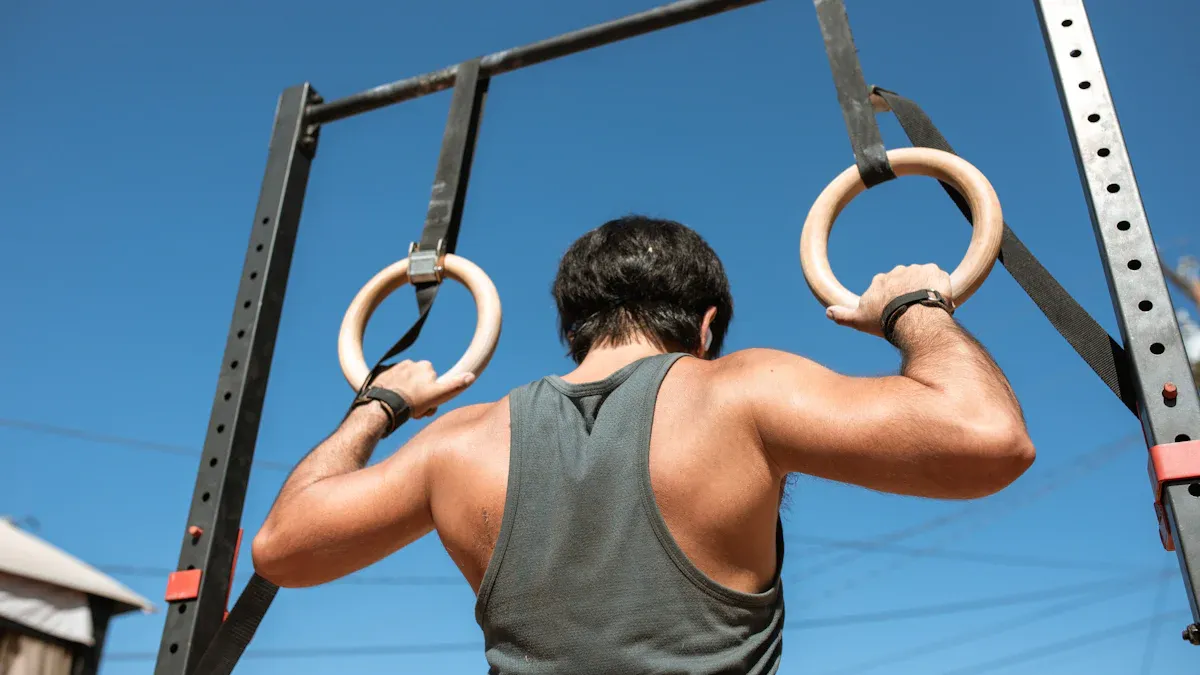
Scapular stabilization exercises are targeted movements for the muscles controlling your shoulder blade. These exercises play a critical role in your overall shoulder health, strength, and shoulder stability. Shoulder pain affects many people annually; between 0.77% and 6.2% of individuals experience it each year. Musculoskeletal conditions, including shoulder issues, contribute to significant healthcare costs.
These exercises build a stable base for arm movement. They improve coordination and motor control. They also provide crucial injury prevention. Strong scapular stability enhances your shoulder strength. You need strong, stable shoulders for daily activities, sports, and long-term well-being in 2025.
Key Takeaways
Scapular exercises strengthen muscles around your shoulder blade. These muscles help your arm move well and prevent injuries.
A stable shoulder blade acts like a strong anchor for your arm. This helps your arm muscles work better and prevents pain.
These exercises improve how your brain controls your shoulder. This makes your movements smoother and reduces injury risk.
Start with basic movements like squeezing shoulder blades together. Then, try harder exercises like YTWL movements.
Do these exercises often, 3-4 times a week. Focus on moving your shoulder blade correctly, not just your hand.
Understanding Scapular Stabilization
Scapula’s Role in Shoulder Function
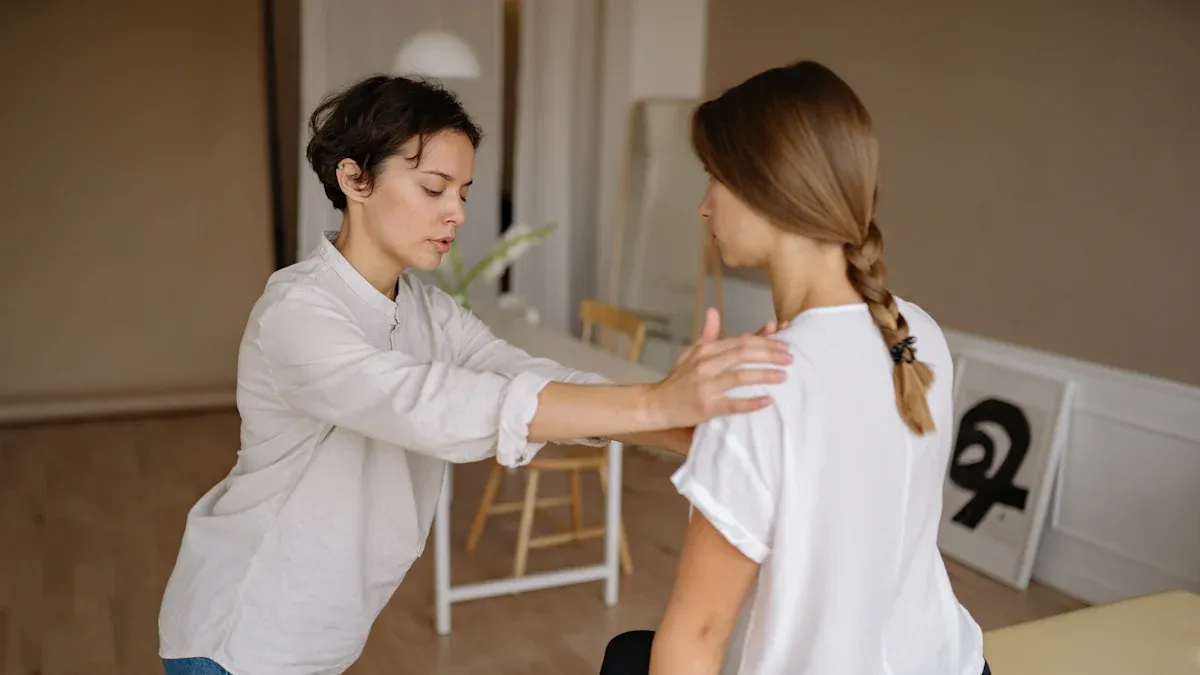
Your scapula, or shoulder blade, is a flat, triangular bone. It forms the foundation for your entire shoulder joint. Think of it as the stable platform from which your arm moves. This bone connects to your humerus (upper arm bone) and your clavicle (collarbone). The scapula does not directly connect to your rib cage. Instead, muscles hold it in place. This unique setup allows for a wide range of motion in your shoulder.
The scapula performs several crucial biomechanical functions for effective shoulder movement. It provides a stable base for your glenohumeral joint, which is your main shoulder joint. The muscles around your scapula dynamically position the glenoid. The glenoid is the socket part of your shoulder joint. This positioning allows for efficient movement of your arm. Coordinated movement between your scapula and humerus is vital. We call this coordinated motion “scapulohumeral rhythm.” This rhythm is essential for efficient arm movement and maximizing joint stability. When you raise your arm, your scapula moves in specific ways. It rotates upward, tilts backward, and rotates externally.
When your scapula does not move correctly, it can cause problems. This incorrect movement is called scapular dyskinesis. Scapular dyskinesis changes the scapulohumeral rhythm. This leads to abnormal movements in your shoulder. These changes can reduce the space under your shoulder bone. This reduction can pinch your rotator cuff tendons or bursa. This pinching causes pain and injury. For example, a study on baseball players showed significant changes in their shoulder joint movement. Players with scapular dyskinesis had increased external rotation of their arm.
They also had less backward tilt of their scapula during pitching. This shows that poor scapular control can lead to too much arm motion and not enough scapular movement. Proper scapular function is therefore critical for healthy shoulder movement.
Key Scapular Stabilizer Muscles
Several muscles work together to control and stabilize your scapula. These are your primary scapular stabilizers. They ensure your shoulder blade moves smoothly and stays in the correct position. These exercises specifically awaken and strengthen these important muscles.
One key muscle is the Serratus Anterior. This muscle originates from the side of your first to eighth or ninth ribs. It inserts along the entire medial border of your scapula. The serratus anterior pulls your scapula forward against your chest wall. It helps hold your scapula flat against your rib cage. This muscle also assists in the upward rotation of your scapula. This action helps you raise your arm above your head. Strong activation of the serratus anterior is essential for overhead activities.
Next, you have the Rhomboid Major and Rhomboid Minor muscles. These muscles sit between your spine and your scapula.
Muscle | Origin | Insertion | Action |
|---|---|---|---|
Rhomboid major | Spinous processes of thoracic vertebrae T2-T5 | Medial border of the scapula, from the root of the spine to the inferior angle | Retracts, rotates, and stabilizes the scapula |
Rhomboid minor | Nuchal ligament and spinous processes of cervical vertebra C7 and thoracic vertebra T1 | Medial border of the scapula, at the root of the spine | Retracts, rotates, and stabilizes the scapula |
Both rhomboids pull your scapula toward your spine. They also help rotate it downward. They are crucial for maintaining good posture and providing stability. Their activation helps you pull things towards you.
Finally, the Trapezius muscle is a large, kite-shaped muscle covering much of your upper back and neck. It has three main parts, each with different actions.
How Scapular Exercises Build Shoulder Strength
Scapular exercises are vital for building robust shoulder strength. They do this by creating a strong foundation for your arm movements. These exercises also improve how your brain and muscles work together. This leads to better overall shoulder health and performance.
Stable Base for Shoulder Movement
A stable scapula is like a strong anchor for your arm. When your shoulder blade is stable, your rotator cuff and deltoid muscles work much better. This means you can lift heavier objects and perform overhead movements with more power. Think of it this way: if your foundation is shaky, the rest of the structure cannot be strong.
Proper scapular movement keeps your rotator cuff muscles in their best position. This helps them work effectively. Correct scapular motion also prevents shoulder impingement. It creates important space for your arm to move. This stops your rotator cuff muscles from overworking and getting strained. Your scapular movement ensures stability. It provides a steady platform for your arm bone in its socket. This prevents impingement syndrome. It increases the space between your arm bone and the acromion when you lift your arm. This avoids pinching your rotator cuff tendons. Scapular movement also makes your deltoid and rotator cuff muscles work their best. It puts them at their ideal length and angle for maximum efficiency. This protects your rotator cuff. It ensures the correct rhythm, which reduces the risk of fatigue, pain, and injury.
Enhancing Neuromuscular Control
Scapular exercises do more than just build muscle strength. They also enhance your brain’s ability to control your shoulder. This is called neuromuscular control. These exercises teach your brain to coordinate your scapular and humeral movements better. This improved control reduces your risk of impingement. It also improves your overall shoulder stability.
When your scapular muscles activate correctly, your brain learns to move your shoulder blade smoothly. This smooth activation helps your arm move freely. It prevents your shoulder from getting into awkward positions that can cause pain. You gain better control over your shoulder movement. This means you can perform tasks with greater precision and less effort. This improved control is crucial for athletes and for everyday activities.
Injury Prevention and Rehab for the Shoulder
Strong scapular stabilizers are your best defense against common shoulder problems. They protect you from issues like impingement, rotator cuff tears, and instability. They do this by keeping your shoulder joint aligned correctly. Shoulder exercises that include scapular stabilization techniques are important. They keep your scapula in the right position, which helps prevent impingement.
Scapular stabilization is also very important in rehabilitation after rotator cuff tears. Your scapula gives a stable base for muscle activation. It helps transfer load within your body’s movement chain. Changes in normal scapular position can affect rotator cuff function. You often see these changes after rotator cuff tears. They are a way your body tries to make up for lost shoulder motion. Establishing proper neuromuscular control of your shoulder girdle muscles is essential. It helps you regain full function after rotator cuff repair. Poor scapular movement can lead to impingement syndrome coming back.
Rehabilitation exercises focus on restoring normal scapular movement. They also strengthen your scapular stabilizers. Specific exercises include prone positions to activate your rhomboids and trapezius. Scapular retraction and depression exercises help de-emphasize your upper trapezius. Serratus anterior strength training uses supine scapular protraction and punch with a plus exercises. Other exercises, like standing sport cord rows and prone lower trapezius exercises, target key scapular stabilizers. The push-up with a plus progression also strengthens your serratus anterior. These exercises help reduce injury risk and improve patient outcomes.
Effective Scapular Stabilization Exercises for 2025
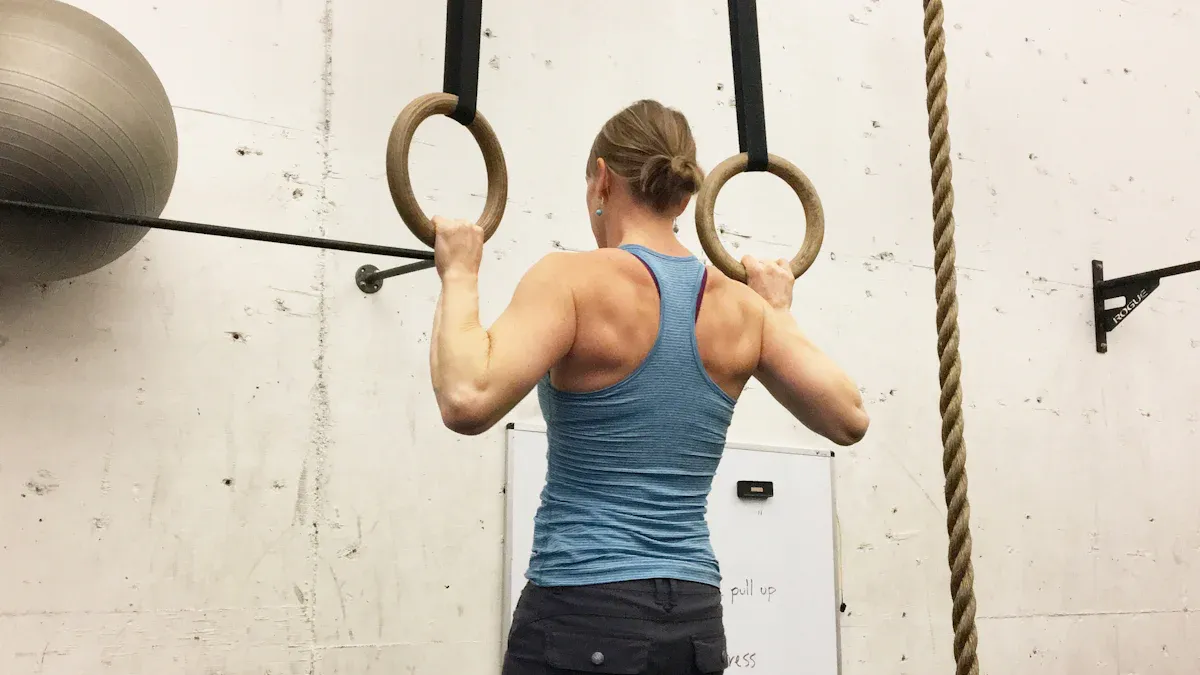
You can build strong, stable shoulders with specific scapular stabilization exercises. These exercises help you gain better scapular control and improve overall shoulder function. You will find foundational movements and advanced scapular mobility exercises to enhance your strength.
Foundational Scapular Exercises
Start with basic scapular mobility exercises to build initial control. These drills teach your body how to move your shoulder blade correctly.
Scapular Retractions: You squeeze your shoulder blades together. This activates your rhomboids and trapezius muscles. These scapular mobility exercises are crucial for preventing and treating shoulder injuries. Retraction helps maintain space in your shoulder joint during arm elevation. This protects your rotator cuff.
Scapular Protraction: You push your shoulder blades forward, away from your spine. Wall push-ups are excellent scapular mobility exercises for this. You engage your serratus anterior muscle, which is vital for scapular movement and strength. Protracting your shoulder blades during these drills directly builds scapular protraction strength.
Scapular Depressions: You pull your shoulder blades down.
Scapular Elevations: You shrug your shoulders up.
Scapular Squeezes: These drills focus on retracting your scapula. They activate your middle and lower trapezius muscles more than your upper trapezius. This is beneficial for early rehabilitation.
Advanced Scapular Training Techniques
Once you master the basics, you can progress to more challenging scapular mobility exercises. These drills further enhance your scapular control and strength.
YTWL Exercises: These scapular mobility exercises effectively activate your scapular and rotator cuff muscles. They target your lower trapezius and serratus anterior, which are key for upward rotation and stability. YTWL drills improve scapular retraction, depression, and upward rotation. This prevents shoulder impingement during arm elevation. These exercises also improve shoulder flexibility and range of motion.
Wall Slides: You slide your arms up a wall while keeping your shoulder blades engaged.
Push-up Plus: This is a push-up with an added protraction at the top.
Band Pull-Aparts: You pull a resistance band apart in front of you. These exercises specifically target your posterior deltoids and rhomboids. Your posterior deltoids engage as you pull the band horizontally. Your rhomboids activate by retracting your shoulder blades together during these drills.
I-Y-T-W-O Formation: These are prone exercises that target different parts of your trapezius and rotator cuff. These drills build comprehensive scapular strength.
Integrating Scapular Exercises into Workouts
You can easily add scapular exercises to your fitness routine. This ensures maximum benefit for your shoulder health.
Warm-ups: Scapular exercises are excellent for warming up your upper body. They prepare your muscles for movement and increase blood flow. These drills activate 17 muscles around your shoulder blades. Performing 10-12 reps of scapular movements effectively warms these muscles. This provides stability for various lifts.
Main Workouts: Incorporate scapular training into your main sets. For example, do band pull-aparts between sets of bench presses.
Cool-downs: Use gentle scapular mobility exercises to improve flexibility and reduce muscle tension.
For optimal results, perform scapular wall slides, band pull-aparts, face pulls, and prone Y-raises 3-4 times per week. Aim for 2-3 sets of 10-15 repetitions for these exercises.
Optimizing Your Scapular Training Program
Proper Form and Mind-Muscle Connection
Quality matters more than quantity in your scapular training. You must feel the target muscles working. This is your mind-muscle connection. Focus on moving your shoulder blades “back and down.” You can also try to “raise your sternum up” or “raise your chest up” during the movement. Avoid focusing only on hand movement. Instead, think about your shoulder blade movement.
Proper breathing also helps your scapular control. Your diaphragm’s movement during inhalation affects your rib cage. A strong diaphragm ensures your rib cage moves well. This allows your scapula to rotate correctly. Poor breathing patterns can hinder this movement. They can also affect your shoulder mobility. Diaphragmatic breathing can improve your scapular posture. It helps your serratus anterior muscle work better.
Consistency and Progressive Adaptation
Regular practice is essential for long-term gains. Your body needs time to adapt. Neural and muscular gains from exercises occur over several weeks. Aim for at least 6 to 8 weeks of consistent scapular training. This maximizes your functional benefits. Continued practice helps you learn motor skills. It also strengthens your tissues.
You must adjust your exercises as your strength improves. This is progressive overload. You can use different resistance bands to increase intensity. For example, start with a medium-resistance band. Then move to an an extra-heavy one. Ensure the band suits your limb length. This provides individualized training. It helps you build more strength.
Leveraging Tech for Scapular Stability
Technology can help you improve your scapular stability. By 2025, new tools offer real-time feedback. Smart shirts can monitor your shoulder movement. Wearable sensors, like accelerometers and gyroscopes, capture your scapular movement. Inertial Measurement Units (IMUs) objectively analyze your shoulder kinematics.
These systems give you immediate feedback. They compare your movement to correct patterns. You get personalized cues, often visual or auditory. This helps you correct your form right away. Machine learning algorithms also analyze sensor data. They can classify your activity patterns. They assess risk and recognize exercises with high accuracy. This means automated systems can monitor your scapular control.
Consistent scapular stabilization exercises are very important. They build robust shoulder strength and scapular stability. These exercises improve your performance. They offer great injury prevention. They also boost your overall shoulder health. Integrate these scapular exercises into your fitness routines. You will gain lasting benefits. Embrace the evolving understanding of your shoulder mechanics. Unlock your shoulder’s full potential.
FAQ
What are scapular stabilization exercises?
Scapular stabilization exercises are specific movements. They strengthen the muscles around your shoulder blade. These muscles control your shoulder blade’s position and movement. They create a stable base for your arm. This helps your shoulder move efficiently and safely.
Why are strong scapular stabilizers important?
Strong scapular stabilizers are crucial for shoulder health. They prevent injuries like impingement and rotator cuff tears. You get better posture and improved arm strength. These muscles ensure your shoulder joint moves correctly. They support all your arm movements.
What happens if my scapula is unstable?
An unstable scapula can cause many problems. You might experience shoulder pain or weakness. It increases your risk of injury. Your arm movements become less efficient. This can lead to conditions like impingement syndrome.
How often should I do scapular stabilization exercises?
You should aim for 3-4 sessions per week. Perform 2-3 sets of 10-15 repetitions for each exercise. Consistency is key for building strength. Listen to your body and adjust as you get stronger.
What is the “mind-muscle connection” in scapular training?
The mind-muscle connection means focusing on feeling the target muscles work. You concentrate on moving your shoulder blade, not just your hand. This helps you activate the correct muscles. It improves your exercise effectiveness.