Sucralose is a widely used sugar substitute. Many people have concerns about its safety, especially its digestive impact. Is sucralose truly a harmless sugar alternative? Or do hidden digestive consequences exist? Consumers should understand these.
This blog offers a balanced, evidence-based look at sucralose’s effects on digestion and overall health. It compares sucralose to traditional sugar. Research indicates that a significant portion of indigestion symptoms are linked to artificial sweeteners. Common complaints include:
Bloating
Diarrhea
Gas We will reveal the truth about sucralose digestive side effects and its place in a healthy diet. This empowers informed choices about this product.
Key Takeaways
Sucralose is an artificial sweetener. It can cause digestive issues like bloating, diarrhea, and gas. This happens because the body does not fully digest it.
Sucralose can change the good bacteria in your gut. These changes may affect your overall gut health.
Sucralose might affect blood sugar and insulin levels. It could also be linked to weight gain, not weight loss.
Moderation is important for both sucralose and regular sugar. Many other sweeteners like stevia and monk fruit are available.
Understanding Sucralose: What It Is

The Science of Sweetness
Sucralose is an artificial sweetener. It comes from sucrose, which is common table sugar. Scientists create sucralose by changing sucrose at a molecular level. Sucralose has the chemical formula C12H19Cl3O8. Sucrose has the formula C12H22O11.
The main difference is that sucralose replaces three hydrogen-oxygen groups (hydroxyl groups) from sucrose with three chlorine atoms. This chemical change makes sucralose much sweeter than sugar. It also makes it unrecognizable to the body’s digestive system. The body does not metabolize sucralose for energy. It passes through the body mostly unchanged.
Where You Find It
Many food and drink products contain sucralose. Manufacturers use it to provide sweetness without adding calories. You often find sucralose in diet sodas and sugar-free drinks. It also appears in various processed foods.
Confectionery, Candies & Snacks: Hard candies, sugar-free chewing gum, chocolates, and protein bars often contain sucralose.
Processed Fruits & Fruit-Based Products: Canned fruits, jams, and jellies use it as a sweetener.
Dairy Products: Dairy-based puddings and instant cappuccino mixes may include sucralose.
Baked Goods & Bakery Mixes: Bread, cakes, muffins, and commercial baking mixes can have sucralose.
Beverages & Beverage Mixes: Diet sodas, flavored waters, fruit juice beverages, and powdered drink mixes commonly feature sucralose.
Nutritional & Dietary Supplements: Protein powders, meal replacements, and vitamin gummies often contain this sweetener.
Desserts & Gelatin Products: Gelatins, puddings, and dessert mixes frequently use sucralose.
Sauces & Marinades: Barbecue sauces, fruit glazes, and salad dressings sometimes include sucralose.
Sucralose Digestive Side Effects: The Truth
Sucralose interacts with the gut in ways that can affect digestion. The body does not metabolize sucralose. Intestinal bacteria also do not metabolize it. This means it passes through the digestive system largely unchanged. This lack of metabolism can contribute to adverse effects. Chemically extracted sweeteners like sucralose may disrupt smooth digestion. This can lead to symptoms such as bloating, diarrhea, and gas.
Gut Microbiome Alterations
Studies indicate sucralose can alter the gut microbiome. The gut microbiome is the community of bacteria living in the intestines. These bacteria play a vital role in digestion and overall health. Sucralose can reduce beneficial bacteria. It can also increase other types.
For example, human studies have shown changes in specific gut bacteria. Some studies found an increase in Blautia coccoides. They also found a decrease in Lactobacillus acidophilus. Genera like Escherichia, Shigella, and Bilophila also increased. Animal studies in mice showed changes in the Firmicutes phylum. They also showed increases in Bacteroides uniformis and Bifidobacterium longum. These shifts can impact gut health.
Research into sucralose’s interaction with intestinal bacteria faces challenges. It is hard to find people who rarely consume artificial sweeteners. These sweeteners are common in many foods.
The gut microbiome is also very complex. It has trillions of microorganisms. This makes it difficult to isolate sucralose’s effects. Definitive conclusions are still forming. The effects can be highly individualized. One 7-day study involved 34 healthy people. Half received sucralose. The other half received a placebo. This study found no overall differences in glucose control, insulin resistance, or the gut microbiome.
Another study involved two 14-day exposures to sucralose and aspartame. It also concluded no change in participants’ gut microbiomes. However, a study on 120 people who rarely consumed sweeteners showed different results. Sucralose had measurable effects on their gut microbiome. It also negatively affected blood sugar responses. These effects depended on the participants’ initial gut microbiome. This identified ‘responders’ and ‘non-responders’.
Common Digestive Discomforts
Many people report common digestive discomforts after consuming sucralose. These include bloating, diarrhea, and gas. These sucralose digestive side effects happen because sucralose is not fully digested. It can draw water into the intestines. This can lead to a laxative effect. It can also cause gas as gut bacteria ferment undigested substances. Some individuals are more sensitive to these effects. They may experience symptoms even with small amounts of sucralose.
Science vs. Anecdote
The discussion around sucralose digestive side effects often includes both scientific findings and personal stories. Scientific studies provide controlled data. They help us understand general trends. However, individual experiences can vary greatly.
What one person experiences, another may not. This is especially true with sucralose. Some people report significant digestive issues. Others consume it without any problems. The complexity of the gut microbiome contributes to these varied responses. It makes it hard to predict how sucralose will affect every individual. Therefore, while science provides a foundation, personal observation remains important for understanding one’s own body.
Sucralose and Overall Health
Blood Sugar and Insulin
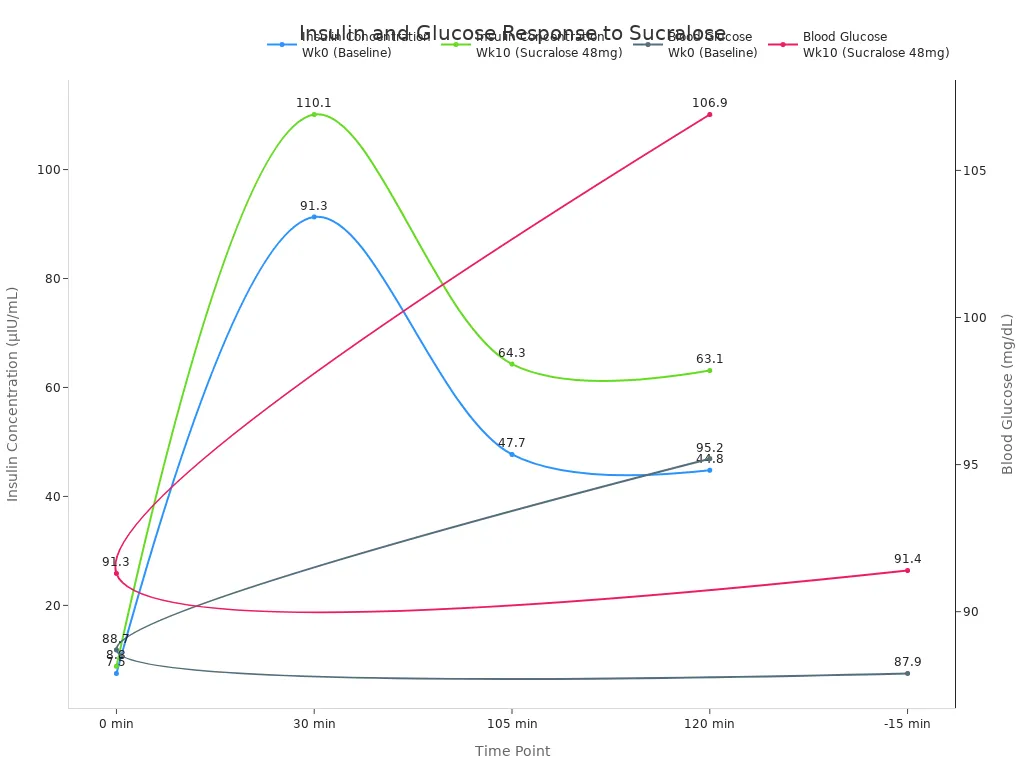
Many people use sucralose to avoid the effects of sugar on blood glucose. However, research shows sucralose can impact blood sugar and insulin. Chronic consumption of sucralose for 10 weeks increased insulin and glucose responses in healthy young adults.
This included higher insulin concentrations at various times. Blood glucose levels also rose. The area under the curve (AUC) for insulin increased. The Matsuda index, which shows insulin sensitivity, decreased in one group. This suggests lower insulin sensitivity. These findings indicate sucralose can affect insulin and glucose responses.
Measurement | Time Point | Wk0 (Baseline) | Wk10 (Sucralose 48mg) | p-value |
|---|---|---|---|---|
Insulin Concentration (μIU/mL) | 0 min | 7.5 ± 3.4 | 8.8 ± 4.1 | 0.01 |
Insulin Concentration (μIU/mL) | 30 min | 91.3 ± 56.2 | 110.1 ± 49.4 | 0.05 |
Insulin Concentration (μIU/mL) | 105 min | 47.7 ± 24.4 | 64.3 ± 48.2 | 0.04 |
Insulin Concentration (μIU/mL) | 120 min | 44.8 ± 22.1 | 63.1 ± 47.8 | 0.01 |
Blood Glucose (mg/dL) | -15 min | 87.9 ± 4.6 | 91.4 ± 5.4 | 0.003 |
Blood Glucose (mg/dL) | 0 min | 88.7 ± 4 | 91.3 ± 6 | 0.04 |
Blood Glucose (mg/dL) | 120 min | 95.2 ± 23.7 | 106.9 ± 19.5 | 0.009 |
Insulin AUC | 48mg group | 9262 | 11398 | 0.02 |
Insulin AUC | 96mg group | 6962 | 8394 | 0.12 |
Matsuda Index | 48mg group | 6.04 ± 3.19 | 4.86 ± 2.13 | 0.01 |
A systematic review and meta-analysis looked at sugar-sweetened and artificially sweetened drinks and type 2 diabetes. However, this meta-analysis did not provide specific findings on sucralose’s impact on blood sugar regulation in people with diabetes.
Weight Management Debates
Many people use sucralose for weight loss. They believe it helps reduce calorie intake. However, a meta-analysis reported a strong link between sucralose consumption and an increased risk of obesity.
This assessment found a significant connection between artificially sweetened drinks and obesity. A study on mothers and children also found positive links. Intrauterine exposure to artificial sweeteners during pregnancy linked to birth size. It also linked to the risk of overweight or obesity at 7 years of age in children. This happened in women with gestational diabetes.
Sucralose consumption has been linked to weight gain, not weight loss. It may enhance hunger and food intake. Sucralose might hinder the body’s ability to control calorie intake.
This could increase cravings for sweet, high-calorie foods. This could lead to weight gain and metabolic issues. Research suggests sucralose can disrupt the body’s natural ways of regulating hunger and fullness. This could lead to overeating and weight gain. Some studies show a possible link between sucralose and changes in gut microbiota. This could contribute to metabolic problems and weight management challenges.
Sucralose affects the brain’s hunger regions. It keeps the hypothalamus active for up to 35 minutes after consumption. Sucrose, or regular sugar, quiets this activity quickly. Participants felt hungrier after consuming sucralose compared to sugar. The brain expects calories after tasting sweetness. The lack of actual calories could change how the brain craves substances over time.
Broader Health Considerations
Beyond digestion and metabolism, sucralose may have other health effects. It can affect the immune system. Sucralose intake can hinder T cell growth and function. It can alter T cell structure and dampen cell signals. It also reduces T cell response in some infection models.
Sucralose increases oxidative stress. It disrupts embryonic development in zebrafish. This leads to malformations and delayed hatching. Maternal sucralose consumption can cause gut inflammation in offspring. It hinders intestinal development and disrupts gut barrier function. These changes alter fat metabolism. They can worsen liver fat when offspring eat a high-fat diet. Long-term consumption of sucralose has increased insulin resistance and glucose intolerance in mice fed a high-fat diet.
The Joint FAO/WHO Expert Committee on Food Additives (JECFA) and the US Food and Drug Administration (FDA) have approved sucralose. The FDA sets an Acceptable Daily Intake (ADI) of 5 milligrams per kilogram of body weight per day. The European Food Safety Authority (EFSA) sets it at 15 milligrams. Despite these approvals, ongoing research explores the broader health impacts of sucralose.
Sucralose vs. Sugar: A Balanced View
Pros and Cons Compared
Understanding the differences between sucralose vs. sugar helps in making informed dietary choices. Excessive sugar consumption has clear negative effects on digestive health. Sugar can upset the bacterial balance in the gut.
It specifically changes the ratio between Proteobacteria and Bacteroides. Unabsorbed sugar in the small intestine feeds Proteobacteria, increasing their numbers. This leads to an imbalance. High sugar intake also reduces Short-Chain Fatty Acids (SCFAs). SCFAs are important for maintaining the gut barrier. Their reduction weakens the gut’s defense.
High dietary sugars also increase mucus-degrading bacteria. This erodes the gut’s protective mucus layer. This allows more bacteria to reach epithelial cells and trigger inflammation. High sugar diets lead to an imbalance in gut microbiota, favoring harmful bacteria.
This imbalance is linked to gastrointestinal issues. High-sugar diets also disrupt the gut lining, causing increased intestinal permeability. This allows harmful substances into the bloodstream. Sugar consumption promotes harmful gut pathogens and cancer cells.
Sucralose offers some benefits over sugar. Most studies show sucralose has minimal to no effect on blood sugar and insulin levels. One small study found daily sucralose consumption did not impact sugar metabolism or insulin sensitivity in healthy adults.
Another study reported no effect on insulin or fasting blood sugar levels after consuming sucralose with each meal for 12 weeks. A study from the University of Vienna found sucralose consumption did not increase bacterial endotoxin levels in the body, unlike sugar.
Previous studies suggest sucralose may contribute to lower body weight compared to sugar. However, other research indicates potential negative effects of sucralose. These include increased insulin resistance and liver inflammation. Some studies also suggest sucralose could reduce insulin sensitivity and increase blood sugar and insulin levels.
The Role of Moderation
Moderation is key for both sucralose and sugar. The U.S. Food and Drug Administration (FDA) defines a moderate intake of sucralose by an Acceptable Daily Intake (ADI) level of 5 mg/kg body weight per day.
This recommendation aligns with advice from regulatory bodies like the FDA and the European Food Safety Authority (EFSA). They suggest consuming sucralose in moderation as part of a balanced diet.
Exceeding recommended daily limits for sucralose can lead to potential risks. These include unknowingly exceeding safe levels, promoting cravings for sweets, disrupting gut microbiota, affecting glucose tolerance, and causing headaches in some individuals.
Exploring Other Sweeteners
Many other sweeteners exist for those looking to reduce sugar intake. These include plant-derived options like stevia and monk fruit. Sugar alcohols such as glycerol, sorbitol, mannitol, maltitol, and erythritol are also available. Rare sugars like allulose and tagatose, and sweet proteins like brazzein and thaumatin, offer alternatives.
Monk fruit extract contains mogrosides. These sweet compounds are not absorbed in the upper gastrointestinal tract. They provide no calories. Gut microbes metabolize them in the colon. Erythritol, often found in some monk fruit sweeteners, absorbs rapidly in the small intestine.
The body excretes 80-90% in urine within 24 hours. Current evidence does not suggest a meaningful impact on the gut microbiome from monk fruit’s mogrosides. A 2019 literature review found no conclusive evidence that low-calorie sweeteners negatively affect gut microbiota. Studies on stevia have shown it can reduce appetite and total energy intake without affecting blood sugar levels.
The truth about sucralose’s impact on digestion and overall health is complex and nuanced. While sucralose can serve as a tool for reducing sugar intake, potential sucralose digestive side effects warrant careful consideration. Its metabolite can alter the gut microbiome and increase intestinal permeability, or “leaky gut.” Sucralose may also stimulate appetite.
Consumers should listen to their bodies and read food labels diligently. Education about artificial sweeteners is crucial for informed choices. Ongoing research continues to explore the full safety profile of this popular sweetener. This empowers individuals to make personalized dietary decisions regarding sugar and other alternatives to sugar.