Seeing sudden upper lip swelling can be alarming. You immediately wonder: is this an emergency? This guide helps you understand urgent causes. Allergic reactions, angioedema, and anaphylaxis are common reasons for a swollen upper lip. These conditions demand quick identification and action. Severe swelling, especially around your lips, can be life-threatening. You will learn immediate allergy fixes and when to seek professional help for your lips.
Key Takeaways
Sudden upper lip swelling can be serious. Watch for trouble breathing or dizziness. These signs mean you need urgent medical help.
Anaphylaxis is a severe allergic reaction. It can cause lip swelling. Use an epinephrine auto-injector if you have one. Call 911 right away.
Angioedema is deep swelling under the skin. It can affect your lips. Some medicines can cause it. Tell your doctor if you take these medicines and swell.
Many things cause lip swelling. Food, insect stings, and medicines are common triggers. Injuries, chapped lips, or infections can also make your lips swell.
See a doctor if lip swelling lasts many days. Also see a doctor if you have pain or fever. Always get medical advice if you are worried about your swollen lips.
Urgent Causes of Sudden Upper Lip Swelling

When your upper lip suddenly swells, you need to act fast. Recognizing life-threatening symptoms is critical. These conditions demand immediate attention to protect your health.
Anaphylaxis: Severe Allergic Reaction
Anaphylaxis is a severe, potentially life-threatening allergic reaction. It can cause a sudden upper lip swelling. Many things can trigger this type of allergic reaction.
Common triggers for anaphylaxis include:
Food allergies: Eggs, nuts, dairy, and shellfish are frequent culprits.
Insect bites or stings: Bee stings, for example, can cause a severe reaction.
Drug allergies: Penicillin is a well-known example.
Environmental allergies: Pollen, mold spores, dust, and pet dander can also lead to anaphylactic reactions in some people.
The diagnosis of anaphylaxis relies on a healthcare professional’s assessment of your signs and symptoms. No single sign is definitive. However, certain criteria help doctors identify this serious condition.
Anaphylaxis is highly likely if you experience:
Sudden onset of skin or mucosal signs (like hives, itching, flushing, or swollen lips, tongue, or uvula) AND you also have trouble breathing or signs of low blood pressure.
Two or more of these symptoms occurring rapidly after exposure to a likely allergen: skin/mucosal involvement, breathing problems, low blood pressure, or persistent stomach issues.
Reduced blood pressure that happens quickly after exposure to a known allergen. For adults, this means a systolic blood pressure below 90 mm Hg or a drop of more than 30 percent from your normal.
If you notice these signs of anaphylaxis, especially with a swollen upper lip, seek medical attention right away. This type of swelling can quickly become dangerous.
Angioedema: Deep Tissue Swelling
Angioedema is another cause of sudden swelling. It involves deep swelling beneath the skin, often affecting the lips, face, and tongue. Unlike hives, angioedema usually does not itch. There are two main types: histamine-mediated (allergic) and bradykinin-mediated.
Here is how these two types of angioedema differ:
Allergic angioedema is often part of an allergic reaction. It can cause a swollen upper lip and may occur with hives. Bradykinin-mediated angioedema does not involve an allergic reaction. It does not respond to typical allergy medications.
Certain medications can also induce angioedema. These include:
Angiotensin-converting enzyme (ACE) inhibitors: Common examples are Lisinopril, Enalapril, and Ramipril.
Angiotensin II receptor blockers (ARBs): Such as Losartan and Valsartan.
If you take these medications and experience sudden swelling, especially a swollen upper lip, tell your doctor immediately. This could be a serious side effect.
Emergency Actions for Life-Threatening Swelling
When you face life-threatening swelling, quick action is vital. You must recognize the signs and know what to do.
When to Call 911 (or your local emergency number): Call for emergency medical attention if you experience any of these symptoms:
Your swelling increases rapidly.
You have trouble breathing or fast, shallow breathing.
You feel tightness in your chest or throat.
You hear wheezing sounds when you breathe.
Your heart rate is fast.
Your skin feels clammy.
You feel anxious, confused, or dizzy.
You are vomiting.
Your lips turn blue or white.
You lose consciousness.
You have rapid swelling, heat, and tenderness in an area of skin.
If you have a known severe allergy and experience an anaphylactic reaction, you should use an epinephrine auto-injector if one is available.
How to Use an Epinephrine Auto-Injector:
Remove the auto-injector from its protective case.
Pull off the blue safety cap.
Grasp the auto-injector in your fist with the orange tip (needle end) pointing downward.
Place the orange tip against the middle of your outer thigh at a right angle. Swing and push the auto-injector firmly until it ‘clicks’.
Hold it firmly in place for 3 seconds (count slowly: 1, 2, 3).
Remove the auto-injector from your thigh.
Massage the injection area for 10 seconds.
Always call 911 immediately after using an epinephrine auto-injector. You need further medical attention, even if your symptoms improve. This is because anaphylactic reactions can return.
Common Allergy Triggers & Fixes

You often experience sudden lip swelling due to common allergies. Identifying your specific triggers helps you manage these reactions. You can also find effective over-the-counter solutions for mild to moderate symptoms.
Food & Medication Allergies
Many people experience an allergic reaction to certain foods or medications. This can cause your lips to swell. Knowing what causes your body to react helps you avoid future problems.
Common food allergens often cause lip swelling. These include:
Cow’s milk
Eggs
Peanuts, soybeans, peas, and chickpeas
Tree nuts (such as walnuts, almonds, hazelnuts, pecans, cashews, pistachios, and Brazil nuts)
Shellfish (such as prawns, crab, and lobster)
Wheat
If you eat one of these foods and your lips become swollen, you likely have a food allergy. You should consult a doctor for proper diagnosis and management of your food allergies.
Medications can also trigger an allergic reaction. Some common drugs linked to lip swelling include:
Nonsteroidal anti-inflammatory drugs (NSAIDs), like ibuprofen and naproxen.
Angiotensin-converting enzyme (ACE) inhibitors, such as lisinopril and captopril.
If you take these medications and notice swelling, tell your doctor right away. They can help you find a different treatment.
Environmental & Insect Allergens
Your environment also contains many things that can cause an allergic reaction. Pollen, for example, often leads to seasonal allergies. Sometimes, pollen allergies can cause a specific type of reaction when you eat certain raw fruits or vegetables. This is called Oral Allergy Syndrome (OAS).
OAS is a contact allergic reaction. It happens when your mouth and throat touch raw fruits or vegetables. You might feel itchiness or notice swelling of your mouth, face, lips, tongue, and throat. This reaction often links to pollen allergies. People allergic to specific pollens may react to certain raw foods. This happens because of cross-reactivity.
Here are some common pollen allergies and the raw foods that might cause a reaction:
Pollen Allergy | Associated Raw Fruits/Vegetables (causing lip swelling) |
|---|---|
Birch tree pollen | Pitted fruit, carrot, peanuts, almond, hazelnut |
Grasses | Peaches, celery, tomatoes, melons (cantaloupe, watermelon, honeydew), oranges |
Ragweed | Banana, cucumber, melon, zucchini |
Insect stings and bites are another common cause of sudden swelling. Bees, wasps, and ants are the insects whose stings most commonly cause medical problems. If you have an allergy to insect stings, a sting can cause swelling far from the sting site. This can include your eyes, lips, tongue, throat, hands, and feet. A severe allergic reaction, or anaphylaxis, can also cause swelling of your face, throat, or tongue.
Non-Allergic Swollen Lip Causes & Care
Sometimes, your lips swell for reasons other than allergies. These non-allergic causes of swollen lips can still be uncomfortable. You can often manage them with home care.
Injuries, Chapping & Sunburn
Physical trauma is a common cause of sudden upper lip swelling. You might accidentally bite your lip, or it could get bumped. Most busted lips typically heal within 7 to 10 days with appropriate home care. Small cuts on your lip often heal even more quickly. Deeper lip injuries may require a longer healing period. They could potentially result in a small scar.
Chapped lips and sunburn also cause swelling. You can prevent chapped lips by applying non-irritating lip balm regularly. Use thick ointments like white petroleum jelly to lock in moisture. Always use lip balm with SPF 30 or higher to protect your lips from sun damage. Reapply it every two hours outdoors. Stay hydrated by drinking plenty of water. Avoid licking, biting, or picking your lips. Licking worsens dryness as saliva evaporates. Picking or biting can delay healing.
Infections & Dental Issues
Infections can also lead to a swollen upper lip. Bacterial infections are a recognized cause of lip swelling. For example, cellulitis is a bacterial infection that can cause lip swelling. It enters the deeper layers of your skin through a wound or abrasion. Symptoms include redness, warmth, pain, and blisters. Group A streptococcal infections can also lead to infective cheilitis.
Dental procedures sometimes cause temporary swelling. After local anesthesia, your lips, cheeks, and tongue will be numb for a few hours. You might accidentally bite these areas, causing them to swell. Normal postoperative swelling is also common after surgical procedures like tooth extractions. If your swollen lips persist for weeks after dental treatment, it could indicate an infection.
Contact Irritants & Mucoceles
Certain products you use can irritate your lips, causing swelling. This happens when your lips react to specific ingredients.
Here are common irritants found in lip products:
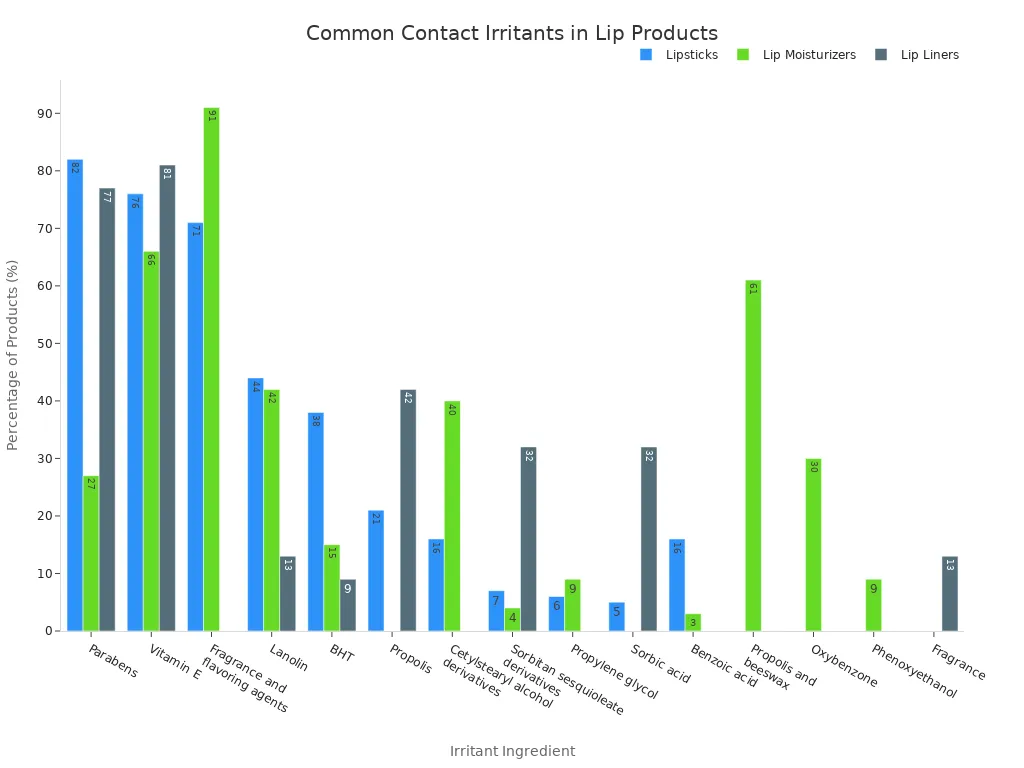
You should choose non-irritating lip products. Avoid ingredients like camphor, eucalyptus, and certain flavorings. Look for beneficial ingredients such as castor seed oil or shea butter.
A mucocele is another non-allergic cause of swelling. It is a painless, fluid-filled swelling in your mouth. It often appears on your lower lip. Mucoceles are soft and bubble-like. They can change in size, growing larger and then shrinking. They may rupture, releasing clear or yellowish fluid. Large mucoceles can cause discomfort when you eat or speak.
When to Consult a Doctor for Non-Urgent Swelling
You should seek medical attention for non-urgent swelling in certain situations. If your swelling continues for longer than a few days, see a doctor. If the swelling is accompanied by pain or fever, it could indicate an infection. You also need to see a doctor if there is no obvious cause for your swollen lips. This might be a symptom of a rare condition. If you have concerns about your swollen lips, even without severe symptoms, consult a doctor.
Rare Conditions Behind Swollen Lips
Sometimes, your lips swell due to less common conditions. These swollen lip causes require specific diagnoses and treatments. You should understand these rare possibilities.
Hereditary Angioedema
Hereditary angioedema (HAE) is a rare genetic disorder. It causes recurrent episodes of severe swelling. This swelling can affect your face, lips, airways, and internal organs. Unlike allergic reactions, HAE attacks do not respond to antihistamines or corticosteroids.
To diagnose HAE, doctors perform laboratory tests. You will have your serum C4 levels measured. These levels are usually low in untreated HAE patients. Doctors also test C1 esterase inhibitor (C1-INH) function and antigen levels. These tests help identify the specific type of HAE you have. For example, HAE Type 1 shows low C1-INH function, low C1-INH level, and low C4 level.
If you experience an HAE attack, specific medications are available. On-demand medications like Berinert® or Kalbitor® treat attacks as they happen. You use prophylactic medications such as Cinryze® or Takhzyro® to prevent attacks. These treatments are vital. Common allergy medications do not work for HAE.
Autoimmune & Chronic Diseases (e.g., Crohn’s)
Certain autoimmune and chronic diseases can also cause swollen lips. Crohn’s disease, an inflammatory bowel condition, sometimes causes lip swelling. This specific type of swelling is called granulomatous cheilitis. It can become more noticeable during active disease periods. Corticosteroid treatment often improves this swelling. Sometimes, this lip swelling appears years before a Crohn’s diagnosis.
Other autoimmune conditions can also lead to swelling. Lupus erythematosus, rheumatoid arthritis, and Sjögren’s syndrome are examples. These conditions can cause acquired angioedema, which affects your lips and face.
Other Underlying Medical Issues
Other rare conditions can cause swollen lips. Melkersson-Rosenthal syndrome is one such condition. It has three main symptoms: facial palsy (weakness or paralysis of your face), facial swelling (often affecting your lips), and a furrowed tongue. The upper lip often swells first.
Endocrine disorders can also be causes of lip swelling. Hypothyroidism can cause discrete, constant, and diffuse lip edema. This can be an initial symptom. Acromegaly, due to excess growth hormone, leads to severe lip enlargement. Hormonal changes during menstruation or pregnancy can also cause temporary lip swelling due to fluid retention.
You now understand the difference between urgent and non-urgent causes of sudden upper lip swelling. For life-threatening conditions like anaphylaxis or severe swelling, act fast. Use an epinephrine auto-injector if you have one, and always seek immediate medical attention. Knowing your body and your allergies is crucial. Develop an action plan for any allergic reaction. If you have any doubt about your swollen lips, or if the swelling is severe, always consult a doctor. Your lips deserve careful attention.
FAQ
What makes sudden upper lip swelling an emergency?
Sudden upper lip swelling becomes an emergency if you also have trouble breathing, chest tightness, dizziness, or a fast heart rate. These symptoms suggest a severe allergic reaction like anaphylaxis or angioedema. You need immediate medical help.
What should you do for sudden allergic lip swelling?
If you suspect an allergic reaction, take an over-the-counter antihistamine for mild swelling. For severe reactions with breathing difficulty, use an epinephrine auto-injector if you have one. Always call 911 immediately after using an auto-injector.
What causes lip swelling besides allergies?
Many things can cause non-allergic lip swelling. Injuries, chapped lips, sunburn, and infections are common causes. Dental issues, contact with irritants in lip products, or a mucocele can also make your lip swell.
When should you see a doctor for swollen lips?
You should see a doctor if your lip swelling lasts more than a few days. Seek medical advice if you have pain, fever, or no clear cause for the swelling. Always consult a doctor if you have any concerns about your swollen lips.