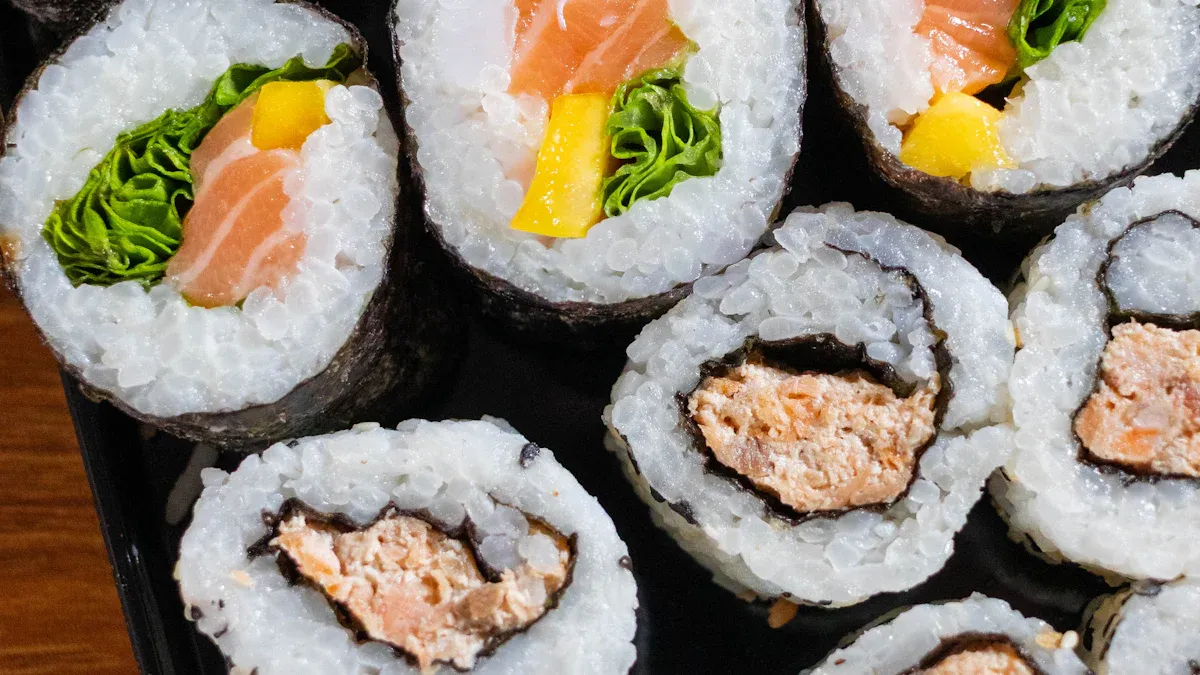
Sushi is a global favorite, and many people perceive it as a healthy meal. The global sushi market size reached USD 5.42 billion in 2023, with North America showing rapid growth. However, a common misconception is that all sushi is low-calorie. A regular sushi roll, typically 6-8 pieces, can range from 300-400 calories. This guide provides a comprehensive look at sushi calories, nutrition, and how you can make informed choices, including a detailed Sushi Calories Chart. The nutritional profile of sushi varies greatly, depending on its ingredients and preparation.
Key Takeaways
Sushi calories change a lot. This depends on the ingredients and how it is made.
Choose lean fish, less rice, and avoid fried items. Also, skip creamy sauces to eat healthier sushi.
Sashimi and nigiri are good choices. They have fewer calories and more protein than many rolls.
Sushi offers protein, healthy fats, and vitamins. It can be part of a healthy diet.
You can ask for changes at restaurants. This helps you make healthier sushi choices.
Sushi Calories: Key Influencers
You might think all sushi is the same, but many factors change its calorie count. Knowing these factors helps you make smart choices.
Rice Type and Quantity
The type and amount of rice in your sushi greatly affect its calories. Most sushi uses white rice, which provides carbohydrates and energy. A large amount of rice means more calories. Some places offer brown rice, which has more fiber but similar calories. When you choose rolls with less rice, you reduce your overall calorie intake.
Fish and Seafood Choices
The kind of fish you pick also changes the calorie count. Some fish are leaner, while others are fattier. For example, fatty fish like mackerel contain 16 grams of fat per 100g. Salmon has 11 grams of fat per 100g. This fat adds calories. In contrast, lean fish such as tuna contain about 101 calories per 100g. Cod has 82 calories, and haddock has 87 calories. These lean fish options offer fewer calories and less fat.
Fillings, Toppings, and Sauces
What you add to your sushi can quickly increase its calories. Cream cheese, often found in a Philadelphia roll, adds about 51 calories per tablespoon. A Philadelphia roll can have 260-391 calories. Avocado also adds calories and healthy fats; an avocado roll piece has 39-46 calories. Rolls like a Dragon roll, with avocado, eel, and sweet eel sauce, can contain 410-570 calories and 19-20 grams of fat. Sauces, especially creamy or sweet ones, also pack extra calories and sugar.
Preparation Methods
How your sushi is made plays a big role in its final calorie count. Deep-fried items, like shrimp tempura, significantly increase the calorie density. A shrimp tempura roll can have 417-508 calories and about 21 grams of fat. A 100-gram serving of Tempura Fried contains 200 calories and 10 grams of fat. Fresh preparation, without frying or heavy sauces, keeps the calories much lower. Choosing fresh sushi helps you manage your calorie intake better.
Sushi Calories Chart: Popular Rolls & Nigiri

You want to understand the calorie content of your favorite sushi. This sushi calories chart helps you make informed choices. It breaks down the nutritional information for various types of sushi, including popular rolls, nigiri, sashimi, and temaki. You will see how ingredients directly impact the overall calories and other nutrients.
Popular Sushi Roll Calories
Many people enjoy popular sushi rolls. These rolls often combine fish, rice, and other ingredients. You can see how different fillings change the calorie count. Rolls with creamy sauces or fried components typically have more calories.
Here is a detailed look at the nutritional content of some common rolls:
Sushi roll | Calories | Carbs (g) | Protein (g) | Fat (g) | Sodium (mg) | Sugars (g) |
|---|---|---|---|---|---|---|
California roll | 255 | 38 | 9 | 7 | – | – |
Spicy Tuna roll | 290 | 26 | 24 | 11 | – | – |
Philadelphia roll | 320 | 39 | 12 | 9 | – | – |
Spicy Salmon roll | ~300-350 | ~30-40 | ~15-20 | ~10-15 | ~400-600 | ~5-10 |
Salmon Avocado roll | ~280-330 | ~30-35 | ~12-18 | ~10-14 | ~350-550 | ~4-8 |
You can see that a California roll contains 255 calories, 38 grams of carbs, 9 grams of protein, and 7 grams of fat. A Spicy Tuna roll has 290 calories, 26 grams of carbs, 24 grams of protein, and 11 grams of fat. The Philadelphia roll is higher, with 320 calories, 39 grams of carbs, 12 grams of protein, and 9 grams of fat.
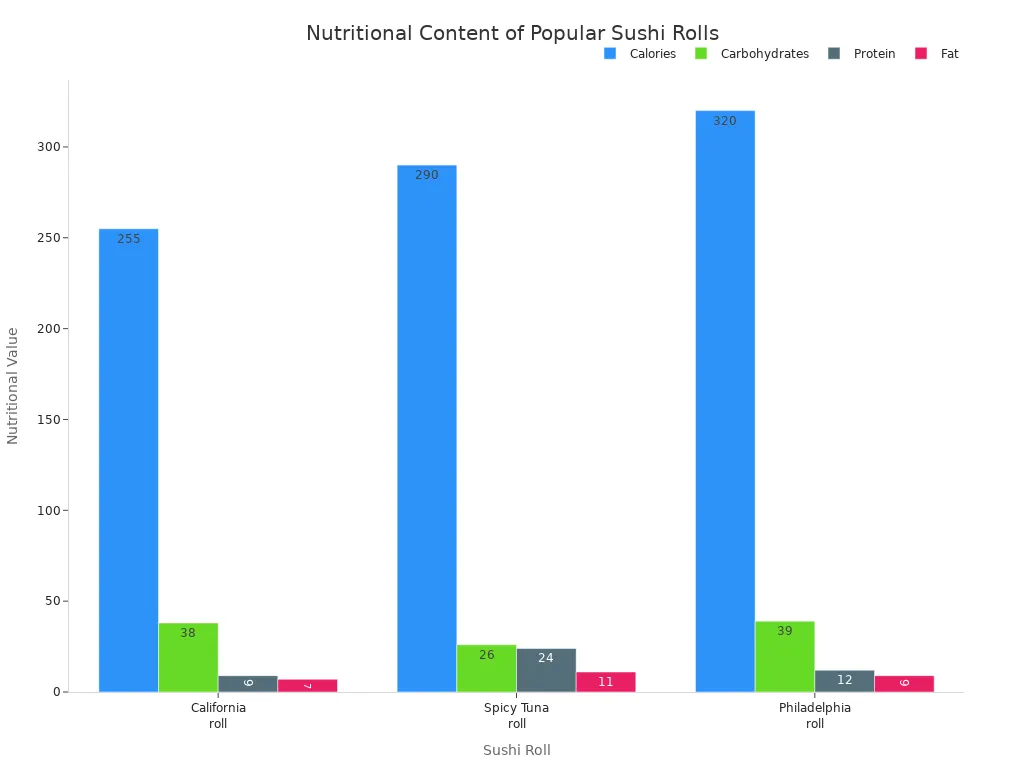
Rolls with fish like the Spicy Tuna roll and Spicy Salmon roll generally offer more protein. They also tend to have fewer calories than rolls with cream cheese or fried ingredients. For example, a salmon avocado roll provides healthy fats and protein.
Consider a typical meal of 6-8 pieces. This can quickly add up to 300-400 calories or more, depending on your choices. A single serving of sushi roll calories can vary greatly. For instance, a larger roll might contain 690 calories, 20g of fats, 10g of saturated fats, 1352mg of sodium, 112g of carbs, and 14g of protein.
Nigiri Calories & Nutrition
Nigiri is a simple form of sushi. It features a slice of fish over a small mound of rice. Each piece of nigiri typically contains 47-53 calories. If you eat 2-3 pieces, you consume about 93-190 calories. This makes nigiri a good option for managing your calorie intake.
Here is a general nutritional breakdown for one piece of nigiri (e.g., tuna):
Nutrient | Amount Per Serving (1 piece) |
|---|---|
Calories | 41 |
Total Fat | 1.68g |
Saturated Fat | 0.357g |
Total Carbohydrate | 0g |
Sugars | 0g |
Protein | 6.13g |
Sodium | 13mg |
You can see that nigiri is often lower in fat and higher in protein compared to many rolls. The carbohydrate content comes mainly from the rice.
Sashimi and Temaki Calorie Insights
Sashimi offers the purest form of fish. It consists of thinly sliced raw fish without rice. This makes it one of the lowest-calorie types of sushi.
For example, a single piece of tuna sashimi (about 1 ounce) has around 30-40 calories. It also provides a good amount of protein.
Here is a look at the nutritional value of a serving of sashimi:
Nutrient | Amount Per Serving (1 serving / 135 grams) |
|---|---|
Calories | 147.2 |
Protein | 32.9 g |
Fat | 0.7 g |
Carbohydrates | 0 g |
Sodium | 60.8 mg |
Sugars | 0 g |
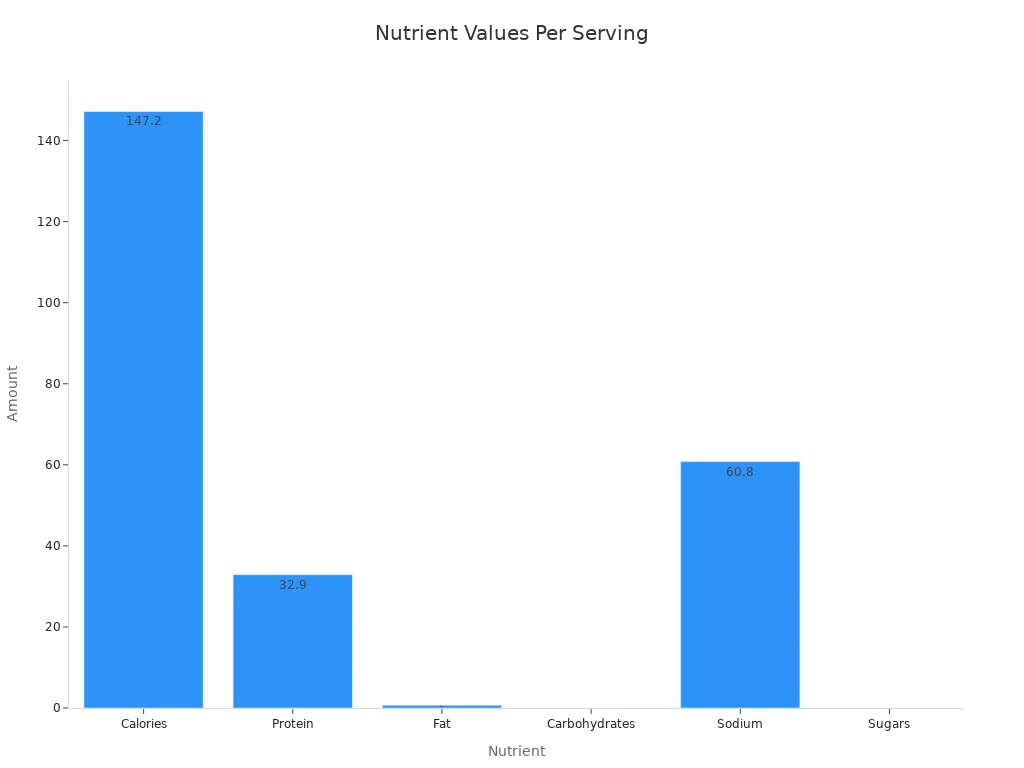
You can see that sashimi is almost pure protein with very few calories from fat or carbohydrates.
Temaki, or hand rolls, are cone-shaped sushi. They contain fish, rice, and vegetables wrapped in nori. The calories in temaki vary based on the fillings. A salmon skin temaki or spicy scallop temaki can have different nutritional profiles.
Consider a tray of sashimi (113g):
Nutrient | Value (1 tray / 113g) |
|---|---|
Calories | 210 |
Fats | 8g |
Saturated fats | 2g |
Carbs | 3g |
Sugar | 0g |
Protein | 28g |
Sodium | 170mg |
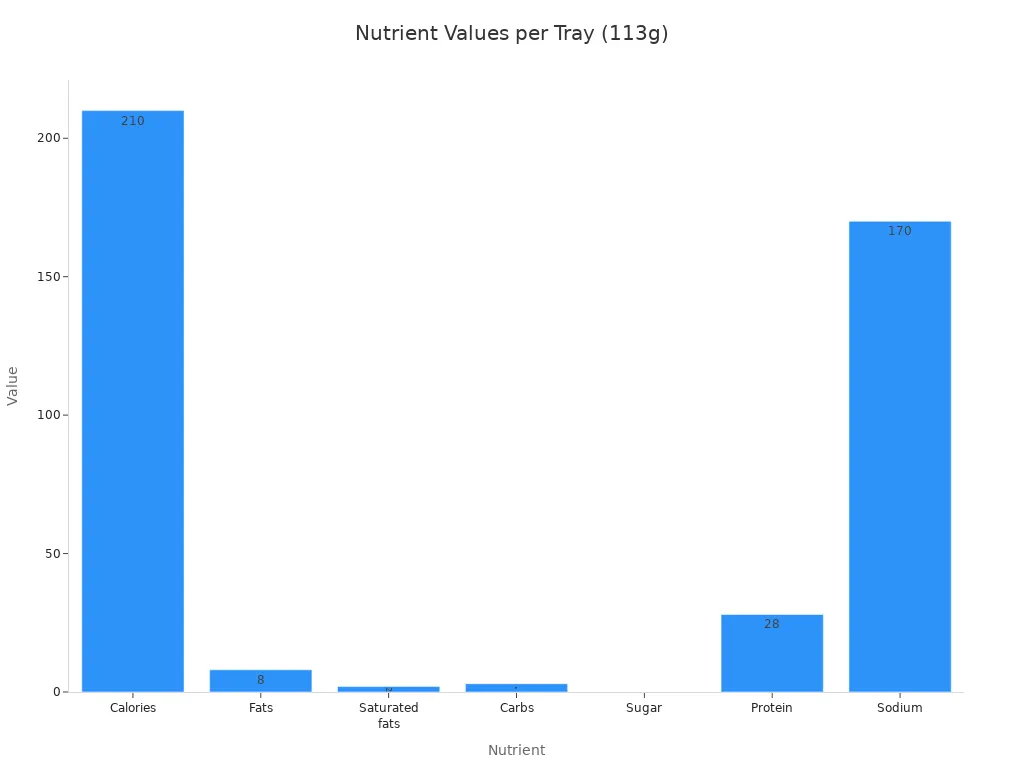
This sushi calories chart helps you compare different types of sushi. You can choose options that fit your dietary goals.
Beyond Calories: Sushi’s Nutritional Value
You now understand the calories in sushi. But sushi offers more than just calories. It provides many important nutrients. You get protein, healthy fats, and essential vitamins and minerals. This makes sushi a valuable part of a balanced diet.
Protein Powerhouse: Fish & Seafood
Sushi often features fish and seafood. These ingredients are excellent sources of protein. Protein helps your body build and repair tissues. It also keeps you feeling full. Lean fish like tuna and cod give you a lot of protein with fewer calories. Even fattier fish like salmon provide significant protein. Eating fish in your sushi helps you meet your daily protein needs.
Healthy Fats: Omega-3s
Many types of fish in sushi contain healthy fats. These are called Omega-3 fatty acids. They are good for your heart and brain. Cold-water fatty fish, such as salmon and tuna, contain high amounts of long-chain (LC) omega-3s. In contrast, fish with lower fat content, like bass, tilapia, and cod, as well as shellfish, have lower levels of these fatty acids. You can see the specific amounts in different fish:
Fish Type | ALA (g) | EPA (g) | DHA (g) | Total (g) |
|---|---|---|---|---|
Salmon, Atlantic | 0.2 | 0.3 | 0.9 | 1.4 |
Salmon, Chinook | 0.1 | 0.8 | 0.6 | 1.5 |
Salmon, chum | 0.1 | 0.3 | 0.5 | 0.9 |
Salmon, coho | 0.1 | 0.3 | 0.6 | 1.0 |
Salmon, pink | 0.1 | 0.3 | 0.5 | 0.9 |
Salmon, sockeye | 0.1 | 0.4 | 0.5 | 1.0 |
Tuna, bluefin | 0.1 | 0.7 | 1.6 | 2.4 |
Tuna, skipjack | 0.1 | 0.2 | 0.5 | 0.8 |
Tuna, yellowfin | 0.1 | 0.2 | 0.7 | 1.0 |
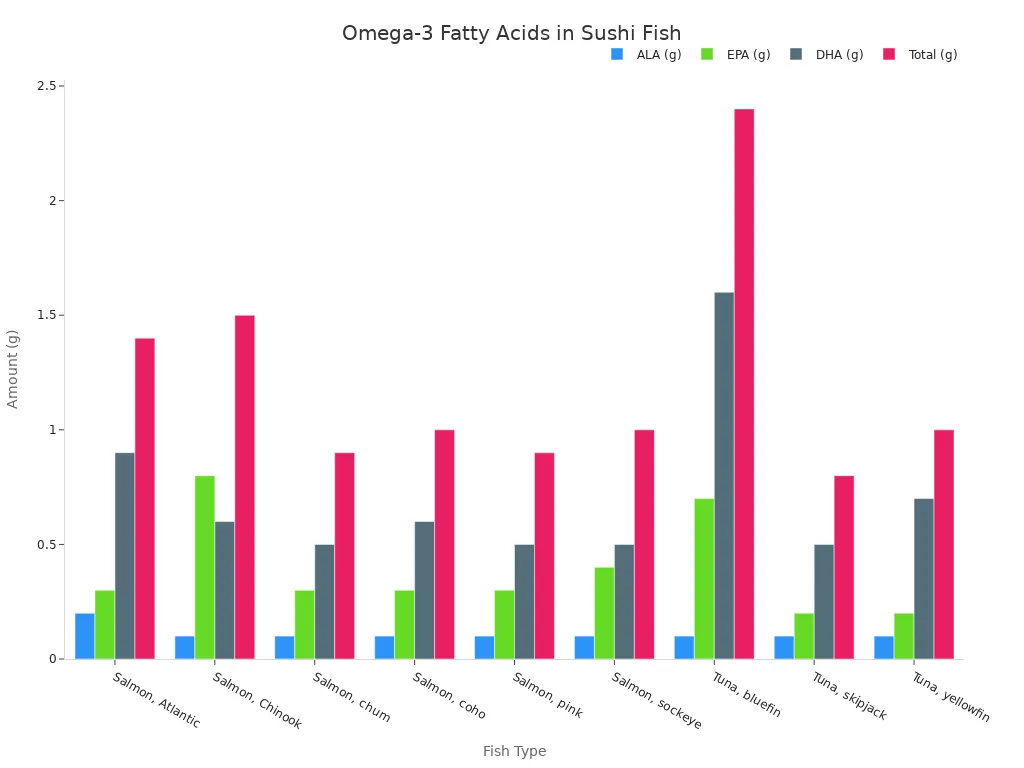
These healthy fats contribute greatly to the nutritional content of sushi.
Carbohydrates: Rice & Fiber
Sushi rice provides carbohydrates. Your body uses carbs for energy. While white rice is common, some places offer brown rice. Brown rice adds more fiber. Nori seaweed also gives you fiber.
Item | Serving Size | Total Carbs | Fiber |
|---|---|---|---|
Nori (seaweed Sheets) | 1 sheet (2g) | 1g | 1g |
Rice and Seaweed (including 100g Premium Sushi Rice) | 1 serving (118g) | 82g | 1g |
Fiber helps your digestion. It also helps control blood sugar levels.
Vitamins & Minerals: Nori & Veggies
Nori seaweed and the vegetables in sushi offer many vitamins and minerals. Nori is especially rich in nutrients.
Vitamins: A, C, E, K, B12, and other B vitamins
Minerals: Iodine, calcium, magnesium, iron, sodium
Other beneficial compounds: Omega-3 fatty acids, protein, fiber, taurine, choline, inositol, betaines
These nutrients are vital for your overall health. They support many body functions.
Sushi & Your Diet: Healthy Choices
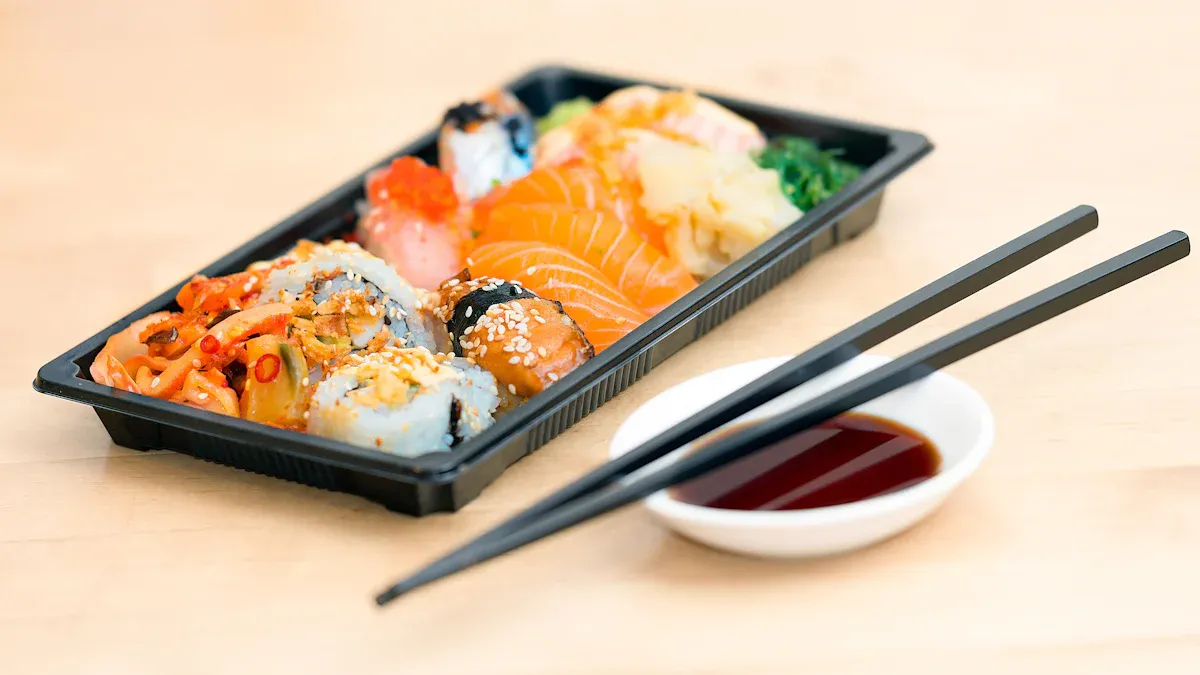
You can enjoy sushi as part of a healthy diet. Making smart choices helps you align sushi with your health goals.
Weight Management: Lower Calorie Options
If you manage your weight, choose sushi options with fewer calories. You can find many delicious choices.
Sushi Option | Description | Approximate Calories |
|---|---|---|
Naruto Roll | Fish and veggies rolled in thinly sliced cucumber (no rice) | 110 calories (with tuna, salmon, avocado) |
Nigiri sushi | Single piece of raw fish over rice | 40-65 calories (depending on fish type) |
Sashimi | Thin slices of raw fish (no rice) | 25-40 calories per ounce |
Edamame | ½ cup serving | 100 calories |
Seaweed salad | Typical restaurant serving | 45-70 calories |
Miso soup | 1 cup serving | 40-50 calories |
You can also pick rolls that are naturally lower in calories.
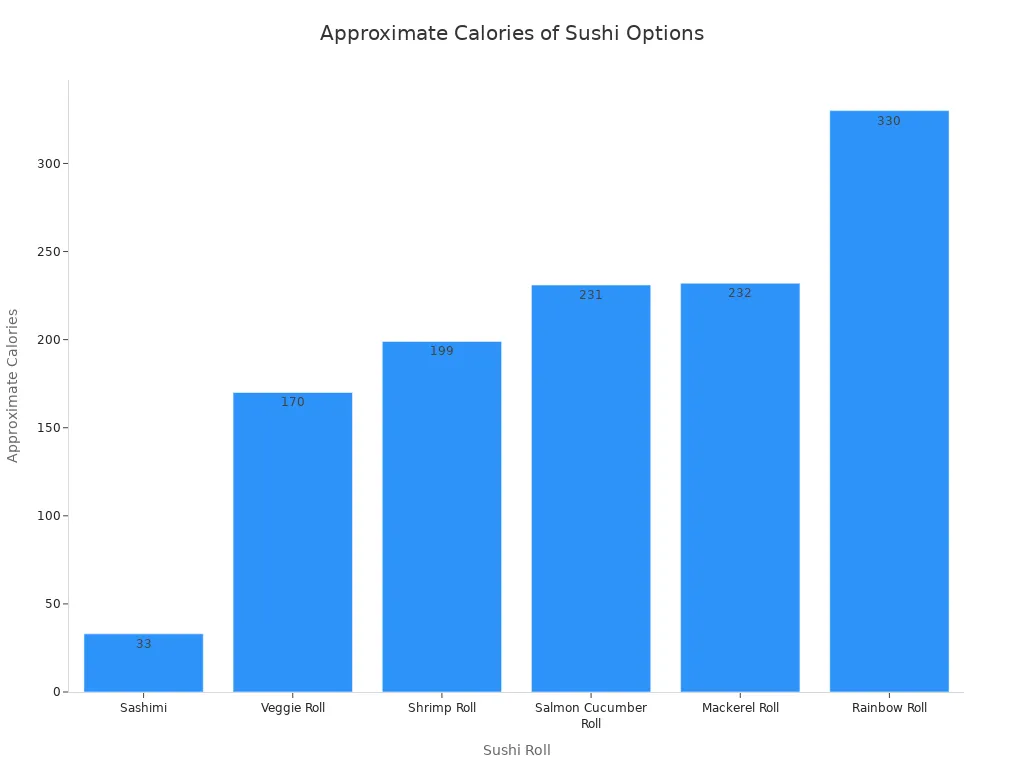
Muscle Gain: Maximizing Protein
You can use sushi to boost your protein intake for muscle gain. Focus on fish and seafood. Sashimi offers pure protein without rice.
Seafood | Protein (g) per 100g |
|---|---|
Lean tuna (akami) | 25.0 |
Yellowtail (Hamachi) | 23.0 |
Medium-fatty tuna (chūtoro) | 23.2 |
Very fatty tuna (ōtoro) | 21.5 |
Shrimp (Ebi) | 20.3 |
Salmon (Sake) | 20.4 |
Crab (Kani) | 19.4 |
Mackerel (Saba) | 18.6 |
Eel (Unagi) | 18.4 |
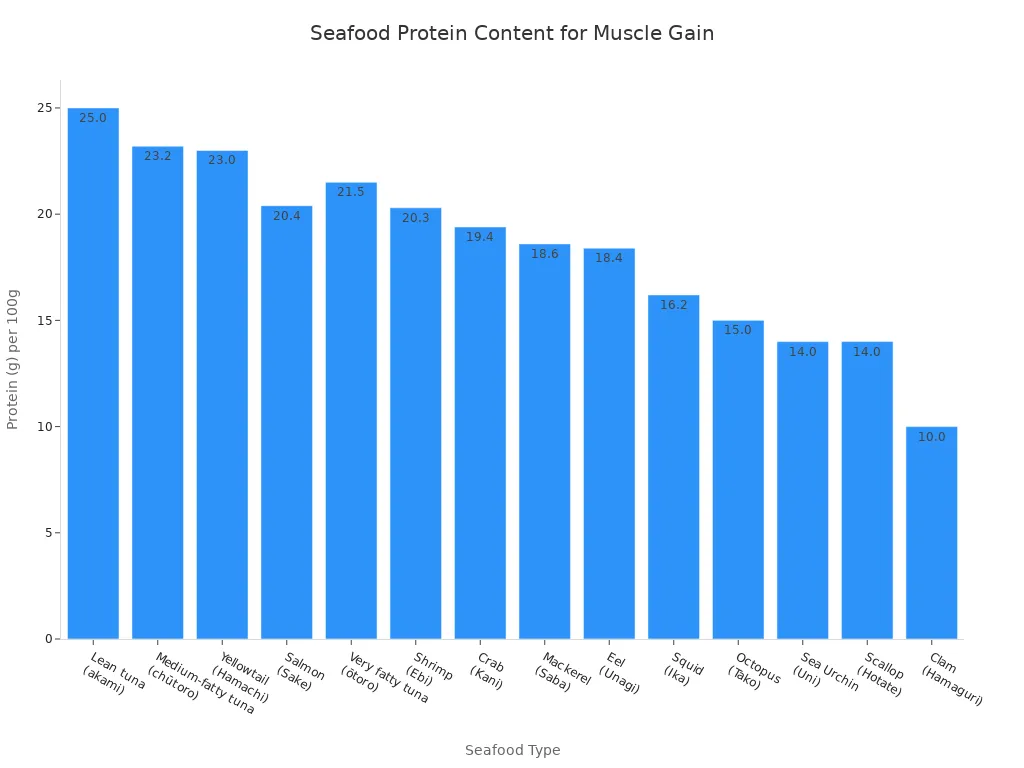
Choose options like lean tuna, yellowtail, salmon, shrimp, and crab. These fish provide excellent protein.
Dietary Restrictions: Gluten-Free, Low-Carb, Vegan
You can find sushi options for various dietary needs.
Gluten-Free: Ask for gluten-free soy sauce (tamari). Choose sashimi or rolls made with gluten-free ingredients.
Low-Carb: Opt for sashimi. Some places offer rolls with cauliflower rice or cucumber wraps instead of traditional rice.
Vegan: Many restaurants offer vegetable rolls with avocado, cucumber, carrots, and other fresh produce. Plant-based tuna and salmon alternatives are also available.
Portion Control: How Much is Enough?
You need to manage your portion sizes to keep your sushi meal balanced. It is easy to eat too many rolls. Pair your sushi rolls with protein-rich sashimi, edamame, or miso soup. This helps you feel full. Share richer specialty rolls with others. Complement your meal with lighter choices like tuna or cucumber rolls. These are ways to make sushi healthier. You can enjoy variety without too many calories. Making healthy sushi choices involves mindful eating.
Sushi Roll Type | Calorie Range | Characteristics |
|---|---|---|
Simpler Rolls | Under 250 calories | Lighter, modest rice and lean protein |
Mid-range Rolls | Moderate | Good balance, includes avocado or light sauces |
Heavier Specialty Rolls | Double simpler rolls | Higher in calories and fat due to fried ingredients, multiple sauces, or creamy fillings |
Smarter Sushi Choices at Restaurants
You can enjoy sushi while still making healthy choices. Knowing how to order helps you keep your meal nutritious.
Customizing Your Order
You have power over your sushi order. You can ask for brown rice instead of white rice. This adds more fiber. You can also ask for light rice or half the normal amount of rice. This reduces your carbohydrate intake. Request to hold spicy mayo and eel sauce. These sauces add many calories. Ask for extra cucumber and avocado instead of more rice. You can also inquire about a naruto-style option. This uses cucumber wraps instead of rice. You can order a sashimi platter with a small side of brown rice. This gives you protein with fewer carbs.
Healthier Preparation Requests
You can make specific requests for healthier sushi. Ask the chef to reduce cream cheese or mayo in your roll. Request your sushi to be made with less rice. This helps manage carbohydrates. Choose low-carb sushi wraps, like cucumber wraps. Swap regular soy sauce for low-sodium soy sauce. This reduces salt. You can also ask for sauces like eel sauce or spicy mayo on the side. This lets you control how much you use.
Mindful Condiment Use
Condiments can quickly add calories and sodium. Eel sauce, spicy mayo, and soy sauce increase calorie content. Soy sauce is high in sodium. One tablespoon has about 900mg of sodium. This is nearly half your daily limit. Too much sodium can cause bloating and high blood pressure. Use a small amount of soy sauce. Dip only the fish side lightly. You can also ask for low-sodium soy sauce. Skip eel sauce and spicy mayo entirely. Wasabi and ginger are low-calorie options for flavor.
Balancing Your Sushi Meal
You can balance your sushi meal for better health. Pair your sushi rolls with protein-rich sashimi. Edamame or miso soup are also good choices. These help you feel full. Share richer specialty rolls with friends. Choose lighter options like tuna or cucumber rolls. This helps you enjoy variety without too many calories. You can make healthy sushi choices with mindful eating.
You can make sushi a healthy and enjoyable part of your balanced diet. Understanding ingredients and preparation is crucial for making informed choices about sushi calories and nutrition. This guide, including the detailed sushi calories chart, helps you align your sushi consumption with your health goals. Use the provided sushi calories chart and tips to enjoy sushi mindfully and confidently, making every sushi experience a smart one.
FAQ
What is the healthiest sushi option?
Sashimi is often the healthiest choice. It contains just fish, offering protein and healthy fats without rice. Nigiri is also a good option. You get a small amount of rice with fresh fish. Focus on lean fish like tuna or yellowtail for your sushi.
What makes certain sushi rolls high in calories?
Creamy sauces, like spicy mayo or eel sauce, add many calories. Fried ingredients, such as tempura, also increase the calorie count. Rolls with cream cheese or extra avocado boost fat and calories. You should choose simpler sushi rolls.
What are low-carb sushi choices?
Sashimi is your best low-carb option. It has no rice. You can also ask for rolls wrapped in cucumber instead of rice. Some restaurants offer cauliflower rice. These choices help you reduce carbohydrate intake when eating sushi.
What is the calorie count for a typical sushi meal?
A typical sushi meal, often 6-8 pieces, can range from 300 to 400 calories. This depends on your choices. Rolls with fried items or creamy sauces will be higher. Simpler rolls and sashimi keep your calorie intake lower.