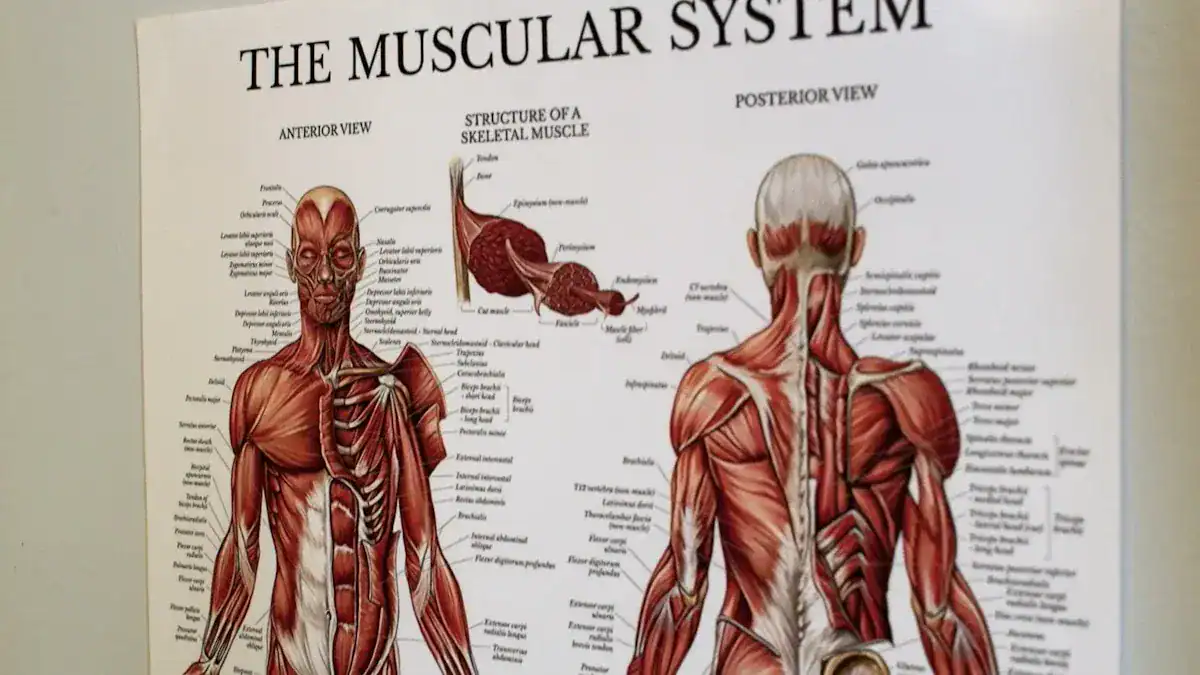
Thigh muscles are fundamental for daily life. These powerful leg muscles, including the quadriceps and hamstrings, enable movement, athletic performance, and overall body stability. The quadriceps sit at the front of the thigh, primarily extending the knee. The hamstrings are at the back of the thigh, controlling knee flexion and hip extension.
Understanding their anatomy is critical for everyone. For instance, thigh muscles are active for approximately 34% of total daily time. This shows how much daily movement relies on these muscles. In athletes, muscle injury is common; for example, 67.1% of handball athletes experience muscle injuries, with the posterior thigh being a frequent site. This blog provides a clear guide to essential thigh muscle anatomy.
Key Takeaways
Thigh muscles are important for daily movement and stability. They include the quadriceps, hamstrings, and adductors.
The quadriceps muscles straighten your knee. The hamstrings bend your knee and move your leg backward. The adductors pull your leg inward.
You can prevent thigh injuries with proper stretching, strengthening exercises, and warm-ups.
Seek medical help if you have ongoing thigh pain or weakness that affects your daily life.
Thigh Muscle Anatomy Explained
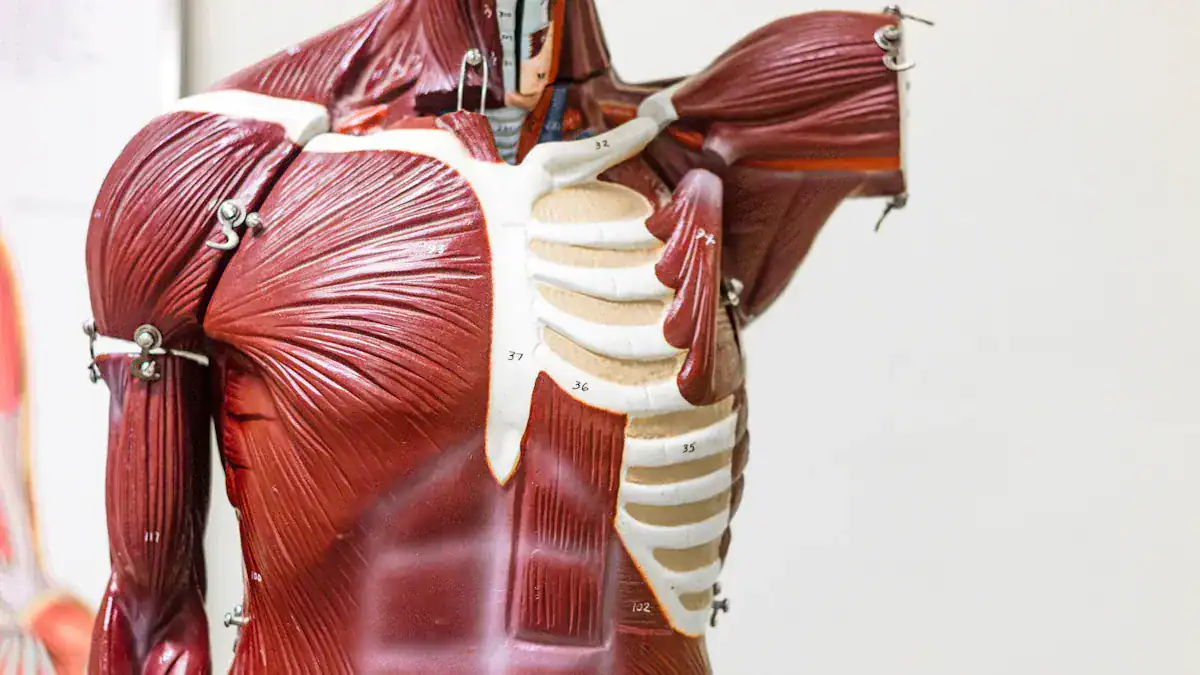
This section details the structure and location of the primary thigh muscle groups. Understanding this anatomy provides a foundation for comprehending their functions and common injuries. The upper leg contains many important muscles. These leg muscles work together for movement and stability.
The Quadriceps Femoris Group
The quadriceps femoris group consists of five powerful muscles located at the front of the thigh. These anterior thigh muscles are crucial for extending the knee. They include the vastus lateralis, tensor of the vastus intermedius, vastus intermedius, vastus medialis, and rectus femoris. These muscles form a large mass on the anterior aspect of the thigh.
The vastus lateralis is the largest muscle in this group. It originates from several areas of the femur. These include the upper part of the intertrochanteric line, the lower and anterior borders of the greater trochanter, the outer border of the gluteal tuberosity, and the upper half of the outer border of the linea aspera. Additional fibers come from the gluteus maximus tendon and the septum between the vastus lateralis and the short head of the biceps femoris. The vastus lateralis attaches to the outer border of the patella. It then joins the quadriceps femoris tendon, which expands the knee-joint capsule.
The rectus femoris is another key muscle in the quadriceps group. It is unique because it crosses both the hip and knee joints. This muscle originates from the ilium via two tendons.
A straight tendon attaches to the anterior inferior iliac spine. A reflected tendon attaches to the supraacetabular groove of the ilium. The muscle fibers then combine with those of the vastus medialis, intermedius, and lateralis. They form the quadriceps femoris tendon. This tendon goes over the patella and becomes continuous with the patellar ligament. The patellar ligament inserts onto the tibial tuberosity. These thigh muscles are essential for leg movement.
The Hamstring Muscles
The hamstring muscles are located at the back of the thigh. These posterior thigh muscles include three distinct muscles: the semitendinosus, semimembranosus, and biceps femoris. They influence both hip and knee movement. These leg muscles are vital for activities like walking, running, and jumping.
The semitendinosus muscle is one of the hamstrings. It originates from the superior portion of the ischial tuberosity. It inserts onto the medial surface of the superior part of the tibia. This insertion is part of the pes anserinus, a common attachment site for several tendons. This muscle helps with knee flexion and hip extension.
The semimembranosus muscle also originates from the ischial tuberosity. It inserts onto the medial condyle of the tibia. The biceps femoris has two heads. Its long head originates from the ischial tuberosity. Its short head originates from the femur. Both heads insert onto the head of the fibula. These thigh muscles work together to bend the knee and extend the hip.
The Adductor Muscle Group
The adductor muscle group forms the medial compartment of the thigh. These medial thigh muscles primarily adduct the thigh, meaning they pull the leg inward toward the body’s midline.
This group includes six muscles: the gracilis, pectineus, adductor longus, adductor brevis, adductor magnus, and obturator externus. These muscles contribute to overall lower limb stability and movement of the upper leg.
The pectineus muscle originates from the pectineal line of the pubis bone. It inserts onto the pectineal line on the posterior aspect of the femur. This insertion is immediately inferior to the lesser trochanter.
The adductor magnus is the largest muscle in the adductor group. It has both adductor and hamstring portions. The adductor portion originates from the ramus of the pubis and the ramus of the ischium. It inserts onto the linea aspera of the femur. The ischiocondylar (hamstring) portion originates from the tuberosity of the ischium.
It inserts onto the adductor tubercle on the medial condyle of the femur. This complex thigh muscle anatomy allows for powerful adduction and some hip extension. All these muscles are crucial for comprehensive thigh function.
Functions of Thigh Muscles
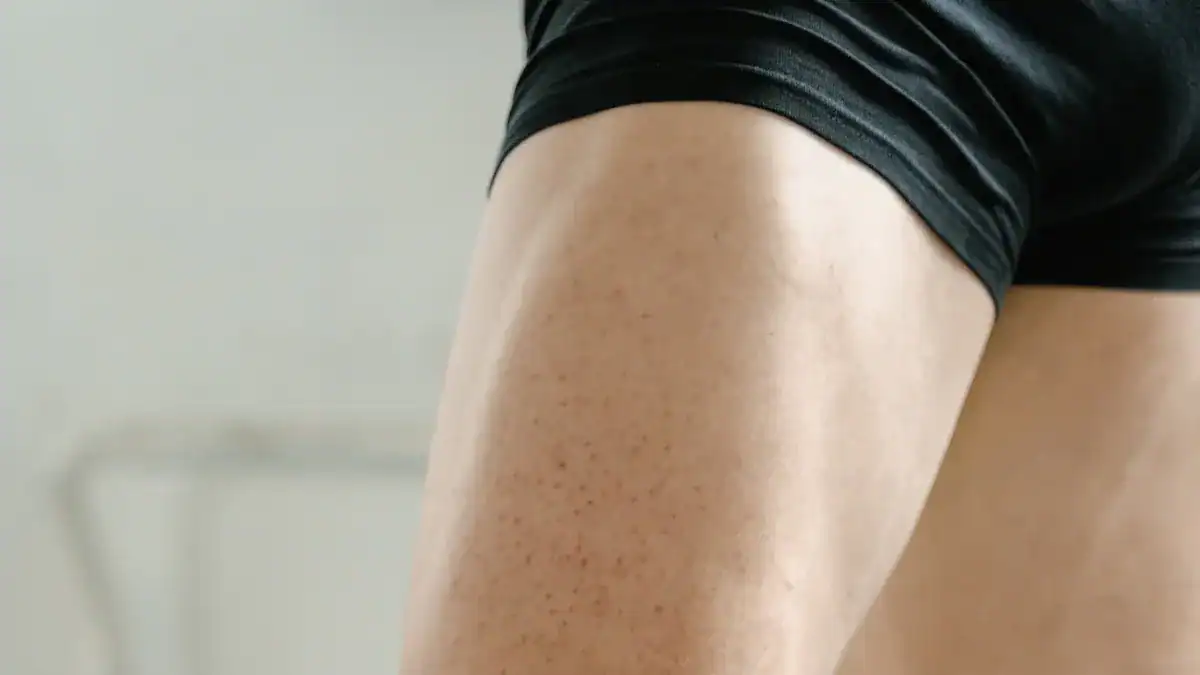
This section explains the specific roles of each major thigh muscle group in movement and stability. These powerful leg muscles work together to allow a wide range of movements for the upper leg. Understanding their function helps in appreciating the body’s mechanics.
Quadriceps: Knee Extension and Power
The quadriceps muscles primarily extend the lower limb at the knee joint. They are powerful muscles essential for many daily activities. For example, they straighten the leg when someone walks, runs, or jumps. These thigh muscles also help control the body’s descent when someone sits down.
The rectus femoris, vastus lateralis, and vastus medialis show significant activation during countermovement jumps. This indicates their crucial role in generating force for such movements. A study on lower limb muscle force generation capacity found a significant reduction in maximum force after endurance exercise. This highlights the quadriceps’ importance in maintaining power. The quadriceps are vital for athletic performance and everyday mobility of the thigh.
Hamstrings: Hip and Knee Movement
The hamstrings are crucial for both hip and knee movement. They perform hip extension and knee flexion. Hip extension involves moving the thigh backward, like when someone pushes off the ground to run. Knee flexion involves bending the knee, such as when someone brings their heel towards their buttocks.
These actions are crucial for propulsion and deceleration. Multiple studies show that hip extensors, including the hamstrings, play a significant role in running performance. Their actions become more important as running speed increases, especially during both the swing and contact phases.
The hamstrings are the primary muscle group for knee flexion. The semimembranosus helps bend the knee. The semitendinosus, an inner hamstring, balances forces from the biceps femoris. This prevents out-of-plane pressure on the knee joint during bending. The short head of the biceps femoris changes length differently because it only crosses the knee. The hamstrings are also active during cycling, especially at higher intensities. They help un-weight the backside leg from the pedals. This action, often described as ‘scraping mud off the bottom of the shoe,’ improves pedaling efficiency and power output. A lack of hamstring engagement can lead to high negative knee force, reducing efficiency. These muscles are key for the function of the thigh.
Adductors: Thigh Stability and Movement
The adductors form the medial compartment of the thigh. Their main function is adducting the thigh. This means they pull the leg inward toward the body’s midline. This action is important for maintaining balance and stability, especially during single-leg stance.
The adductors also contribute to overall lower limb stability. For instance, during a ‘Lateral Pelvic Drop’ (Trendelenberg posture) in single-leg stance, the adductor longus muscle shows increased activation. This suggests the adductor longus helps stabilize the pelvis when hip abductor muscles are less active. The role of the adductor longus in pelvic stabilization is complex. It depends on the specific body posture and can show individual variations. These muscles are essential for the stability and movement of the upper leg.
Common Thigh Muscle Injuries
Many people experience various thigh muscle injuries. These conditions can affect daily activities and athletic performance. Understanding these common thigh muscle conditions helps in prevention and recovery.
Quadriceps Strains and Tears
Quadriceps strains and tears are frequent thigh muscle injuries. The rectus femoris is the most injured quadriceps muscle. Injuries often happen during sprinting or kicking actions. These thigh muscle injuries can occur from sudden, forceful eccentric contraction of the quadriceps. This happens when the muscle lengthens under tension, like regulating knee flexion and hip extension in sports. Excessive passive stretching or activating a maximally stretched muscle can also cause tears. Repetitive strenuous use of the quadriceps muscles, or direct trauma, also leads to these thigh muscle injuries.
Recovery times for quadriceps tears vary by severity:
Grade | Severity | Recovery Time |
|---|---|---|
Grade 1 | Mild, limited muscle fiber tearing, mild pain, minimal strength loss | 1 to 2 weeks |
Grade 2 | Moderate, significant muscle fiber tearing, moderate pain, moderate strength loss, potential swelling/bruising | Several weeks |
Grade 3 | Severe, complete muscle fiber tearing, intense pain, complete strength loss, pronounced swelling/bruising, visible muscle gap | Several months |
Hamstring Strains and Pulls
Hamstring strains are common thigh muscle injuries, especially in athletes. Sprinters often face risk factors for these muscle strains. These include lower hamstring flexibility and a lower hamstring to quadriceps strength ratio. Other factors are lower general joint laxity, shortened optimum muscle length, and insufficient warm-up. Fatigue, previous injuries, and poor lumbar posture also increase risk.
A healthcare provider diagnoses a hamstring injury through a physical examination. They ask about symptoms and how the injury happened. Imaging tests provide more details. X-rays can show bone damage where the hamstring attaches. MRIs or ultrasounds assess the extent of the hamstring injury. This helps determine the injury’s location and severity. Hamstring strains are graded (I: mild, II: moderate, III: severe) based on pain, weakness, and loss of motion. These grades reflect the damage to muscle fibers or tendons.
Patellofemoral Pain Syndrome
Patellofemoral pain syndrome (PFPS) is a common thigh muscle condition. It affects the front of the knee, around the kneecap. This condition is the most common running overuse injury. Its incidence ranges from 3% to 15% in active populations. For example, 13.5% of mixed-gender military populations experience it. Amateur cyclists have a 35% point prevalence.
Several factors cause PFPS. Overusing the knees through repetitive motions, like frequent jumping, can lead to it. Weak or tight muscles around the knee also contribute. Insufficient support from weak leg muscles, especially the quadriceps, or inflexibility in the quadriceps and other muscles puts tension on the knee. Suddenly increasing activity levels can trigger PFPS. The natural shape of the knee can also play a role.
Thigh Tendinopathies
Thigh tendinopathies involve irritation or damage to the tendons in the thigh. These thigh muscle conditions often result from overuse. One common type is patellar tendinopathy, also known as Jumper’s knee. This affects the patellar tendon below the kneecap. Another type affects the thigh adductors. These tendinopathies cause pain and tenderness in the affected muscles. They can limit movement and strength in the thigh.
Care and Prevention for Healthy Thighs
Maintaining healthy thigh muscles is crucial for daily function and preventing injuries. People can take several steps to keep their thigh strong and flexible.
Effective Stretching and Flexibility
Stretching improves the flexibility of thigh muscles. Dynamic stretches are best before exercise. They increase blood flow and prepare muscles for activity. Examples include leg swings and walking lunges.
Static stretching is ideal after a workout when muscles are warm. It involves holding a stretch for 30-60 seconds. This method is considered the best for increasing overall flexibility. Eccentric training, which lengthens the muscle under tension, also helps improve flexibility and may reduce injury rates in the thigh. Always stretch both sides equally to maintain muscle balance in the thigh.
Strengthening Exercises for Thigh Muscles
Strengthening exercises build strong thigh muscles. For the quadriceps, people can do leg extensions on a machine. Wall sits engage the quadriceps, glutes, and hamstrings, improving knee stability. Step-ups also build strength and coordination in the thigh.
For hamstring muscles, exercises like hamstring curls with a resistance band are effective. Deadlifts and Romanian deadlifts strengthen the entire posterior thigh. Nordic hamstring curls specifically develop eccentric strength, which is important for hamstring safety. These exercises help build powerful muscles in the thigh.
Proper Warm-up and Cool-down
A proper warm-up prepares the thigh for activity. A warm-up routine of 10 to 15 minutes is recommended for vigorous activities. This should include dynamic stretching and mobility exercises. Dynamic stretching increases blood flow to the thigh muscles.
It also reduces injury risk and improves performance. High knees activate hip flexors and quads. After exercise, a cool-down period is often performed. While many believe cool-downs reduce muscle soreness or stiffness, studies show mixed results. An active cool-down may not significantly affect thigh musculotendinous stiffness or glycogen resynthesis.
When to Seek Medical Attention
People should seek medical attention for persistent issues with their thigh. If muscle weakness makes daily activities difficult, a doctor’s visit is necessary. This applies to any thigh muscle weakness that limits functional activities. A sports medicine physician can diagnose and treat musculoskeletal conditions. They can identify the source of pain, discomfort, or limited motion that lingers or keeps coming back in the thigh.
This guide explored essential thigh muscle anatomy, detailing the quadriceps, hamstrings, and adductors. We learned their crucial roles in daily movement, athletic performance, and stability. Understanding these powerful muscles helps prevent injuries. Apply the strategies for stretching and strengthening to maintain strong, healthy thighs. Proactive care ensures lasting mobility and well-being.