Orthodontic rubber bands are small, medical-grade elastic loops. You use them with your braces. They connect to your braces to correct bite issues and achieve proper jaw alignment. These orthodontic devices are crucial for your overall orthodontic treatment. They ensure a successful and lasting outcome for your smile, regardless of the specific types of rubber bands for braces your orthodontist prescribes.
For 90 percent of orthodontic cases, rubber bands will be added.
Consistent wear of your rubber bands for braces is essential. Inconsistent use can significantly extend your treatment time with braces, delaying the ideal position of your bite.
Key Takeaways
Orthodontic rubber bands fix bite problems. They move your teeth and jaws into the right place. Braces alone cannot always do this.
There are different types of rubber bands. Each type fixes a specific problem. Your orthodontist chooses the right ones for you.
Wear your rubber bands exactly as your orthodontist tells you. Change them often. This helps your treatment work well and on time.
Not wearing your rubber bands can make your treatment take longer. It can also make your results not as good. Always follow your orthodontist’s instructions.
Why Orthodontic Rubber Bands Are Essential for Braces
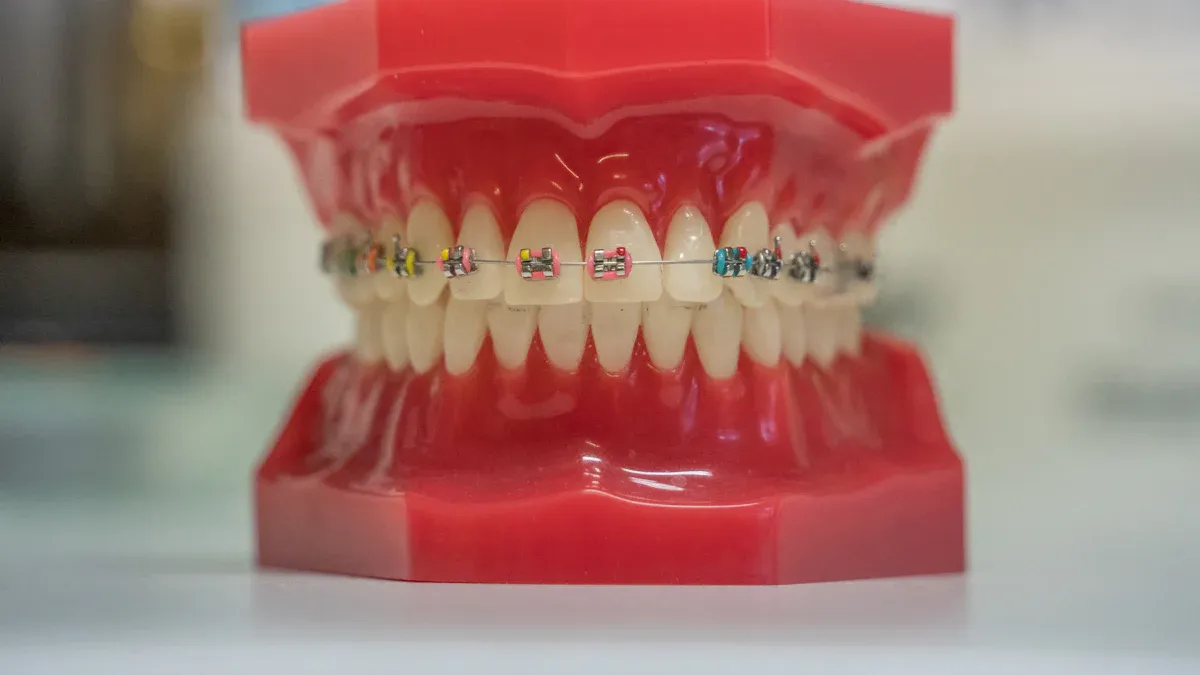
You might wonder why your orthodontist prescribes rubber bands in addition to your braces. Braces alone do a great job of straightening your teeth. However, they cannot always fix every problem. Orthodontic rubber bands play a vital role in your overall orthodontic treatment. They apply continuous force to move your teeth and jaws into their correct positions. This addresses issues that braces alone cannot fully resolve.
Orthodontic rubber bands are small elastic loops. They connect to brackets on your upper and lower teeth. This connection creates a gentle, continuous force. This force guides your teeth and jaws into better alignment. Consistent wear gradually shifts your teeth into their optimal positions. This happens by applying directional pressure.
Correcting Bite Issues
Rubber bands are crucial for fixing bite problems. They improve jaw alignment by realigning your upper and lower jaws to fit correctly. This ensures a balanced bite and better jaw function. They correct issues like overbites, underbites, and crossbites. They do this by repositioning your upper and lower jaws through targeted pressure.
For example, rubber bands play a big role in correcting overbites. This is when your upper teeth are too far forward. They also fix underbites, where your lower teeth come too far forward. Orthodontics uses these bands to resolve bite issues. They reposition your upper and lower jaws. This specifically addresses overbites, underbites, crossbites, and open bites.
Guiding Tooth Movement
Rubber bands enhance the movement of your teeth. They provide extra guidance and apply additional force. Braces alone might not be enough in some cases. Orthodontists use elastics to improve the mechanics of your braces. These elastics attach to hooks on your brackets. They provide extra force to correct specific bite issues or alignment problems. Wearing elastics as instructed is crucial for successful treatment.
Elastic bands help your teeth move in directions that braces alone cannot achieve. They help close gaps. They align your dental arches. They also make sure your teeth fit together correctly. This continuous force speeds up the tooth-moving process. It helps you achieve your desired results faster.
Aligning Jaws Properly
Rubber bands help align your jaws. They apply gentle and steady pressure to your teeth and jaws. Your orthodontist places them in specific ways. These can be vertical, diagonal, or crisscross patterns. This tension makes the bone around your teeth change and adapt. This gradually aligns your bite over time. This is how do rubber bands work to improve your smile.
For example, Class II elastics fix overbites. Your upper teeth significantly overlap your lower ones. These elastics connect from your upper molars to your lower canines. They pull your upper teeth backward. They push your lower teeth forward. This corrects the overbite and aligns your jaw. Class III elastics fix underbites. Your lower teeth extend beyond your upper teeth. These elastics connect your lower molars to your upper canines. They encourage your lower jaw to move backward. They also encourage your upper jaw to move forward. This restores your natural tooth alignment. These bands apply constant pressure to align both jaws. This improves your bite function. They can also shift your jaw’s position. This leads to better jaw alignment and a balanced facial appearance during your braces treatment.
Types of Rubber Bands for Braces
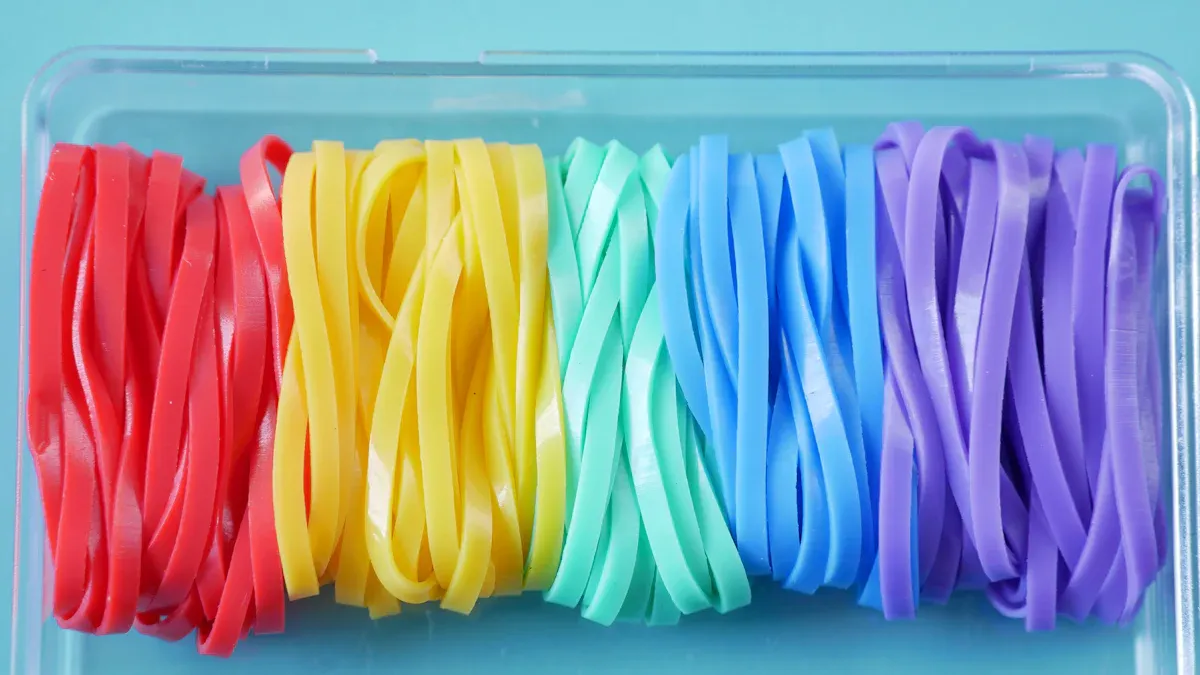
You will encounter several types of rubber bands for braces during your orthodontic journey. Each type serves a specific purpose. Your orthodontist chooses them based on your unique needs. Understanding these different types of rubber bands helps you appreciate their role in your treatment.
Understanding Elastic Ligatures
First, let’s clarify something important. You might see small, colored bands on your braces. These are called elastic ligatures. They are different from the orthodontic rubber bands (elastics) you will wear.
Feature | Elastic Ligatures (Ligature Elastics) | Orthodontic Rubber Bands (Interarch Elastics) |
|---|---|---|
Appearance | Small, often colorful ties around each bracket | Larger bands stretching between upper and lower brackets |
Primary Role | Hold the archwire securely in place within each bracket | Correct the way upper and lower teeth fit together (bite issues) |
Function | Apply steady pressure to guide teeth into alignment | Address overbites, underbites, and crossbites |
Removability | Not typically removed by the patient | Removable by the patient for eating and cleaning |
Elastic ligatures are small, colored bands. They go around each individual bracket. Their job is to hold the archwire firmly in place. This archwire runs through all your braces. It helps guide your teeth into alignment. Orthodontic rubber bands, on the other hand, are larger. You connect them to hooks on your brackets. They apply extra pressure to move your teeth or jaw into the correct position. You can remove these orthodontic rubber bands for eating and cleaning.
Class I Elastics: Minor Adjustments
Class I elastics are for minor adjustments. Your orthodontist uses them to close spaces between your teeth within the same arch. They also help rotate your teeth. These types of rubber bands help settle your bite. They ensure your upper and lower teeth fit together perfectly.
Class II Elastics: Overbite Correction
Class II elastics are crucial for correcting an overbite. An overbite happens when your upper front teeth stick out too far over your lower front teeth. These elastics connect from your upper molars to your lower canines. They pull your upper teeth backward. They also push your lower teeth forward. This helps align your jaw.
This movement reduces your overbite. For example, an overbite of 6.8 mm can reduce to 0.6 mm with this treatment. Your lower front teeth move forward. Your lower molars shift slightly forward and move down. Your upper front teeth tilt slightly outward. Your upper molars move down a little. These movements work together to fix your overbite.
Class III Elastics: Underbite Correction
Class III elastics fix an underbite. An underbite means your lower jaw sticks out beyond your upper jaw. These elastics apply continuous force. They encourage your lower jaw to move backward. They also encourage your upper jaw to move forward. This constant pressure helps align your jaws. It creates a more harmonious position over time.
You typically attach Class III elastics from a hook on your upper molar to a hook on your lower canine or premolar. This setup pulls your upper jaw forward. It also pulls your lower jaw backward. This happens at the same time. The tension from these rubber bands for braces stimulates bone remodeling. This is a process where bone cells break down and rebuild. This allows your teeth to move through the bone. Your jaws gradually shift into a more ideal alignment. Consistent wear, about 20-22 hours daily, is vital for this treatment to work.
Vertical Elastics: Open Bite Closure
Vertical elastics help close an open bite. An open bite means your upper and lower front teeth do not touch when your mouth is closed. These elastics cause your back teeth to move upward. This makes your lower jaw rotate forward and upward. This rotation helps close the gap between your front teeth. They also help move your front teeth downward. This ensures proper vertical positioning of your front teeth.
Cross Elastics: Correcting Crossbites
Cross elastics correct crossbites. A crossbite occurs when some of your upper teeth sit inside your lower teeth. These types of rubber bands are useful for:
Anterior crossbites (front teeth)
Crossbite of a single upper canine
Mild posterior crossbites (back teeth), especially when only one tooth is affected.
Box Elastics: Jaw Stabilization
Box elastics help stabilize your jaw. They also help close your bite. You attach them to four teeth. Two are on your upper arch. Two are on your lower arch. This creates a box shape. This setup promotes uniform settling of your teeth. It also helps with transverse corrections. This contributes to overall bite adjustments.
Triangle Elastics: Specific Rotations
Triangle elastics are another type of elastic. Your orthodontist uses them for specific rotations of your teeth. They help guide individual teeth into their correct positions. This ensures a precise alignment of your smile.
Sizes and Strengths of Elastics
Orthodontic elastics come in many sizes and strengths. Manufacturers offer dozens of different types of elastics. These vary in force levels and diameters.
Size (mm) | Light (OZ) | Medium (OZ) | Heavy (OZ) |
|---|---|---|---|
3.2 (1/8”) | 3.5 | 5.0 | 6.5 |
4.8 (3/16”) | 3.5 | 5.0 | 6.5 |
6.4 (1/4”) | 3.5 | 5.0 | 6.5 |
8.0 (5/16”) | 3.5 | 5.0 | 6.5 |
9.5 (3/8”) | 3.5 | 5.0 | 6.5 |
Your orthodontist chooses the right size and strength for you. They consider several factors:
Distance between hooks: Longer distances need larger elastics.
Desired movement: Correcting your bite may need heavier forces. Stabilization might need lighter forces.
Your tolerance and wear time: Consistent wear of moderate forces is often better than intense, short-term use.
Elastic geometry: The way the elastics are configured (e.g., Class II, Class III, vertical triangles) affects the size and force needed.
Latex allergy: If you have a latex allergy, you will use latex-free elastics. These have different stretch properties.
Wearing Rubber Bands: Proper Use and Care
Wearing rubber bands for braces correctly is vital for your treatment success. Your orthodontist gives you specific instructions. Following these instructions helps you achieve your best smile.
Step-by-Step Application
Applying your rubber bands is simple. First, locate the small hooks on your upper and lower braces. Your orthodontist shows you where to attach them. Gently stretch a new elastic band between these hooks. Make sure the band sits securely on each hook. You might find a small tool helpful for reaching back teeth. Practice in front of a mirror until you feel comfortable.
Daily Wear Guidelines
You must wear rubber bands daily as instructed. Orthodontic rubber bands should be worn around the clock, typically 24 hours a day. This includes during meals and sleep. This maximizes their benefit. You can temporarily remove them if eating or cleaning your teeth becomes difficult. Change your elastic bands regularly, at least twice a day. They lose elasticity and effectiveness over time, even if they are not broken. Always carry spare elastic bands with you. If you miss a day, do not double up the next day; just continue with your regular schedule. Not wearing rubber bands as prescribed is a common mistake. This can make your treatment take longer.
Dos and Don’ts for Elastics
Do:
Wear your elastics exactly as your orthodontist shows you.
Change your elastics at least twice a day.
Always have extra bands with you.
Don’t:
Skip wearing rubber bands or remove them for long periods. This can undo weeks of progress.
Use old, stretched-out elastics. They will not work correctly.
Double up on elastics unless your orthodontist tells you to. This can cause too much force.
Skipping wear or not changing elastics regularly means they won’t work as intended. This can lead to prolonged treatment and incomplete bite correction.
Managing Initial Discomfort
You might feel some soreness when you first start wearing rubber bands. This is normal. The discomfort typically peaks within 48 to 72 hours. You can manage this with over-the-counter pain relievers like ibuprofen. Apply cold compresses to the outside of your face for 15-20 minutes. This reduces inflammation. Eat soft foods like yogurt or soup to minimize chewing pressure on your sore teeth. You can also apply orthodontic wax to any rough areas on your braces that irritate your cheeks or lips.
Oral Hygiene with Bands
Maintaining good oral hygiene is crucial when you wear rubber bands. Always remove your elastics before you brush and floss your teeth. This allows you to clean your braces and teeth thoroughly. After cleaning, replace the old elastics with fresh ones. Elastics create more areas where food particles and plaque can accumulate. Consider using an antimicrobial mouth rinse to help reduce bacteria levels.
Consequences of Not Wearing Rubber Bands
You play a crucial role in your orthodontic treatment. Not wearing your rubber bands for braces as instructed can lead to several negative outcomes. Understanding these consequences helps you appreciate the significance of wearing rubber bands.
Extended Treatment Time
You might think skipping a day or two will not matter. However, a lack of compliance with wearing rubber bands is the biggest risk of delay in treatment. Not wearing your appliances as instructed delays your overall orthodontic treatment. It can greatly extend the time you spend in braces. For example, if you should wear elastics for over 20 hours daily but only wear them for half that time, your treatment can take much longer. Adhering to your prescribed care plan helps minimize these delays.
Compromised Treatment Results
Inconsistent wear of your elastics directly impacts your results.
Old, stretched-out elastics lose their ability to apply necessary force. They become ineffective for moving your teeth.
Your treatment timelines extend because your teeth remain stagnant. They do not move as planned.
Skipping days or wearing elastics part-time slows down your treatment. It delays your final results.
If you do not wear your rubber bands, your bite will not change. This increases your treatment time. If your treatment time becomes too long due to inconsistent wear, your final treatment result will be compromised.
Potential for Retreatment
You might not achieve the most ideal bite if you choose not to wear your orthodontic elastics as prescribed. Your final orthodontic outcome depends on proper wear. Missing even one or two days of prescribed elastic wear can delay bite correction. It can disrupt your overall dental treatment plan. Inconsistent wear can slow progress or cause your bite to shift slightly.
Without elastics, bite issues will not correct, even if your teeth appear straight.
This means you might not get the smile you hoped for. You could even need further treatment later.
Increased Overall Costs
Extended treatment time and the potential for retreatment often lead to increased overall costs. More appointments mean more time and money spent. You might need additional appliances or procedures to fix issues caused by non-compliance. Following your orthodontist’s instructions helps you achieve your best smile efficiently and cost-effectively.
Consistent use of your orthodontic rubber bands is critical for successful braces treatment. You ensure a healthy, aligned smile by following your orthodontist’s instructions. Adherence to these guidelines is key to your overall orthodontic treatment. If you have any challenges or questions about your types of rubber bands for braces, communicate with your orthodontic team. Your compliance leads to lasting alignment and a confident smile.
FAQ
❓ What do orthodontic rubber bands do?
Orthodontic rubber bands apply gentle, continuous force. They move your teeth and jaws into correct alignment. These bands fix bite issues like overbites, underbites, and crossbites. They help you achieve a healthy, functional bite.
🔄 How often should you change your rubber bands?
You should change your rubber bands at least twice a day. They lose their elasticity and effectiveness over time. Always replace old bands with fresh ones. This ensures they apply the correct force for your treatment.
😬 What happens if you forget to wear your rubber bands?
Forgetting to wear your rubber bands can delay your treatment. It can also compromise your final results. Your teeth and jaws will not move as planned. Consistent wear is crucial for successful and timely orthodontic progress.
🍽️ Can you eat with your rubber bands in?
You can eat with your rubber bands in. However, some people find it more comfortable to remove them for meals. Always remove your bands before brushing and flossing. Remember to put fresh ones back in after you finish.