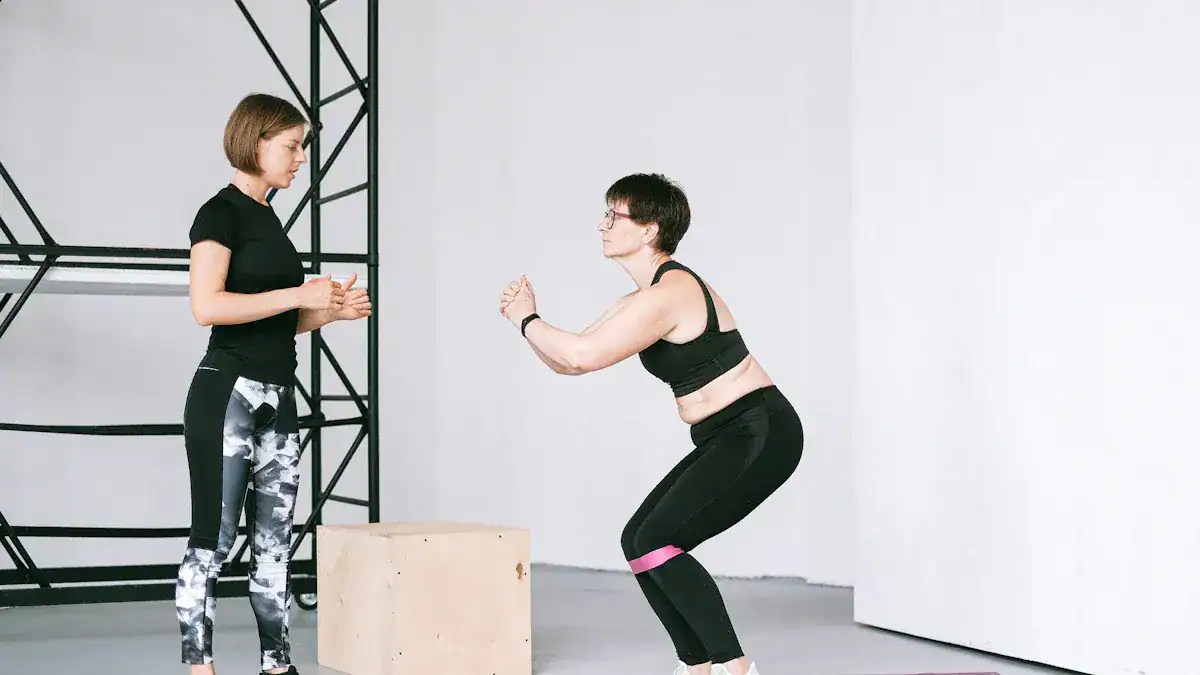
You might worry about weak legs in elderly individuals. This common concern significantly impacts your daily life, independence, and mobility. A major sign of weak legs in individuals over 50 is a loss of power when walking. Yet, weak legs are not an inevitable part of aging. You can improve your strength! This blog explores causes, effective prevention strategies, and practical leg strengthening exercises. These exercises help you regain leg strength and improve balance, preventing falls. You can strengthen weak legs and improve fall prevention, enhancing your quality of life and supporting better elderly care.
Key Takeaways
- Weak legs are common as people get older, but you can make them stronger. Many things cause weak legs, like losing muscle, health problems, not eating well, or not moving enough.
- You can prevent weak legs by staying active with exercises, eating healthy foods with enough protein and vitamins, drinking enough water, and getting regular check-ups.
- Simple exercises like sit-to-stands, calf raises, and step-ups can help make your legs much stronger. Always talk to your doctor before starting new exercises.
- Eating enough protein, Vitamin D, and calcium helps your muscles and bones stay strong. Drinking water is also very important for your muscles to work well.
- If your legs suddenly feel weak, or you have numbness or pain, see a doctor right away. This can be a sign of a serious problem.
Causes of Weak Legs
You might wonder why your legs feel weaker as you get older. Many factors contribute to weak legs. Understanding these causes helps you address them effectively.
Age-Related Muscle Loss
As you age, your body naturally loses muscle mass and strength. This process is called sarcopenia. For individuals around 75 years old, you lose muscle mass and function each year. This loss directly impairs your muscles’ ability to generate force. It leads to frailty and limits your movement, contributing to weak legs. After age 30, you typically lose about 3%-5% of muscle mass each decade. This loss can speed up around age 60. By age 80, many people experience sarcopenia. This makes daily activities difficult and increases your risk of falls.
Medical Conditions
Several health issues can cause weak legs. Chronic diseases like diabetes, arthritis, and cardiovascular problems often play a role. Neurological disorders such as Parkinson’s disease, multiple sclerosis, and certain strokes also affect leg strength. Peripheral Artery Disease (PAD) can cause leg numbness or weakness. These conditions contribute to overall weakness in the legs.
Nutritional Deficiencies
Your diet significantly impacts muscle health. Deficiencies in certain vitamins can lead to weak legs.
| Deficiency | Associated Symptoms Relevant to Weak Legs |
|---|---|
| Vitamin B12 | Impaired balance, difficulty with gait, muscle weakness. |
| Vitamin D | Muscle weakness, reduced balance, muscle aches. |
Symptoms of Vitamin B12 deficiency include sensory problems and muscle weakness. A lack of Vitamin D can cause fatigue and muscle aches. These deficiencies contribute to balance problems and overall weakness.
Inactivity and Lifestyle
A sedentary lifestyle greatly affects your leg strength. If you sit for long periods, you increase your risk of sarcopenia. Each extra hour of sitting increases this risk by 33%. This happens even if you exercise regularly. Watching a lot of television is also linked to lower leg muscle mass. A sedentary lifestyle leads to a loss in functional capacity. This speeds up weakness and frailty.
Medication Side Effects
Some medications can cause muscle weakness. Statins, used for cholesterol, are strongly linked to muscle side effects. The risk is higher for older adults. Nucleoside analogues, used for viral infections, can also cause muscle weakness. Taking many drugs (polypharmacy) is linked to sarcopenia. Loop diuretics, used for heart and kidney issues, may also contribute to muscle weakness. Muscle relaxants and certain anxiety or sleep medications can increase your risk of falls and cause grogginess.
Neurological Factors
Your brain and nerves play a big part in muscle strength. Older adults with significant leg weakness show problems with neural activation. Reduced brain excitability is directly linked to age-related weakness. Your brain’s ability to send signals to your leg muscles can be less effective. This accounts for about one-third of the variation in muscle strength. Age-related strength loss is not just about losing muscle mass. Neurological factors are very important. You can lose leg strength faster than you lose muscle mass.
Preventing Weak Legs

You can take many steps to reduce your risk of developing weak legs. Proactive measures help you maintain your independence and improve your overall well-being.
Regular Physical Activity
Engaging in regular physical activity is crucial. You should include exercises that target specific muscle groups. These include your quadriceps, glutes, and hip abductors. Try exercises like standing up and sitting down from a chair. Step-ups and bridges also help. These are excellent leg strengthening exercises. Body weight and light resistance exercises improve your strength and coordination. Geriatric physical therapy can offer tailored exercise plans. These plans focus on muscles you use daily, enhancing your strength, flexibility, and balance. This consistent exercise routine helps you strengthen weak legs and improve mobility.
Balanced Nutrition
Your diet plays a vital role in muscle health. You need enough protein for muscle repair and growth. Include foods like legumes, lentils, soy, eggs, and peanut butter. These are great protein sources. Vitamin D and calcium are essential for strong bones, which indirectly support your leg strength. Fruits and vegetables provide important nutrients like potassium and vitamins C and K. These nutrients support muscle and nerve function.
Adequate Hydration and Rest
Staying hydrated is important for your muscles. Women should aim for about 1.6 liters of water daily. Men should drink around 2.0 liters. You may need more water if you are very active or in hot weather. Sufficient rest also allows your muscles to recover and grow stronger.
Routine Health Check-ups
Regular health check-ups help you identify potential problems early. Your doctor can screen for conditions like diabetes or vitamin deficiencies. Early diagnosis and treatment lead to better outcomes for weak legs. Proactive health monitoring helps prevent severe symptoms. This is a key part of your safety and fall prevention strategy.
Managing Chronic Illnesses
If you have chronic illnesses, managing them well is important. Regular exercise, like walking or cycling, improves circulation and strengthens your leg muscles. Maintain a healthy weight to reduce strain on your legs. Avoid sitting or standing for too long. Stay active and move around often. A healthy diet, rich in antioxidants and protein, also supports your leg strength and mobility.
Enhancing Fall Prevention
You can make your home safer to prevent falls. Remove clutter and install grab bars. Improve lighting and secure rugs. Wear well-fitting, non-slip shoes. These safety tips help you avoid accidents. Incorporate balance exercises like Tai Chi or single-leg stands. Strength training for your legs and core also helps. These leg strengthening exercises improve your balance and help you prevent falls. Strengthening your legs helps you improve balance and reduces the risk of falls.
7 Exercises to Strengthen Legs

You can significantly improve your leg strength and overall mobility with targeted leg strengthening exercises. These exercises help you strengthen weak legs and enhance your balance. Remember to consult your doctor before starting any new exercise routine.
Sit to Stand
The sit to stand exercise is excellent for building lower body strength and functional fitness. It mimics a common daily movement.
How to Perform:
- Sit on a sturdy chair, about 45 cm high, with armrests.
- Warm up by performing 5 unloaded knee extensions per leg.
- Cross your arms over your chest.
- Stand up from the chair. Take 2 seconds to rise (concentric phase).
- Pause for 1 second at the top, fully extended.
- Slowly sit back down. Take 2 seconds to lower (eccentric phase).
- Pause for 1 second when seated.
- Perform as many repetitions as you can while keeping this pace until your muscles feel tired. Aim for 3 sets of 8–12 repetitions.
- Rest for 1 minute between sets.
- If you find it too easy, increase the difficulty. If it is too hard, make it easier. You can use minimal support if needed after 6 good repetitions.
This exercise helps you improve strength in your legs.
Calf Raises
Calf raises target the muscles in your lower legs. This strengthening exercise helps with walking and balance.
How to Perform:
- Stand tall, holding onto a wall or sturdy chair for support.
- Slowly lift your heels off the ground, standing on the balls of your feet.
- Hold for a moment at the top.
- Slowly lower your heels back down.
- Perform 3 sets of 10 repetitions, three times per week for 8 weeks. Rest for 2 minutes between sets. You can start with fewer repetitions and gradually increase them.
Seated Knee Extension
This exercise strengthens your quadriceps, the muscles on the front of your thighs.
How to Perform:
- Sit on a sturdy chair that does not tilt or wobble. A chair without arms gives you more freedom.
- Extend one leg straight out in front of you.
- Hold your leg up for a few seconds.
- Slowly lower your leg back down.
- Repeat with the other leg.
- Push only until you feel your muscles working, not to the point of pain. Muscle soreness is normal, but joint pain means you should stop.
- You can add ankle weights for more challenge as you get stronger.
Always prioritize safety during this exercise. Consult a healthcare provider if you have concerns.
Step-Ups
Step-ups are great for building leg strength and improving your ability to climb stairs.
How to Perform:
- Stand in front of a sturdy step or a low platform.
- Step up onto the platform with one foot.
- Bring your other foot up to meet it.
- Step back down with the first foot.
- Then step down with the second foot.
- Alternate your leading leg.
- Start with a low step and gradually increase the height as your strength improves.
Half Squats
Half squats work your glutes, hamstrings, and quadriceps. This strengthening exercise helps with everyday movements like sitting and standing.
How to Perform:
- Stand with your feet shoulder-width apart.
- You can hold onto a chair for balance.
- Slowly bend your knees, lowering your hips as if you are about to sit in a chair. Do not go all the way down.
- Keep your back straight and your chest up.
- Push through your heels to return to the starting position.
Ankle Circles
Ankle circles improve joint mobility and help reduce stiffness. They contribute to overall leg exercises and increase your awareness of movement (proprioception). This is crucial for balance and preventing falls.
How to Perform:
- Sit in a chair or lie down.
- Lift one foot slightly off the ground.
- Slowly rotate your ankle in a circular motion.
- Make 10 circles in one direction, then 10 in the other.
- Repeat with your other foot.
- Perform these foot exercise at least three times a week to improve foot strength and flexibility. Start slowly and increase frequency as you get stronger.
Walking Heel to Toe
This exercise helps you maintain coordination and balance. It significantly improves lower body muscle strength and gait stability.
How to Perform:
- Find a straight line on the floor. You can use a hallway or even an imaginary line.
- Place the heel of one foot directly in front of the toes of the other foot.
- Walk forward, placing your heel down first, then your toes.
- You can hold onto a chair or wall for support if you need it.
- Walk for a few dozen steps.
These leg strengthening exercises are a great way to strengthen weak legs and improve balance. Consistent strength training will make a big difference.
Nutrition for Leg Strength
You can significantly improve your leg strength and muscle health through your diet. What you eat directly impacts how strong your legs feel.
Protein Intake
Protein is vital for building and repairing muscles. You need enough protein to maintain your muscle mass as you age. Current research suggests you consume more protein than standard guidelines. For healthy older adults, aim for 1.0–1.2 grams of protein per kilogram of body weight daily. If you are active or have chronic diseases, you might need even more, up to 1.2–2.0 grams per kilogram. This higher intake helps preserve lean muscle mass and improves functional performance. Studies show that 1.5 grams of protein per kilogram daily can improve muscle mass and gait speed. This is especially true for those who are undernourished.
Vitamin D and Calcium
These two nutrients are crucial for strong bones. Strong bones support your muscles and overall strength. For individuals aged 50 or older, aim for at least 1200 mg of calcium and 800 units of Vitamin D daily. This combination helps prevent fractures. A daily intake of 700 units of Vitamin D and 500 mg of calcium can reduce falls by as much as 65% in less active women over 65.
| Age (years) | Calcium (mg/day) | Vitamin D (IU/day) |
|---|---|---|
| 51–70 | 1200 | 400 |
| ≥70 | 1200 | 600 |
Essential Minerals
Minerals like magnesium are very important for muscle function. Magnesium helps regulate many biological processes in your cells. About 20% of your body’s magnesium is in your skeletal muscles. It plays a central role in protein synthesis, energy production, and muscle contraction. Magnesium also offers anti-inflammatory and antioxidant benefits. It is crucial for mitochondrial health. Low magnesium levels can lead to decreased mitochondrial efficiency. This can damage your cells. Adequate magnesium helps maintain optimal muscle performance. It is critical for preserving muscle health and functionality.
Hydration Benefits
Water makes up about 76% of your muscle mass. It is vital for muscle contraction. When you are dehydrated, your muscles cannot work as well. A decline in total body water, common in aging, can impair muscle function. This makes proper hydration critical for maintaining muscle strength and preventing cramps. Cell dehydration can lead to muscle wasting and impaired contractile capacity. Staying well-hydrated can significantly reduce painful cramps and sprains. This supports your overall strengthening efforts.
When to Seek Medical Advice
You should know when to seek medical help for your legs. Sometimes, leg weakness signals a serious problem.
Sudden Weakness
Sudden weakness in your legs needs immediate attention. This is especially true if you cannot explain it. It can signal a medical emergency like a stroke. You might also have cauda equina syndrome. Look for specific signs. These include an inability to move your legs. One leg might feel weaker than the other. You might also experience leg numbness or arm numbness. Problems with balance or trouble walking are also serious. Difficulty speaking or slurred speech, and vision problems also require urgent care.
Accompanying Symptoms
Certain other symptoms with leg weakness mean you need to see a doctor. Numbness and tingling are important signs. This is especially true if they start in your hands or feet and move up. These can be early warnings of serious nerve conditions. Examples include Multiple Sclerosis or a stroke. Diabetes can also cause nerve damage. Look for prickling sensations that spread. Numbness with burning or shooting pain is also a concern. Symptoms affecting both sides of your body are serious. Seek emergency care if you have sudden, severe pain in your back or leg. Loss of bladder or bowel control also needs urgent help. These are warning signs of a stroke. See a doctor quickly if you have leg weakness, numbness, or tingling. Also, see a doctor if your walking changes.
Persistent Weakness
Sometimes, leg weakness lasts a long time or gets worse. This means you need a medical check-up. This is true if the weakness is sudden or severe. It is especially important if it affects only one side of your body. Also, look for severe pain, swelling, or redness. If you have chronic conditions like diabetes, be extra careful. Persistent weakness needs a full medical evaluation. This helps find any physical causes.
Impact on Daily Life
Your daily life can show when you need medical advice. Do you find it hard to walk or climb stairs? Does discomfort stop you from standing for long? These are signs to talk to a doctor. You might have Peripheral Artery Disease (PAD). Early detection is very important. A doctor can find the cause of your symptoms. A feeling of heaviness or dragging in your legs is also a concern. This makes it hard to lift your feet. It increases your risk of falls. Significant loss of mobility also means you should seek help. This can make everyday tasks very difficult. Your safety depends on addressing these issues. Do not ignore these signs of weak legs.
You can manage weak legs in elderly individuals. This challenge is often reversible. You now understand the causes and effective prevention. Consistent leg strengthening exercises are crucial. These exercises help strengthen weak legs and improve your balance. Start small with your exercise routine. Be consistent. Consult healthcare professionals for personalized advice and effective fall prevention. This helps you improve strength and maintain independence. Stronger legs give you better mobility and quality of life. You can improve your balance and overall strength. This reduces the risk of falls. Building leg strength is achievable through regular exercise. Addressing weak legs in elderly individuals empowers you.
FAQ
What is sarcopenia?
Sarcopenia is the natural loss of muscle mass and strength as you age. This process can make your legs feel weaker. It affects your ability to move easily.
What foods help strengthen my legs?
You should eat protein-rich foods like lean meats, eggs, and beans. Include foods with Vitamin D and calcium, such as dairy products or fortified cereals. These nutrients support muscle and bone health.
How often should I exercise my legs?
You should aim for at least two to three leg strengthening sessions each week. Allow your muscles to rest for a day between workouts. Consistency helps build and maintain strength.
When should I worry about leg weakness?
You should seek medical advice if you experience sudden leg weakness. Also, see a doctor if you have numbness, tingling, or severe pain. These symptoms can signal a serious underlying condition.
Can hydration affect my leg strength?
Yes, proper hydration is crucial for muscle function. Your muscles need water to contract efficiently. Dehydration can lead to muscle weakness and cramps. Drink enough water daily.