

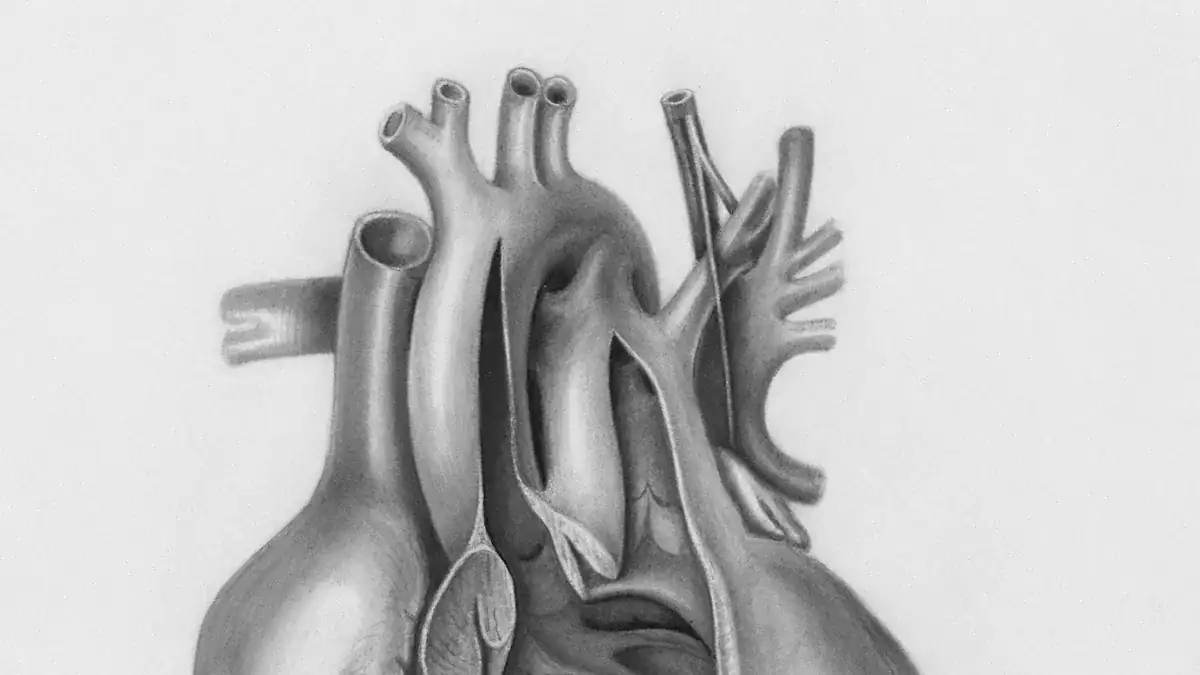
All echocardiogram colors provide valuable information. However, yellow and orange often indicate problematic turbulent blood flow. These colors signify blood not flowing smoothly within the heart. Such patterns can point to underlying heart conditions visible on an echocardiogram. A medical professional interprets these results. Yet, understanding these basic indicators can be helpful.
Key Takeaways
Yellow and orange colors on an echocardiogram often mean blood is flowing roughly. This can show problems like narrow heart valves.
Red and blue colors show the direction of blood flow. Red means blood moves toward the camera, and blue means it moves away.
No color where blood should be flowing can mean a blockage. This is a serious sign that needs quick medical attention.
Doctors use these colors to find heart problems. They look for issues like leaky valves or holes in the heart.
Understanding Echocardiogram Colors

What Colors Represent
Color Doppler echocardiography (CCDS) is an ultrasound method. It overlays blood flow data onto a grayscale image. Areas with flowing blood receive color overlays. These colors are based on parameters like flow direction, mean flow velocity, and velocity variance. This system helps visualize the direction of blood flow. The underlying principle is the doppler effect.
This effect measures changes in sound wave frequency as blood moves. The doppler shift in frequency determines the color displayed. Typically, red indicates flow moving towards the transducer. Blue indicates flow moving away. The brightness or intensity of these echocardiogram colors relates to the blood’s velocity. A brighter red or blue signifies faster flow.
As velocity increases, the assigned color becomes lighter in shade. This phenomenon is sometimes called ‘color fading’ or ‘decreased color saturation’. Many CCDS devices introduce additional colors, like green or orange.
These colors appear in areas with significant velocity variations. They help visually identify turbulent flow regions. These regions are often found downstream from a stenosis.
This color representation is crucial for interpreting a color doppler echocardiogram. The doppler technology provides real-time information. The doppler signal processing translates frequency shifts into visible colors. This allows doctors to see blood movement inside the heart’s chambers and vessels.
Normal Blood Flow Patterns
A healthy heart shows specific patterns on an echocardiogram. Normal blood flow appears smooth and consistent. The colors will be uniform within a vessel or chamber. They will show a clear direction of blood flow. For example, blood moving into the heart’s chambers or out through major arteries will display a consistent red or blue.
This depends on its path relative to the doppler transducer. The doppler imaging confirms these expected patterns. Normal blood flow patterns in major coronary arteries exhibit a characteristic biphasic coronary flow pattern (CFP). This pattern is observed using Transthoracic Doppler Echocardiography (TTDE).
This biphasic pattern is present under both baseline and stress conditions. The consistent and predictable nature of these doppler patterns indicates healthy heart function. Doctors look for these expected color flows to confirm proper cardiac performance.
Bad Echocardiogram Colors: Yellow & Orange
Why Yellow/Orange Indicate Problems
Yellow and orange colors on a doppler echocardiogram indicate high velocity or turbulent blood flow. This is often an abnormal finding. These specific echocardiogram colors highlight areas of concern. Turbulent blood flow means the blood does not move smoothly. Instead, it swirls and creates eddies. This turbulence typically occurs in conditions like stenosis or other abnormalities within blood vessels. The appearance of these colors results from the mixing of blood flow as it passes through a narrow opening.
The doppler technology uses a process called aliasing. Aliasing causes increasing velocities to show a progression through the color sequence. Rapid flow moving towards the transducer aliases from red, through orange and yellow, to blue shades.
Conversely, rapid flow moving away from the transducer aliases from blue, through turquoise and yellow, to red shades. This phenomenon explains the appearance of orange and yellow colors. They directly relate to very high-velocity blood flow. The doppler system interprets these extreme speeds. It then assigns these distinct colors to show the severity of the flow disturbance. This helps doctors visualize the precise direction of blood flow and its characteristics.
Conditions Linked to Turbulent Flow
Areas appearing yellow or orange in a doppler ultrasound signify a higher or more turbulent speed of blood flow. This turbulence can be caused by stenosis. Stenosis is a narrowing of a blood vessel or heart valve. Other abnormalities within the blood vessels can also cause this. When yellow appears in doppler imaging, it suggests blood flow issues or turbulence. This information is crucial for diagnosing conditions affecting blood vessels. It also helps determine appropriate interventions.
Several heart conditions are directly associated with turbulent blood flow. These conditions often show yellow and orange colors on the doppler display.
Valvular Stenosis: A narrowed heart valve forces blood through a smaller opening. This increases blood velocity and creates turbulence. The
dopplerwill show yellow or orange at the site of the narrowed valve.Valvular Regurgitation: A leaky heart valve allows blood to flow backward. This abnormal backflow often creates turbulent jets. These jets appear as yellow or orange.
Congenital Heart Defects: Some birth defects, like a ventricular septal defect (a hole between the heart’s lower chambers), cause blood to shunt abnormally. This shunting creates high-velocity, turbulent flow. The
dopplerwill highlight these areas with yellow and orange.Aortic Coarctation: This is a narrowing of the aorta, the body’s main artery. Blood rushes through the narrowed section at high speed. This appears as turbulent flow on the
dopplerimage.
These colors provide critical visual cues. They guide medical professionals to specific problem areas within the heart and its vessels.
Interpreting Color Doppler Echocardiogram Results
Other Concerning Color Patterns
Beyond yellow and orange, other color patterns on a doppler image can signal problems. A red jet flow moving in the opposite direction of blood flow through a valve into the chamber suggests a leak.
This condition is called regurgitation. This specific red jet indicates a valve is not closing properly. It allows blood to flow backward. Such abnormal flow patterns require careful evaluation. Doctors look for these specific color presentations. They help identify various cardiac abnormalities.
Absence of Expected Color Flow
Sometimes, a color doppler echocardiogram shows no color where blood flow should exist. This absence of expected color flow is also a significant concern. It can indicate a blockage or an obstruction. For example, a clot in an artery might prevent blood from moving.
The doppler would then show a lack of color in that area. This lack of color means no doppler shift is detected. This suggests a serious issue. It requires immediate medical attention.
Unusual Color Mixing or Reversal
Unusual color mixing or reversal patterns on a doppler image point to complex issues. These unusual patterns often mean blood is flowing in multiple directions at once.
It can also mean blood is flowing in the wrong direction of blood flow. This often happens with severe valve problems or congenital heart defects. The doppler system struggles to assign a single color. This results in a mosaic of colors. This mosaic indicates highly turbulent or chaotic flow.
When evaluating mitral regurgitation on echo, color Doppler gives us the first visual clue. However, it is only the beginning of the story. To truly understand MR severity, doctors look beyond the jet. They utilize spectral Doppler to assess the mitral regurgitation.
This means the doppler color image provides an initial alert. Further doppler tests confirm the severity of the problem. A doctor interprets these complex echocardiogram findings.
Implications of Abnormal Colors
Diagnosing Heart Valve Issues
Abnormal colors on an echocardiogram provide crucial information for diagnosing heart valve problems. These colors help doctors identify and grade issues like valve leakage or narrowing.
Doppler echocardiograms use colored details to show blood flow patterns. This is crucial for identifying abnormalities such as leaking valves. Standard echocardiogram images are black and white. Doppler technology adds color to show the direction and speed of blood flow. This aids in detecting issues like valve leakage or poor communication between heart chambers.
For obstruction, a narrowed color flow map can complement imaging. A “narrowing of color flow” signals a possible pulmonary obstruction.
For regurgitation, the pattern of flow reversal in the aortic arch reflects the total regurgitant volume. Normal regurgitation through a mechanical valve typically has low momentum. It appears as a relatively homogeneous color. This helps distinguish normal from problematic flow.
Identifying Congenital Defects
Abnormal color patterns significantly contribute to identifying and characterizing congenital heart defects (CHD). Doctors look for specific patterns in different views of the heart.
Four-Chamber View (4CV) Abnormal Patterns: These patterns include one atrioventricular (A-V) inflow filling two ventricles. Another pattern shows one A-V inflow filling one ventricle. A third pattern involves two A-V inflows with disproportion. These patterns indicate congenital heart defects.
Three Vessels and Trachea View (3VTV) Abnormal Patterns: Abnormalities in vessel number, dimension, or spatial relationships are key indicators of CHD. Ductal dependence also points to these defects.
Color Doppler is essential for early cardiac evaluation. Recognizing and categorizing these abnormal patterns is crucial for accurate diagnosis. This is especially true in the first trimester when the fetal heart is small. Other views are difficult to obtain then.
Expert operators generally show strong agreement in interpreting color Doppler patterns. However, certain subtle abnormalities, like ventricular disproportion and vessel anomalies, present challenges. The subjective perception of size differences in color signals, especially at early gestational ages, can lead to inconsistencies. This difficulty is particularly noted for subtle signs in the 4CV and 3VTV. These are hard to recognize and interpret correctly in the first trimester. Operator expertise in recognizing and interpreting these abnormal color Doppler signs is pivotal for accurate diagnosis.
Human error is a common cause of false-negative results in first-trimester fetal heart assessments. The diagnostic value of specific color Doppler flow patterns supports early CHD identification. This is especially true for univentricular hearts. However, its value may be limited in cases with subtle ventricular disproportions or minor abnormalities. These are visible only in the three vessels–trachea view.
Detecting Blockages or Clots
Abnormal colors, or even the absence of color, help detect blockages or clots. A blockage in a blood vessel prevents normal blood flow. On a color Doppler image, this appears as a missing color signal in the affected area. The Doppler system detects no blood movement.
This indicates a complete or significant obstruction. For example, a blood clot in an artery stops blood from passing through. The echocardiogram would show no color where blood should flow. This lack of color is a critical sign. It alerts doctors to potential life-threatening conditions.
Factors in Color Interpretation
The Role of Blood Flow Velocity
Blood flow velocity plays a crucial role in interpreting echocardiogram results. Doctors use these measurements to understand the severity of heart conditions. Myocardial contrast echocardiography (MCE) helps quantify blood flow velocity in the heart muscle.
It measures how fast tiny bubbles refill the heart’s small blood vessels. This method helps detect and measure how severe coronary artery narrowing (stenosis) is. The amount of blood flow problem directly shows how bad the stenosis is.
A study used a doppler guidewire to measure blood flow velocity in narrowed arteries. The peak velocity greatly increased inside the narrowed part. This showed how much the artery was blocked. The doppler velocity measurements were very similar to those from X-ray imaging (angiography). This confirms the accuracy of doppler in assessing blockages.
However, measuring blood flow velocity accurately depends on several factors. The doppler angle is very important. Studies show that the angle of the ultrasound transducer affects accuracy.
Other factors include the type of transducer, wall-filter frequency, and pulse-repetition frequency. For example, measurements can differ when the doppler angle is 40° versus 70°. Different transducers also show varying accuracy. These factors influence how well doctors can see the direction of blood flow and its speed.
Limitations of Color Doppler
A color doppler echocardiogram has certain limitations. These can affect how doctors interpret the images. Many technical factors influence the results. These include color gain, color processing, the color map used, and the image resolution. The width of the ultrasound sector also plays a role.
Physiological factors also affect the readings. These include the pressure from the left ventricle and the size of the left atrium. The way a leaky blood jet sprays (eccentricity) and the reason for the leak also matter.
Instrument settings are critical. A higher gain setting can make a leaky jet look larger than it is. A lower aliasing velocity can also make the jet appear bigger. The alignment of the ultrasound beam with the blood flow jet is important. Filter settings, transducer frequency, and frame rate also impact the image quality.
Artifacts or patient-specific factors can sometimes lead to wrong interpretations. Incorrect settings for gain, wall-filter, or velocity scale can hide important information. They can also distort the doppler tracing. A “mirror image” artifact can appear when the doppler signal reflects off shiny surfaces.
Blood vessel motion can create false velocity changes. Increasing the doppler angle too much can make the tracing quality worse. It can even suggest blood flows in two directions. Color blooming artifacts can also happen, especially after injecting contrast agents. This makes blood vessels look larger than they are. Understanding these limitations helps doctors interpret the direction of blood flow more accurately.
Yellow and orange echocardiogram colors often signal turbulent blood flow. This indicates issues like valve problems or blockages in the heart. Other abnormal patterns, such as absent or reversed flow, also show significant abnormalities. While these colors can concern you, a cardiologist always provides a definitive diagnosis for your heart. They conduct a comprehensive evaluation. Discuss any echocardiogram results with your healthcare provider.


