What is hippocampal atrophy refers to the shrinkage of the hippocampus, a vital part of the brain. This specific brain region plays a critical role in memory formation and learning. The hippocampus helps process new memories. Understanding what is hippocampal atrophy is crucial for maintaining overall brain health and cognitive function. This condition can significantly affect memory and other cognitive abilities. This guide provides comprehensive information on hippocampal atrophy, its implications, and how to support your brain.
Key Takeaways
Hippocampal atrophy means the hippocampus, a brain part, shrinks. This part is vital for memory and learning.
Many things cause hippocampal atrophy. These include diseases like Alzheimer’s, long-term stress, and unhealthy eating habits.
The main sign of hippocampal atrophy is memory loss. People may forget recent events or have trouble making choices.
Doctors use brain scans to find hippocampal atrophy. Treatments focus on managing the causes and improving brain health.
You can protect your hippocampus. Eat healthy foods, exercise regularly, keep your mind active, and manage stress.
The Hippocampus: Your Brain’s Memory Center
Anatomy of the Hippocampus
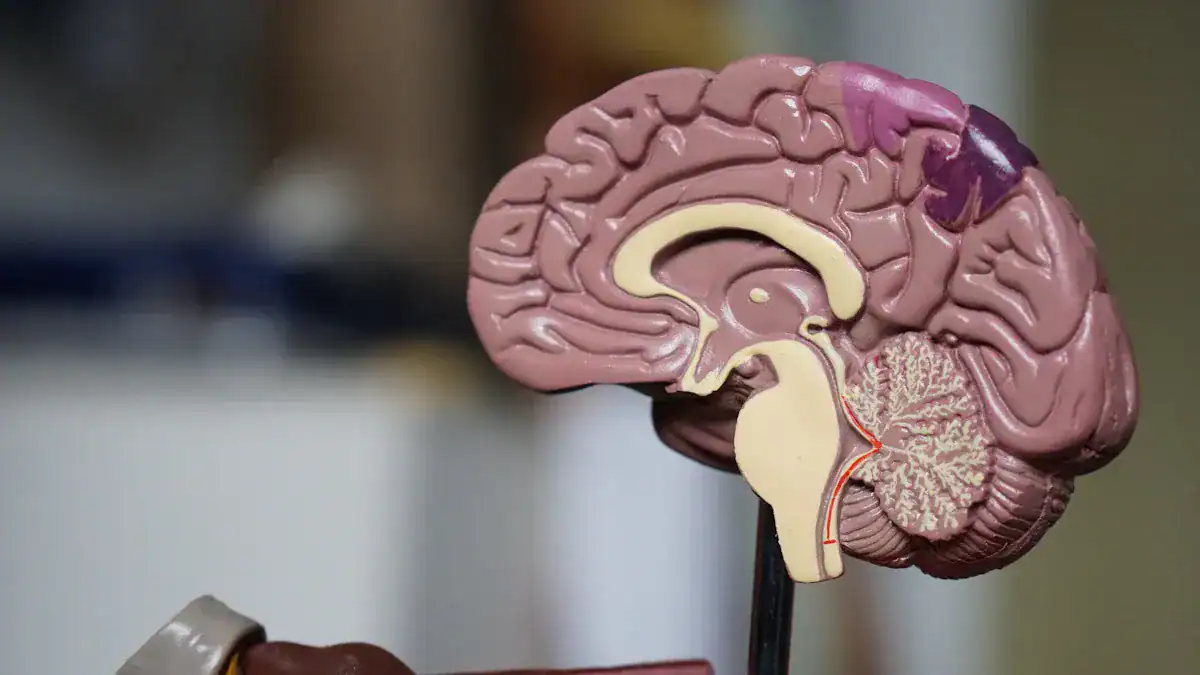
The hippocampus is a small, seahorse-shaped structure deep within the brain. This vital part of the brain plays a central role in how people form new memories. The hippocampus is not a single uniform structure. It contains several distinct subregions. These include cornu ammonis 1 (CA1), CA3, CA4, the dentate gyrus (DG), and the subiculum.
Each subregion has specific features and pathways. For example, the anterior part of the hippocampus helps with global memory, perception, and recalling scenes. The posterior hippocampus supports fine and detailed memory. The head of the hippocampus relates to logical memory, while its body and tail connect with visual memory. The CA1 subregion, a key part of the hippocampus, connects to areas that regulate episodic memory.
Key Memory and Learning Functions
The hippocampus is essential for creating new memories. It acts as a central hub where different types of sensory information come together. Information about “what” an object is and “where” it is located first goes to separate brain areas. The “what” stream involves areas like the perirhinal cortex. The “where” stream includes the parahippocampal cortex.
These streams then meet within the hippocampus. This convergence allows the hippocampus to form complete memories of events and their context. The hippocampus also sends information back to these cortical areas, which helps with memory retrieval. This part of the brain is crucial for the rapid formation of new memories. It also helps consolidate these memories into long-term storage in the neocortex. Studies on patient H.M., who lost his hippocampus, clearly showed its critical role in memory. Without a functioning hippocampus, he could not form new memories.
What Causes Hippocampal Atrophy?
Many factors can lead to the shrinkage of the hippocampus, a condition known as hippocampal atrophy. This condition involves the loss of volume in this crucial brain region. Understanding these causes helps people protect their brain health.
Medical Conditions and Atrophy
Several medical conditions directly contribute to hippocampal atrophy. Alzheimer’s disease is a major cause. Hippocampal atrophy is a key sign of Alzheimer’s disease. It strongly links to poor memory. The hippocampus helps form new memories. Its volume predicts how well people with Alzheimer’s disease remember things after a delay. Cortical gray matter predicts immediate recall, but hippocampal volume is more specific to delayed recall. This shows the hippocampus’s special role in memory consolidation. A failure in delayed memory often points to hippocampal problems in Alzheimer’s disease. Hippocampal volume also connects to how well the brain works in Alzheimer’s disease. Features of the hippocampus seen in scans and how brain parts connect are good signs of Alzheimer’s disease changes.
Other neurodegenerative conditions also show hippocampal atrophy. Chronic migraine, for example, links to hippocampal atrophy. It speeds up brain aging. Studies show that more frequent headaches mean smaller hippocampal volume. This suggests chronic migraine causes structural damage, especially in the right hippocampus.
People with chronic migraine show clear structural changes in their hippocampus compared to those with occasional migraines. Parkinson’s disease also shows hippocampal atrophy, though it is less severe than in Alzheimer’s disease. Patients with Parkinson’s disease dementia have more hippocampal atrophy than those without dementia, but still less than people with Alzheimer’s disease. Hippocampal atrophy is a general sign for many neurodegenerative diseases and different forms of dementia.
Lifestyle Factors Affecting the Brain
Daily habits and life experiences also impact the hippocampus. Chronic stress is a significant factor. Long-term, unpredictable stress can greatly reduce the total volume of the hippocampus. This shrinkage affects all parts of the hippocampus, including the dentate gyrus, CA3, and CA1 regions. It impacts both the upper and lower parts of the hippocampus. For example, stress reduces overall hippocampal volume, dentate gyrus volume, CA3 volume, and CA1 volume. These changes include the shrinking of nerve cell branches, especially in the dentate gyrus and dorsal CA3 areas. There are also fewer inhibitory nerve cells and fewer support cells in the hippocampus. The blood vessels in the hippocampus also decrease.
People with major depression often have smaller hippocampal volume. Those who have more depressive episodes tend to lose more hippocampal volume. Similar shrinkage happens in people who have faced bad life events or taken certain medications. This shows that stress contributes to this volume loss.
Poor diet also harms the hippocampus. Diets high in fat and sugar, like Western diets, reduce the growth of new brain cells. They increase harmful substances and boost inflammation. This leads to more nerve cell damage and problems with learning and memory. These diets also lower levels of brain-derived neurotrophic factor (BDNF), which is vital for brain cell health. How long someone eats high-fat and sugar diets affects how much BDNF decreases and how bad learning and memory problems become.
Even short periods of these diets can cause thinking problems. They can also worsen the effects of mild brain injury on BDNF levels and brain cell connections. Diets rich in sugar and fat, or just sugar, can harm memory linked to the hippocampus in as little as five days. Sugar-only diets increase inflammation and stress in the hippocampus. A human study found that eating fewer healthy foods and more unhealthy foods linked to smaller left hippocampal volumes in older adults. This was the first human study to show these links, matching findings from animal studies. Too much high-fat and high-sugar food can cause insulin resistance, which disrupts how the hippocampus works. This disruption can weaken the hippocampus’s control over eating, possibly leading to obesity.
Age and Genetic Influences
Aging naturally causes some brain volume changes, including in the hippocampus. As people get older, the hippocampus tends to shrink.
Group | Annualized Rate of Hippocampal Volume Loss (Mean ± SD) | Range |
|---|---|---|
Control | -1.9 ± 1.1% | -5.3% to -0.1% |
Control-Stable | -1.7 ± 0.9% | -3.8% to -0.1% |
Control-Decliner | -2.8 ± 1.7% | -5.3% to -0.1% |
This table shows that even healthy older adults experience some hippocampal volume loss each year.
Genetics also play a role in hippocampal atrophy. The ε4 allele of the APOE gene is a known genetic risk factor for Alzheimer’s disease. People who carry this gene have a higher risk of Alzheimer’s disease and its impact on hippocampal volume. Variations in APOE also link to different levels of ApoE in the blood.
This might affect how vulnerable the brain is to nerve damage and hippocampal atrophy. A broader genetic risk for Alzheimer’s disease, especially factors affecting the health of the hippocampus, increases the risk of hippocampal atrophy. Women who carry the APOE-ε4 allele might experience faster hippocampal atrophy.
Recognizing Symptoms of Hippocampal Atrophy

Recognizing the signs of hippocampal atrophy is important. This condition affects the brain’s memory center. People often notice changes in their memory and thinking abilities.
Memory Loss and Cognitive Decline
The most common symptom of hippocampal atrophy is memory loss. This memory loss often shows up as difficulty recalling recent events. Specific types of memory deficits are linked to different parts of the hippocampus. For example, delayed recall scores connect to many hippocampal subfields. These include the molecular layer, GC-DG, CA3, CA4, hippocampal tail, presubiculum, CA1, subiculum, fimbria, and HATA.
Studies show strong links between delayed recall scores and the bilateral presubiculum in people with normal cognition.
In Alzheimer’s disease, the right presubiculum shows this link. Atrophy of the subicular complex, especially the presubiculum, consistently relates to memory decline as Alzheimer’s disease progresses. Volume loss in the presubiculum also correlates with cognitive decline in people with dementia and older adults without stroke. These specific memory deficits highlight the hippocampus’s role in forming and retrieving memories.
Other Neurological Indicators
Hippocampal atrophy can also affect decision-making. Studies on patients with autoimmune limbic encephalitis (ALE), a condition that damages the hippocampus, show interesting effects. These patients process uncertainty well. However, their sensitivity to rewards and physical effort decreases when uncertainty is part of a decision.
This reduced sensitivity to reward in uncertain situations links to how severe the atrophy is. The hippocampus helps integrate uncertainty signals with other value attributes. It does not cause a general disruption of cognitive processing or executive functions.
A positive link exists between total hippocampal volumes and reward sensitivity under uncertainty. Patients with more severe atrophy in the hippocampus show less sensitivity to reward when uncertainty is involved. This link remains strong even after accounting for age and gender.
This shows a direct connection between the extent of hippocampal atrophy and impaired reward sensitivity in uncertain decision-making. The effects of hippocampal atrophy on decision-making are specific. They do not reflect a general problem with cognitive processing. This is because the correlation is with atrophy severity, not general cognitive dysfunction. The task design also minimized general cognitive issues. This suggests a specific deficit in combining uncertainty signals with other value attributes.
Early Warning Signs
Early detection of hippocampal atrophy is crucial. Patients with Mild Cognitive Impairment (MCI), especially the amnestic type, often show memory dysfunction. This type of MCI is an early stage of Alzheimer’s disease. Memory impairment is an early cognitive change in conditions where hippocampal atrophy is common.
Atrophy in specific hippocampal subfields, like the left hippocampus–amygdala transition area (HATA), appears in cognitively normal older individuals.
This happens even before clinical symptoms are recognized. The volume of the presubiculum also strongly correlates with delayed recall scores. This is true for cognitively normal individuals who later develop cognitive impairment and those with Alzheimer’s disease. This highlights its importance in early dementia detection. Recognizing these early memory loss and memory deficits can help people seek help sooner.
Diagnosing and Managing Hippocampal Atrophy
How Hippocampal Atrophy Is Diagnosed
Doctors use several methods to diagnose hippocampal atrophy. Imaging techniques help them see changes in the brain. Automated volumetry is a superior method. It detects Alzheimer’s disease better than manual measurements. Combining baseline hippocampal volume with its rate of change predicts Alzheimer’s disease progression well. This improves accuracy over single measurements. The Scheltens’ scale offers a quick, manual way to measure the hippocampus. It helps screen individuals at risk for Alzheimer’s. Doctors use T1-coronal images for visual assessment.
They apply the Scheltens et al. five-point scale to score the right and left hippocampus. Quantitative assessment uses T1 sequences. Software like FreeSurfer analyzes these scans. It segments hippocampi from 3D T1-weighted MRI scans. This provides precise hippocampal volumetric values. These methods help identify atrophy and serve as a biomarker of memory impairment.
Current Treatment Options
Current treatments for hippocampal atrophy often focus on managing underlying conditions. Researchers investigate acetylcholinesterase inhibitors (AChEIs). These include donepezil and galantamine. Studies assess their ability to reduce hippocampal atrophy rates.
A systematic review looked at AChEIs in patients with neurodegenerative diseases. These diseases lead to cognitive decline. Post-hoc analyses and randomized trials have explored galantamine and donepezil. They examine their effects on brain atrophy and memory deficits. For example, donepezil treatment may slow the progression of hippocampal atrophy in Alzheimer’s patients. These medications aim to help with symptoms and potentially slow the rate of brain changes.
Lifestyle Management Strategies
Non-pharmacological interventions are crucial for managing symptoms related to hippocampal atrophy. These strategies help individuals at risk of dementia and those with early disease. They positively influence risk factors. They also alleviate accompanying symptoms and enhance quality of life.
Apathy, a symptom linked to decreased hippocampal volume, responds well to these treatments. Music therapy is an effective non-pharmacological intervention for apathy. Physical activity also shows positive results for apathy. Multi-domain interventions are more effective than single approaches. The FINGER intervention is an example. It included diet, exercise, cognitive training, and vascular risk monitoring. These interventions should be frequent and intense for best results. They can be used alone or with other treatments. These strategies help manage memory deficits and improve overall well-being.
Preventing Hippocampal Atrophy for Brain Health
People can take many steps to protect their brain and potentially slow hippocampal atrophy. These actions focus on lifestyle choices that support overall brain health.
Nutrition for a Healthy Brain
A healthy diet protects the hippocampus. It supports overall brain health. Dutch dietary guidelines suggest eating plenty of fruits (≥ 150 g/d), vegetables (≥ 150 g/d), and whole grains (≥ 90 g/d). They also recommend fish (≥ 60 g/wk), legumes (≥ 84 g/wk), nuts (≥ 15 g/d), and dairy (≥ 300 g/d).
Limiting sugar-containing beverages (≤ 150 g/d) and high-fat meats (≤ 250 g/wk) is important. The Alternative Healthy Eating Index 2010 (AHEI-2010) also promotes vegetables, fruits, whole grains, nuts, and omega-3 fats.
It advises avoiding sugary drinks, red meat, and trans fats. B vitamins, like B6, B9, and B12, are vital. They help regulate homocysteine. A 24-month study showed B vitamin supplements reduced brain atrophy, including in the hippocampus, for older adults with mild cognitive impairment.
The Power of Physical Activity
Regular physical activity greatly benefits the brain. Daily walking, even low-intensity, links to larger hippocampus volume in older women. This shows that lifestyle activities help. Cardiovascular training can increase hippocampus volume by 2% in older adults. It also improves spatial memory. Aerobic exercise stops age-related decline in hippocampus volume. It can even increase it, improving cognitive function.
Mental Engagement and Cognitive Stimulation
Engaging the mind also protects the brain. Environmental enrichment, with social and sensory stimulation, boosts new neuron growth in the hippocampus. Learning tasks, like spatial learning, also increase new neurons. Cognitive training, even for auditory perception, enhances hippocampal function. This improves cognitive performance. Bilingualism is another factor. It delays dementia symptoms. The hippocampus is plastic and responds to these activities.
Stress Management and Quality Sleep
Managing stress and getting good sleep are crucial. Chronic stress damages the hippocampus. It causes loss of mossy fiber synapses and changes in neurons. Optimal sleep duration is between six and eight hours. This leads to larger brain volume. High sleep quality, with fewer awakenings, links to larger hippocampal volumes. A consistent bedtime, around 11:18 PM, and wake time, around 8:50 AM, also support hippocampal health and cognitive performance.
Hippocampal atrophy involves the shrinking of the brain’s memory center. Understanding what is hippocampal atrophy reveals its causes, symptoms, and the importance of early recognition for cognitive health. Lifestyle choices significantly impact hippocampal health and overall brain function. People can make informed decisions and increase medical awareness to preserve cognitive vitality. Prioritize your brain health. Consult healthcare professionals for concerns about what is hippocampal atrophy or any signs of cognitive decline.