The qt interval measures your heart’s ventricles depolarizing and repolarizing time. The qtc interval corrects this qt for heart rate. A normal qt interval typically falls within specific ranges:
Group | Normal QT Interval (seconds) |
|---|---|
Adult Males | 0.35–0.43 |
Adult Females | 0.35–0.45 |
Your normal qtc is generally less than 450 ms for men and less than 460 ms for women. These qt and qtc values reflect your heart’s electrical recovery. They are fundamental for preventing serious cardiac events. An abnormal qt or qtc can signal conditions like lqts. Monitoring your qt and qtc on an ecg is vital for your crucial heart rhythm and overall heart health. Understanding your qt and qtc helps maintain a healthy heart.
Key Takeaways
The QT interval shows how long your heart’s lower chambers take to reset. The QTc interval adjusts this time for your heart rate.
Normal QTc values are less than 450 ms for men and less than 460 ms for women. These numbers show a healthy heart rhythm.
A prolonged QTc interval means your heart takes too long to reset. This can increase your risk for dangerous heart rhythms.
Many things can affect your QT and QTc intervals. These include your age, gender, medicines, and body chemicals.
Monitoring your QT and QTc is important. It helps doctors find heart problems early and keep your heart healthy.
Understanding the QT Interval
What the QT Interval Represents
The qt interval is a vital measurement on your electrocardiogram. It shows the time your heart’s ventricles need to complete their electrical cycle. This cycle includes both depolarization and repolarization. Depolarization is when your heart muscle contracts. Repolarization is when it relaxes and recharges. The qt interval reflects the duration of the cellular action potential. This action potential is the electrical signal that makes your heart beat. It is an indirect measure of the ventricular action potential and ventricular repolarization. This period also forms the ventricular refractory period. This means your heart cannot respond to another electrical impulse during this time. A normal qt interval ensures your heart functions correctly.
How the QT Interval is Measured
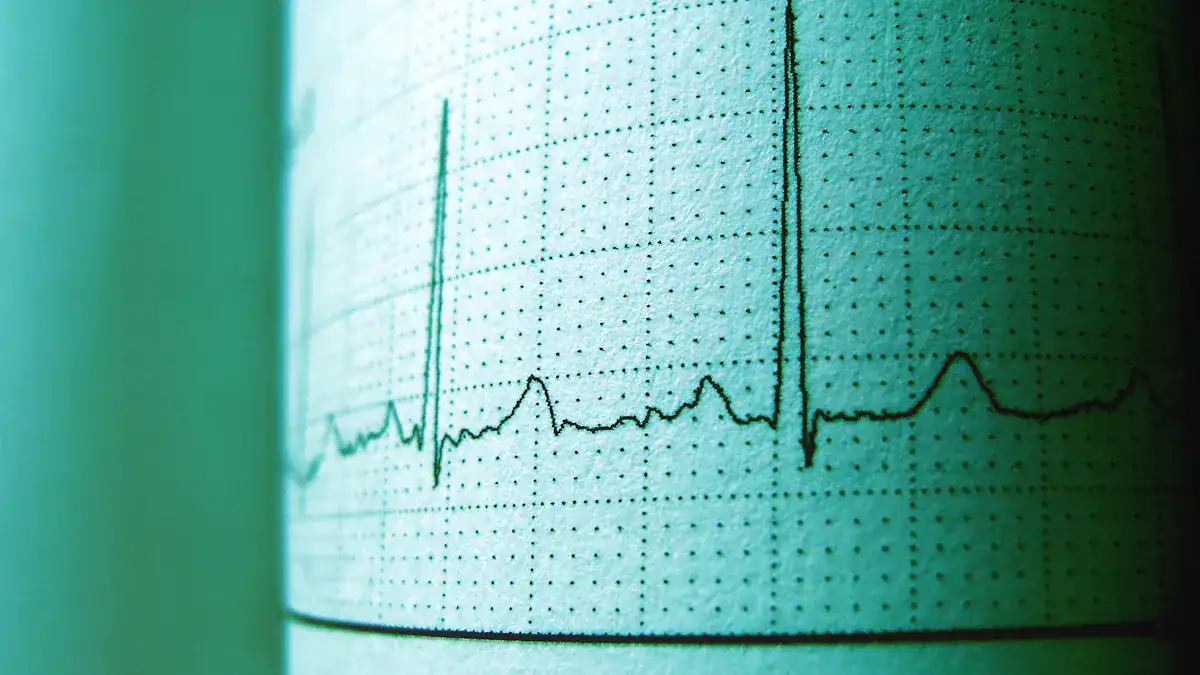
You measure the qt interval from the start of the QRS complex to the end of the T-wave on your electrocardiogram (ecg). The QRS complex shows ventricular depolarization. The T-wave shows ventricular repolarization. Doctors often measure the qt interval in lead II. This lead has a long history in heart measurements. When the T-wave is not clear, you can use the tangent method. This involves drawing a line to the steepest part of the T-wave. The point where this line meets the baseline marks the T-wave’s end. It is important not to include the U-wave in your qt interval measurement. This would create a QU interval, which is different. For accuracy, doctors average the qt interval from several heartbeats. This helps get a reliable reading for your heart.
Why the QT Interval Matters
The qt interval is very important for your heart’s health. An abnormal qt interval can signal serious issues. For example, a prolonged qt interval can indicate conditions like lqts (Long QT Syndrome). This condition increases your risk of dangerous heart rhythms. These rhythms include torsades de pointes, a critical ventricular arrhythmia. A prolonged qtc (corrected qt interval) is also a strong predictor of overall mortality. Studies link prolonged qtc to various unfavorable cardiovascular outcomes. These include arrhythmias, sudden death, and stroke. Conversely, a shortened qtc interval also carries risks. It links to an increased short-term risk of atrial fibrillation. Both prolonged and shortened qt intervals show your heart’s vulnerability. The qt interval acts as a biomarker. It helps doctors assess your overall heart risk. This measurement is a key part of understanding your heart’s electrical activity.
The Corrected QT (QTc) Interval
Why QTc Correction is Necessary
Your raw qt interval measurement changes with your heart rate. A faster heart rate, called tachycardia, makes your qt interval shorter. A slower heart rate, known as bradycardia, causes your qt interval to lengthen. This natural change means you cannot simply compare qt intervals if your heart rate is different. You need a corrected qt interval, or qtc, for an accurate qtc assessment. This correction helps doctors properly evaluate your risk for serious conditions like lqts. Without qtc correction, you might misinterpret your heart’s electrical activity. An accurate qtc value helps prevent dangerous heart rhythms, such as Torsades de Pointes. This is why qtc measurement is crucial for your heart health.
How QTc is Calculated
To get your corrected qt interval, doctors use specific formulas. These formulas adjust your raw qt interval based on your heart rate. Several formulas exist for calculating the qtc. Bazett’s formula is one of the oldest and most common. It calculates qtc by dividing your qt interval by the square root of your RR interval. However, Bazett’s formula can sometimes overcorrect at very fast heart rates or undercorrect at very slow ones. Other formulas offer more reliable qtc measurement across different heart rates. These include Fridericia’s formula, which uses the cube root of the RR interval. The Framingham formula and Hodges’ formula also provide good qtc values. These different methods help ensure you get the most accurate qtc value for your heart.
Normal QTc Values
Knowing your normal qtc values is essential for understanding your heart’s electrical health. These qtc values help doctors identify potential problems like lqts. For adult men, a normal qtc value is typically less than 430 milliseconds (ms). For adult women, a normal qtc value is less than 450 ms. If your qtc value falls between 430-450 ms for men or 450-470 ms for women, it is considered an upper limit. A qtc value above these ranges is prolonged. A prolonged qtc can indicate a higher risk for lqts and other dangerous arrhythmias. Monitoring your qtc values helps you maintain a crucial heart rhythm.
Normal QT and QTc Intervals
Typical Healthy Ranges
You want to know what a normal qt and qtc looks like. Your heart’s electrical activity has specific healthy ranges. A normal qt interval is typically 420 milliseconds (ms) or less when your heart beats at 60 beats per minute (bpm). For your qtc, definitions can vary slightly. Some experts consider a normal qtc value to be 400 ms or less. Others extend this to 410 ms or even 420 ms. Many consider a qtc value of 440 ms or less as normal. Generally, your normal qtc values fall between 350 ms and 440 ms.
Specific upper limits exist for different groups. For adult men, your qtc should ideally be less than 450 ms. For adult women, your qtc should be less than 460 ms. If your qtc values are within 20 ms of these upper limits, doctors consider them “borderline.” A simple rule of thumb helps you quickly check your qt interval. This is the “Half-RR rule.” It suggests your qt interval should be less than half of the preceding R-R interval. This rule works well for heart rates between 65 and 90 bpm. It is easy to use. However, this rule can sometimes show a prolonged qt interval when it is not. It is less reliable if your heart rate is very slow.
Factors Influencing Ranges
Several factors can influence your qt and qtc values. These factors can make your normal ranges shift. Your age and gender play a big role. As you get older, your qtc interval tends to increase. This increase is often more noticeable in men. The variability of your qtc also goes up with age. This means more older people, especially men, show prolonged qtc values.
Differences in qtc between sexes are not present at birth. They appear later in life. Girls show a slightly longer qtc between 1 and 3 months of age. This difference appears again after puberty. These changes relate to your sex hormones. Testosterone seems to shorten your qtc. In women, estrogen and progesterone have a complex interaction that affects your qtc. Beyond age and gender, your body’s electrolyte balance also impacts your qt and qtc. Your potassium intake can affect your qtc. Levels of sodium, calcium, and magnesium in your body also influence your qtc. Keeping these electrolytes balanced helps maintain a healthy qt interval.
When Intervals Are Concerning
You need to know when your qt and qtc values become a concern. A prolonged qtc can signal a risk for serious heart problems like lqts. Doctors consider your qtc prolonged if it is greater than 440 ms for men and greater than 460 ms for women. The 2009 recommendations state a qtc of 450 ms or more for men and 460 ms or more for women is prolonged.
Here is a table showing concerning qtc values:
Category | Men (ms) | Women (ms) |
|---|---|---|
Normal QTc | <450 | <460 |
Prolonged QTc | 450-500 | 460-500 |
Abnormally Prolonged QTc | 450 | 470 |
Clinically Significant QTc | >500 | >500 |
If your qtc value is 500 ms or greater, doctors consider this a marked prolongation. This places you at extreme risk for a dangerous heart rhythm called Torsades de Pointes (TdP). This situation requires immediate medical attention. A qtc of 500 ms or more also indicates illness severity. While it shows a serious condition, it does not always independently predict life-threatening ventricular arrhythmias. Still, such a prolonged qtc means you might have longer hospital stays and higher risks during your recovery. Monitoring your qt and qtc is crucial for your heart health.
Monitoring QT/QTc for Crucial Heart Rhythm
Monitoring your qt and qtc intervals is a key part of maintaining a crucial heart rhythm. These measurements help doctors understand your heart’s electrical stability. They can spot potential problems before they become serious. You need to know what these numbers mean for your heart health.
Identifying Arrhythmia Risk
You monitor your qt interval to lower your risk of dangerous heart arrhythmias. This is especially true for patients in the hospital. Your qtc is considered prolonged if it is greater than 440 ms for men. For women, a qtc greater than 460 ms is prolonged. These numbers are important.
Your qt interval is dynamic. Many things can change it. These include your stress levels, hormones, medicines, and electrolytes. Because of this, checking your ecg only sometimes might miss times when your qt is prolonged.
A prolonged qtc is a big concern. It links to arrhythmias like Torsades de Pointes (TdP). Torsades de Pointes is a life-threatening type of ventricular tachycardia. Research shows that a prolonged qtc can predict death, even in healthy people. For example, if your qtc is 0.60 seconds, you have a 2.76 times higher risk of heart problems. This is compared to someone with a qtc of 0.40 seconds. While a prolonged qtc can come before Torsades de Pointes, it is not the only cause. The arrhythmia also depends on how repolarization spreads across your heart muscle.
Specific arrhythmias are linked to prolonged qt intervals. These include:
Torsades de Pointes
Polymorphic ventricular arrhythmia (TdP is a type of this)
Ventricular fibrillation
Lethal fibrillation
If your baseline qtc is over 500 ms without a clear reason, doctors become very concerned. This level of prolongation can be deadly. It needs immediate medical attention.
The American Heart Association (AHA) has guidelines for qtc monitoring. These depend on your risk for Torsades de Pointes. Risk factors include:
Your Characteristics: Being older, being female, or having existing heart problems. These include heart attacks, weak heart pumping, or slow heartbeats.
Body Conditions: Problems with electrolytes, kidney failure, or liver failure.
Medicine Use: Taking drugs known to prolong the qt interval.
You should have qtc monitoring if:
You start new antiarrhythmic medicines. This is true no matter your TdP risk.
You have TdP risk factors and start non-antiarrhythmic drugs that can cause TdP.
You have severe electrolyte problems. This is true no matter what medicines you take.
Understanding these risks helps in the management of your heart health. It guides the diagnosis and management of qt prolongation.
Medication Effects on QT
Many medicines can affect your qt interval. They can cause qt prolongation. This is a significant concern because it increases your risk of arrhythmias, especially Torsades de Pointes. Knowing the causes of qt prolongation from drugs is vital.
Common types of medicines that prolong the qt interval include:
Antimicrobial Agents: This group includes antibiotics like fluoroquinolones and macrolides. It also includes antifungal agents.
Antipsychotic Agents: Both older (typical) and newer (atypical) antipsychotics can prolong your qt.
These drugs cause qt prolongation in different ways.
Class IA antiarrhythmic drugs: These medicines block channels that let sodium and potassium move in and out of heart cells. Blocking potassium channels usually makes the qt interval longer.
Class III antiarrhythmic drugs: These drugs mainly block potassium channels. This directly causes qt prolongation. This prolongation links to Torsades de Pointes.
Most drug-induced qt prolongation happens because medicines stop potassium from leaving your heart cells. The main cause is blocking the IKr current. This current helps your heart cells reset quickly after each beat. Blocking it makes the reset take longer. This prolongs the qt interval. It raises your risk for arrhythmias like Torsades de Pointes. Some drugs, like arsenic trioxide, block the IKr current indirectly. They make the channels that carry this current not work right. This reduces the current and prolongs your qt. Careful management of your medications is part of preventing long qt syndrome.
Underlying Heart Conditions
Your heart’s health directly impacts your qt and qtc intervals. Several underlying heart conditions can lead to abnormal qt measurements. This can increase your risk of dangerous arrhythmias.
One major cause is congenital long qt syndrome (LQTS). This is a genetic disorder. It affects how your heart’s ion channels work. These channels control the electrical signals in your heart. When they do not work right, your heart’s electrical recovery takes too long. This shows up as a prolonged qtc on your ecg. Diagnosing prolonged qt often involves looking for these genetic conditions.
Other structural heart diseases can also prolong your qt. These include:
Acute ischemia: This happens when your heart muscle does not get enough blood.
Myocarditis: This is inflammation of your heart muscle.
Ventricular hypertrophy: This means your heart’s pumping chambers are too thick.
Electrolyte imbalances also play a role. Low levels of potassium (hypokalemia) or magnesium (hypomagnesemia) can make qt prolongation worse. They also increase your risk of arrhythmias.
Conditions like myocardial ischemia or heart failure can significantly impact your qt and qtc.
Myocardial ischemia, especially a heart attack (acute myocardial infarction, AMI), prolongs your qtc.
Your qtc interval often gets longer during the first week after a heart attack.
A prolonged qtc measured in the emergency room (QTc-ER) can predict future heart problems. These include heart failure in patients with a certain type of heart attack (STEMI).
If your QTc-ER is greater than 445 ms, you might have a weaker heart pump (lower left ventricular ejection fraction). This links to heart failure.
High stress on your heart, common in heart conditions, can also increase your qtc.
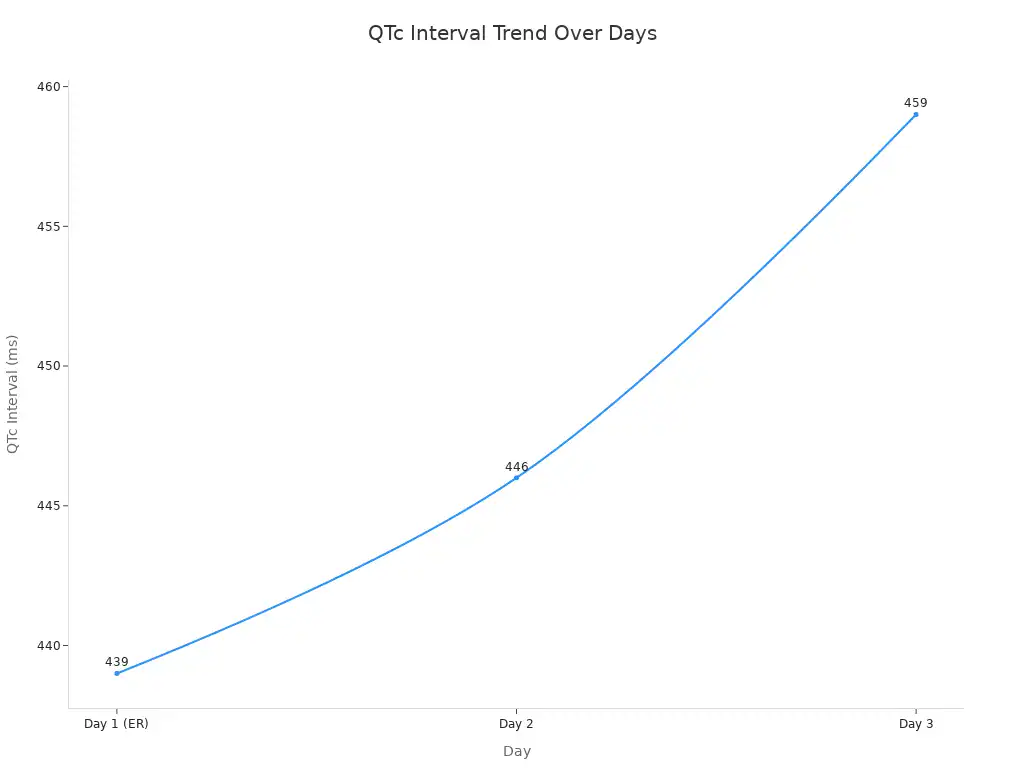
Here is how your qtc might change after a heart attack:
Measurement | Day 1 (ER) | Day 2 | Day 3 |
|---|---|---|---|
QTc Interval (ms) | 439 ± 33 | 446 ± 38 | 459 ± 42 |
A QTc-ER value over 445 ms is a strong sign of future problems. These include heart failure and even death. This shows the importance of monitoring your qt and qtc for a crucial heart rhythm. The diagnosis of these conditions often involves careful ecg analysis.
Normal qt and qtc intervals are vital for your heart’s electrical health. Your qtc should be less than 450ms for men and less than 460ms for women. This normal qt and qtc range indicates healthy heart activity. Heart rate correction is essential for accurate qtc assessment. Understanding and monitoring your qt and qtc values helps assess cardiac risk. It identifies potential issues like arrhythmias, including those linked to lqts. This monitoring maintains your crucial heart rhythm. Abnormal qt or qtc can lead to serious arrhythmias. Always consult healthcare professionals for personalized interpretation of your qt and qtc. Your heart health depends on understanding your qt and qtc.
FAQ
What is the difference between QT and QTc?
The qt interval measures your heart’s electrical recovery. Your heart rate affects the raw qt measurement. The qtc interval corrects this qt for your heart rate. This makes the qtc a more accurate measure. It helps doctors assess your heart’s electrical health. A normal qt and qtc are crucial for your heart. This qt value is important.
Why is a prolonged QTc dangerous?
A prolonged qtc means your heart takes too long to reset. This increases your risk for dangerous arrhythmias. These include Torsades de Pointes. This condition is often linked to long qt syndrome (lqts). A prolonged qtc can lead to sudden cardiac arrest. Your heart needs a normal qtc. This qt prolongation is serious.
How do doctors diagnose long QT syndrome?
Doctors diagnose long qt syndrome using an ecg. They look for a prolonged qt interval, especially the qtc. Genetic testing can confirm the diagnosis. A family history of lqts or sudden death also helps in the diagnostic process. This diagnostic evaluation is crucial for your heart. A proper diagnosis of long qt syndrome is vital. This diagnostic step is key.
What are the causes of long QT syndrome?
Long qt syndrome can be inherited (genetic lqts) or acquired. Acquired causes include certain medications that prolong the qt interval. Electrolyte imbalances, like low potassium, are also causes. Your doctor will investigate these to find the specific causes of your long qt syndrome. This helps manage your qt.
Can medications cause long QT syndrome?
Yes, many medications can cause acquired long qt syndrome. These drugs prolong your qt interval. They affect your heart’s electrical system. This can lead to a prolonged qtc. Always tell your doctor about all medicines you take to avoid qt prolongation. This helps prevent lqts. Your doctor will check your qt.