

You’ll want reliable, comfortable gear: the GVS SPR657 Elipse low‑profile half‑mask for organic gases and dust; the 3M 7502 reusable half facepiece with Cool Flow valve and bayonet cartridge fit; the 3M 6900 full facepiece for wide visibility and impact protection; the 3M P100/OV 65021 combo for P100 filtration plus organic vapor defense; and the 3M R95 8247 disposable with carbon odor relief. Keep going to see fit, maintenance, and selection tips.
| GVS SPR657 Elipse Low Profile Respirator Mask (M/L) |

| Low-Profile Comfort | NIOSH Approval / Certification: NIOSH-approved (TC-84A-9377) | Protection Type: Organic gases, vapors, and dust | Reusable vs Disposable: Reusable facepiece with replaceable filters | VIEW LATEST PRICE | Read Our Analysis |
| 3M 7502 Reusable Half Facepiece Respirator |

| Professional Grade | NIOSH Approval / Certification: NIOSH‑approved when used with approved cartridges/filters | Protection Type: Gases, vapors and particulates (with appropriate cartridges/filters) | Reusable vs Disposable: Reusable half‑facepiece (cartridges/filters replaceable) | VIEW LATEST PRICE | Read Our Analysis |
| 3M 6900 Full Facepiece Reusable Respirator (Large) |
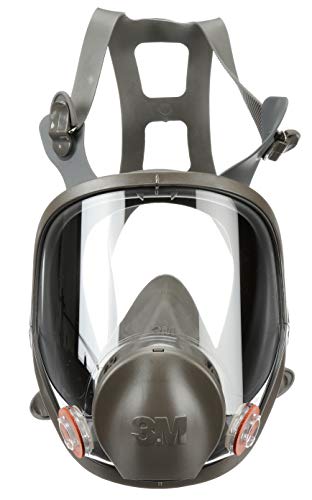
| Full-Face Protection | NIOSH Approval / Certification: NIOSH‑approved when used with approved cartridges/filters | Protection Type: Gases, vapors and particulates (with appropriate cartridges/filters) | Reusable vs Disposable: Reusable full‑facepiece (cartridges/filters replaceable) | VIEW LATEST PRICE | Read Our Analysis |
| 3M P100/OV Reusable Respirator 65021 (Medium) |

| Maximum Filtration | NIOSH Approval / Certification: NIOSH‑approved organic vapor cartridge + P100 filters | Protection Type: Organic vapors + P100 particulate (≥99.97%) | Reusable vs Disposable: Reusable facepiece with replaceable organic vapor/P100 filters | VIEW LATEST PRICE | Read Our Analysis |
| 3M R95 Odor Respirator 8247 (1 Pack) |

| Budget Odor Defense | NIOSH Approval / Certification: NIOSH‑approved (R95) | Protection Type: Solid/liquid aerosols (including oils) + nuisance organic vapors (carbon layer) | Reusable vs Disposable: Disposable respirator (single‑use) | VIEW LATEST PRICE | Read Our Analysis |
More Details on Our Top Picks
GVS SPR657 Elipse Low Profile Respirator Mask (M/L)
Should you need a compact, low‑profile half‑mask that shields you from organic gases, vapors and dust while staying comfortable through long shifts, the GVS SPR657 Elipse (M/L) is a top choice; it’s extremely lightweight, hypoallergenic, and offers low breathing resistance so you can get the job done without tiring. You’ll find it NIOSH‑approved (TC‑84A‑9377) and suited to painting, solvents, automotive, construction, agriculture, shipyard, and repair work. Replaceable filters last up to three years. The soft, odorless, latex‑ and silicone‑free elastomer fits comfortably, the headband adjusts easily, and the low profile preserves your full field of vision with other PPE.
- NIOSH Approval / Certification:NIOSH-approved (TC-84A-9377)
- Protection Type:Organic gases, vapors, and dust
- Reusable vs Disposable:Reusable facepiece with replaceable filters
- Facepiece Material / Seal:Soft thermoplastic elastomer (latex‑ and silicone‑free)
- Intended Applications:Painting, solvents, automotive, construction, agriculture, shipyard, repair
- Filter/Cartridge Compatibility or Type:Replaceable filters (up to 3‑year service life)
- Additional Feature:Extremely low profile
- Additional Feature:Hypoallergenic elastomer material
- Additional Feature:Up to 3‑year filters
3M 7502 Reusable Half Facepiece Respirator
Should you need a durable, comfortable half‑face respirator for industrial chemical work, the 3M 7502 is built for fit and extended wear. You’ll get a soft silicone facepiece, Cool Flow exhalation valve, and bayonet connection for 3M 6000 Series cartridges or approved particle filters. The integrated dropdown suspension with quick latch lets you drop the mask one‑handed without removing a hard hat, and its valve cover directs moisture and debris away. Used with NIOSH‑approved cartridges and a written respiratory program (OSHA 29 CFR 1910.134), it can help protect up to 10× PEL for many industrial tasks.
- NIOSH Approval / Certification:NIOSH‑approved when used with approved cartridges/filters
- Protection Type:Gases, vapors and particulates (with appropriate cartridges/filters)
- Reusable vs Disposable:Reusable half‑facepiece (cartridges/filters replaceable)
- Facepiece Material / Seal:Advanced silicone facepiece
- Intended Applications:Painting, welding, chemical handling, abatement, construction, mining, pharmaceutical, smelting
- Filter/Cartridge Compatibility or Type:3M bayonet connection — compatible with 6000 Series cartridges and 2000/2200/7000/5000 Series filters
- Additional Feature:Silicone facepiece comfort
- Additional Feature:Drop‑down dual‑mode harness
- Additional Feature:3M Cool Flow valve
3M 6900 Full Facepiece Reusable Respirator (Large)
Should you need a durable, full-face respirator that combines wide visibility with chemical protection, the 3M 6900 (Large) is a solid choice — its silicone face seal and large lens make long wear more comfortable while the bayonet connection fits 3M 6000-series cartridges for gases and vapors. You’ll get NIOSH approval whenever you pair it with correct 3M cartridges or filters, and it meets ANSI Z87.1-2010 impact standards. The lightweight, reusable design includes a four-point support system and Cool Flow valve for easier breathing. Use it in industrial tasks—painting, chemical handling, grinding—only with proper instructions, fit, and approved filters.
- NIOSH Approval / Certification:NIOSH‑approved when used with approved cartridges/filters
- Protection Type:Gases, vapors and particulates (with appropriate cartridges/filters)
- Reusable vs Disposable:Reusable full‑facepiece (cartridges/filters replaceable)
- Facepiece Material / Seal:Silicone face seal
- Intended Applications:Painting, welding, chemical handling, sanding, grinding, labs, chemical splash/cleanup, construction
- Filter/Cartridge Compatibility or Type:3M bayonet connection — compatible with 6000 Series cartridges and multiple 3M particulate filters (2000/2200/7000/5000)
- Additional Feature:ANSI Z87.1 impact rated
- Additional Feature:Large lens field‑of‑vision
- Additional Feature:Four‑point harness
3M P100/OV Reusable Respirator 65021 (Medium)
Whenever you work with paints, varnishes, or other organic vapors and need high-efficiency particulate protection, the 3M P100/OV Reusable Respirator 65021 (Medium) delivers a practical combo of P100 filtration and an organic vapor cartridge to block both aerosols and many common solvent fumes. You get NIOSH‑approved P100 filters that remove ≥99.97% of aerosols plus an OV cartridge for certain solvent vapors. The 3M bayonet fits compatible cartridges/filters; the kit includes the facepiece and replaceable OV/P100 pair (#60921). Lightweight, reusable, latex-free, and durable, it uses a flexible faceseal and adjustable straps so you’ll stay comfortable during prolonged tasks.
- NIOSH Approval / Certification:NIOSH‑approved organic vapor cartridge + P100 filters
- Protection Type:Organic vapors + P100 particulate (≥99.97%)
- Reusable vs Disposable:Reusable facepiece with replaceable organic vapor/P100 filters
- Facepiece Material / Seal:Flexible thermoplastic faceseal
- Intended Applications:Stains, varnishes, coatings, sealants, general organic vapor/particulate tasks
- Filter/Cartridge Compatibility or Type:Integrated organic vapor + P100 filters (#60921) — 3M bayonet connection
- Additional Feature:Included OV/P100 filters
- Additional Feature:Made in USA
- Additional Feature:Flexible thermoplastic seal
3M R95 Odor Respirator 8247 (1 Pack)
Pick the 3M R95 Odor Respirator 8247 should you need NIOSH‑approved R95 protection with added carbon odor relief for short‑term exposure to oil aerosols and nuisance organic vapors—ideal for spray painting, varnishing, and similar workshop tasks. You get at least 95% filtration against solids and oils plus a carbon layer that cuts nuisance organic vapors beneath OSHA PELs. The gray, disposable design uses advanced filter media for easier breathing, cushioned nose foam, adjustable noseclip, and two straps with four‑point attachment for a secure fit. It’s lightweight (1.6 oz), sold as a single pack, backed with a limited warranty and solid reviews.
- NIOSH Approval / Certification:NIOSH‑approved (R95)
- Protection Type:Solid/liquid aerosols (including oils) + nuisance organic vapors (carbon layer)
- Reusable vs Disposable:Disposable respirator (single‑use)
- Facepiece Material / Seal:Molded filter media with cushioning nose foam
- Intended Applications:Spray painting, varnish/stains, oil‑based paints, adhesives, certain pesticides, solvents
- Filter/Cartridge Compatibility or Type:R95 filter media with activated carbon layer (disposable)
- Additional Feature:Built‑in carbon layer
- Additional Feature:Cushioning nose foam
- Additional Feature:Disposable two‑strap design
Factors to Consider When Choosing Respirators for Chemical
Upon choosing a respirator for chemical work, you should match the device to the specific hazard type and select a filter with the proper efficiency rating. Check that cartridges are compatible with the respirator model, that you can achieve a reliable fit and seal, and that maintenance needs and lifespan meet your use patterns. These factors together determine how effectively the respirator will protect you on the job.
Hazard Type
Because different chemicals pose different hazards, you need to match respirator type and cartridges/filters to the contaminant class and exposure conditions. Initially, identify the hazard class—gases/vapors, particulates/mists, acids/bases, or specific toxicants—since cartridges and filters target particular classes. Use airborne concentration and standards (PEL, TLV, IDLH) to decide whether a filtering respirator suffices or supplied air/SCBA is required whenever concentrations exceed assigned protection factors. Consider chemical properties—vapor pressure, particle size, solubility—because high vapor pressure favors gas/vapor cartridges while very small aerosols need P-series or HEPA-level filters. Account for irritants and oxygen‑displacing agents and avoid air‑purifying devices in oxygen‑deficient atmospheres. Plan for breakthrough and service life to schedule cartridge/filter changes before protection fails.
Filter Efficiency Rating
Frequently, choosing the right filter efficiency comes down to matching the filter’s tested removal percentage and oil-resistance rating to the particle size, aerosol composition, and exposure level you’ll face. You should pick among common classes—95% (N95), 99% (R99/P99), and 99.97% (P100/HEPA-equivalent)—knowing these percentages reflect laboratory removal under specified aerosol challenges. Note oil-resistance: N means not oil-resistant, R is somewhat, P is strongly resistant; that matters should oil-based aerosols be present. Recall efficiencies cover particulates only; gases and vapors need chemical-specific cartridges or sorbents. Check test standards (NaCl or DOP challenges, flow rates) to confirm ratings match workplace conditions. Finally, balance higher efficiency against increased breathing resistance and cost, choosing the minimum rating that meets regulatory and hazard requirements.
Cartridge Compatibility
Upon selecting respirators for chemical hazards, start off confirming cartridge compatibility so seals, certifications, and functional features all match your facepiece and the contaminants you’ll face. Make sure the facepiece and cartridges share the same connector type (bayonet, threaded) so components mate properly. Verify cartridges and filters are certified for the specific hazard class—organic vapors, acid gases, ammonia, or particulates—and that protection ratings meet or exceed expected concentrations. Check that the assembled facepiece/cartridge pairing is NIOSH‑ or equivalent‑approved for your intended use. Confirm the respirator supports the configuration you need (single, dual, or combined gas+particulate) and that added filters won’t interfere with cartridge function. Follow manufacturer labeling for service life, changeout criteria, and any material compatibility limits.
Fit And Seal
Get the fit right every time—your respirator only protects provided it seals snugly against your face. A proper seal has no gaps; verify it with qualitative (saccharin/bitrex) or quantitative (PortaCount) fit testing for your specific model. Be clean‑shaven where the facepiece contacts skin and try different sizes/styles; facial hair, high cheekbones, glasses, or dental work can break the seal. Re‑test at least annually and whenever your face changes—weight shifts, orthodontics, scarring, or aging can alter fit. Each donning requires a user seal check (positive and negative pressure) because talking, bending, or heavy work can disrupt the seal. Choose a size and facepiece material that keeps breathing resistance low so you won’t adjust the mask and compromise protection.
Maintenance And Lifespan
Although a respirator can look serviceable, its protective life depends on care, storage, and regular inspection, so you ought to treat maintenance as part of your safety routine. Replace filters or cartridges per the manufacturer’s service life or immediately should you notice increased breathing resistance, odors, taste, or irritation—don’t wait for failure. Store respirators and spares in a clean, dry, temperature-controlled place away from sunlight, chemicals, and dust to preserve filter media and seals. Inspect facepiece, straps, valves, and seals before each use; remove any damaged unit from service. Clean and disinfect reusable units after each shift with mild detergent and warm water, then air-dry fully before reassembly. Keep records of change dates, fit tests, and maintenance, and shorten cartridge life should exposures approach protection limits.