You can discover what can you mix with tea tree oil to create effective remedies, as this versatile oil blends well with various essential and carrier oils. For example, combining tea tree oil with citrus oils like lemon creates a fresh scent. Floral fragrances, such as lavender, promote relaxation while enhancing tea tree oil’s potent germ-fighting properties.
Woodsy aromas like cedarwood also form pleasing scents. Mixing tea tree oil boosts its benefits for your health while improving the overall fragrance. Since this strong oil kills germs naturally, knowing what can you mix with tea tree oil helps you customize solutions for many everyday problems, making this helpful oil useful in even more ways.
Blending Tea Tree Oil with Essential Oils

You can make tea tree oil even stronger by mixing it with other essential oils. These mixes give you good smells and help you feel better. Knowing what you can mix with tea tree oil helps you make special solutions for different needs.
Citrus & Herbal Tea Tree Blends
Citrus essential oils add a fresh, happy smell when mixed with tea tree oil. But you need to pick citrus oils carefully so they don’t make your skin sensitive to the sun. This is called phototoxicity. It means the oil can cause sunburn or skin problems if you go into the sun.
You should use Bergamot FCF (which means it’s free of certain chemicals) instead of regular bergamot. Regular bergamot can cause skin problems in the sun. Sweet orange, blood orange, mandarin, tangerine, and tangelo oils are safe or have very little risk. Lime, lemon, and grapefruit oils that have been steam-distilled are also safe choices.
Distilling removes most of the chemicals that cause sun sensitivity. For example, distilled lemon oil has much fewer of these chemicals than regular lemon oil. Neroli, petitgrain, lemon leaf, and yuzu are also safe citrus options. When you mix citrus oils, don’t use too much.
Experts say to use no more than 4 drops of any mix of citrus fruit essential oils for every 30 mL of carrier oil. This rule keeps you safe, because mixing many citrus oils can make your skin more sensitive to the sun.
Herbal essential oils also mix well with tea tree oil. Peppermint oil smells fresh and can help you breathe easier. Rosemary oil has a strong smell that helps you focus. Eucalyptus oil is known for its strong, fresh smell and helps with breathing. A mix of tea tree oil and lemongrass fights germs very well.
This mix works great in natural deodorants. Tea tree oil is the main germ-fighting part, stopping bad smells. Lemongrass helps control smell all day and gives a fresh scent. This mix shows how putting essential oils together can make a better solution.
Floral & Woody Tea Tree Blends
Floral essential oils make the strong, medicine-like smell of tea tree oil softer. They also add their own helpful qualities. Lavender oil is a popular choice. It helps with swelling, protects your body, and fights germs.
These things are good for skin problems like acne. While lavender alone doesn’t have much proof for acne, mixing it with things that are known to work, like tea tree oil, shows better results. A study looked at a mix with 3% tea tree oil and 2% lavender oil in jojoba oil.
People in the study put this mix on their skin for four weeks. The study found that red, swollen acne spots got much better.
It also showed that their skin made much less oil. Plus, the mix greatly lowered the amount of P. acnes bacteria on the skin. This study shows that using a tea tree oil and lavender mix can help with acne.
Woody essential oils give a calm, earthy smell. Cedarwood oil, for example, has a warm, relaxing smell. It mixes well with tea tree oil, making a balanced scent. Sandalwood and frankincense are other woody choices. They make the mix smell deeper and have their own helpful qualities.
These woody smells can help hide the sometimes strong smell of pure tea tree oil. This makes the mix nicer to use on your skin or in a diffuser. Mixing tea tree oil with these essential oils lets you choose both the smell and the helpful effects.
Diluting Tea Tree Oil with Carrier Oils
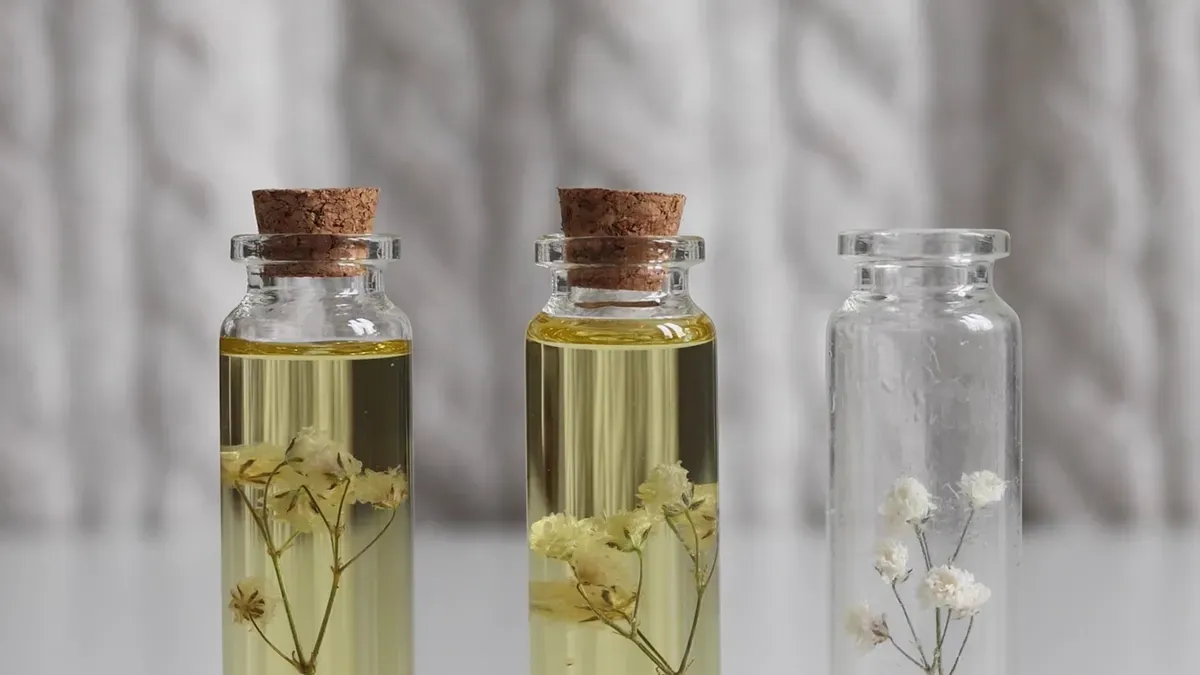
You must dilute tea tree oil before applying it to your skin. This is very important because pure tea tree oil is strong. It can cause irritation if you use it directly. Mixing it with a carrier oil makes it safe for your skin. A carrier oil helps spread the tea tree oil evenly. It also helps the skin absorb the tea tree oil. Knowing what can you mix with tea tree oil safely is key for effective use.
Popular Carrier Oils
Many types of carrier oil work well with tea tree oil. These oils help deliver the benefits of tea tree oil to your skin. Each carrier oil has its own unique properties.
Here are some popular choices:
| Oil | Comedogenic rating | Notes |
|---|---|---|
| Coconut oil | 4 | High in lauric acid; recommended for very dry skin/body use |
| Sunflower seed oil | 0–2 | High in linoleic acid; suitable for most skin types |
| Jojoba oil | 2 | High in eicosenoic acid; suitable for most skin types, including oily/acne-prone |
| Mineral oil | 0 | No fatty-acid note; suitable for most skin types |
| Sweet almond oil | 2 | High in oleic acid; suitable for dry, sensitive, acne-prone skin |
| Argan oil | 0 | High in oleic and linoleic acid; suitable for most skin types |
| Sesame seed oil | 3 | High in linoleic and oleic acid; suitable for dry/irritated skin |
Coconut oil is a common choice, especially for very dry skin or body use. However, it has a comedogenic rating of 4. This means it might clog pores for some people. Sunflower seed oil and argan oil have low comedogenic ratings, often 0-2. They suit most skin types. Jojoba oil is also a good option for many skin types, including oily or acne-prone skin.
It has a rating of 2. Sweet almond oil is gentle and works well for dry, sensitive, or acne-prone skin. Mineral oil has a rating of 0, making it very unlikely to clog pores. Sesame seed oil is good for dry or irritated skin.
Some carrier oils also offer better stability for your blends. Jojoba oil has superior oxidative stability. It can last two years or more. This makes it a very stable base for diluting tea tree oil. Sweet almond oil also has good oxidative stability. It lasts about 12 months with proper storage. Its smooth glide makes it good for massage blends.
Safe Dilution & Use
You must dilute tea tree oil properly for safe use. A general guideline is to mix 3-5 drops of tea tree oil per tablespoon of carrier oil. This creates a safe concentration for most uses.
For facial application, dermatologists recommend specific dilution ratios to prevent irritation. You can see these ratios in the table below:
| Tea tree oil drops | Coconut/carrier oil drops | Approximate percentage of tea tree oil |
|---|---|---|
| 1 | 12 | ~7.7% |
| 2 | 12 | ~14.3% |
This means you would mix 1 to 2 drops of tea tree oil with 12 drops of a carrier oil like coconut oil or jojoba oil. This dilution is often recommended for treating acne and other skin concerns. Always do a patch test first. Apply a small amount of the diluted oil to a hidden skin area. Wait 24 hours to check for any reaction.
Regulatory bodies also provide guidelines for tea tree oil in finished products. For leave-on skin products, like face cream, the maximum safe concentration is 0.1%. Rinse-off products can have higher concentrations. For example, face wash and shower gel can contain up to 1.0% tea tree oil. Shampoo can have up to 2.0%. These limits ensure safety for consumers.
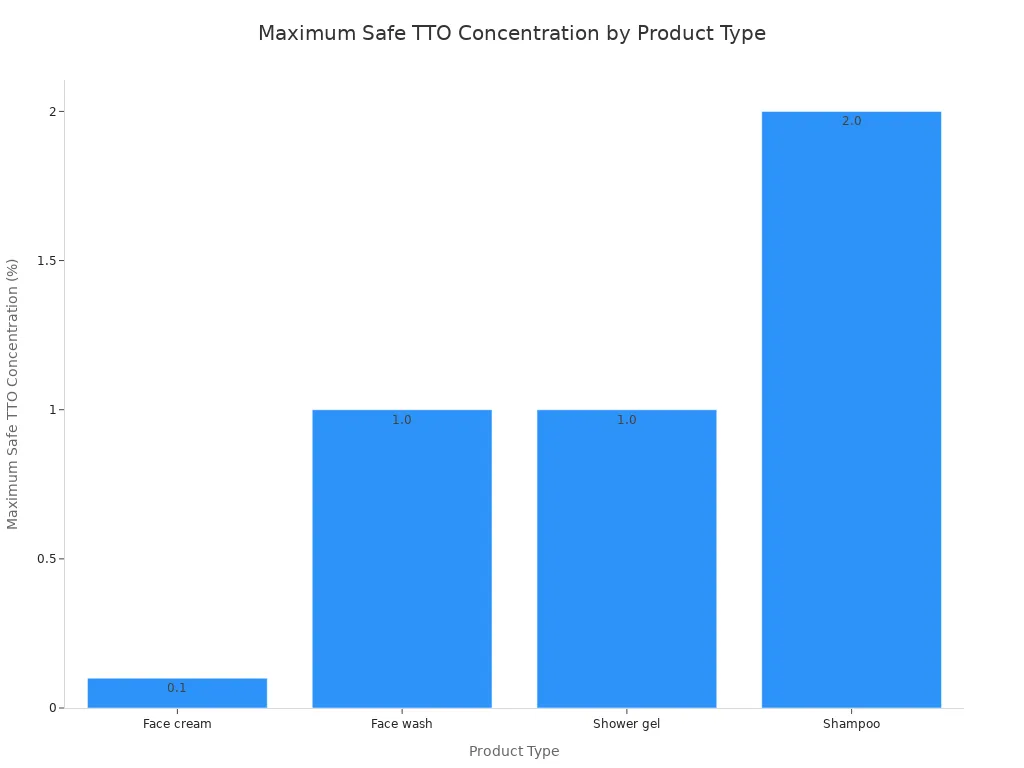
These recommendations come from safety assessments. They help ensure products are safe for you. Using diluted tea tree oil can help with various skin conditions. Its antibacterial and anti-inflammatory properties make it useful for treating acne. Always follow dilution guidelines for safe and effective results.
Tea Tree Oil Blends for Home & Body
You can create many useful blends with tea tree oil for both personal care and household cleaning. These practical recipes help you harness the natural power of tea tree oil for various needs. Knowing what you can mix with tea tree oil allows you to make effective solutions.
Recipes for Skin & Hair Care
You can use tea tree oil to improve your hair and skin health. For example, a 5% tea tree oil shampoo effectively reduces dandruff. A clinical trial showed that using a 5% tea tree oil shampoo daily for four weeks led to a 41% improvement in dandruff severity.
It also significantly improved itchiness and greasiness. You can buy a commercial shampoo with 5% tea tree oil. Alternatively, you can add 5 to 10 drops of tea tree oil to your regular shampoo bottle and shake it well. This simple addition helps control dandruff.
Tea tree oil also helps with certain skin conditions, like mild scalp folliculitis. A dermatologist-recommended recipe for a scalp serum involves diluting tea tree oil in a carrier oil. You can mix 1 drop of tea tree oil with half a teaspoon of jojoba or coconut oil for a 1% dilution. For a 2% dilution, use 2 drops of tea tree oil with half a teaspoon of carrier oil.
Apply this mixture to your dry scalp, leave it on for 5 to 10 minutes, then shampoo thoroughly. Start by using it 2 to 3 times per week. Stop if you notice any irritation. Always perform a patch test on your inner forearm for three days before using it widely. This method can help with mild scalp breakouts.
Blends for Home & Air
You can make powerful cleaning solutions for your home using tea tree oil. A concentrated all-purpose peppermint cleaner combines tea tree oil, distilled white vinegar, and peppermint essential oil.
First, heat 1 cup of distilled white vinegar until it boils. Stir in a quarter cup of washing soda until it dissolves. Then, add a quarter cup of vodka, 3 drops of liquid castile soap, 4 drops of tea tree oil, and 8 drops of peppermint essential oil. Pour this mixture into a Mason jar and shake it well. When you clean, dilute 1 part cleaner with 4 parts water in a spray bottle. Shake it and wipe surfaces with a microfiber cloth.
Tea tree oil also helps prevent mold. Its antifungal properties are strong. A concentration of 0.06% to 0.12% tea tree oil can inhibit fungi like Aspergillus niger and Penicillium species. To kill fungi, you need a higher concentration, typically 2% to 8%. This range is the minimum fungicidal concentration.
You can also make a room spray to reduce airborne bacteria. A recipe suggests using 6 drops of tea tree oil in a 4 oz bottle that contains 2 oz of water, witch hazel, and vodka. Eucalyptus and tea tree oils are known to reduce airborne bacteria.
You now understand what can you mix with tea tree oil. This powerful oil offers great versatility. You can blend tea tree oil with various essential oils. These include citrus, floral, and woody scents. You also learned to mix it with a carrier oil for safe skin use. Always dilute tea tree oil properly.
This prevents irritation. You must also perform a patch test. Apply a small amount of your blend to your inner forearm. Cover it with a bandage. Wait 24 to 48 hours. Check for any redness or itching. If you see no reaction, you can use the blend. Experiment with different combinations. Find what works best for your needs. Tea tree oil provides many natural solutions.
FAQ
What are the main benefits of blending tea tree oil?
Blending tea tree oil enhances its therapeutic effects. You get pleasant aromas. It helps customize solutions for skin, hair, and home. Blending also makes the strong scent of pure tea tree oil more enjoyable.
What essential oils mix well with tea tree oil?
You can mix tea tree oil with citrus oils like sweet orange for fresh scents. Floral oils such as lavender soften its aroma and add calming properties. Herbal oils like peppermint and eucalyptus boost its cleansing power. Woody oils such as cedarwood offer earthy notes.
What oils should you use to dilute tea tree oil?
You should use a carrier oil like jojoba, sweet almond, or sunflower oil. These oils dilute tea tree oil safely for skin application. They help spread the tea tree oil evenly. They also aid skin absorption.
What precautions should you take when using tea tree oil blends?
Always dilute tea tree oil before skin use. Perform a patch test first to check for irritation. Avoid contact with eyes and internal use. Follow recommended dilution ratios for safety.