The large intestine plays a crucial role in the digestive system and overall health. Understanding the anatomy of the large intestine is important for health awareness. Many common conditions, such as Irritable Bowel Syndrome (IBS) or diverticulitis, affect this vital bowel segment.
A colon diagram serves as a vital tool for visualizing and comprehending this complex organ. It helps us see how this important bowel works. Serious issues with the bowel can lead to various health problems.
Key Takeaways
The large intestine is a key part of your digestive system. It absorbs water and salts. It turns liquid waste into solid waste.
A colon diagram helps you see the different parts of the large intestine. These parts include the cecum, ascending colon, transverse colon, descending colon, sigmoid colon, and rectum.
Special features like taeniae coli and haustra help the large intestine work. They move waste and absorb water more effectively.
The large intestine wall has four layers. Each layer has a specific job. These layers help the large intestine function properly.
Large Intestine Overview
What is the Large Intestine?
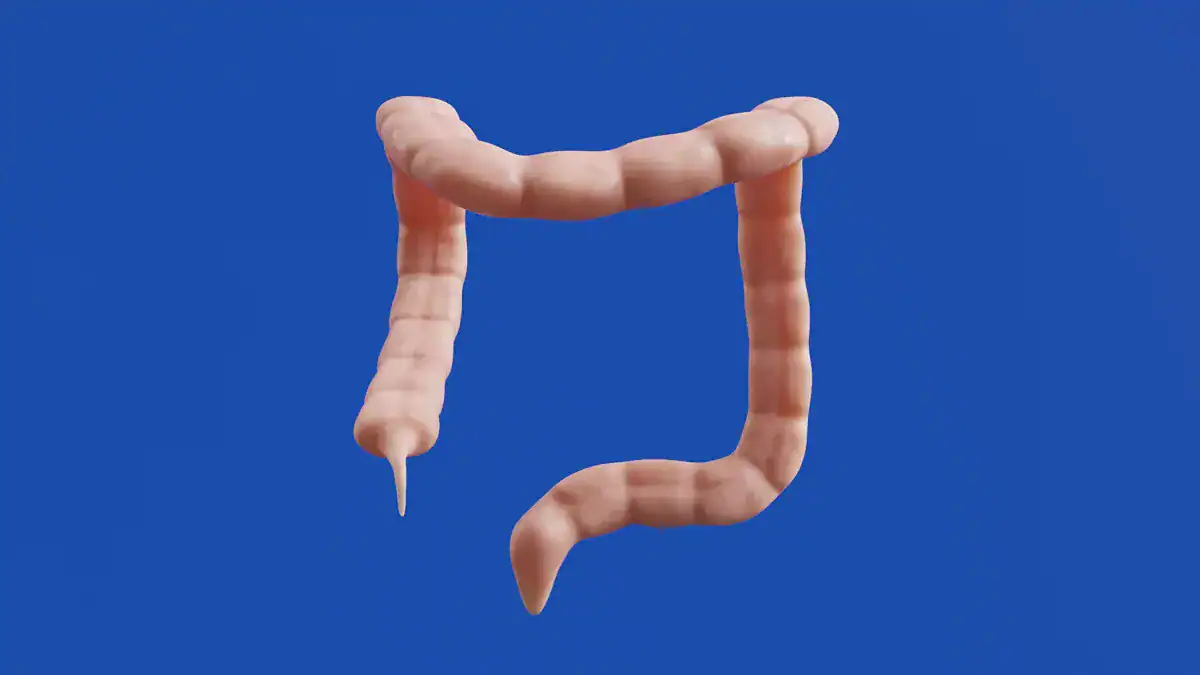
The large intestine represents the final section of the gastrointestinal tract. People also call it the large bowel or colon. This vital bowel plays a critical role in digestion. It measures approximately 5 feet in length in most adults. Its diameter is about 2.5 inches. This makes it wider than the small bowel. The large intestine processes waste material before the body eliminates it.
Primary Functions
The large intestine performs several essential tasks. These tasks are crucial for overall health. The primary function of the large intestine involves processing waste.
It receives liquid food waste from the small intestine.
It absorbs water and salts from this liquid waste.
The large bowel turns liquid waste into solid waste, also known as poop.
It uses layers of tissue and muscles to move this poop out of the body.
This bowel also houses an extensive microflora. These bacteria are essential for survival.
Normal flora prevents bad bacteria from multiplying in the bowel.
These bacteria also help break down fiber, which prevents constipation.
They secrete vitamin K and vitamin B for absorption.
Large vs. Small Intestine
Understanding the differences between large and small intestine helps clarify their roles. The two parts of the bowel have distinct characteristics.
Feature | Small Intestine | Large Intestine |
|---|---|---|
Length | Around 4.5 to 7 meters | Around 1.5 meters |
Diameter | Around 3.5 to 4.5 cm (narrower) | Around 4 to 6 cm (wider) |
Internal Surface | Contains folds, villi, and microvilli | Lacks villi and has a smoother internal surface |
Muscular Bands | Longitudinal muscles in circular layers | Longitudinal muscles arranged in three bands (Teniae Coli) |
Components | Duodenum, Jejunum, Ileum | Cecum, Colon, Rectum, Anal Canal |
These differences between large and small intestine highlight their specialized functions within the digestive system. The large bowel focuses on water absorption and waste formation.
Exploring the Colon Diagram: Key Sections
A colon diagram visually represents the different parts of the large intestine. This section details these main regions. Understanding these parts helps one grasp the journey of waste through the large bowel.
Cecum and Appendix
The cecum marks the beginning of the large intestine. It is a pouch within the peritoneum. This part of the bowel is typically located on the right side of the body. It joins the appendix. The cecum receives chyme from the ileum. It connects to the ascending colon. The ileocecal valve (ICV) separates it from the ileum. The cecocolic junction separates it from the colon.
The cecum is the most proximal part of the large intestine. It sits in the right iliac fossa of the abdomen. It lies inferior to the ileocecal junction. This blind pouch has the vermiform appendix at its tip. It marks the start of the large bowel, just above the ileocecal valve.
In humans, the cecum absorbs salts and electrolytes. It also lubricates solid waste before it moves into the rest of the large intestine. The cecum primarily functions in microbial fermentation. It stores ingesta. It contains diverse microbiota. These bacteria help detoxify compounds and produce essential vitamins.
Ascending Colon
The ascending colon travels upwards on the right side of the abdomen. It begins at the cecum. This section of the large bowel moves waste against gravity. The ascending colon is typically 15 cm in length. It is about 8 inches long. Its average inner diameter is 6.6 cm, ranging from 6.0-7.0 cm. It measures about 2.5 inches in diameter.
Transverse Colon
The transverse colon stretches across the upper abdomen. It runs from right to left. This section is the longest and most mobile part of the colon. It starts at the right colic flexure, also known as the hepatic flexure.
Here, it connects to the ascending colon. The colon turns 90 degrees after meeting the right lobe of the liver. It concludes at the left colic flexure, also called the splenic flexure. Here, it curves sharply beneath the spleen. It then joins the descending colon. It makes another 90-degree turn downwards near the spleen.
Descending Colon
The descending colon travels downwards on the left side of the abdomen. It extends from the left colic flexure. This part of the large bowel stores digested food remains. It holds them before they move into the rest of the colon and toward the rectum. Feces also form in the descending colon. They accumulate here before a bowel movement.
Sigmoid Colon
The sigmoid colon is the final S-shaped segment of the colon. It connects the descending colon to the rectum. This distinctive ‘S’ shape allows it to fit within the pelvic cavity. It helps store and move feces. The sigmoid colon forms a loop. It averages about 35–40 centimeters (14–16 inches) in length. Its length can range from 40 to 45 cm among individuals. A colon diagram clearly shows this unique curve.
Rectum and Anus
The rectum is the final segment of the large intestine. It connects the sigmoid colon to the anal canal. It begins at S3, continuing from the sigmoid colon. It lacks taenia coli, haustra, and omental appendices. This distinguishes it from the colon. It measures approximately 12 to 16 cm in length. It plays a crucial role in water and electrolyte absorption from stool. It is integral to the defecation process and fecal continence.
The rectum features two main flexures: the sacral flexure and the anorectal flexure. The sacral flexure follows the sacrum. The anorectal flexure forms from the puborectalis muscle. This muscle is crucial for continence. Three lateral flexures are also present. These form from internal transverse folds. The ampulla is the final segment. It relaxes to store feces before defecation.
It is continuous with the anal canal. Stretch receptors in the rectal ampulla detect stool. They trigger the urge to defecate. They allow for voluntary control over initiation or delay. Contraction of the rectum and increased intra-abdominal pressure aid in defecation. The rectum extends from the sigmoid colon at the third sacral vertebra.
It follows the sacral curvature to the anal canal. The anorectal junction is typically located 2 to 3 cm in front of and just below the tip of the coccyx. The rectum is narrowest at its junction with the sigmoid. It expands into the rectal ampulla distally. Unlike the sigmoid, it lacks sacculations, appendices epiploicae, and mesentery. The teniae coli converge and blend with the outer muscular layer about 5 to 6 cm above the rectosigmoid junction. The luminal surface has two longitudinal and three prominent, permanent transverse folds, known as rectal valves. These parts of the large intestine work together for waste elimination.
Detailed Anatomy of the Large Intestine
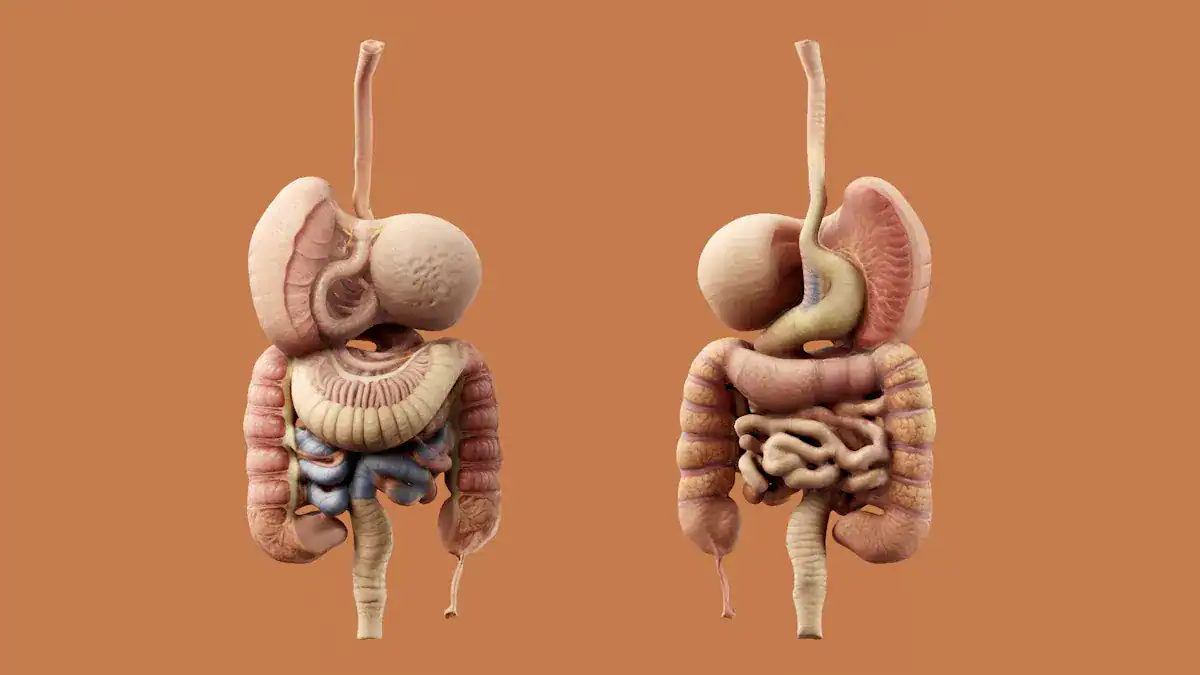
The large intestine has several unique anatomical features. These features distinguish it from other parts of the digestive system. They also contribute to its specific functions. Understanding these details helps one grasp the complex anatomy of the large intestine.
Taeniae Coli
Taeniae coli are distinctive features of the large intestine. They are three distinct bands of longitudinal muscle fibers. Each band measures approximately 0.2 inches wide. These bands appear on the surface of the large intestine. They begin at the base of the appendix.
They extend from the cecum to the rectum. The contraction of the taeniae coli puts pressure on the wall of the large bowel. This pressure leads to the formation of a series of pouches.
These pouches are known as haustra. Taeniae coli are responsible for creating these haustra. The contractions within these haustra are called haustral contractions. These contractions are slow, segmenting movements. They further mix chyme. These contractions also bring the chyme into close contact with the mucosal layer of the large intestine. This maximizes the absorption of water and electrolytes.
Haustra
Haustra are pouch-like structures in the colon. Unique muscle arrangements form them. They create segmented regions. These regions facilitate more effective mixing and movement of intestinal contents. These pouches slow down the movement of contents.
This enhances water absorption. It also promotes thorough breakdown of waste material. Haustral contractions retain contents longer in specific areas. This maximizes nutrient extraction. Haustral contractions are slow, uncoordinated movements. They occur approximately every 25 minutes. A haustrum distends as it fills with chyme. This distension stimulates muscles to contract. The contraction pushes the contents to the next haustrum.
Epiploic Appendages
Epiploic appendages are small, fat-filled pouches. They are made of visceral peritoneum. They hang from the external surface of the colon. Some also hang from parts of the small intestine. These appendages are small, physiological peritoneal fat pouches.
They are 1–2 cm thick and 0.5–5 cm long. Vascular stalks attach them to the external surface of the colon. Epiploic appendages consist of pedunculated fat tissue. They attach to the colonic surface. They are common on the taeniae of the cecum and sigmoid colon. Their length varies from 0.5–5 cm. Their exact functional role is not well-understood.
Proposed theories suggest they act as cushions for mechanical protection. They may also store blood supply during peristalsis and colonic vessel compression. They could also store fat during periods of decreased caloric intake.
They might also provide immune protection and defensive mechanisms against inflammation. This is similar to the greater omentum. They are also described as protective padding. They are potentially involved in immune response and fat storage. They may also play a role in colonic absorption.
Ileocecal Valve
The ileocecal valve is a distinct feature of the small intestine. It operates independently. This valve is a sphincter muscle. It separates the small and large intestine. Its critical function is to limit the reflux of colonic contents back into the ileum. The ileocecal valve functions as a sphincter.
It regulates the passage of digestive contents from the ileum into the ascending colon. It consists of smooth, circular muscle and mucosal tissue. This is similar to other digestive sphincters. Anatomically, it has two mucosal folds. These folds create a one-way passage.
This allows material to move from the small intestine to the large bowel. It prevents backflow. A thickened ring of muscle fibers reinforces this structure at the ileocecal junction. This enhances its ability to control intestinal flow. It also prevents bacterial overgrowth in the small intestine.
The ileocecal valve’s main roles are to separate the contents of the ileum and colon. This minimizes bacterial colonization in the small intestine. It also regulates the emptying of ileal contents into the colon. This regulation helps prevent malabsorption and diarrhea. The valve’s action triggers by distention.
It relaxes to allow passage from the ileum to the colon when the small intestine is distended. It increases its tone and closes to prevent backflow when the colon is distended. It also acts as a sphincter. This prevents contents from passing too quickly into the cecum.
Colon Wall Layers
The large intestine wall has four distinct layers. Each layer plays a specific role in the function of this vital organ. Understanding these layers helps explain how the large bowel works.
Mucosa
The mucosa is the innermost layer of the large intestine. It directly contacts the contents moving through the bowel. This layer is crucial for absorption and protection. It contains several types of cells:
Absorptive columnar cells take in water and electrolytes. They line the surface and are common in the right and transverse colon.
Goblet cells produce mucus. This mucus lubricates the passage of waste. These cells are common in the left colon.
Enteroendocrine cells, Paneth cells, and Stem cells are found at the base of crypts.
The lamina propria, a part of the mucosa, contains supportive cells and various inflammatory cells.
Submucosa
The submucosa sits just beneath the mucosa. This layer consists of connective tissue. It holds blood vessels, lymphatic vessels, and nerves. These structures support the mucosa and help regulate its functions.
Muscularis Propria
The muscularis propria is the muscle layer. It is responsible for the movements of the large intestine. This layer has two distinct parts:
The inner circular layer has smooth muscle fibers. These fibers wrap around the digestive tract.
The outer longitudinal layer has smooth muscle fibers that run along the length of the tract. In the colon, these longitudinal muscles gather into three distinct bands. These bands are called the taeniae coli. They help move waste through the bowel.
Serosa
The serosa is the outermost layer of the large intestine. It is a smooth, protective covering. This layer consists of a simple squamous epithelium and a thin layer of connective tissue. It is part of the visceral peritoneum.
The serosa covers parts of the large intestine that are within the abdominal cavity, like the transverse and sigmoid colon. Its main job is to reduce friction between organs. Other parts, like the ascending and descending colon, have an adventitia. This is a fibrous connective tissue layer that anchors them to surrounding structures.
This blog explored the large intestine, detailing its key sections and functions. A colon diagram helps visualize this vital bowel. It shows how each part contributes to overall digestive health. The large intestine plays an indispensable role in digestion, water absorption, and waste elimination. Understanding this complex bowel promotes appreciation for digestive health. A clear colon diagram makes learning about this essential bowel easier.