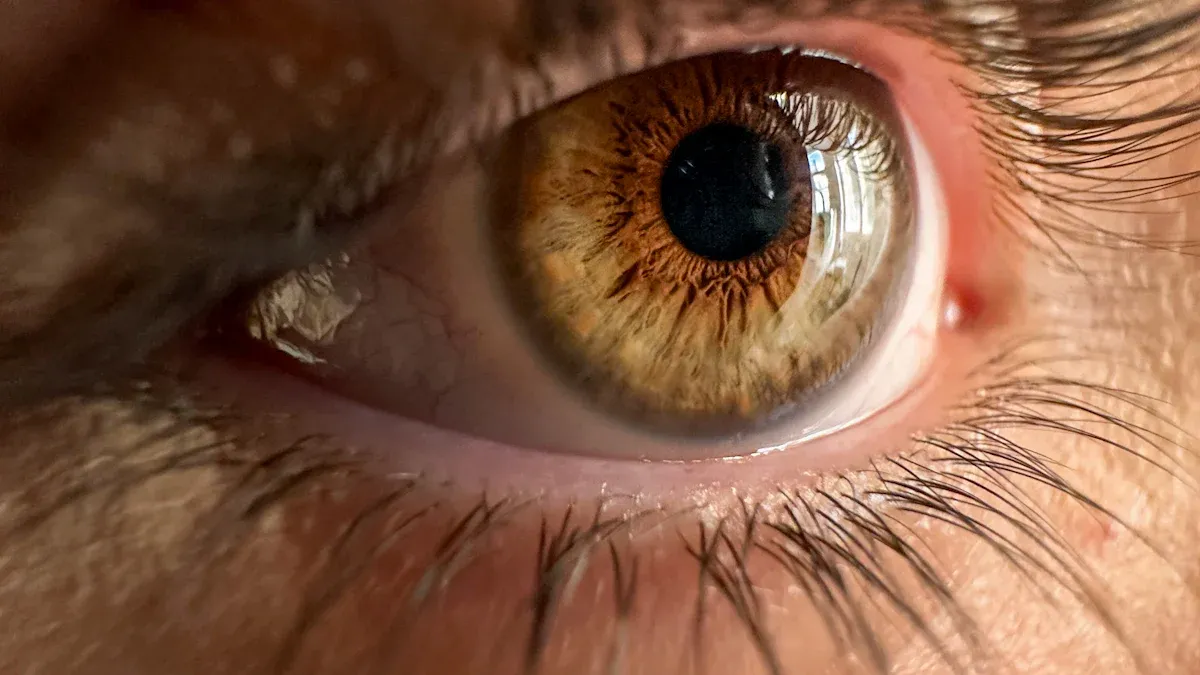
Can hypothyroidism affect your eyes? Many people overlook this connection, but a significant and crucial link exists. An underactive thyroid can manifest in various hypothyroidism symptoms affecting the eye, leading to various eye problems. Patients often report dry eyes, blurry vision, and periorbital swelling around the eye. Some also experience eyelid abnormalities and loss of eyebrow or eyelash hairs.
The tear duct is a target organ for thyroid hormones. A deficiency in these hormones can predispose individuals with hypothyroidism to dry eyes. Recognizing these symptoms is important for early diagnosis and management of thyroid health. This helps protect your overall eye well-being.
Key Takeaways
Hypothyroidism can cause many eye problems. These include dry eyes, puffy eyelids, and eyebrow hair loss.
Low thyroid hormones directly affect tear production. This leads to dry eye syndrome.
Thyroid Eye Disease (TED) is different from direct hypothyroidism eye issues. TED is an autoimmune problem that causes bulging eyes and double vision.
Early diagnosis and treatment of thyroid problems are important. This helps protect your eye health.
See a doctor if you have ongoing eye discomfort. This could be a sign of a thyroid issue.
Direct Eye Problems from Hypothyroidism
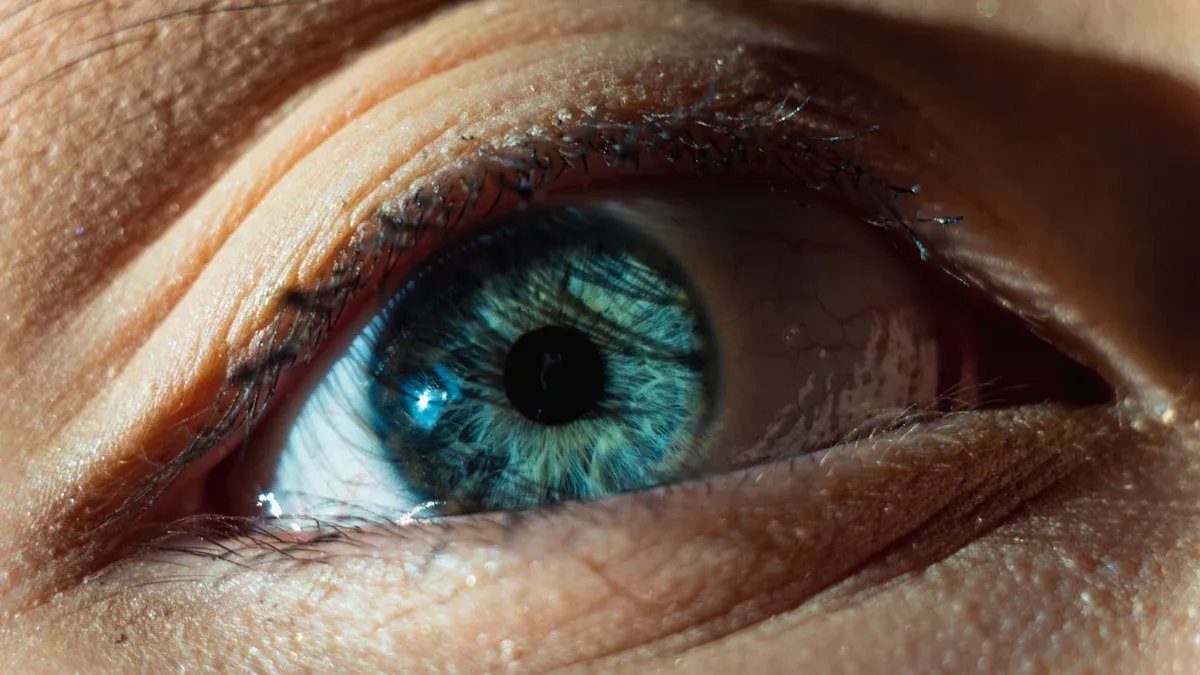
Low thyroid hormone levels directly cause or worsen several eye issues. These problems stem from hormonal imbalances and metabolic changes impacting ocular health. They are distinct from autoimmune Thyroid Eye Disease.
Dry Eye Syndrome and Tear Production
Many individuals with an underactive thyroid experience dry eye syndrome. This condition occurs when the eyes do not produce enough tears, or the tears evaporate too quickly.
Patients with Hashimoto’s thyroiditis, a common cause of hypothyroidism, often report more severe dry eye symptoms compared to others. Their OSDI scores, which measure dry eye symptoms, are significantly higher. Tests also show lower tear production and faster tear break-up times in these patients.
Several mechanisms link hypothyroidism to decreased tear production.
Autoantibodies can target the lacrimal gland, which produces tears. This damage reduces tear output.
Changes in tear composition also contribute to dry eye syndrome. Tears may have less mucin, less water, and more inflammatory factors. Abnormal proteins and lipid secretion further reduce tear quality.
A decrease in conjunctival goblet cells, which produce mucin, leads to less mucin in tears. This affects the tear film’s stability.
Ocular inflammation, often mediated by T lymphocytes, plays a critical role in reducing aqueous tear production.
Abnormalities in the tear film’s protein composition indicate lacrimal gland dysfunction.
Damage to the ocular surface in thyroid disorders links to reduced tear production due to lacrimal gland involvement.
Myxedematous deposits can surround nerves, causing facial neuropathy. This can lead to decreased tear production. Reduced blood flow to the inner ear, affecting the labyrinthine artery, also contributes to facial neuropathy and reduced tear production. These factors collectively contribute to the prevalence and severity of dry eye syndrome in hypothyroid patients.
Periorbital Swelling and Puffy Eyelids
Hypothyroidism often causes periorbital swelling, which appears as puffy eyelids. This swelling results from myxedema. Myxedema involves the accumulation of mucopolysaccharides, such as hyaluronic acid and chondroitin sulfate, in the skin’s dermis. These substances bind water, leading to nonpitting edema. This water binding and accumulation cause the characteristic puffiness around the eye.
Hypothyroidism can cause a puffy or swollen face, especially in advanced stages. This swelling can make facial expressions difficult. Thyroid hormones (T4 and T3) regulate how tissues use energy and oxygen. Insufficient circulating thyroid hormones slow down various bodily processes.
These include growth, temperature regulation, metabolism, and heart function. Thyroid hormone receptors are present in fibroblasts, hair follicles, keratinocytes, and sebaceous glands. These cells are crucial for skin barrier balance, connective tissue formation, and water retention regulation. When these processes slow due to hypothyroidism, characteristic facial and skin changes, including swelling, can occur.
Eyebrow Hair Loss: The Queen Anne’s Sign
Loss of eyebrow hair is a classic symptom of thyroid-related hair loss. This often affects the outer third of the eyebrow. Doctors call this the Hertoghe sign or Queen Anne’s sign. It is a classic, though non-specific, sign of hypothyroidism. Eyebrow hair loss in hypothyroidism typically presents as a gradual thinning. This thinning often affects the outer third of the eyebrow.
This hair loss is part of a more generalized hair thinning. It can also affect the scalp, eyelashes, and body hair. The hair loss develops gradually. It may become apparent several months after thyroid complications begin. Hair-related symptoms may take several months to improve after thyroid treatment starts. Both hypothyroidism and hyperthyroidism can cause diffuse eyebrow thinning, often laterally.
Blurred Vision and Retinal Impact
Hypothyroidism can sometimes lead to blurred vision. This occurs due to metabolic changes affecting the eye’s structures. While less common than dry eye syndrome or swelling, some patients report a general haziness or difficulty focusing. The retina, the light-sensitive tissue at the back of the eye, can also experience subtle impacts from the body’s slowed metabolic processes. These changes can affect the clarity of vision.
Rare Optic Nerve Swelling
In rare cases, hypothyroidism can cause optic nerve swelling. The optic nerve transmits visual information from the eye to the brain. Swelling of this nerve, known as papilledema, can result from increased pressure within the skull or direct metabolic effects on the nerve itself. This condition can lead to visual disturbances and requires prompt medical attention.
Distinguishing Thyroid Eye Disease from Hypothyroidism Symptoms
It is crucial to understand the difference between direct effects of hypothyroidism on the eye and Thyroid Eye Disease (TED). While both involve the thyroid, they are distinct disorders. Direct effects stem from low thyroid hormone levels. TED is an autoimmune thyroid condition.
Understanding Thyroid Eye Disease (TED)
Thyroid Eye Disease, also known as Graves’ ophthalmopathy, is an an autoimmune disorder. It primarily affects the tissues around the eye. TED is most often associated with Graves’ disease, which causes hyperthyroidism. However, TED can also occur in people with other thyroid disorders, including hypothyroidism. This means a person with an underactive thyroid can still develop TED.
In one study, a significant portion of patients, specifically 33.96%, were hypothyroid. This figure is higher than percentages reported by other groups. This suggests that TED can be more common in hypothyroid patients than previously thought, especially those with milder symptoms like dry eye. TED involves inflammation and swelling of the muscles and fatty tissue behind the eye. This leads to a range of specific ocular problems.
Key Differences in Ocular Manifestations
The eye problems directly caused by hypothyroidism differ from those seen in TED. Direct hypothyroidism effects often include dry eye syndrome, puffy eyelids due to fluid retention, and eyebrow hair loss. Blurred vision and, rarely, optic nerve swelling can also occur. These issues generally relate to metabolic slowdown and fluid accumulation.
In contrast, TED presents with more severe and distinct inflammatory symptoms. These include:
Proptosis (Bulging Eyes): The eyes push forward due to inflammation and swelling of tissues behind them.
Double Vision (Diplopia): Swelling and scarring of the eye muscles can restrict eye movement. This causes the eyes to misalign.
Eyelid Retraction: The eyelids pull back, making the eyes appear wide open.
Restrictive Strabismus: The eye muscles become stiff and prevent normal eye movement.
Optic Neuropathy: Severe swelling can compress the optic nerve. This leads to vision loss.
Redness and Pain: Inflammation causes significant discomfort and visible redness.
These TED symptoms are typically more severe and progressive than the direct effects of hypothyroidism. They result from an autoimmune attack on the eye tissues.
When to Suspect Thyroid Eye Disease
Doctors suspect Thyroid Eye Disease when specific eye symptoms appear, especially in someone with a thyroid disorder. Diagnosing TED involves looking for particular clinical signs and confirming thyroid dysfunction.
According to Bartley’s criteria, doctors can diagnose TED in two ways:
If eyelid retraction is clear, the diagnosis is confirmed by other signs. These include abnormal thyroid function, bulging eyes (exophthalmos), optic nerve problems, or eye muscle involvement. Doctors must rule out other causes.
If eyelid retraction is absent, the diagnosis relies on bulging eyes, optic nerve problems, or eye muscle involvement. All of these must occur with abnormal thyroid function.
To diagnose TED, two out of three clinical requirements must also be met:
Laboratory evidence of current or recently treated immune-related thyroid dysfunction. Examples include Graves’ disease or Hashimoto’s thyroiditis.
Presence of thyroid antibodies without a dysthyroid state. These include TRA, thyroid-binding inhibitory antibodies, TSI, or antimicrosomal antibody.
Exam findings, which can include one or more of the following:
Unilateral or bilateral eyelid retraction with temporal flare.
Unilateral or bilateral proptosis.
Restrictive strabismus.
Compressive optic neuropathy.
Fluctuating eyelid edema or erythema.
Chemosis or caruncular edema.
Radiographic evidence showing unilateral or bilateral enlargement of specific eye muscles. These include the inferior rectus, medial rectus, superior rectus/levator complex, or lateral rectus.
If you experience any of these distinct and severe eye symptoms, especially with a known thyroid disorder, seek immediate medical evaluation. Early diagnosis and treatment are vital for managing TED and preventing permanent vision damage.
Underlying Mechanisms: How Thyroid Imbalance Affects Eyes
Thyroid imbalance can significantly impact the eye through several complex mechanisms. These include direct hormonal effects, systemic inflammation, and metabolic changes. Understanding these processes helps explain why various eye disorders occur with thyroid conditions.
Hormonal Impact on Ocular Tissues
Thyroid hormones (TH) are vital for the eye’s metabolic balance and proper development. Deviations in TH levels can lead to ophthalmopathy, a type of eye disorder. TH is essential for retinal development, influencing cone photoreceptor fate and retinal layer formation. It also helps with optic nerve myelination and retinal pigment epithelium (RPE) maturation.
Specifically, T3 guides cone opsin specification and promotes oligodendrocyte differentiation. TH also regulates extracellular matrix (ECM) remodeling and ocular surface homeostasis. T4 modulates collagen expression in corneal keratocytes and promotes collagen I synthesis in corneal fibroblasts. These hormones bind to thyroid hormone receptors (TRs), starting genomic and non-genomic pathways. Deiodinases (DIOs) locally regulate TH signaling, ensuring precise control within cells.
Systemic Inflammation and Autoimmune Responses
Thyroid disorders often involve systemic inflammation and autoimmune responses that affect the eye. In Hashimoto’s thyroiditis-induced hypothyroidism, patients show elevated Systemic Immune-Inflammation Index (SII) and Systemic Inflammation Response Index (SIRI). These markers are linked to dry eye disease (DED).
The C-reactive protein-to-albumin ratio (CAR) is also higher in these patients and predicts DED severity. Infiltrating immune cells release cytokines like IFN-γ and TNF-α. These cytokines injure the ocular epithelium and impair lacrimal function, worsening tear-film instability. Autoimmune thyroid eye disease (TED) is an autoimmune condition. The immune system attacks tissues around the eyes, causing inflammation and swelling. TED is common in Graves’ disease or Hashimoto’s thyroiditis. It causes proptosis, double vision, and eye discomfort.
Metabolic Changes Affecting Eye Health
Hypothyroidism causes metabolic changes that contribute to various eye disorders. Thyroid hormone deficiency directly impacts lens protein formation, which is crucial for lens clarity. Thyroid hormones regulate the body’s water balance.
Hypothyroidism can disrupt this balance, leading to water retention in ocular tissues and the lens. This affects lens function. Hypothyroidism also increases oxidative stress. This stress influences cell apoptosis and alters the cytokine microenvironment, contributing to conditions like cataracts.
Mitochondrial dysfunction and metabolic dysregulation in hypothyroidism lead to more damaging reactive oxygen species (ROS). This contributes to aging eye tissue and cataract development. Impaired gastrointestinal and liver function, common in hypothyroidism, reduces nutrient absorption. This disrupts the lens’s nutritional balance, accelerating its degeneration.
Diagnosing and Managing Ocular Manifestations of Thyroid Disorders
Comprehensive Eye Examination
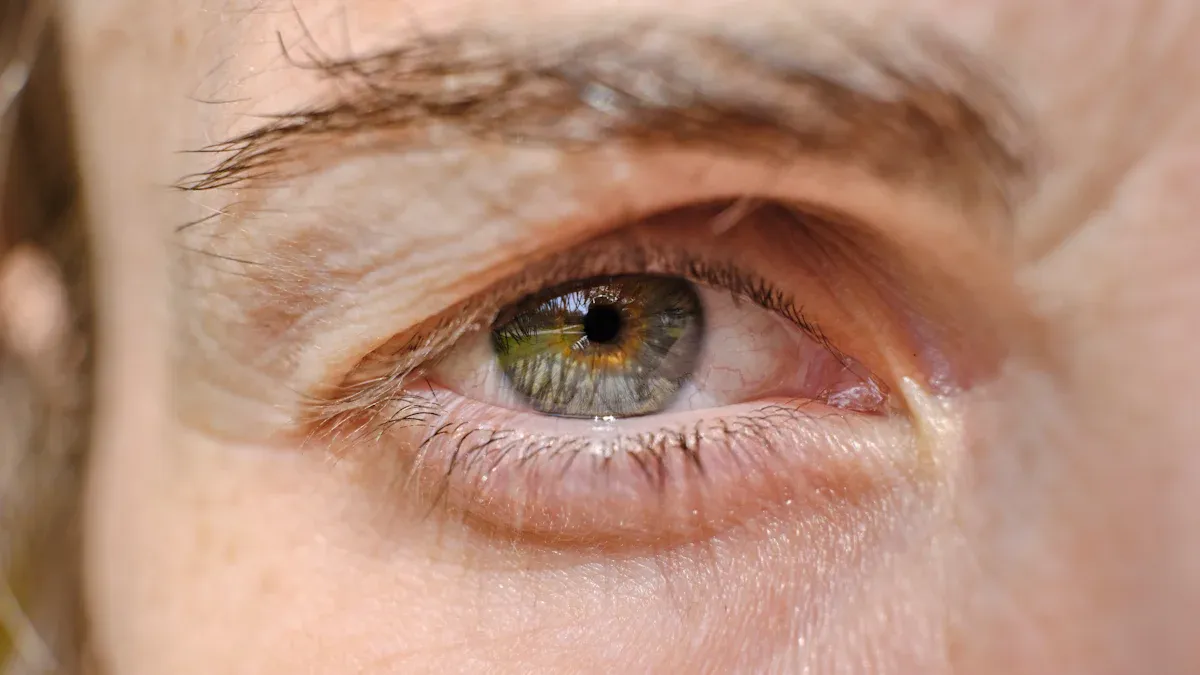
A comprehensive eye examination is crucial for anyone with suspected or diagnosed thyroid disorders. An ophthalmologist performs several tests. These tests help identify and monitor ocular manifestations. They check visual acuity and color vision.
They also examine pupils and extraocular motility. Doctors assess ocular alignment and perform Hertel exophthalmometry. They conduct an external examination and a slit lamp examination. They also measure intraocular pressure to check for dangerous increases.
Visual field testing maps peripheral vision and detects optic nerve compression. Color vision testing reveals subtle optic nerve damage. Detailed eye movement assessments identify affected muscles. These examinations help diagnose and manage various eye disorders linked to thyroid conditions.
Seek comprehensive medical evaluation if persistent eye discomfort or changes occur. A collaborative approach between endocrinologists and ophthalmologists is important for optimal diagnosis and management of thyroid-related eye conditions.
Early recognition and appropriate treatment can significantly improve both thyroid health and ocular well-being.