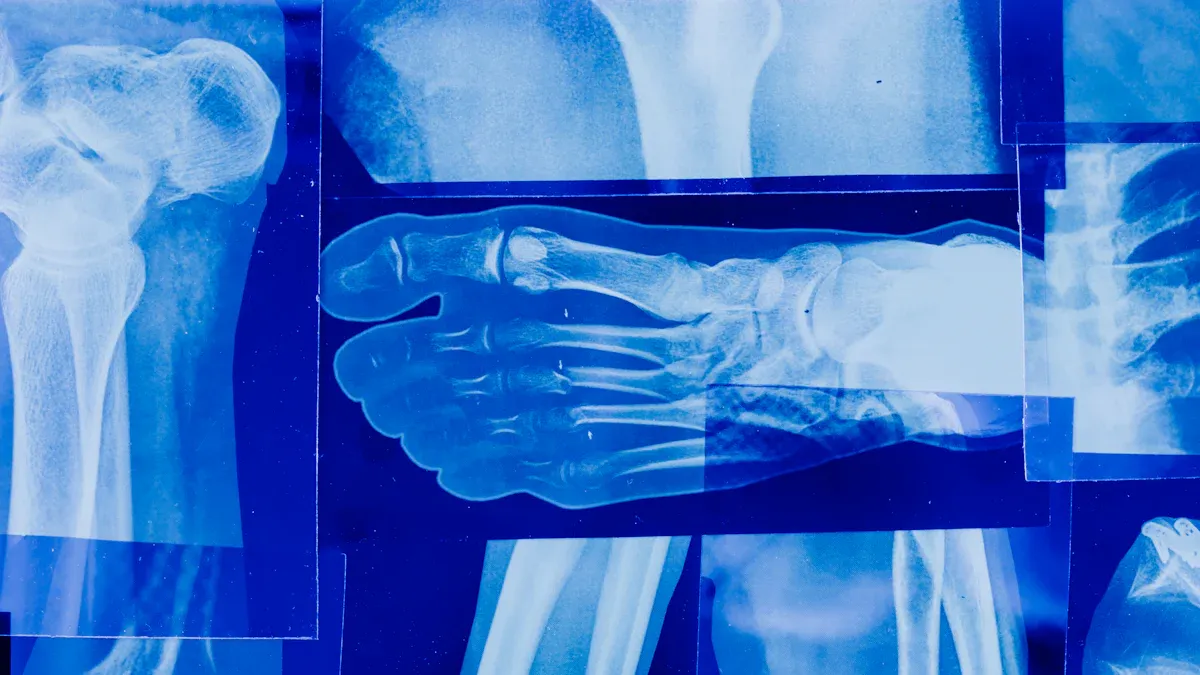
Leg bones are the foundational components supporting human mobility. They are crucial for daily activities and overall physical health. Each human leg contains thirty bones. These bones form a resilient structure, showcasing remarkable complexity. Understanding the anatomy of these leg bones highlights their vital role. They are essential for every movement of the leg. Various injuries can impact these fundamental parts of the body.
Key Takeaways
Your leg has four main bones: the femur (thigh bone), tibia (shin bone), fibula (calf bone), and patella (kneecap).
These leg bones help you stand, walk, run, and jump. They also support your body weight and protect important parts of your leg.
The femur is the longest and strongest bone. The tibia carries most of your weight. The fibula helps stabilize your ankle. The patella protects your knee.
Common leg bone injuries include fractures (breaks), stress fractures (tiny cracks), and shin splints. These injuries can happen from overuse or sudden impacts.
You can keep your leg bones healthy. Eat well, exercise regularly, and avoid risky situations. This helps prevent injuries and keeps your bones strong.
Overview of Bones of the Lower Limb
The human lower limb contains several important bones. These bones work together to support the body, allow movement, and provide stability. They include the femur, tibia, fibula, and patella. These primary bones of the lower limb are essential for daily activities. They help us walk, run, and jump. The entire lower limb relies on these structures for its function.
Femur: Thigh Bone
The femur is commonly known as the thigh bone. It is the longest and strongest bone in the human body. This bone extends from the hip to the knee. The femur plays a crucial role in weight-bearing. It also provides a strong attachment point for many powerful muscles of the leg.
Tibia: Shin Bone
The tibia is the shin bone. It is the second largest bone in the leg. The tibia carries most of the body’s weight from the femur down to the foot. It forms the main part of the lower leg. The tibia connects to the femur at the knee joint. It also connects to the fibula alongside it.
Fibula: Calf Bone
The fibula is the calf bone. It is a long, thin bone located on the outer side of the tibia. While the tibia bears most of the weight, the fibula helps stabilize the ankle and supports the muscles of the lower leg. It does not bear much weight directly. The fibula also helps form the ankle joint, which is vital for the movement of the lower limb.
Patella: Kneecap
The patella is the kneecap. This small, flat, triangular bone sits in front of the knee joint. It protects the knee joint from injury. The patella also increases the leverage of the quadriceps muscle. This helps extend the leg. The patella is an important part of the complex knee structure, allowing smooth movement of the lower limb. All these bones of the lower limb are critical for mobility and support.
Leg Bone Anatomy and Structure
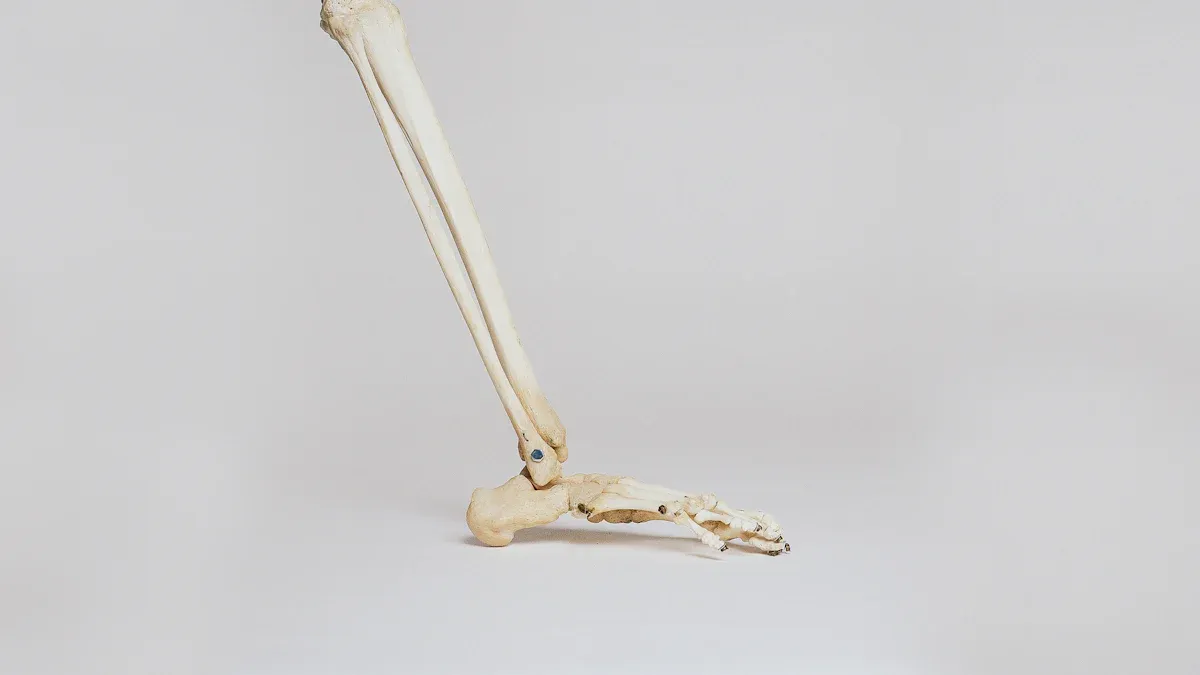
Understanding the detailed anatomy of each major leg bone reveals its specific design for function. Each bone has a unique structure. This structure allows it to perform its role effectively. The general structure of long bones includes a shaft (diaphysis) and two ends (epiphysis).
Femur: Longest, Strongest Bone
The femur is the longest and strongest bone in the human body. Its robust anatomy supports significant weight. The diaphysis, or shaft, is a thick, cylindrical structure. It provides great strength. The proximal epiphysis connects to the hip joint. The distal epiphysis forms part of the knee joint. The average adult male femur measures 48 centimeters (19 inches) in length. It has a diameter of 2.34 centimeters (0.92 inches). This size contributes to its strength.
Tibia: Weight-Bearing Structure
The tibia is the second largest bone. It serves as the primary weight-bearing structure in the lower leg. Its anatomy includes a large proximal end. This end articulates with the femur at the knee joint. The shaft of the tibia is triangular. It tapers towards the ankle. The distal end forms part of the ankle joint. The adult human tibia can withstand an axial force during walking. This force is up to 4.7 times an individual’s body weight. This demonstrates its remarkable strength.
Fibula: Stabilizing Bone
The fibula is a slender bone. It runs parallel to the tibia. Its anatomy shows it does not bear much weight directly. Instead, the fibula plays a crucial role in providing stability to the ankle joint. It also supports the muscles of the lower leg. The proximal end of the fibula articulates with the tibia just below the knee. The distal end forms the lateral malleolus. This is the outer ankle bone.
Patella: Protective Kneecap
The patella is a unique bone. It is a sesamoid bone. This means it is embedded within a tendon. Specifically, it sits within the quadriceps tendon. This tendon connects the thigh muscles to the tibia. The patella protects the knee joint from direct impact. Its smooth posterior surface articulates with the distal femur. This articulation allows for smooth movement. It also increases the leverage of the quadriceps muscle. This helps extend the leg.
Bone Composition and Types
The bone anatomy of leg bones involves two main types of bone tissue. These are cortical bone and cancellous bone. Cortical bone is dense and compact. It forms the outer layer of most bones. Cancellous bone, or spongy bone, is less dense. It has a porous, honeycomb-like structure. It fills the ends of long bones. Cortical bone forms a dense cylinder in long bones like the femur. It primarily consists of collagen fibers and an inorganic bone mineral. This bone mineral is largely in the form of small crystals. Scientists approximate these as hydroxyapatite. In terms of dry mass, bone mineral makes up 60-70%. Collagen forms most of the remaining portion. Additionally, bone contains minor amounts of other substances. These include proteins and inorganic salts. Living bone also includes 10-20% water.
Functions of Leg Bones
Leg bones perform several vital roles. They allow humans to stand, move, and interact with their environment. These bones are essential for the overall function of the lower limb. They are fundamental to the mechanics of the entire lower limb.
Weight-Bearing and Support
Leg bones bear the entire body’s weight. The femur and tibia are primary weight-bearing bones. They transfer forces from the upper body to the ground. These bones also support surrounding structures. This includes muscles, ligaments, tendons, and nerves in the lower limb. The foot also plays a crucial role in supporting body weight as part of the lower limb’s function.
Movement and Locomotion
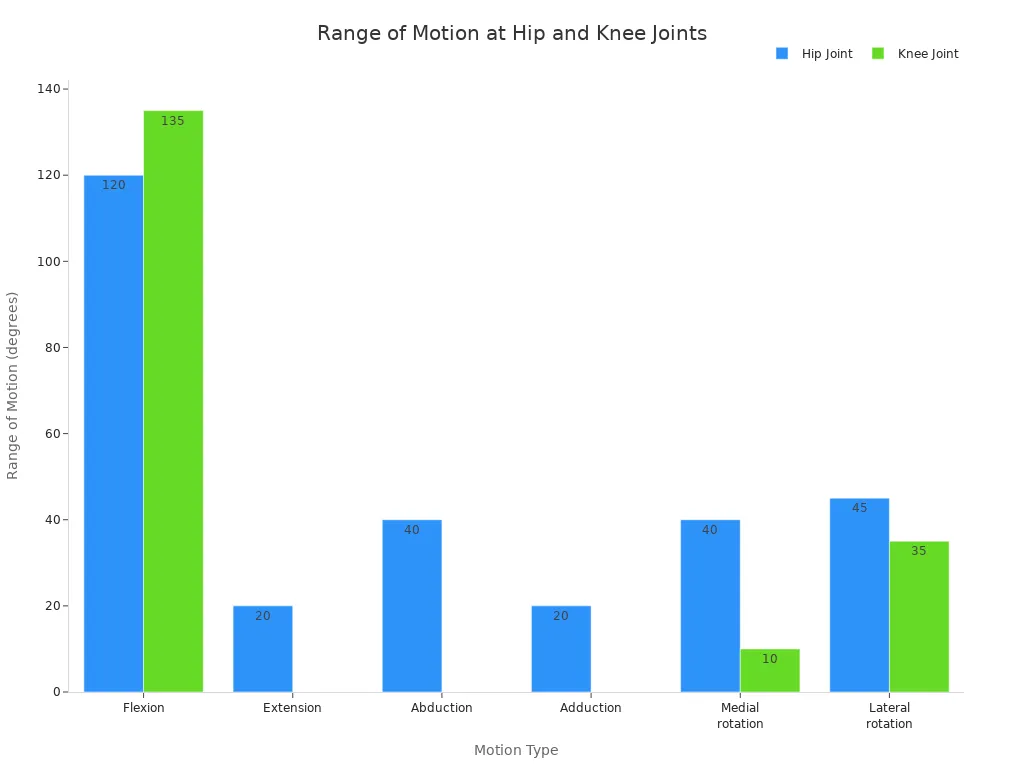
Leg bones facilitate a wide range of movement. They form joints that allow bending, straightening, and rotation. This enables activities like walking, running, and jumping. The hip joint and knee joint are key to these actions. For example, the knee joint allows significant flexion. The hip joint also provides extensive movement.
Joint | Motion | Range of Motion (degrees) |
|---|---|---|
Hip | Flexion | 120° |
Hip | Extension | 20° |
Hip | Abduction | 40° |
Hip | Adduction | 20° |
Hip | Medial rotation | 40° |
Hip | Lateral rotation | 45° |
Knee | Flexion | 135° |
Knee | Extension | 0° |
Knee | Medial rotation | 10° |
Knee | Lateral rotation | 30-40° |
Muscle Attachment and Leverage
Bones provide attachment points for muscles. Tendons connect muscles to bones. When muscles contract, they pull on the bones. This creates movement. Leg bones act as levers. This leverage increases the force and range of motion muscles can produce. This provides stability and leverage for movement.
Protection of Structures
Leg bones also protect delicate structures. For instance, the patella shields the knee joint from direct impact. The long bones of the leg enclose bone marrow. This marrow produces blood cells. The overall structure of the lower limb protects nerves and blood vessels running through the leg. The foot contributes to balance and shock absorption, which is vital for the entire lower limb. These functions ensure the lower limb operates effectively.
Common Leg Bone Injuries
Many different conditions can affect the leg bones. These conditions range from minor strains to severe breaks. Understanding these common leg bone injuries helps people recognize symptoms and seek proper care. These injuries often impact daily activities and mobility.
Fractures: Types and Causes
Fractures are breaks in a bone. They can happen in any of the leg bones. Different types of fractures occur depending on the force and direction of impact. Some common types of leg bone fractures seen in sports include pelvic fractures, acetabular fractures, hip fractures, femur fractures, patella fractures, and growth plate fractures. Tibia (shin bone) and fibula (calf bone) fractures are also common. For example, soccer players often experience tibia and fibula fractures.
Stress Fractures
Stress fractures are tiny cracks in a bone. Repetitive stress or overuse causes these fractures. They often occur when muscles become fatigued and can no longer absorb shock. This transfers the stress to the bones. The tibia is a very common site for these injuries. Middle- and long-distance running often leads to more long bone and pelvic fractures. The tibia accounts for 46% of all stress fractures in competitive track and field athletes. These are often called tibial stress fractures. These tiny breaks are a type of overuse injury.
Traumatic Fractures
Traumatic fractures are complete breaks in a bone. A sudden, powerful force causes them. This force might come from a fall, a direct blow, or a car accident. These fractures are often severe. They require immediate medical attention. Examples include femur fractures, tibia fractures, and fibula fractures. Ankle fractures also fall into this category. Recovery from a traumatic femur fracture can take anywhere from 12 weeks to 12 months. Many patients can begin walking much earlier with a physical therapist’s help.
A broken femur typically takes four to six months to heal naturally. The healing process involves several stages. In the first five days, blood vessels break at the fracture site, forming a blood clot.
This clot acts as a temporary frame. The immune system starts healing by removing damaged tissue. From days 5 to 11, a cartilage network develops, connecting the broken bone sections. New woven bone also begins to form. Between days 11 and 28, the cartilage hardens, new blood vessels grow, and more new bone forms. The bone then starts a remodeling process. This process eventually makes the bone normal again and can continue for months to years.
Recovery times for femur fractures, especially after surgery, vary. The timing of surgery is important. Open fractures, where the skin breaks, need immediate treatment.
External fixation, using metal screws or pins for temporary stability, can extend recovery. Intramedullary nailing, inserting a metal rod to hold the bone, helps during healing. Other severe traumatic injuries can involve the knee joint. These include tears to the anterior cruciate ligament, posterior cruciate ligament, medial collateral ligament, and lateral collateral ligament. These ligament injuries often accompany bone fractures around the knee.
Shin Splints
Shin splints, also known as medial tibial stress syndrome, cause pain along the inner edge of the tibia. Repetitive stress and strain on the tibia and its surrounding muscles and tissues primarily cause them. This is often a self-imposed issue.
Several biomechanical factors contribute to this stress. Overpronation, where the foot rolls inward excessively, places undue stress on the tibia. Improper landing, especially heel striking, creates a sudden force on the feet. This stresses the lower leg’s tendons and periosteal fascia. Both flat feet and high-arched feet can contribute to shin splints. Flat feet may worsen overpronation. High-arched feet can lead to poor shock absorption. Improper footwear also increases the risk of shin splints.
Osgood-Schlatter Disease
Osgood-Schlatter disease causes pain and swelling below the knee. It affects the growth plate at the top of the tibia. This condition commonly occurs in children and adolescents during growth spurts. Repeated stress from activities like running and jumping pulls on the patellar tendon.
This tendon connects the kneecap to the tibia. This pulling causes inflammation and pain. Girls affected are typically aged 10-11 years, with a range of 8-12 years. Boys affected are typically aged 13-14 years, with a range of 12-15 years. Children between 11 and 14 are more likely to experience this disease. This age range involves significant growth spurts. Children aged 12 to 14 are most susceptible, with prevalence rates from 9.8% to 12.9%.
Patellofemoral Pain Syndrome
Patellofemoral pain syndrome causes pain around or behind the kneecap (patella). It often results from overuse or improper movement of the knee joint. This condition is common in athletes. It is also common in people who do activities involving repeated knee bending.
Risk factors include altered stress to the patellofemoral joint from intrinsic knee factors. Alterations in the kinetic chain or errors in training also contribute. Generalized quadriceps weakness is another factor. External factors like overuse, poor running technique, weight gain, or improper footwear increase stress on the patellofemoral joint.
Increased training intensity, specifically increases greater than 30% mileage over two weeks for runners, also poses a risk. This syndrome is a common cause of knee pain.
Injury Management and Prevention
Causes of Leg Bone Injuries
Many factors contribute to leg bone injuries. Children often sustain fractures from falls or twisting during activities like ice skating or skiing. Falls from heights, such as trampolines or playground structures, also cause fractures. Direct force on the leg while the foot is planted, common in sports like football or soccer, leads to fractures.
Poor nutrition, a diet low in calcium, and obesity can weaken bones, increasing fracture risk. High-energy accidents, such as car crashes, or contact sports often result in severe fractures. In infants or toddlers, a femur fracture without walking may indicate child abuse. High-energy injuries and twisting injuries also cause proximal tibia fractures, often called ‘trampoline fractures,’ when multiple people jump together.
Recognizing Injury Symptoms
Recognizing symptoms helps in seeking timely care for leg injuries. For example, a hairline fracture in the tibia often presents with shin pain, focal tenderness over the front of the tibia, and swelling.
Doctors assess a patient’s reported symptoms and medical history. They conduct a physical examination. Imaging studies are crucial for diagnosis. X-rays, CT scans, MRI, or bone scans determine the type and severity of the fractures. MRI is preferred for specific diagnosis of hairline fractures over bone scintigraphy. CT scans have limited value due to lower sensitivity and higher radiation exposure.
General Treatment Approaches
Treatment for leg bone injuries varies based on the injury type and severity. For non-displaced fibula fractures, especially those with a stable ankle joint and minimal displacement, conservative treatment is often effective. This treatment includes elastic bandages, bivalve pneumatic air stirrups, hinged short-leg boots, or cast immobilization.
Functional treatment with a brace can sometimes lead to better outcomes than a cast. Conservative treatment is also suitable for elderly or unhealthy patients, even with unstable fractures, if the ankle joint remains stable. This approach aims to restore function and stability without surgery.
Prevention Strategies
Preventing leg bone injuries involves strengthening bones and avoiding risky situations. Regular exercise strengthens leg bones and helps prevent osteoporosis. Weight-bearing exercises, such as walking, climbing stairs, or dancing, force the body to work against gravity.
Muscle-strengthening exercises, using weights or body resistance, should be performed at least twice a week. Examples include step-ups, lunges, and bodyweight exercises. The “Wall slide” exercise strengthens the thighs, abdomen, and back, improving leg alignment and knee joint health. Balance exercises like tai chi and yoga improve stability and reduce fall risk. Proper nutrition, including adequate calcium, also supports bone health.
This blog explored the anatomy, structure, functions, and common injuries of leg bones. We discussed how these essential bones support the body and enable movement. Understanding their intricate anatomy helps us appreciate their critical role in mobility and overall health. Prioritize bone health through proper nutrition, regular exercise, and injury prevention. This protects your skeletal system. The human skeletal system, with its complex anatomy, shows remarkable resilience and importance.
FAQ
What is the longest bone in the human leg?
The femur is the longest and strongest bone in the human body. It extends from the hip to the knee. This bone plays a crucial role in supporting the body’s weight and enabling movement of the leg.
What is the primary function of the tibia?
The tibia, or shin bone, primarily bears the body’s weight. It transfers forces from the femur down to the foot. This strong bone forms the main part of the lower limb.
Does the fibula carry much body weight?
No, the fibula does not bear significant body weight. It runs alongside the tibia. The fibula’s main role is to stabilize the ankle and support muscles in the lower leg. This slender fibula helps form the ankle joint, crucial for foot movement.
What are some common leg bone injuries?
Common leg bone injuries include various types of fractures. Stress fractures are tiny cracks from overuse. Traumatic fractures result from sudden, powerful forces. The tibia and fibula are common sites for these fractures. These fractures require careful management.
How does the patella contribute to knee function?
The patella, or kneecap, protects the knee joint from impact. It also increases the leverage of the quadriceps muscle. This helps extend the leg. The patella articulates with the femur and the tibia, ensuring smooth knee movement. The fibula also stabilizes the lower leg, which impacts overall foot function.